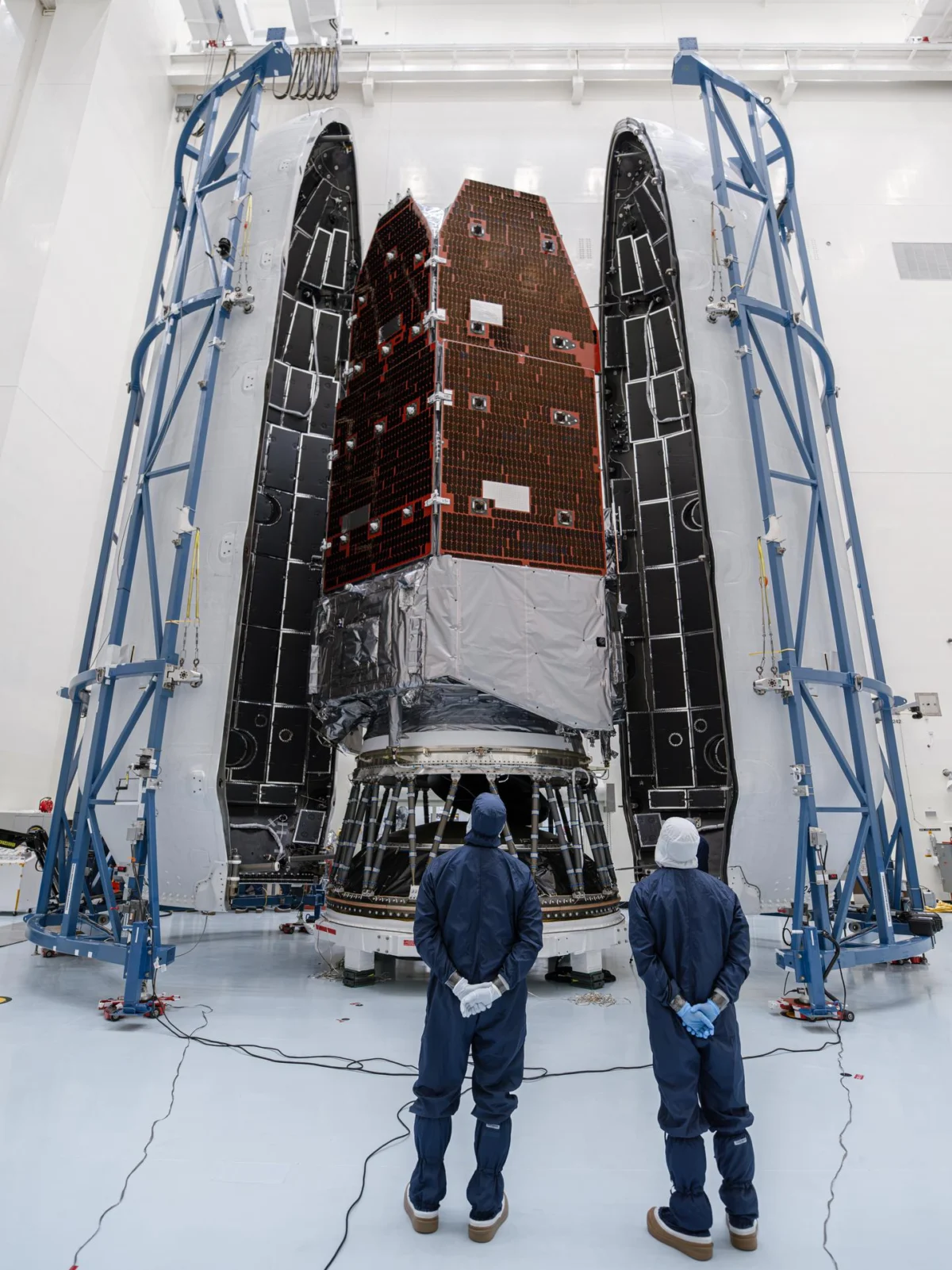
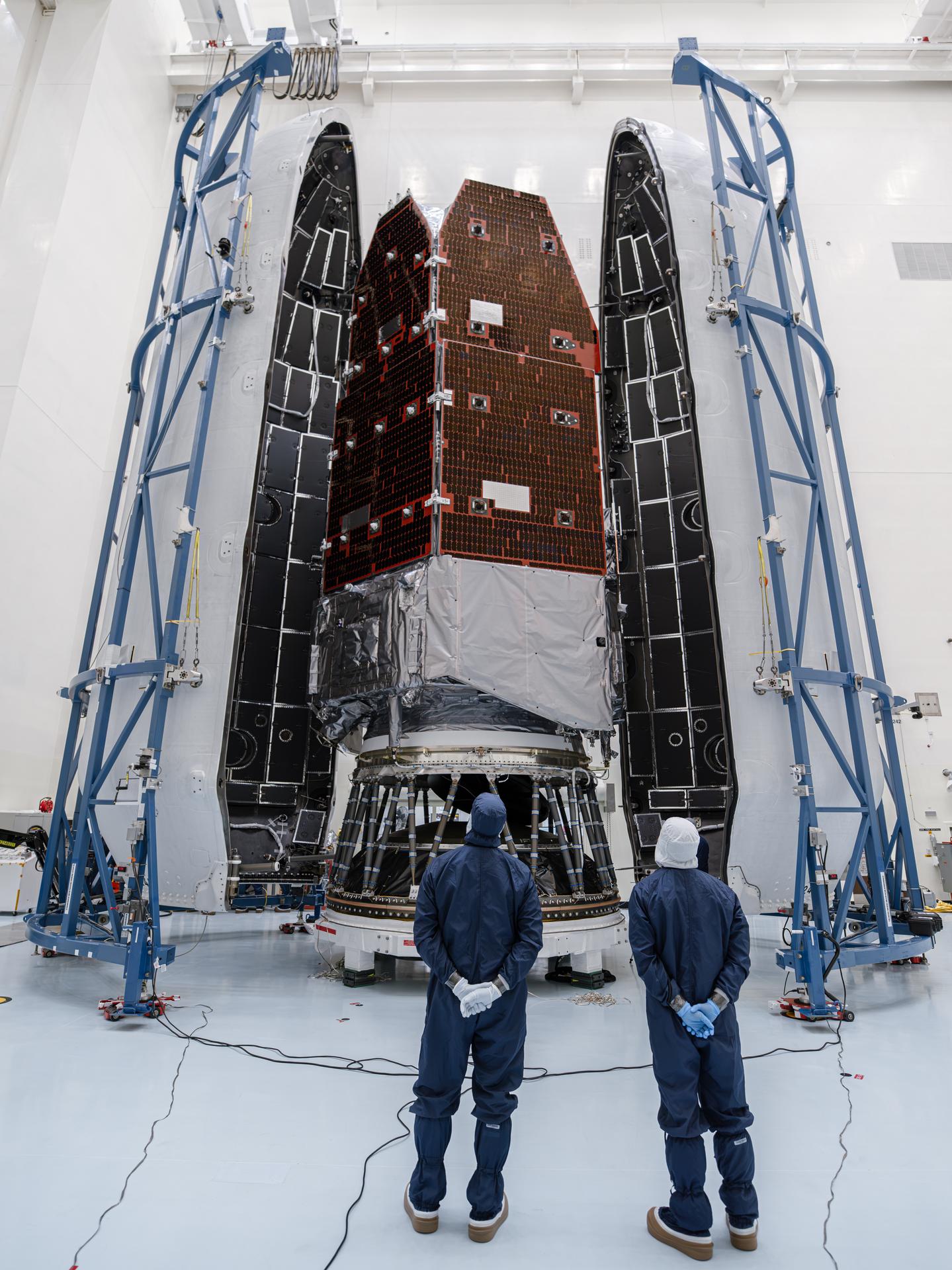
Preparations are complete for the highly anticipated prelaunch and launch activities of NASA’s Nancy Grace Roman Space Telescope, a next-generation observatory poised to revolutionize our understanding of the cosmos. Roman is designed to tackle some of the universe’s most profound enigmas, chief among them the elusive dark energy and dark matter that govern cosmic evolution. The mission represents a monumental leap in space-based astronomy, promising unprecedented insights into the universe’s largest structures, distant exoplanets, and the very fabric of spacetime.
NASA, in collaboration with SpaceX, has scheduled the liftoff of the Roman Space Telescope for no earlier than 7:26 a.m. EDT on Sunday, August 30, 2026. The powerful SpaceX Falcon Heavy rocket will carry the observatory into space from Launch Complex 39A at NASA’s historic Kennedy Space Center in Florida. Comprehensive launch coverage is slated to commence at 6:20 a.m. EDT, offering a window into this critical phase of the mission.
The Roman Space Telescope, named in honor of Dr. Nancy Grace Roman, NASA’s first chief astronomer and a pioneering figure often referred to as the "Mother of Hubble," is engineered to deliver a transformative perspective on the universe. Its distinguishing feature is its exceptionally sharp infrared vision, coupled with a field of view that is at least 100 times larger than that of the venerable Hubble Space Telescope. This unparalleled combination will enable Roman to conduct crisp, sweeping surveys of vast swathes of the cosmos, generating an immense volume of data crucial for a diverse array of scientific investigations.
Unveiling Cosmic Secrets: Roman’s Ambitious Scientific Objectives
The scientific agenda for the Roman Space Telescope is remarkably ambitious, addressing fundamental questions that have long challenged astrophysicists. Its primary objectives include:
-
Investigating Dark Energy and Dark Matter: These mysterious components constitute approximately 95% of the universe’s mass-energy budget but remain largely undetected. Roman will utilize two primary methods to probe dark energy: weak gravitational lensing and baryon acoustic oscillations (BAO). Weak lensing involves precisely measuring the subtle distortions of distant galaxy shapes caused by the gravitational pull of intervening dark matter. By mapping these distortions across vast cosmic distances, scientists can infer the distribution of dark matter and how dark energy has influenced the universe’s expansion. BAO, on the other hand, measures the characteristic patterns in the distribution of galaxies, which are relics of sound waves in the early universe. Tracking how these patterns have stretched over time provides a "standard ruler" to measure the expansion rate of the universe and characterize dark energy. Roman’s wide field of view is absolutely essential for collecting the massive statistical samples of galaxies required for these precise measurements.
-
Discovering and Characterizing Exoplanets: The telescope will employ the microlensing technique to detect thousands of exoplanets, including potentially many Earth-like worlds orbiting at greater distances from their stars than typical transit missions can find. Microlensing occurs when a foreground star passes in front of a more distant star, and its gravity briefly magnifies the light from the background star. If the foreground star has planets, they will create additional, smaller magnifications, revealing their presence. Roman’s long-duration, wide-field observations are perfectly suited for this method, which is particularly sensitive to planets in the "habitable zone" and those far from their host stars, expanding our census of planetary systems beyond what missions like Kepler and TESS have achieved. The mission will also carry a coronagraph instrument to directly image large exoplanets and debris disks, paving the way for future direct imaging missions.
-
Mapping Billions of Galaxies: By observing billions of galaxies across cosmic time, Roman will construct an unprecedented three-dimensional map of the universe. This map will not only trace the distribution of matter but also provide crucial data on how galaxies formed, evolved, and clustered together over billions of years. Understanding these cosmic structures is vital for testing cosmological models and tracing the history of star formation and element enrichment in the universe.
-
Studying Black Holes: Roman’s keen infrared vision will allow it to peer through dust and gas, enabling detailed studies of supermassive black holes at the centers of galaxies and intermediate-mass black holes, shedding light on their growth and their impact on galaxy evolution. Its wide field will facilitate the discovery of rare, distant quasars powered by actively feeding black holes.
-
Exploring Objects within Our Own Solar System and Beyond: From studying icy bodies in the Kuiper Belt to investigating dwarf galaxies orbiting the Milky Way, Roman will contribute to a broad spectrum of astronomical research, extending from our cosmic neighborhood to the very edge of the observable universe.
The Journey to L2: A Strategic Vantage Point
Following its launch and successful separation from the Falcon Heavy rocket, the Roman Space Telescope will embark on a journey to the second Sun-Earth Lagrange point, or L2. Located approximately one million miles (1.5 million kilometers) from Earth in the anti-sun direction, L2 is a gravitationally stable point in space. This strategic location offers several critical advantages for an infrared observatory. At L2, the telescope can maintain a stable thermal environment, shielded from the heat and light of the Sun, Earth, and Moon. This allows its sensitive infrared instruments to cool down to extremely low temperatures, essential for detecting the faint infrared signals from distant cosmic objects without interference from its own heat or scattered light. The stable gravitational environment also minimizes the need for frequent, costly fuel-consuming maneuvers to maintain its position, extending its operational lifetime.
The Roman mission is designed for a primary lifetime of five years, with an ambitious goal of operating for a decade. A key commitment of the mission is the public availability of all Roman’s science data after processing, ensuring that the global scientific community can freely access and build upon its discoveries, maximizing its scientific impact for generations.
Launch Coverage and Pre-Launch Events Timeline
NASA has meticulously planned an extensive schedule of coverage and media briefings to provide the public and journalists with real-time updates and in-depth information surrounding this landmark mission. All times are Eastern and are subject to change based on real-time operational considerations.
Saturday, August 29, 2026
-
9 a.m. EDT: NASA’s Roman Space Telescope Mission Science Briefing: This briefing will delve into the scientific objectives and expected breakthroughs of the Roman mission. It will take place in the NASA Kennedy Press Site auditorium, featuring leading scientists and mission specialists. Media will have the opportunity to ask questions in person or via phone. Limited auditorium space will be available, and media requiring dial-in information must contact the NASA Kennedy newsroom at [email protected] no later than one hour before the briefing.
-
10:30 a.m. EDT: NASA’s Roman Space Telescope Prelaunch News Conference: This crucial conference will provide final updates on the readiness of the spacecraft, the Falcon Heavy rocket, and the launch operations. Key personnel from NASA and SpaceX will participate, addressing technical and operational aspects of the launch. Similar to the science briefing, media can ask questions in person or by phone, with the same contact procedure for dial-in access.
-
11:45 a.m. EDT: High-Profile Flyby Demonstration: An anticipated flyby of the Nancy Grace Roman Space Telescope and Falcon Heavy rocket on the launchpad by NASA Administrator Jared Isaacman in his jet is planned. This unique visual event will be broadcast live on the same stream as the prelaunch news conference, with a dedicated view of the launchpad during the transition. This flyby is contingent on prevailing weather conditions and operational safety considerations.
-
12 p.m. EDT: In-Person Media Interviews: Following the news conferences, opportunities for one-on-one interviews with mission experts and NASA officials will be available at the NASA Kennedy Press News Center. Previously credentialed media interested in scheduling an interview should contact the NASA Kennedy newsroom at [email protected].
Sunday, August 30, 2026 – Launch Day
- 6:20 a.m. EDT: Launch Coverage Begins: Live broadcast coverage will commence, providing real-time updates, expert commentary, and behind-the-scenes insights as the countdown progresses.
- 7:26 a.m. EDT: Targeted Launch Window Opens: The Falcon Heavy rocket, carrying the Roman Space Telescope, is targeted for liftoff.
- 9:30 a.m. EDT: Postlaunch News Conference: A post-launch briefing will be held to discuss the initial phases of the mission, including successful liftoff, fairing separation, and initial orbital insertion. Participants will provide updates on the telescope’s health and status. Media inquiry procedures are consistent with previous briefings.
Accessing Launch Coverage
Live coverage of these pivotal events will be streamed across multiple platforms, ensuring broad accessibility:
- The primary online viewing portal will be NASA Live: https://www.nasa.gov/live
- Audio-Only Coverage: For those preferring audio, the NASA "V" circuits will carry coverage, accessible by dialing 321-867-1220 or 321-867-1240. On launch day, mission audio of countdown activities without NASA broadcast commentary will be available on 321-867-7135. Additionally, launch audio will be broadcast on the Launch Information Service and Amateur Television System’s VHF radio frequency 146.940 MHz and the KSC Amateur Radio Club’s UHF radio frequency 444.925 MHz, FM mode, audible within Brevard County on the Space Coast.
- NASA Website Coverage: The official NASA website will host comprehensive launch day coverage, including the livestream and continuous blog updates detailing countdown milestones. On-demand streaming video and high-resolution launch photos will be made available shortly after liftoff. Further mission updates can be followed on the dedicated Roman launch blog: https://science.nasa.gov/blogs/roman/
Engaging the Public: Virtual Participation and Social Media
NASA is actively encouraging public engagement with the Roman mission:
- Virtual Launch Attendance: Members of the public can register to attend the Roman launch virtually through NASA’s Virtual Guest Program. This program offers curated launch resources, notifications about related opportunities or schedule changes, and a commemorative stamp for the NASA virtual guest passport following a successful launch. Registration details are available at: https://www.eventbrite.com/e/nasas-nancy-grace-roman-space-telescope-launch-tickets-1983457247019?aff=oddtdtcreator
- Social Media Engagement: The public is invited to follow and engage with the mission on X (formerly Twitter), Facebook, and Instagram by tagging official NASA accounts. This allows enthusiasts to share their excitement and connect with the mission’s progress.
A Monument of International Collaboration and Technological Prowess
The development and execution of the Nancy Grace Roman Space Telescope mission exemplify a vast network of international collaboration and industrial partnership. Managed at NASA Goddard Space Flight Center in Greenbelt, Maryland, the mission benefits from significant participation by NASA’s Jet Propulsion Laboratory in Southern California, Caltech/IPAC in Pasadena, California, and the Space Telescope Science Institute in Baltimore. A dedicated team of scientists from various research institutions further contributes to its scientific endeavors.
Key industrial partners providing crucial technological expertise include BAE Systems Inc., L3Harris Technologies, and Teledyne Scientific & Imaging. Their contributions have been instrumental in developing the cutting-edge instruments and components necessary for Roman’s ambitious goals.
The mission also boasts robust international support, underscoring the global nature of space exploration. Contributions have been made by the European Space Agency (ESA), the Japan Aerospace Exploration Agency (JAXA), the French space agency CNES (Centre National d’Études Spatiales), and the Max Planck Institute for Astronomy in Germany. These international partners bring diverse scientific and engineering capabilities, enriching the mission’s scope and potential for discovery.
NASA’s Launch Services Program, based at Kennedy Space Center, is responsible for managing the launch service for the Roman mission, ensuring a safe and successful journey into space.
Broader Implications for Astronomy and Future Exploration
The Nancy Grace Roman Space Telescope is not merely a successor to previous observatories; it represents a paradigm shift in wide-field infrared astronomy. By providing a comprehensive view of the distant universe, it will generate datasets of unparalleled size and depth, serving as a critical resource for cosmologists, exoplanet hunters, and galaxy evolution specialists for decades to come. Its findings are expected to significantly refine our cosmological models, constrain the properties of dark energy, and provide a statistical foundation for understanding the diversity of planetary systems. The technological advancements embedded in Roman, particularly its coronagraph, will also pave the way for future missions capable of directly imaging Earth-like exoplanets and searching for signs of life.
The launch of the Nancy Grace Roman Space Telescope marks not just another space mission, but a pivotal moment in humanity’s quest to understand its place in the universe. Its legacy will undoubtedly echo through future scientific endeavors, inspiring new generations of astronomers and engineers to push the boundaries of knowledge even further.
For more detailed information about NASA’s Roman telescope, please visit: https://www.nasa.gov/roman
Media Contacts:
Alise Fisher
NASA Headquarters, Washington
202-385-1287
[email protected]
Leejay Lockhart
Kennedy Space Center, Fla.
321-747-8310
[email protected]
Claire Andreoli
Goddard Space Flight Center, Greenbelt, Md.
301-286-1940
[email protected]