Four months after a devastating fall left her paralyzed, Saffron Cresswell found herself facing a daunting return to a home that felt irrevocably altered. The once-vibrant world of equestrianism, her lifelong passion and a pathway towards Olympic dreams, had been silenced. The familiar scent of hay and the rhythmic thud of hooves were replaced by an unnerving quiet, a stark contrast to the relentless pace of her previous life. At 23, Cresswell’s world had fractured, but a remarkable resilience, honed through years of intense dedication, was about to propel her onto an entirely new and unexpected trajectory.
A Childhood Forged in Equine Pursuit
Cresswell’s journey with horses began at the tender age of three, a passion ignited by her mother, who herself was involved in amateur equestrian activities. The bond was immediate and profound. By primary school, her dedication was so consuming that she was the only child permitted a mobile phone, enabling her to cycle from school to the stables to begin her riding sessions before her mother finished work. This early immersion laid the foundation for an extraordinary career.
By the age of 13, Cresswell was not just riding; she was producing her own young pony from beginner status to represent Great Britain at three European Championships, securing one gold and two team silver medals. This success was the catalyst for her formal eventing career. The commitment required was immense. Her parents, recognizing the depth of her talent and ambition, made a significant sacrifice, selling their home to purchase a dedicated yard to support her burgeoning career. For six years, the family lived in two small touring caravans, eventually converting part of a barn into a modest dwelling. Cresswell’s daily routine was a testament to her unwavering focus: up at 5 am for four pony rides before school, followed by more riding afterwards. Her school attendance hovered around a “68% or something ridiculous,” a consequence of her all-consuming equestrian pursuits.
The intensity of her training extended beyond the stables. During her rehabilitation, Cresswell consistently pushed her limits, often waiting for the gym to open to get in an hour of exercise before her scheduled physiotherapy sessions. This innate drive and ability to immerse herself fully in a discipline became a hallmark of her character.
The Day That Changed Everything
The pivotal moment occurred on June 8, 2024, at the Bramham Horse Trials. Competing in the under-25 cross-country round, just three fences from the finish, Cresswell fell from her horse, Vivendi Hero. The accident was a cruel twist of fate, a "freak accident" as she described it, where she landed directly on the back of her head. The impact resulted in a break at T4 level, essentially chest level, and an immediate and devastating loss of sensation in her legs. Unlike some spinal cord injuries where there can be a temporary loss of feeling, Cresswell remembers the instant realization of the severity of her condition.
The 45-minute ambulance journey to Leeds General Infirmary was agonizing, filled with the stark reality of her injury. Emergency surgery followed. In the immediate aftermath, a conversation with Olympic silver medallist Nicola Wilson, who had previously suffered a neck injury, offered a flicker of hope. Wilson had described regaining feeling in her arm after 20 minutes. Cresswell, experiencing a similar initial lack of sensation, clung to this possibility, believing her feeling might return within a similar timeframe, or the three to four weeks it took Wilson to recover sensation in her legs.
However, as weeks turned into months, the grim reality began to set in. By approximately six weeks, while undergoing treatment in a spinal unit in Wakefield, the full extent of her permanent paralysis became undeniable. She spent six weeks bedbound in a private hospital room, which she wryly referred to as her “hotel room,” adorned with get-well-soon cards. Even in this confined state, her characteristic drive persisted. She utilized small weights provided by physiotherapists for her arms, focusing on the principle of having a daily task, however small.
Rehabilitation was a painstaking process. Learning to sit up again was a significant challenge due to the lowered blood pressure common with spinal injuries, limiting her ability to remain upright in a wheelchair for more than five minutes without feeling faint. Basic tasks like putting on socks or tying her hair proved arduous, and even by the time she left the hospital, she lacked the core strength and balance to tie her hair while sitting. Her daily schedule was meticulously structured, often involving arriving at the gym when it opened at 1 pm, before her official 2 pm physiotherapy session, and revisiting the physio room at 10 am. Her determination to remain active and engaged was evident in her approach to activities like swimming. When told that swimming would require too many assistants, she simply asked to watch, making her presence known by the poolside for two weeks. Her persistence eventually led to her being allowed to participate, a testament to her proactive strategy of turning perceived obstacles into opportunities.
A New Sporting Arena
Upon her discharge from the hospital on October 8, Cresswell returned to Worcestershire, where her parents had already sold all 25 of her horses. The absence of her equine companions and the sudden quiet of her home presented a profound void. Her parents, who had made immense sacrifices to support her equestrian career, also faced the significant business challenge of diversifying their operations. The family’s livelihood, intrinsically tied to Cresswell’s athletic pursuits, required a fundamental recalibration.
The immediate aftermath was isolating. "I came home and fundamentally the next day, both my parents went out the door and went to work," Cresswell recalled. "So, I was home alone in a house that I couldn’t really get out of and I couldn’t really do anything." This stark reality fueled her urgent need to find a new outlet.
A crucial turning point came at the Spinal Games at Stoke Mandeville Hospital, a program designed for individuals with spinal injuries to explore various adaptive sports. Cresswell excelled, winning the archery competition against 110 participants, achieving six out of six bull’s eyes. This experience provided a vital "stepping stone" and a crucial morale boost during her initial challenging period at home.
By December, she had embraced wheelchair racing, competing in 10k races and a half-marathon, and also exploring wheelchair tennis and basketball. However, a sense of unease lingered. "I was worried I would never find a sport that I wanted to put my whole energy into," she admitted. The unique bond she shared with horses, where a hobby evolved into a career and a lifestyle, seemed irreplaceable.
The Unexpected Glide into Para-Canoeing
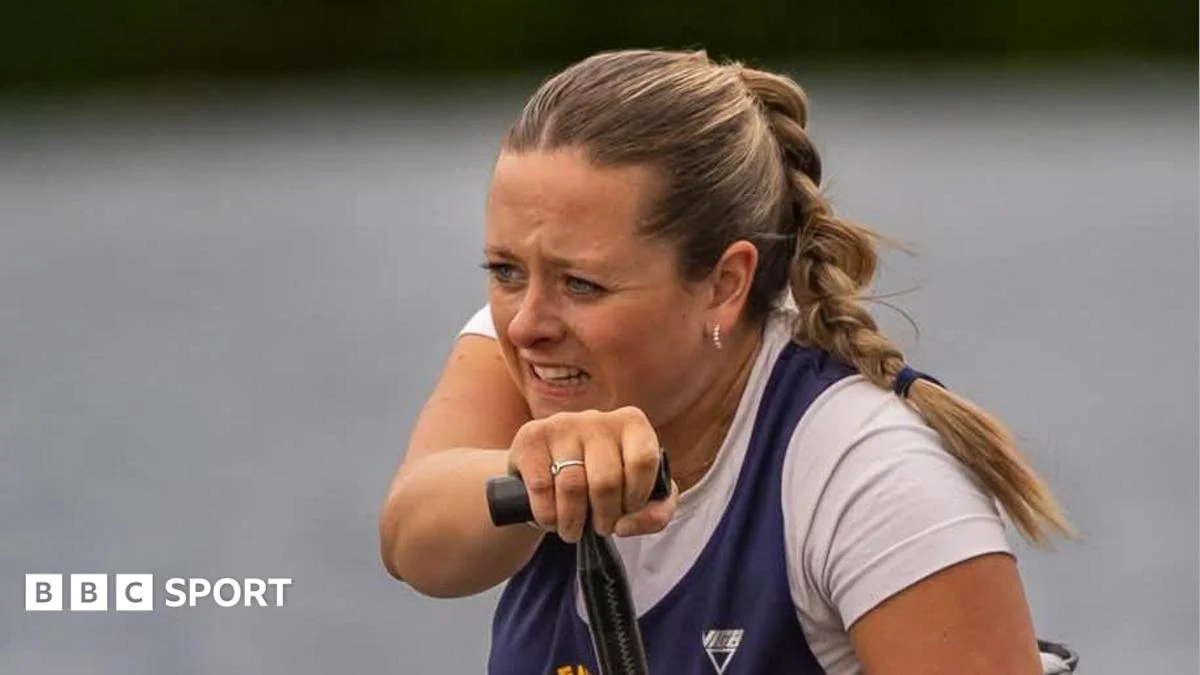
The discovery of para-canoe was serendipitous. A conversation with Olympic canoe athlete Deborah Kerr at a Women’s Sport Trust event, where Kerr encouraged her to "have a go," planted the seed. On December 23rd of the previous year, Cresswell took her first tentative strokes. Winter proved a challenging introduction, and she readily admits she was "not a natural." Her coach, initially hesitant to let her venture far from the bank for fear of capsizing, stayed by her side for the first month.
What began as a single taster session rapidly escalated. Within a short period, Cresswell was training twice a week, then five times a week on the water, dedicating four hours to paddling, supplemented by three gym sessions weekly. The physical demands were immense, particularly the challenge of maintaining balance. Lacking the proprioceptive feedback from her lower body, Cresswell relies entirely on her head and eyes to detect any imbalance. Strapped into a seat with no core function and unable to feel the seat itself, she described feeling as if she were "floating." This heightened reliance on visual cues and a finely tuned awareness of subtle shifts in equilibrium has become a critical aspect of her success. She draws parallels between this sensory adaptation and the enhanced hearing of deaf individuals, highlighting the human capacity to develop compensatory mechanisms.
The technical intricacies of canoeing, however, resonated deeply with her equestrian background. The precision, the constant refinement of technique, and the development of a nuanced understanding of movement mirrored the demands of eventing. This similarity, she believes, is a key reason for her profound enjoyment and rapid progression in the sport.
Her progress has been nothing short of meteoric. The goal of competing at a World Championship was initially a distant aspiration, a quiet ambition for the future. The qualifying time she needed to achieve was 1 minute and 26 seconds. She has since surpassed this, now consistently paddling at 1 minute and 18 seconds, a testament to relentless practice and innovative training methods.
Aiming for the Global Stage and Beyond
Cresswell has been selected to represent Great Britain at the upcoming Canoe Sprint and Para-Canoe World Championships in Poznan, Poland. Having only experienced one prior race in the UK, her immediate objectives are pragmatic: to remain upright and successfully navigate from the start to the finish line. A previous attempt in April ended in a capsize before the race began, underscoring the inherent challenges of the sport.
More significantly, her participation in Poznan is crucial for obtaining an international classification. This rigorous process involves medical assessments to evaluate her impairment and demonstrate the extent of her functional capacity while paddling. Achieving this classification is a prerequisite for earning points at international events, which in turn can lead to qualification for the 2028 Paralympic Games in Los Angeles.
Looking back from her current position, the idea of para-canoeing would have been unimaginable during her hospital stay. "I certainly wouldn’t have imagined I was going to do para-canoe – I didn’t even know [that] was a sport when I was in hospital," she confessed. The journey from a devastating fall to the brink of international competition, achieved in less than a year, is a profound testament to her indomitable spirit and her remarkable capacity to adapt, rebuild, and redefine her aspirations. The quiet determination that once propelled her towards Olympic equestrian glory has now found a new, powerful current in the world of para-canoeing.