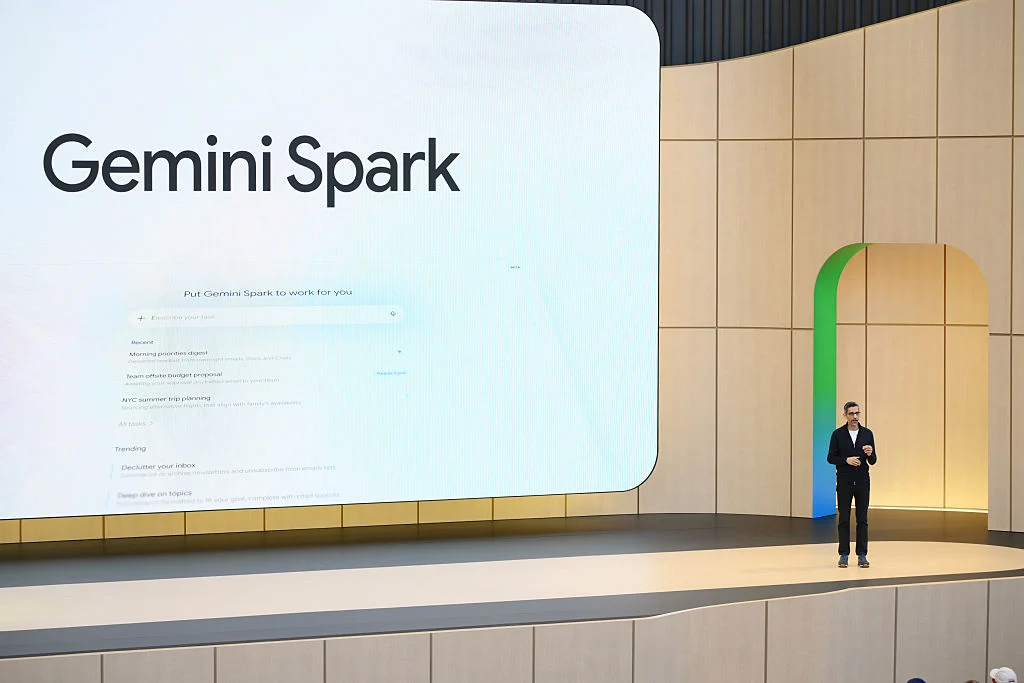
Google’s recent announcement regarding new Gemini Live voice features, while promising enhanced productivity and a more intuitive user experience, paradoxically highlights a persistent challenge for the tech giant and the broader artificial intelligence industry: an inclination towards feature fragmentation and excessive internal branding that can undermine the very simplicity AI aims to deliver. In its official blog post, Google articulated a vision where users "shouldn’t have to guess whether a task requires Spark, a Daily Brief, or a quick inbox search," positioning the updated Gemini app as a unified solution capable of handling diverse tasks via natural voice commands. This declaration, intended as a pledge for seamless interaction, inadvertently underscores a fundamental criticism: Google has endowed virtually every Gemini AI capability with its own distinct brand identity, thereby complicating rather than streamlining the user journey.
The Proliferation of Brands within Gemini
Within the Gemini application, users are presented with a bewildering array of distinct functionalities: ‘Chat,’ ‘Spark,’ and ‘Daily Brief.’ Each of these is represented by its own icon and occupies a separate segment within the app’s navigation interface. This design choice contributes significantly to a cluttered user experience, diverging from what could otherwise be a straightforward and cohesive interaction model. The existence of these separate, branded features suggests that Gemini, despite its advanced technological underpinnings, may still be grappling with the identification and consolidation of a singular, indispensable "killer feature" that defines its core utility for the everyday consumer.
Gemini’s Evolution: A Brief Chronology
Google’s foray into generative AI has been a journey marked by ambitious initiatives and iterative development, reflecting the rapid pace of innovation in the field. The origins of Google’s contemporary AI strategy can be traced back to its deep investments in machine learning and neural networks over the past decade, culminating in the development of sophisticated models. Prior to Gemini, Google introduced Bard in March 2023, an experimental conversational AI service designed to compete with OpenAI’s ChatGPT. Bard, initially based on Google’s LaMDA model, quickly evolved, incorporating capabilities from PaLM 2 and showcasing Google’s intent to remain at the forefront of AI.
The pivotal shift occurred in December 2023 with the introduction of Gemini, Google’s most capable and general-purpose AI model suite. Gemini was unveiled as a multimodal AI, engineered to understand and operate across various data types, including text, code, audio, image, and video. It was launched in three sizes: Ultra (the largest and most capable), Pro (optimized for scaling across a wide range of tasks), and Nano (designed for on-device applications). The Gemini Pro model was swiftly integrated into Bard, effectively rebranding and enhancing Google’s conversational AI offering. This strategic consolidation aimed to present a more powerful and unified AI platform to users and developers alike.
The subsequent months saw rapid deployment and integration of Gemini across Google’s ecosystem. In February 2024, Google officially launched the Gemini app, replacing Bard as the primary interface for its advanced AI assistant on mobile devices. This move signaled Google’s commitment to Gemini as its flagship AI product. The latest announcement regarding Gemini Live voice features, allowing for more natural, real-time voice interactions, is a continuation of this roadmap, aiming to make AI assistance more accessible and integrated into daily routines. However, the internal branding of features like Spark and Daily Brief within this purportedly unified app points to an ongoing tension between showcasing technological breadth and delivering user simplicity. This historical context illustrates Google’s earnest efforts to innovate in AI, yet also reveals a consistent pattern of product nomenclature and feature segregation that has occasionally complicated user adoption across its diverse offerings.
Deconstructing Gemini’s Branded Features
Let’s delve deeper into the specific branded features within Gemini, examining their intended purpose and the critiques they invite:
Daily Brief: A Double-Edged Sword of Proactivity
The ‘Daily Brief’ feature exemplifies a concept that might appeal more to an AI engineer’s vision of utility than to an everyday user’s practical needs. It is conceived as an AI-enabled agenda, delivering "proactive, personalized updates" by aggregating data from various Google applications, such as Gmail and Calendar. In theory, this could offer a powerful snapshot of one’s day, highlighting appointments, important emails, and pending tasks.
In practice, however, the Daily Brief often falls short of its promise. It frequently struggles to differentiate between truly urgent, actionable information and mere background noise. For instance, while a calendar reminder for an upcoming meeting is genuinely useful, the Brief can also generate unsolicited prompts to "continue research started in the chatbot" or, more disconcertingly, remind users of prior Google searches. Imagine being prompted about college scholarships you casually researched months ago, or animal rescues you briefly looked into. This kind of interaction crosses a line from helpful to intrusive, invoking a sense of being constantly monitored rather than genuinely assisted. Such resurfacing of past activities, devoid of immediate context or a clear user-expressed need, doesn’t feel productive; it feels unsettling, raising legitimate privacy concerns about how persistently and indiscriminately the AI accesses and utilizes personal data. The system lacks the nuanced understanding of user intent and urgency that a human assistant would possess, leading to a deluge of information rather than a curated selection of priorities.
Spark: A Powerful Agent, Unduly Branded
Conversely, ‘Spark’ represents one of the more genuinely useful facets of the Gemini app, serving as an AI agent capable of executing actions on a user’s behalf. This could involve drafting emails, summarizing documents, or managing schedules, effectively extending the AI’s capabilities beyond mere conversational responses to tangible task completion. The potential of such an agent is immense, offering a pathway to significant productivity gains.
Yet, Google has chosen to package Spark as a distinct, standalone brand within the Gemini ecosystem. While this internal branding might foster team identity and focus for Google engineers working on the Spark project, it creates unnecessary cognitive overhead for the end-user. A mainstream AI app user should not be required to discern which "side" or branded module of the AI application is necessary for a particular task. The ideal user experience dictates that a user simply articulates their request, and the underlying AI intelligence seamlessly determines the most appropriate function to fulfill it, spinning up an agent like Spark if the task warrants it, without the user ever needing to explicitly select "Spark mode." The technical sophistication of an AI agent like Spark is best served when its operational complexities are abstracted away, presenting a unified, intelligent front to the user.
The Industry-Wide UI Conundrum
This challenge of exposing internal architecture directly to consumers, rather than presenting a simplified, unified interface, is not unique to Google’s Gemini. It appears to be a pervasive trend across the nascent AI industry. Leading AI developers frequently require users to navigate distinct modes or interfaces for different types of interactions.
Consider Anthropic’s Claude, another prominent generative AI model. Users have historically had to decide whether they wanted to "chat" with Claude or "Cowork" with its assistance. Until very recently, these two modes within the Claude app operated with separate memory banks, meaning a conversation in "Chat" would not be remembered when switching to "Cowork," forcing users to repeat context or information. This disconnect created a frustrating and inefficient user experience, highlighting a fundamental flaw in design philosophy.
Similarly, OpenAI’s ChatGPT, while generally lauded for its simplicity, also presents users with distinct interfaces, sometimes requiring them to swap between "Chat" and "Work" modes depending on the desired functionality, especially when integrating with plugins or specialized tools. This engineering-centric design paradigm forces consumers to learn and adapt to the internal workings of the AI, rather than allowing the AI to adapt to their natural way of interacting. Users are, in essence, being asked to familiarize themselves with brand names that are little more than labels for interaction modes or functional surfaces powered by a company’s overarching AI model. This approach adds an unnecessary layer of complexity, increasing cognitive load and making engagement with AI feel less intuitive and more like operating a specialized software tool.
Apple’s Integrated Approach: A Potential Blueprint for Success
In stark contrast to this industry trend, Apple’s somewhat "anticlimactic" approach to integrating AI, unveiled as "Apple Intelligence," could ultimately prove to be a winning strategy for mainstream consumer adoption. Rather than introducing a standalone AI app with various branded sub-features, Apple has chosen to embed AI capabilities directly into the applications and workflows that users already routinely engage with on their iPhones, iPads, and Macs.
This philosophy means that iPhone and Apple device owners are not required to alter their existing behaviors or learn a new interface to leverage AI’s benefits. Instead, Apple simply makes the familiar apps and features they already use – such as Spotlight Search, the Photos app, the iPhone’s Camera, and Siri voice requests – inherently "smarter." For example, Apple Intelligence enhances Siri’s contextual awareness and ability to perform multi-step actions across apps, allows users to generate custom emojis (Genmoji), summarize emails in Mail, or refine images in Photos without ever needing to open a dedicated "AI app." This seamless integration minimizes the learning curve and reduces user friction, making AI an invisible yet powerful enhancement to their daily digital lives. By weaving AI directly into the fabric of its operating systems and popular applications, Apple aims to deliver a powerful, personalized, and private AI experience that feels natural and unobtrusive. This strategy leverages existing user habits and trust in the Apple ecosystem, potentially accelerating widespread AI adoption in a way that app-centric, branded AI features might struggle to achieve.
The Rise of Text-Based AI Services: Simplicity as a Virtue
The inherent simplicity of certain text-based AI services further underscores the argument for minimalist user interfaces. A growing ecosystem of AI assistants, including platforms like Poke, Ollie, Lindy, Orchid, Lucas, Folk, Tomo, and Instinct, operate on a fundamentally straightforward principle: users simply text a chatbot, and the assistant executes the requested task.
This model leverages the ubiquitous and universally understood interface of text messaging. Texting is a clean, familiar, and low-friction mode of communication that requires minimal cognitive effort. Users do not need to navigate complex menus, select specific "modes," or remember internal brand names for different functionalities. They articulate their needs in natural language, much as they would to a human assistant or a friend. This directness eliminates the mental overhead associated with figuring out which feature or product within a larger, multi-faceted application is the correct one to use for a given query.
As Justine Moore, an investment partner at a16z, succinctly articulated, "People don’t want to open an app every time they need help – they want a contact they can text like a friend. And the gold standard is iMessage." This observation highlights a profound user preference for convenience and familiarity. The power of an AI assistant, from a user’s perspective, lies not in its ability to parade a multitude of branded features, but in its seamless integration into existing communication channels and its effortless capacity to fulfill requests without demanding a paradigm shift in user interaction. The simplicity of a text-based interface resonates with this desire for immediate, no-fuss assistance, positioning it as a compelling alternative to more complex, app-bound AI solutions.
Implications for the Future of AI Interaction
The ongoing tension between exposing sophisticated AI capabilities and crafting intuitive user experiences has profound implications for the future adoption and impact of artificial intelligence. Google’s Gemini, with its powerful underlying models and innovative voice features, stands at a critical juncture. While its ambition to offer a comprehensive AI assistant is commendable, the current approach to feature branding risks alienating mainstream users who prioritize simplicity and ease of use.
The battle for AI dominance may not ultimately be won by the model with the highest benchmark scores alone, but by the company that best abstracts away complexity, integrating AI so seamlessly into daily life that it becomes an invisible, indispensable utility. Companies that continue to demand that users understand their internal architectural divisions, whether it’s distinguishing between "Spark" and "Daily Brief" or "Chat" and "Cowork," risk hindering the very mainstream adoption they seek.
The success of Apple’s integrated approach and the appeal of simple text-based AI services suggest a clear path forward: prioritize user experience over internal branding. AI should adapt to the user, not the other way around. As generative AI matures, the industry will likely converge on more unified, context-aware interfaces that dynamically anticipate user needs and deploy appropriate capabilities without explicit user direction. This shift towards an ambient, ever-present, and effortlessly intelligent AI, rather than an app-centric collection of branded features, will be the true hallmark of successful AI integration in the years to come, ultimately determining which platforms achieve widespread and enduring consumer loyalty.