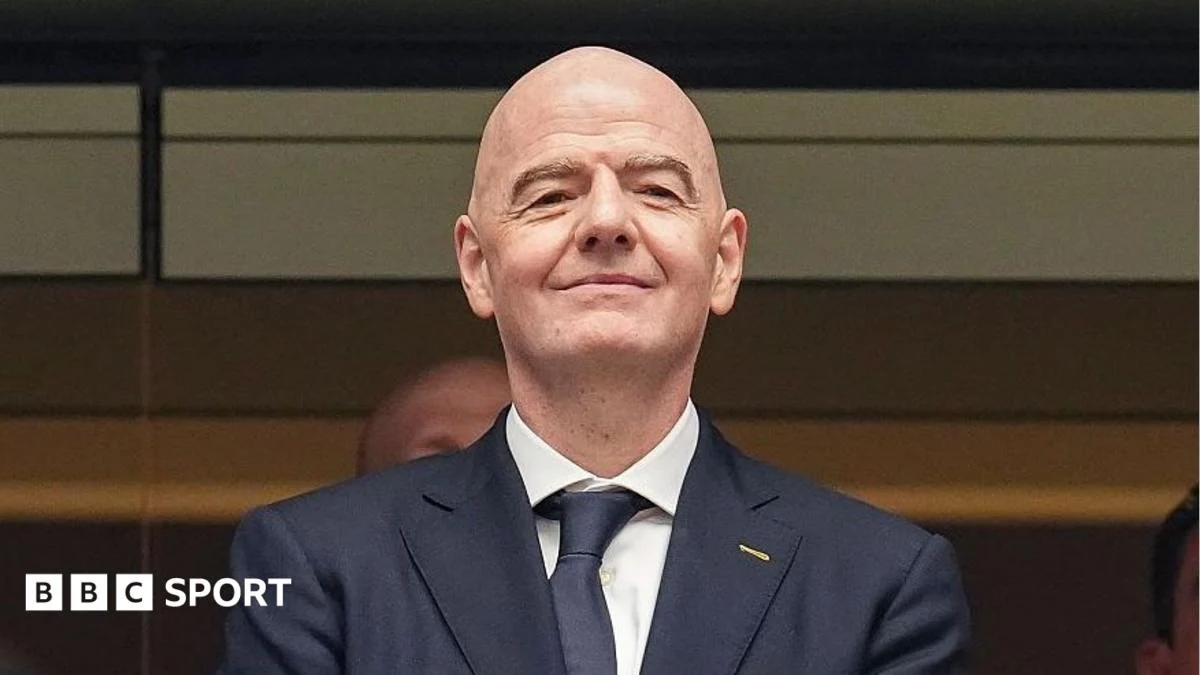
UEFA is resolute in its pursuit to unseat FIFA President Gianni Infantino, even as it has rescinded the threat of boycotting international football competitions. The European football confederation, alongside Europe’s representatives on the FIFA Council, will formally present a letter on Thursday that guarantees the controversial FIFA Forward Enterprise (FFE) plan will not be resurrected. This significant shift, with the official removal of the boycott to be confirmed at UEFA’s executive committee meeting in Monaco, addresses UEFA’s primary demand, ensuring the FIFA U-20 Women’s World Cup can proceed next week in Poland with six European teams participating.
However, the withdrawal of the boycott does not signal an end to UEFA’s challenge. Sources indicate that UEFA remains confident in its ability to rally support for a unity candidate to stand against Infantino when his presidency comes up for re-election in March. The upcoming election, requiring a majority of 106 out of 211 member associations to secure victory, is anticipated to be a closely contested affair. Despite this ongoing opposition, UEFA has abandoned the more extreme tactic of attempting to force a vote of no confidence, a motion that would have required an improbable 159 votes, a three-quarters majority of member associations, to pass.
While no definitive candidate has yet emerged to challenge Infantino, Concacaf president Victor Montagliani is reportedly being considered a serious contender. The nomination window closes on November 18th, leaving a critical period for UEFA and its allies to consolidate support and identify a viable challenger. Even if Infantino were to win re-election, the expectation is that a closely fought contest could significantly undermine his authority and legitimacy, potentially casting a long shadow over his presidency.
The initial threat of a boycott stemmed from a decision made last month by UEFA’s 55 member associations. They voted unanimously to suspend participation in all FIFA competitions until the FFE proposal was definitively withdrawn and binding assurances were provided that FIFA would never again open its governance or competitions to private ownership. Following the boycott’s retraction, FIFA expressed its satisfaction, stating it was "pleased that all qualified teams will be participating in the upcoming Under-20 Women’s World Cup." Six European nations – England, France, Italy, Portugal, Spain, and co-hosts Poland – are slated to compete in the tournament. A FIFA spokesperson reiterated the organization’s belief in football’s unifying power and its commitment to developing the sport in close collaboration with confederations and stakeholders.
The Genesis of the Conflict: FIFA Forward Enterprise and UEFA’s Concerns
The protracted dispute between UEFA and FIFA President Gianni Infantino is deeply rooted in the FIFA Forward Enterprise (FFE) plan. This ambitious initiative, unveiled by FIFA, proposed a new commercial model for international football that would involve private investment and potentially lead to the privatization of certain FIFA competitions and governance structures. For UEFA, a confederation that has historically championed a more democratically governed and member-driven football ecosystem, the FFE represented a fundamental threat to the principles of football governance.
UEFA’s primary apprehension revolved around the potential for private ownership to dilute the influence of national federations and confederations, thereby compromising the integrity and equitable distribution of football’s revenues. The organization feared that such a shift could lead to decisions being driven by commercial interests rather than the best interests of the sport and its global fanbase. The potential for private entities to exert undue influence over competition formats, commercial rights, and even the allocation of development funds was a significant point of contention.
The timeline of events leading to the boycott threat and subsequent withdrawal underscores the evolving dynamics of this power struggle. The FFE proposal itself was the catalyst, sparking internal discussions and growing unease within UEFA’s member associations.
Key Chronological Milestones:
- Early to Mid-2023: Reports emerge of FIFA exploring new commercial models, including the potential for private equity involvement, leading to initial concerns within UEFA.
- September 2023: FIFA formally presents the FIFA Forward Enterprise (FFE) plan, sparking widespread debate and apprehension among member associations, particularly within UEFA.
- October 2023: UEFA’s 55 member associations hold an emergency meeting and vote to boycott all FIFA competitions if the FFE proposal is not unequivocally withdrawn and assurances against future privatization are not provided.
- Late October/Early November 2023: Intense negotiations and diplomatic efforts take place between UEFA and FIFA. The threat of a widespread boycott looms large, impacting upcoming FIFA tournaments.
- November 2023 (Week of the Article): UEFA announces the withdrawal of its boycott threat, citing assurances from FIFA regarding the FFE plan. However, UEFA simultaneously declares its continued intent to challenge Infantino’s presidency through alternative means.
- November 2023 (Thursday): UEFA and its European FIFA Council members are set to present a formal letter to FIFA, guaranteeing the non-revival of the FFE plan.
- November 2023 (Monaco): UEFA’s executive committee meeting is scheduled to officially confirm the withdrawal of the boycott.
- November 18, 2023: Deadline for nominations for candidates to challenge Infantino for the FIFA presidency.
- March 2024: FIFA presidential election is scheduled.
The decision to withdraw the boycott, while strategically significant, represents a calculated move by UEFA. It demonstrates a willingness to de-escalate immediate operational disruptions to focus on a longer-term political strategy. By securing the immediate withdrawal of the FFE, UEFA has achieved a critical objective, paving the way for the FIFA U-20 Women’s World Cup to proceed and averting a crisis for the participating teams and the tournament itself.
The Presidential Election: A Battle for FIFA’s Future
The upcoming FIFA presidential election in March 2024 has become the focal point of UEFA’s challenge to Gianni Infantino’s leadership. While the immediate crisis of the FFE plan has been averted, the underlying tension and desire for change within UEFA remain palpable. The confederation’s strategy has shifted from direct confrontation through boycotts to a more nuanced political campaign aimed at unseating Infantino through the electoral process.
The requirement for 106 votes for victory means that securing a majority will necessitate broad support from across FIFA’s diverse membership. UEFA, representing a significant bloc of influential European nations, is actively seeking to build alliances with other confederations and individual member associations. The identification of a credible unity candidate is paramount to this strategy. A candidate who can articulate a compelling vision for the future of global football and garner widespread appeal across different continents will be crucial.
Potential Candidates and the Nomination Process:
- Victor Montagliani (Concacaf President): Currently serving as the president of the Confederation of North, Central American and Caribbean Association Football (Concacaf), Montagliani is mentioned as a potential contender. His leadership within a major confederation provides him with significant experience and a platform to build support.
- Nomination Deadline: November 18, 2023. This date is critical, as it marks the cutoff for any aspiring candidate to formally submit their nomination. Candidates typically require the endorsement of at least five member associations to be eligible.
The election is not merely a popularity contest; it is a battle for the soul of FIFA. UEFA’s objective is to install a leader who prioritizes member-driven governance, transparency, and equitable development over what they perceive as Infantino’s increasingly centralized and commercially driven approach. The ramifications of the election extend far beyond the presidency itself, influencing FIFA’s policies, financial distribution, and overall direction for years to come.
Analysis of the Election Dynamics:
- Close Contest Anticipated: Intelligence suggests that the election is expected to be extremely close. This implies that even a narrow victory for Infantino could be perceived as a weakening of his mandate, potentially leading to increased internal dissent and challenges during his tenure.
- Legitimacy Concerns: If Infantino secures re-election with a slim margin, his legitimacy as president could be severely compromised. This could create a climate of instability within FIFA, making it more difficult to implement long-term strategies and maintain global unity.
- Strategic Importance of Candidate Identification: The success of UEFA’s challenge hinges on its ability to identify and rally support behind a candidate who can present a credible alternative to Infantino’s leadership. This requires not only political acumen but also a clear understanding of the diverse needs and aspirations of FIFA’s global membership.
External Voices and Divided Opinions
The debate surrounding FIFA’s leadership and direction has resonated beyond the corridors of power, with former players also expressing their views. This division highlights the multifaceted perspectives on Infantino’s presidency and the future of football governance.
On one side, a group of prominent former players has publicly called for change at the helm of FIFA. Mikael Silvestre, a former Manchester United and France defender and a member of FIFA’s Players’ Voice Panel, articulated this sentiment with a strong statement on X, titled "Enough is Enough!". His post garnered support and was shared by notable figures such as England defender Lucy Bronze, France’s 1998 World Cup winner Emmanuel Petit, and former England goalkeeper David James. This collective voice from within the playing community adds significant weight to the calls for reform and suggests a growing dissatisfaction with the current FIFA administration.
Conversely, another group of former players, officially recognized by FIFA as "FIFA Legends," has publicly endorsed Gianni Infantino. These include World Cup-winning Brazil captain Cafu, former Italy striker Christian Vieri, ex-Portugal captain Pepe, and former Argentina international Esteban Cambiasso. Their statements, shared on social media, emphasize their belief in the positive evolution of the game under Infantino’s leadership.
Christian Vieri’s statement, in particular, highlighted the perceived improvements in player representation and the overall development of football over the past decade. He stated, "Over the past 10 years, we have seen the work Fifa and President Infantino have done to create representativity for players in football, which did not exist. We will remain available to support the great evolution our game has seen this past decade, so that it keeps reaching and benefiting people of every country that plays football all around the world."
This divergence in opinions among former players underscores the complexity of the situation. While some see a need for fundamental change and a return to more traditional governance principles, others believe that Infantino’s reforms have been beneficial for the sport, particularly in terms of global reach and player advocacy. The "FIFA Legends" endorsement, coming from individuals officially recognized by the governing body, provides a counter-narrative to UEFA’s criticisms and suggests that Infantino retains a degree of support within certain influential circles.
The broader implications of this internal conflict and the upcoming election are significant. The direction FIFA takes in the coming years will shape the future of professional football, its commercial landscape, and its equitable development across the globe. UEFA’s persistent challenge, even without the leverage of a boycott, signals a deep-seated disagreement on the fundamental principles of football governance, a disagreement that is likely to continue to define the sport’s political landscape.