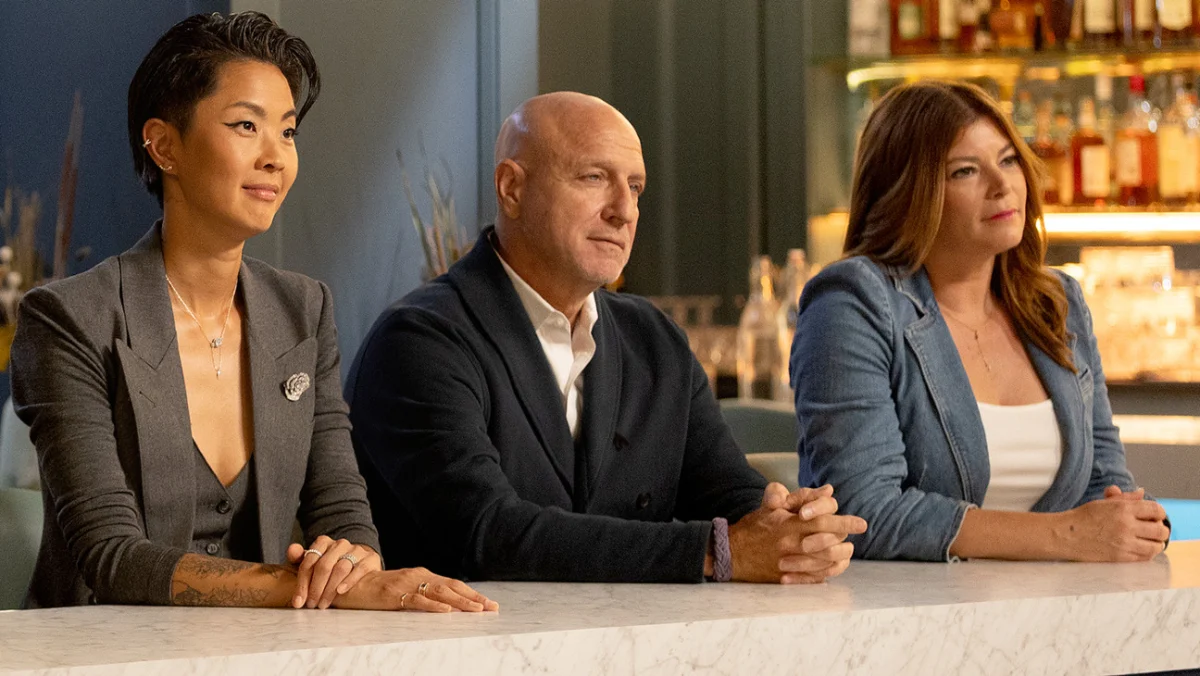
The acclaimed Bravo culinary competition series, Top Chef, is once again a strong contender at the upcoming Emmy Awards, securing multiple nominations that highlight its enduring quality and impact on the reality television landscape. With a remarkable 57 Emmy nominations amassed over its 23-season run, the show’s last win in the prestigious Best Reality Competition Program category dates back to 2010. This year, Top Chef faces stiff competition in that same category, alongside nominations for Best Reality Host for Kristen Kish, its third-time host, as well as for Best Casting and Directing for a reality series.
The show’s veteran judges, Tom Colicchio and Gail Simmons, have ardently argued that Top Chef‘s consistent recognition is not merely a testament to its longevity, but a reflection of its inherent complexity and demanding production standards, which they contend set it apart from many of its genre peers. In recent discussions with The Hollywood Reporter, both Colicchio and Simmons elaborated on the intricate logistical and creative challenges that define the Top Chef experience, emphasizing that its on-location filming and high-stakes culinary execution demand a level of production rarely seen in studio-bound reality programs.
The Demands of On-Location Production
Tom Colicchio articulated a clear distinction between the production of Top Chef and other reality competition series. "Our show is not done in a studio," Colicchio stated. "It’s much easier to shoot a show in the studio. We shoot maybe one or two episodes when we stay in the studio. But we’re out on location. We’ve got to pick up and build a kitchen, move 150 people on a crew, trucks, and it’s hard to do." He contrasted this with programs filmed on constructed sets, noting, "Some of the other shows, you’re in a castle. You’re on a set. It’s a good show, but still, it’s a set." This emphasis on the physical demands of building and dismantling elaborate kitchen setups in diverse environments underscores the significant logistical undertaking each season represents.
Gail Simmons echoed this sentiment, highlighting the inherent risks and complexities associated with the show’s on-location format. "It’s a more complicated show to shoot than a lot of other shows in the category, if I may say, and we’re on location in a different place every season," she explained. The recently nominated season 23, which filmed across North Carolina and Greenville, South Carolina, served as a prime example of these challenges. Simmons elaborated, "This is not a studio show, and we’re dealing with perishables and knives and fire at all times. And I think sometimes that gets forgotten." The constant presence of volatile elements—food that spoils, sharp implements, and open flames—necessitates rigorous safety protocols and a highly skilled crew, adding layers of complexity beyond typical studio productions.
A Season of Unforeseen Challenges
Beyond the standard production hurdles, the 23rd season of Top Chef presented its own unique set of difficulties. Simmons recalled a particularly demanding period for both the production team and the contestants. "It wasn’t an easy season to shoot, not just for us but for our cast. There were casualties along the way, not just eliminations," she revealed. This alluded to instances where contestants faced significant physical or emotional strain, including one participant who had to withdraw mid-season due to an aggravated injury. "It was hard. It was hard for a lot of reasons, but I think our producers do a really incredible job piecing the jigsaw puzzle together," Simmons added, acknowledging the masterful editing and narrative construction required to present a coherent and compelling season under such circumstances.
The season also showcased moments of profound human connection and empathy, particularly a memorable interaction early on. Host Kristen Kish, in her third season at the helm, demonstrated remarkable compassion by comforting contestant Nana Araba, who was visibly upset after failing to plate all components of her dish. This moment exemplified the genuine emotional depth that Top Chef often captures, moving beyond simple competition to explore the personal journeys and vulnerabilities of its chefs.
The Evolution of Host Kristen Kish
Kristen Kish, a former Top Chef winner herself, has increasingly embraced her role as host, allowing her authentic personality to shine through. She likens her growing comfort and effectiveness in the role to a muscle being exercised. "It’s not that I get stronger in one particular place," Kish explained. "The thing that I get stronger in is feeling confident of being fully myself in all the different ways, because every season is different, every challenge is different, every batch of chefs brings a new kind of energy that I have to react to. It is reality television at its finest. It’s happening in real time. I don’t go and spit out a line and then I do the same thing over and over and over again. I react and I feel whatever is happening in the room at the time." This improvisational and responsive hosting style contributes significantly to the show’s genuine feel, aligning perfectly with its real-time, high-pressure environment.
Camaraderie Over Cutthroat Competition
A defining characteristic of Top Chef, differentiating it from many other reality competition series, is the palpable sense of camaraderie among the chefs. While they are ultimately competing against one another, a strong current of mutual support and constructive feedback often prevails. Tom Colicchio attributes this shift to an evolving culinary industry and the influence of the show itself. "I think [the culinary] industry’s changed a little bit. It’s a lot less cutthroat than it used to be," he observed. "But also I think that a lot of these chefs have watched Top Chef now or they grew up watching, and they think, ‘I’m not going to be that person. They don’t want to be that person, and I think they realize that you don’t have to be backstabbing to win this."
Colicchio emphasized the core focus of the competition: the food. "Backstabbing someone is not going to help you make your dish better. That’s what you have to focus on. Make your dish better. Forget what everybody else is doing," he advised. This philosophy has become increasingly evident over the past five to six seasons, fostering an environment that more closely resembles a professional kitchen where collaboration is key to success. "And it’s been the last five or six seasons where you get a real sense that they’re treating it like more like a kitchen because in a kitchen everybody works together. If you don’t work together, you’re going to have terrible service. And I think they all are realizing that it’s going to be a much better experience if they support each other than if they’re fighting each other. Ultimately, they want to win. I think they want to win on their own terms, making the best food."
The Reign of Rhoda Magbitang
The most recent season, 23, culminated in the victory of Rhoda Magbitang, whose consistent culinary excellence secured her the title. Colicchio was unequivocal about the basis of her win: "We don’t judge on personality; we don’t judge on looks. We judge on food. Her food was consistently the best food." He further elaborated, "At the end she came on really strong, put up some great dishes and her finale meal was the best meal."
Gail Simmons provided further insight into Magbitang’s exceptional performance, highlighting her ability to articulate her culinary vision and connect her dishes to her personal narrative. "She was always incredibly articulate about her food and how she came to be cooking the way she is, her story, her childhood, her family, and she always just had a great sort of confidence about her cooking style and her abilities, and I really appreciated that," Simmons stated. "Her food? I think she has a knack for putting together beautiful flavors. They’re spicy and complex and interesting, and they rely on a lot of deep techniques, some of which I’m not even familiar with. I think the most successful chefs on our show, the winners certainly, really internalize the food that they grew up on, make it personal and then differentiate the way they cook it from anyone else who’s also trying to cook the same food."
The Enduring Cultural Significance of Top Chef
Both Simmons and Colicchio, having been integral judges for all 23 seasons, recognize Top Chef‘s profound influence on the culinary industry. Colicchio views the show as a vital institution, on par with prestigious awards like the James Beard Awards or Food & Wine’s Best New Chef accolades. "‘[Top Chef has] become culturally really important to the culinary industry,’" he told THR. "‘And so we want to keep it going because it’s that important. It’s as important as a [James] Beard Award or a Food & Wine best new chef award. You win Top Chef; that’s a big feather you’re putting in your cap. And you know what it does for the chefs; it gives them a real showcase. And what happens afterwards is makes it easier to raise money, especially the demographics that have always had a hard time raising money in the industry, and open your own restaurant, and that’s usually the goal: They want to open their own restaurant and do their thing. My goal is to just keep doing this for our industry. I think if we ever go away, that’s one less thing. It’s like the Beard Award. If all of a sudden they stop doing it, what am I shooting for now?’"
Simmons offered a broader perspective on the show’s impact, emphasizing its role in shaping perceptions and fostering appreciation for the culinary world. "I think what I want to keep doing, what Top Chef does so well, and I give that credit to our producers and to Bravo, is to evolve people’s perceptions of what good food is, and to evolve people’s perceptions of diversity and expand people’s ideas of travel and compassion, and also just highlight an industry where there’s a lot of people working really hard behind the scenes that most of us take for granted when we eat every day. There’s endless locations. There’s endless great young chefs in this world, and I want to see them all succeed."
Looking Ahead to Season 24
The announcement of Top Chef‘s renewal for a 24th season at Bravo’s May upfronts has generated considerable excitement. While Kristen Kish, Tom Colicchio, and Gail Simmons are all confirmed to return, details regarding the location and production schedule for the upcoming season remain under wraps. Simmons indicated a slight shift in the typical production timeline, noting, "Usually, we start shooting right around now, and this year we’re pushing it back a couple months, which is great." She clarified that this delay is due to broader programming schedules rather than any issues with the show itself, affording her a rare summer break and the opportunity to attend her children’s school events. "We know there will be a season 24 in 2027, and I can’t wait to make it," she added.
Kish, while sworn to secrecy about specific details, expressed immense enthusiasm for the forthcoming season. "All I can say is that it’s just it’s going to be incredible not only for us to to live through, but also I can’t wait for people to watch," she teased, suggesting that the delay will become apparent and understandable once the new location is revealed.
Potential Future Destinations
When asked for potential future filming locations, Simmons presented a list of aspirational destinations, acknowledging that current plans lean towards domestic settings. "If I really have my druthers, I want to go to Tokyo. We’re not going to Tokyo. We’re going to stay domestic, I believe," she stated. However, she highlighted numerous domestic cities ripe for exploration, including Atlanta, Philadelphia, and a return to Chicago, which last hosted the show in season four, nearly two decades ago. Nashville and various Midwestern locations also feature on her wish list, as does a deeper exploration of the Southwest beyond Tucson, specifically New Mexico. Simmons believes these culturally rich and diverse locations offer fertile ground for compelling storytelling and exceptional culinary experiences that audiences can benefit from discovering. The continued success and critical acclaim of Top Chef suggest that its journey of culinary exploration and Emmy contention is far from over.