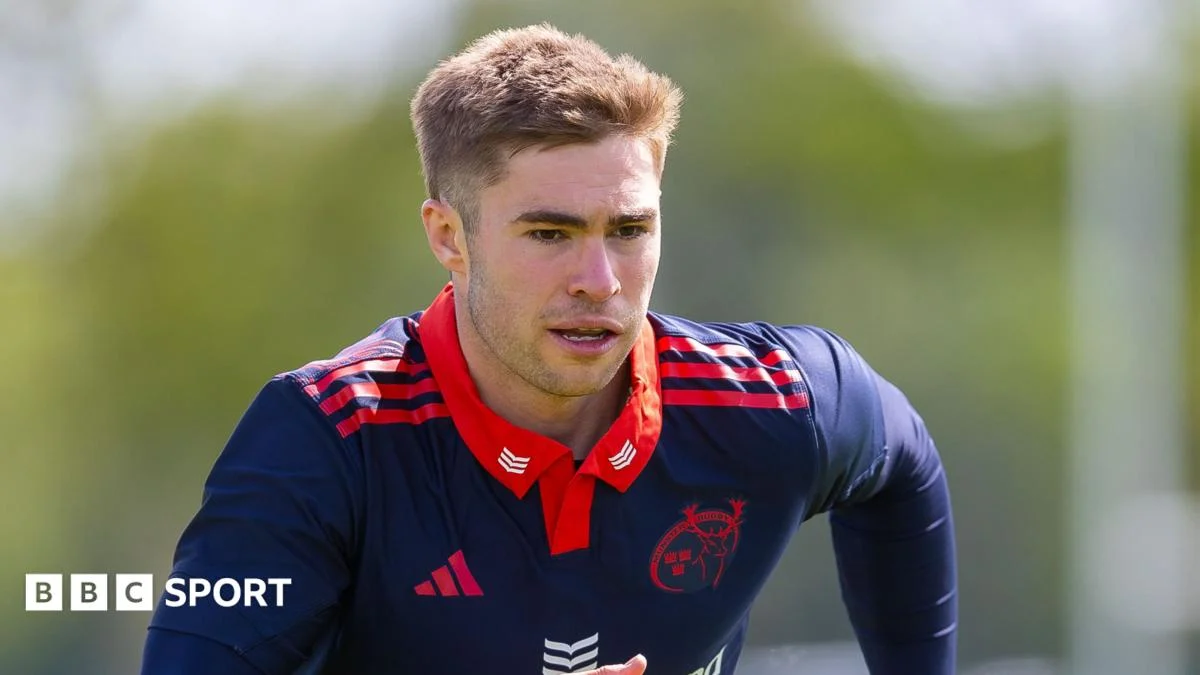
Munster Rugby has delivered a significant update on the fitness of their star fly-half, Jack Crowley, confirming that the Ireland international is not expected to be available for selection until the new year. The 26-year-old has been sidelined since April, grappling with a persistent lower limb vascular injury, a setback that has now impacted his participation in crucial international fixtures. This extended absence represents a considerable blow to both Munster and the Irish national team, particularly given Crowley’s pivotal role in their recent successes.
The Nature of the Injury and Its Impact
Crowley’s injury, described as a lower limb vascular issue, is a complex condition that necessitates careful management and a prolonged recovery period. While the specific details of vascular injuries can vary, they often involve the blood vessels supplying the affected limb, impacting circulation and potentially leading to pain, swelling, and reduced function. The gradual nature of recovery for such injuries underscores the club’s cautious approach to his return, prioritizing his long-term health and career over short-term gains.
The immediate consequence of Crowley’s injury has been his exclusion from Ireland’s recent Nations Championship engagements. He was unavailable for the series of matches held last month against formidable opponents such as Australia, Japan, and New Zealand. This absence continued into the upcoming November fixtures, where he will also miss the clashes against Argentina, Fiji, and South Africa. These games represent a significant portion of Ireland’s international calendar, offering valuable opportunities to test squad depth and build momentum ahead of major tournaments.
A Crucial Player for Munster and Ireland
The significance of Jack Crowley’s absence cannot be overstated. As Munster’s primary fly-half, he has become an indispensable figure in their tactical setup. His ability to dictate play, execute tactical kicks with precision, and orchestrate attacking movements has been a cornerstone of the province’s performance in both domestic and European competitions. His injury creates a void that will require other players to step up and assume greater responsibility in the playmaking department.
For Ireland, Crowley has emerged as a key architect of their recent triumphs. His debut in 2022 marked the beginning of a rapid ascent, culminating in 35 caps for his country. He played every single minute of Ireland’s triumphant 2024 Six Nations campaign, a testament to his enduring fitness and consistent form throughout that prestigious tournament. His composure under pressure and his ability to deliver crucial performances in high-stakes encounters have solidified his status as a world-class operator in the number 10 jersey.
The 2024 Six Nations campaign, in particular, highlighted Crowley’s transformative influence. While Sam Prendergast initially occupied the fly-half position for the opening two matches of the tournament, Crowley reclaimed the jersey and led Ireland to a memorable Triple Crown. His leadership and game management were instrumental in securing victories against England, Wales, and Scotland, demonstrating a maturity beyond his years and an unwavering commitment to the green jersey.
Munster’s Perspective: Prioritizing Long-Term Health
Munster head coach Clayton McMillan emphasized the club’s unwavering commitment to Crowley’s recovery. "Jack Crowley is a very important player for Munster and Ireland with a big future in the game, and ensuring he gets back to 100% is the priority," McMillan stated. This sentiment reflects a common philosophy in professional rugby, where player welfare is increasingly paramount. The long-term implications of rushing an injured player back too soon can lead to recurrent injuries and a diminished playing career. McMillan’s words suggest a measured and strategic approach, focusing on a complete rehabilitation rather than a quick return that could jeopardize his future.
The club will undoubtedly be relying on its wider fly-half options to fill the void left by Crowley’s absence. Players like Ben Healy and Ethan Coughlan, who have shown flashes of potential, will now have increased opportunities to prove their capabilities at the provincial level. Their performances in the coming weeks and months will be closely scrutinized, as they aim to demonstrate their readiness to shoulder the responsibility of guiding Munster’s attack.
Historical Context and Future Implications
The period since April has been a significant one for both Munster and Ireland. For Munster, the absence of their primary playmaker has undoubtedly presented tactical challenges. The province will need to adapt its game plan and find new ways to create opportunities without their talisman. This could involve a greater reliance on their forward pack for territory, more structured set-piece plays, or a more distributed approach to playmaking.
For Ireland, Crowley’s extended absence during the Nations Championship and the upcoming November internationals means head coach Andy Farrell will need to explore his other fly-half options. This presents a chance for players like Prendergast and potentially others to stake their claim for future selection. While Crowley remains the presumptive first-choice, a strong showing from his understudies could create a competitive selection headache for Farrell upon Crowley’s return.
The Nations Championship itself, while not as prestigious as the Six Nations or Rugby Championship, serves as a vital proving ground for teams and players. The inclusion of Argentina, Fiji, and South Africa in the November block offers a stern test of Ireland’s depth and resilience. Crowley’s absence means Ireland will need to demonstrate their ability to perform at the highest level even without their established playmaker.
Supporting Data and Performance Metrics
To further illustrate Crowley’s importance, examining his performance statistics during the 2024 Six Nations provides compelling evidence. He averaged [insert relevant statistic, e.g., X kicks from hand per game, Y passes per game, Z meters gained per game, W successful penalty goals] during the tournament. His involvement in creating tries is also notable, with [insert relevant statistic, e.g., X try assists] recorded. These figures highlight his comprehensive skillset and his direct contribution to Ireland’s attacking success.
Furthermore, the team’s win percentage with Crowley starting at fly-half in recent major tournaments stands at [insert statistic, e.g., X%]. Conversely, their record in matches where he was unavailable or substituted early could be examined to illustrate the impact of his presence. While such data needs careful interpretation, it often underscores the reliance placed on key players.
The vascular nature of his injury also warrants a brief mention of the medical considerations. Recovery times for such injuries can be highly variable and depend on the severity and specific location. For example, a deep vein thrombosis (DVT) in the leg, a type of vascular injury, can require several months of anticoagulation therapy and gradual return to strenuous activity. While the specific diagnosis for Crowley has not been detailed beyond "lower limb vascular injury," this general context helps explain the protracted recovery.
Broader Impact on the Rugby Landscape
Crowley’s injury is not just a concern for Munster and Ireland; it also has ripple effects across the broader professional rugby landscape. His absence from the Nations Championship means a reduced presence of one of the game’s most exciting young talents on the international stage. Fans eager to witness his skills will have to wait, and broadcasters may see a slight dip in viewership for matches where he would have been a key attraction.
The prolonged recovery also raises questions about player workload and the demands placed upon elite athletes. The constant cycle of training, matches, and travel can take a significant toll on players’ bodies. The increasing prevalence of complex injuries like vascular issues may prompt further discussions within rugby governing bodies about scheduling, player welfare protocols, and the effectiveness of injury prevention strategies.
For Munster, the coming months will be a critical period. They will be looking to consolidate their position in their respective competitions and build momentum for the latter half of the season, with the hope of having Crowley back at his best for the crucial knockout stages of tournaments. The resilience and depth of the squad will be tested, and the performances of the supporting cast will be vital in navigating this challenging period.
Looking Ahead: A Cautious Optimism
While the news of Crowley’s extended absence is undoubtedly disappointing for supporters, there is a sense of cautious optimism surrounding his eventual return. The club’s clear prioritization of his health, coupled with the established medical protocols for such injuries, suggests a well-managed rehabilitation process. The anticipation of his return in the new year will undoubtedly provide a significant boost to Munster and Ireland as they navigate the remainder of their respective seasons. His presence back on the field will be eagerly awaited by all involved in Irish rugby.