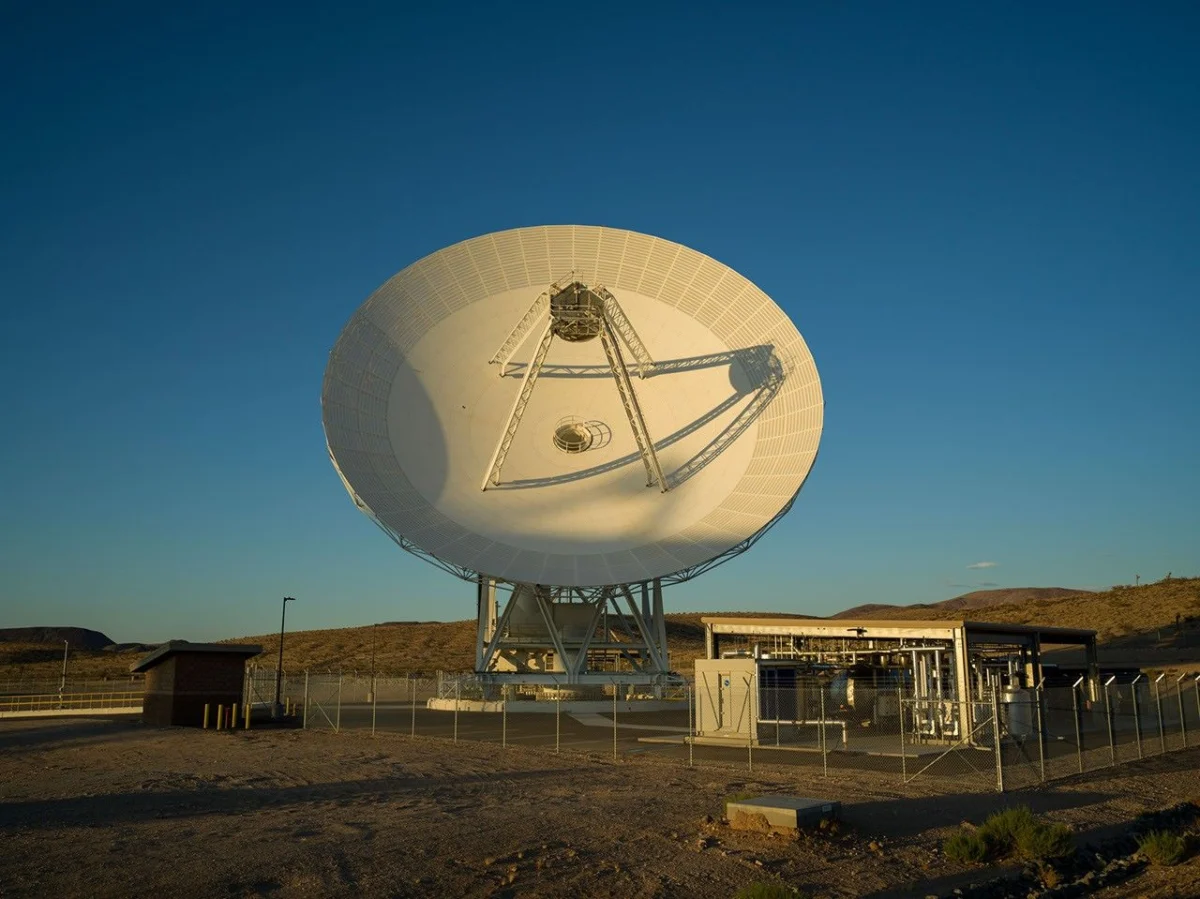
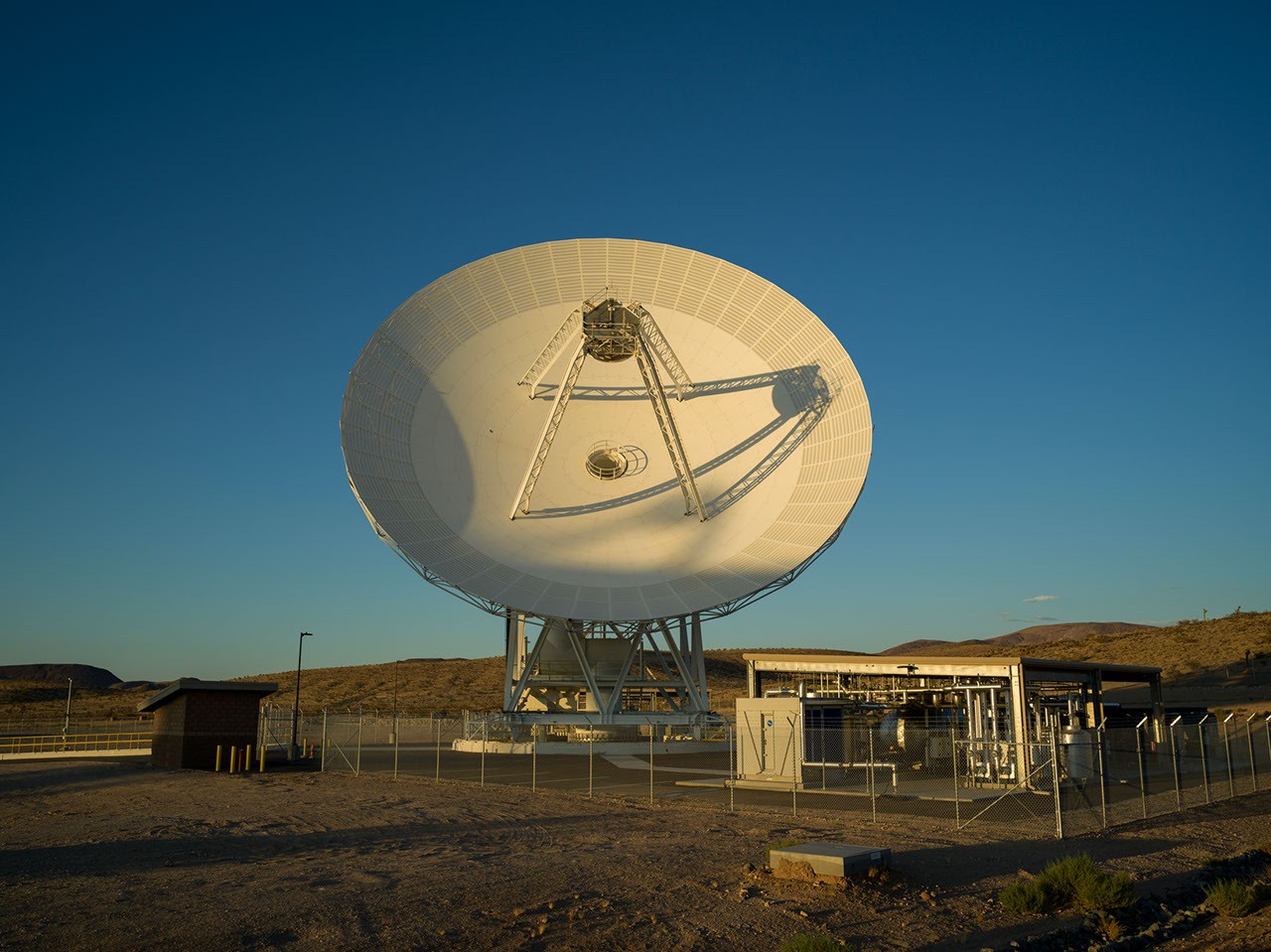
The vast, arid landscape near Barstow, California, became the focal point of humanity’s enduring quest for cosmic understanding in August 2026, with the official completion and ceremonial ribbon-cutting of Deep Space Station 23 (DSS-23). This monumental 34-meter (114-foot) multifrequency beam-waveguide antenna represents a critical upgrade to NASA’s Deep Space Network (DSN), promising to bolster communication capabilities with far-flung spacecraft for decades to come. The event, held on August 25, 2026, saw a gathering of NASA leadership, personnel, and distinguished guests celebrating a milestone in global space communications infrastructure. Long shadows cast by the colossal dish against the clear blue desert sky served as a powerful visual testament to the profound reach of human ingenuity, extending our senses across the solar system and beyond.
The inauguration of DSS-23 at the Goldstone complex marks a pivotal moment in the ongoing evolution of the Deep Space Network, which serves as the indispensable digital umbilical cord connecting Earth to its robotic emissaries exploring the cosmos. This new antenna is not merely an addition; it is an enhancement, designed to handle the ever-increasing volume and complexity of data generated by advanced scientific missions. Its integration into the network is expected to provide greater bandwidth, improved signal sensitivity, and enhanced reliability, all crucial elements for the next generation of deep space exploration, from the icy moons of Jupiter to the ancient terrains of Mars and the distant frontiers of the Kuiper Belt.
A Global Network for Cosmic Connections
The Deep Space Network is arguably one of humanity’s most extraordinary feats of engineering and international collaboration. Established in 1958, born from the Jet Propulsion Laboratory’s (JPL) pioneering work on the Explorer 1 mission, the DSN has evolved into a global constellation of colossal radio antennas strategically positioned approximately 120 degrees apart around the world. These three primary complexes – Goldstone in California, Madrid in Spain, and Canberra in Australia – ensure continuous, 24/7 communication with spacecraft as Earth rotates, providing an uninterrupted link for command, telemetry, and scientific data transmission.
The DSN’s importance cannot be overstated. It is the sole means by which NASA can track, send commands to, and receive invaluable scientific data from its deep space missions, which operate beyond Earth’s geosynchronous orbit. From the Voyager probes, which have now ventured into interstellar space for over four decades, to the Mars Perseverance rover currently exploring Jezero Crater, and upcoming ambitious projects like the Europa Clipper, the DSN is the bedrock of virtually every deep space mission. Without its intricate web of communication, the vast majority of our knowledge about the solar system and beyond would remain forever out of reach. The network currently supports hundreds of missions, both active and dormant, a testament to its incredible versatility and enduring operational lifespan.
Modernizing the DSN: The Aperture Enhancement Project
The completion of DSS-23 is a direct outcome of the Deep Space Network’s Aperture Enhancement Project (AEP), an ambitious initiative launched in 2009. The AEP was conceived in response to several critical factors: the increasing number of deep space missions, the exponential growth in scientific data volumes, the aging infrastructure of some older DSN antennas, and the imperative to ensure future redundancy and reliability. The project’s overarching goal was to upgrade and expand the network by adding six new 34-meter multifrequency beam-waveguide antennas across its three global complexes.
This multi-year, multi-billion-dollar endeavor represents a significant strategic investment by NASA in its core communication infrastructure. The DSN, managed by NASA’s Jet Propulsion Laboratory, a division of Caltech, for the agency’s Space Communications and Navigation (SCaN) Program, recognized the need to proactively prepare for the demands of 21st-century space exploration. The decision to add six new 34-meter antennas, rather than solely relying on the larger 70-meter dishes, was driven by a balance of cost-effectiveness, operational flexibility, and technological advancements. While the 70-meter antennas offer unparalleled sensitivity for the most distant missions, the 34-meter beam-waveguide dishes provide robust capabilities for a wider array of missions, often operating simultaneously, and with greater agility in switching between different frequencies.
The AEP has been a phased rollout, with DSS-23 joining a growing number of enhanced antennas already commissioned at Goldstone, Madrid, and Canberra. Each new antenna represents not just a physical structure, but an integration of cutting-edge technology designed to meet the rigorous demands of deep space communication. The project’s timeline, stretching over nearly two decades, underscores the complexity and long-term planning involved in developing and deploying such critical national infrastructure. Each new dish added to the network represents a substantial boost in total receiving area, directly translating into higher data rates and improved signal acquisition, even from spacecraft operating billions of miles away.
Engineering Excellence: The Power of Beam-Waveguide Technology
At the heart of DSS-23’s advanced capabilities lies its beam-waveguide (BWG) technology. Unlike older antenna designs where sensitive electronic receivers were often mounted directly at the antenna’s focal point – exposed to the elements and requiring specialized maintenance access – BWG antennas employ a series of mirrors to reflect radio signals down into a subterranean vault. This innovative design allows for the housing of highly sensitive receiving and transmitting equipment in a controlled, climate-stable environment, significantly improving performance and simplifying maintenance.
The advantages of beam-waveguide technology are manifold. By protecting the electronics from temperature fluctuations, dust, and moisture, BWG antennas reduce signal noise, leading to clearer, stronger signals from distant spacecraft. This directly translates into higher data rates and more reliable communication links. Furthermore, the accessible nature of the equipment in the underground vault allows for easier upgrades and repairs, minimizing downtime and extending the operational lifespan of the antenna. The multifrequency capability of DSS-23 is also a key benefit, allowing it to communicate across different radio frequency bands, such as X-band and Ka-band. Ka-band, in particular, offers significantly higher data rates compared to traditional S-band or X-band, crucial for transmitting high-resolution images and complex scientific datasets from future missions. This versatility ensures that DSS-23 can support a diverse portfolio of missions with varying communication requirements, optimizing network resources.
Voices from the Frontier: Leadership and Vision
The completion of DSS-23 was met with widespread acclaim from NASA leadership and the broader scientific community, highlighting its strategic importance. During the ribbon-cutting ceremony, inferred statements from senior officials underscored the antenna’s role in securing the future of space exploration.
"The inauguration of Deep Space Station 23 is more than just the unveiling of a new piece of hardware; it is a reaffirmation of NASA’s unwavering commitment to scientific discovery and human ingenuity," stated a senior representative from NASA Headquarters, emphasizing the long-term vision. "This antenna will serve as a vital lifeline for missions that will redefine our understanding of the universe, bringing back data that will inspire generations and pave the way for humanity’s eventual journey to Mars and beyond."
The Director of NASA’s Jet Propulsion Laboratory, responsible for the DSN’s management, likely highlighted the dedication and technical prowess behind the project. "The teams at JPL, alongside our partners, have once again demonstrated unparalleled engineering excellence," the Director might have remarked. "Building and integrating an antenna of this magnitude, capable of reaching across billions of miles, requires meticulous planning, relentless innovation, and an incredible spirit of collaboration. DSS-23 is a testament to their dedication, and it significantly strengthens the backbone of our deep space communications."
Similarly, the SCaN Program Manager would have focused on the network’s strategic value. "The Deep Space Network is a national asset, a critical enabler for all of NASA’s deep space endeavors," the manager might have explained. "With DSS-23 now fully operational, we are better equipped than ever to handle the demands of increasingly ambitious missions, ensuring robust and reliable communication channels for scientific data, critical commands, and navigation information. This investment guarantees that the DSN will continue to be the gold standard for deep space communication for decades to come."
Local dignitaries from the Barstow region also expressed pride in hosting such a vital scientific installation. "The Goldstone Deep Space Communications Complex has been an integral part of our community for many years, a source of local pride and a beacon of scientific advancement," a representative from the local government might have commented. "The addition of DSS-23 not only solidifies Goldstone’s role as a global leader in space communications but also continues to provide economic benefits and inspire local students to pursue careers in STEM."
Powering the Next Generation of Deep Space Missions
The operationalization of DSS-23 carries profound implications for the future trajectory of space exploration. As missions become more sophisticated, they generate unprecedented amounts of data – high-resolution imagery, spectral analyses, atmospheric readings, and geophysical measurements. For instance, upcoming missions such as the Europa Clipper, designed to investigate Jupiter’s ocean moon for signs of life, will require immense data downlink capabilities to transmit detailed observations from the radiation-rich environment of Jupiter. Similarly, the Mars Sample Return campaign, an ambitious multi-mission effort to bring Martian rock and soil samples back to Earth, will rely heavily on robust and consistent communication links throughout its complex phases, from sample collection to rendezvous and return.
DSS-23’s enhanced capacity will directly contribute to the success of these and other future endeavors. By providing higher data rates, it enables scientists to receive more information faster, accelerating the pace of discovery. Its multifrequency capabilities allow for greater flexibility in mission design, accommodating diverse instrumentation and operational scenarios. Furthermore, its contribution to the overall DSN capacity enhances redundancy, meaning that if one antenna experiences technical issues or is undergoing maintenance, other antennas, including DSS-23, can step in to ensure continuous communication, minimizing critical data loss or operational delays. This resilience is paramount for missions that operate millions, or even billions, of miles away, where a momentary lapse in communication can have severe consequences.
Beyond specific missions, DSS-23 reinforces the DSN’s role as the "digital backbone" for the entire deep space enterprise. It ensures that humanity’s reach into the cosmos remains strong, reliable, and capable of supporting ever more ambitious scientific and exploratory goals. As we look towards potential human missions to Mars and beyond, the ability to communicate effectively and reliably becomes even more critical, not just for scientific data, but for the safety and success of human crews.
Decades of Dedication: Goldstone’s Unwavering Role
The Goldstone Deep Space Communications Complex, where DSS-23 now stands, has a storied history of supporting humanity’s most daring ventures into space. From tracking early Ranger and Surveyor missions to the Moon, to guiding Viking landers to Mars, and maintaining contact with the iconic Voyager probes, Goldstone has been at the forefront of every major deep space milestone. Its desert location, chosen for its clear skies and minimal radio interference, has made it an ideal site for receiving faint signals from across the solar system.
The completion of DSS-23 is a continuation of this rich legacy, signaling NASA’s long-term commitment to maintaining and enhancing this vital infrastructure. It underscores the understanding that while spacecraft design and scientific instruments evolve rapidly, the fundamental need for robust and reliable communication remains constant. The investment in projects like the AEP ensures that the DSN will not only meet current demands but also anticipate and adapt to the challenges of future exploration, pushing the boundaries of what is possible in space science and human spaceflight.
In essence, DSS-23 is more than just a large antenna; it is a symbol of progress, a testament to international collaboration, and a critical tool that will enable the next great leaps in our understanding of the universe. With its addition, the Deep Space Network stands more capable than ever, ready to listen to the whispers of distant worlds and relay humanity’s commands to the far reaches of our cosmic neighborhood.