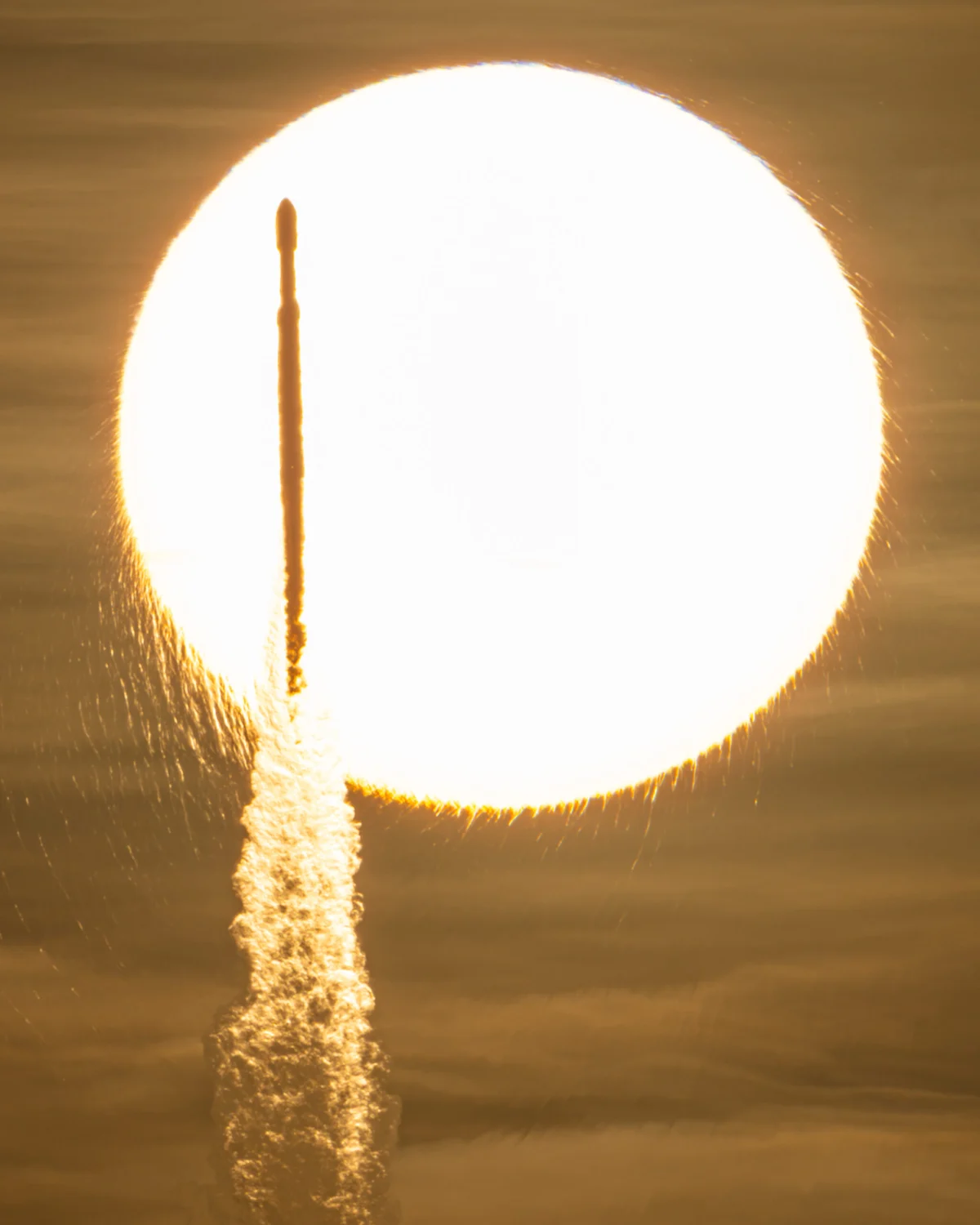
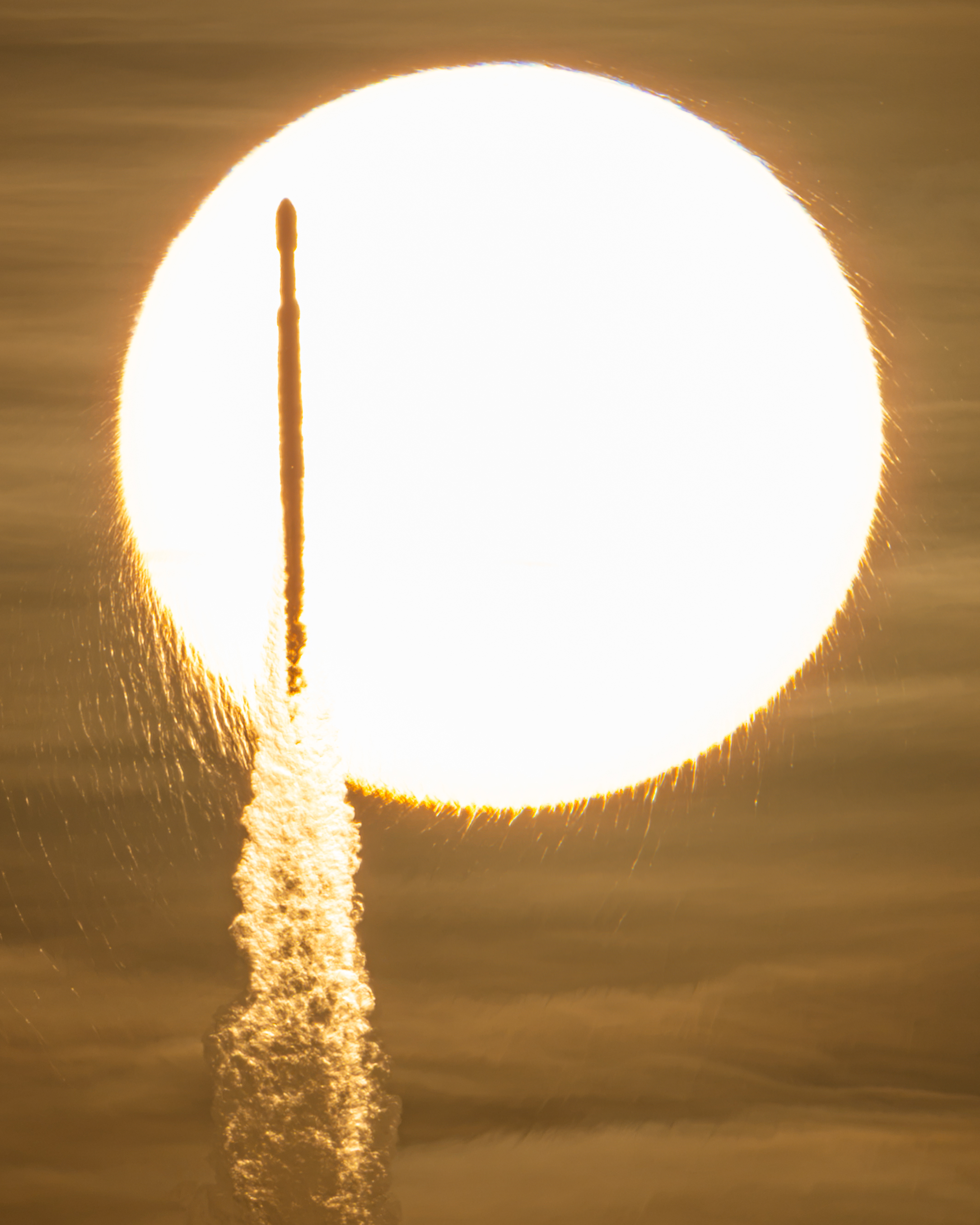
The Nancy Grace Roman Space Telescope, a revolutionary observatory developed by NASA, successfully launched from the agency’s Kennedy Space Center in Florida on August 30, 2026. Carried aloft by a powerful SpaceX Falcon Heavy rocket, the mission began its journey to the Sun-Earth L2 Lagrange point, approximately 1.5 million kilometers (930,000 miles) from Earth, from where it will commence its ambitious scientific campaign. The launch was captured in a striking image showing the rocket transiting the Sun, a testament to precision timing and photographic skill. Roman is poised to become a cornerstone of astrophysics, designed to tackle some of the most profound questions in modern cosmology and exoplanetary science, building upon and expanding the legacies of its predecessors like the Hubble Space Telescope.
A New Eye on the Universe: The Roman Space Telescope’s Capabilities
The Nancy Grace Roman Space Telescope represents a significant leap forward in space-based observation, primarily due to its expansive field of view and advanced instrumentation. While it shares the same 2.4-meter primary mirror diameter as the venerable Hubble Space Telescope, Roman’s Wide Field Instrument (WFI) will capture images with a field of view 100 times larger than Hubble’s WFC3 infrared camera. This unparalleled capability will enable Roman to survey vast swathes of the cosmos with unprecedented efficiency, collecting data on billions of stars and galaxies across cosmic time.
The telescope’s scientific payload comprises two primary instruments: the Wide Field Instrument (WFI) and the Coronagraph Instrument (CGI). The WFI is a 300-megapixel camera that will operate in near-infrared wavelengths, crucial for observing distant galaxies and probing phenomena affected by cosmic expansion. Its wide field allows for rapid surveys, essential for statistical studies of dark energy, exoplanet populations, and the large-scale structure of the universe. The Coronagraph Instrument, an advanced technology demonstrator, will push the boundaries of direct exoplanet imaging and spectroscopy by suppressing starlight, allowing for the direct observation of faint planets orbiting bright stars. This instrument is designed to achieve starlight suppression levels orders of magnitude greater than previously possible, paving the way for future missions capable of characterizing Earth-like exoplanets.
The Launch Event: A Precision Ascent
The launch of the Nancy Grace Roman Space Telescope was a critical milestone in a multi-decade development effort. Liftoff occurred precisely as scheduled from Launch Complex 39A at Kennedy Space Center, a historic pad that has witnessed numerous pivotal moments in space exploration. The SpaceX Falcon Heavy, currently one of the world’s most powerful operational rockets, was selected for its proven ability to deliver heavy payloads to distant orbits, a necessity for Roman’s L2 destination. The rocket’s three Falcon 9 first-stage boosters generated over five million pounds of thrust at liftoff, propelling the 4,300-kilogram (approximately 9,500-pound) observatory through Earth’s atmosphere.
The ascent profile involved a complex sequence of events: the ignition and separation of the two side boosters, which performed synchronized landings back at Landing Zones 1 and 2 at Cape Canaveral Space Force Station; the continued burn of the central core stage before its own separation and subsequent landing on a drone ship in the Atlantic Ocean; and finally, the sustained burn of the Falcon Heavy’s upper stage to inject Roman into its translunar injection trajectory towards L2. The image of the Falcon Heavy transiting the Sun during launch, captured by photographer John Kraus, underscored the perfect alignment and timing required for such a complex operation, symbolizing humanity’s ambition to reach beyond our immediate solar neighborhood. The journey to the L2 point is expected to take approximately one month, followed by a meticulous commissioning period lasting several months before scientific operations commence.
The Legacy of Nancy Grace Roman
The telescope bears the name of Dr. Nancy Grace Roman (1925-2018), a pioneering astronomer who profoundly shaped the course of space astronomy at NASA. Often referred to as the "Mother of Hubble," Dr. Roman was NASA’s first chief astronomer, a position she held for nearly two decades, starting in 1959. She played a pivotal role in planning and developing the Hubble Space Telescope, advocating tirelessly for its creation and overseeing its early conceptual design. Her vision helped lay the groundwork for a new era of space-based observatories, free from the distortions of Earth’s atmosphere.
Dr. Roman earned her Ph.D. in astronomy from the University of Chicago in 1949 and spent time at Yerkes Observatory before moving to the U.S. Naval Research Laboratory. Her decision to join the nascent NASA agency was driven by a desire to contribute to the burgeoning field of space science. Throughout her career, she championed the use of space telescopes, recognizing their potential to revolutionize our understanding of the universe. Naming this next-generation observatory after her is a fitting tribute to her enduring scientific legacy and her unwavering dedication to advancing astronomical research.
Unveiling Dark Energy: A Cosmic Enigma
One of Roman’s primary scientific objectives is to investigate dark energy, the mysterious force believed to be responsible for the accelerating expansion of the universe. Discovered in the late 1990s, dark energy constitutes approximately 68% of the universe’s total mass-energy content, yet its nature remains one of the greatest unsolved puzzles in physics and cosmology. Roman will employ three distinct methods to probe dark energy:
-
Type Ia Supernovae: These "standard candles" are exploding white dwarf stars with a consistent intrinsic brightness. By measuring their apparent brightness and redshift, astronomers can determine cosmic distances and the rate of the universe’s expansion over time. Roman’s wide field of view will allow it to discover thousands of these supernovae across a broad range of redshifts, providing a statistically robust dataset to precisely map the expansion history.
-
Weak Gravitational Lensing: The gravity of massive structures like galaxy clusters subtly distorts the light from more distant galaxies, an effect known as weak gravitational lensing. By measuring these tiny distortions across billions of galaxies, Roman will create a 3D map of dark matter and dark energy distribution throughout the universe. This mapping will reveal how dark energy influences the growth of cosmic structures over billions of years.
-
Baryon Acoustic Oscillations (BAO): These are faint imprints left in the distribution of galaxies by sound waves that propagated through the early universe. BAO act as a "standard ruler" in the cosmos. Roman’s extensive galaxy surveys will measure the characteristic scale of these oscillations at different cosmic epochs, providing another independent measure of the universe’s expansion rate and the properties of dark energy.
By combining these complementary techniques, Roman aims to achieve unprecedented precision in constraining dark energy models, potentially distinguishing between a cosmological constant and more exotic "quintessence" theories, or even revealing new physics beyond our current understanding.
The Search for Exoplanets: Beyond Our Solar System
Beyond cosmology, the Nancy Grace Roman Space Telescope is poised to revolutionize exoplanet research, particularly through its innovative use of gravitational microlensing. While missions like Kepler and TESS have excelled at finding exoplanets via the transit method (detecting the dimming of a star as a planet passes in front of it), Roman will focus on planets that are often missed by these techniques.
Gravitational microlensing occurs when a foreground star (or planet) passes almost perfectly in front of a more distant background star from our vantage point. The foreground object’s gravity acts as a lens, temporarily magnifying the light of the background star. If the lensing star has planets, they can create additional, smaller magnification spikes in the light curve. This method is particularly sensitive to:
- Planets far from their host stars: Microlensing can detect planets at distances from their stars similar to Jupiter and Saturn in our solar system, regions where transits are rare and radial velocity methods become challenging.
- Low-mass planets: It is sensitive to planets with masses down to that of Mars, or even smaller, and can find planets around stars across a wide range of masses.
- Free-floating planets: Potentially, microlensing could detect planets that have been ejected from their star systems and wander through the galaxy unbound, offering insights into planetary formation and ejection mechanisms.
Roman’s microlensing survey will target the crowded central bulge of the Milky Way, where there are millions of stars available for lensing events. Over its mission lifetime, Roman is expected to discover thousands of new exoplanets, creating the first statistical census of exoplanets down to Earth-mass across a broad range of orbital distances. This data will be crucial for understanding the diversity of planetary systems in our galaxy and refining theories of planet formation and evolution.
Mapping the Cosmos: Understanding Universal Evolution
Roman’s wide field of view and infrared capabilities also make it an ideal instrument for mapping the large-scale structure of the universe and tracing the evolution of galaxies over cosmic time. By observing billions of galaxies out to high redshifts, Roman will essentially provide a cosmic archaeological record, showing how galaxies have grown, merged, and changed their properties over the past 10 billion years.
The mission will create deep, wide-area surveys that will:
- Chart the Cosmic Web: Provide highly detailed maps of the filamentary network of dark matter and galaxies that constitute the cosmic web, revealing how this structure evolved under the influence of gravity and dark energy.
- Study Galaxy Formation and Evolution: Observe galaxies at various stages of their development, from the earliest protogalaxies to mature systems, allowing scientists to understand the processes that drive star formation, chemical enrichment, and the assembly of massive galaxies.
- Characterize Distant Quasars: Identify and study distant quasars, which are supermassive black holes actively accreting matter, serving as beacons to probe the intergalactic medium and the reionization epoch.
These surveys will complement observations from other ground-based and space-based telescopes, such as the James Webb Space Telescope (JWST) and the Vera C. Rubin Observatory (formerly LSST), providing a comprehensive picture of the universe’s history. While JWST excels at detailed observations of individual distant objects, Roman will provide the statistical power of vast surveys, filling a critical niche in modern astrophysics.
Engineering Marvel: From Concept to Orbit
The journey of the Nancy Grace Roman Space Telescope from concept to launch spans over two decades. Originally conceived as the Wide-Field Infrared Survey Telescope (WFIRST) in the early 2000s, the mission was a top priority in the National Research Council’s 2010 Decadal Survey of Astronomy and Astrophysics. The project faced numerous technical challenges and budgetary considerations, undergoing several design iterations and reviews.
A key innovation in Roman’s development was the utilization of a spare 2.4-meter primary mirror originally built for a classified U.S. government satellite. This "gift" from the National Reconnaissance Office significantly reduced development time and cost, allowing NASA to accelerate the mission’s progress. Engineers at NASA’s Goddard Space Flight Center, the Jet Propulsion Laboratory, and numerous industrial partners worked meticulously to integrate the sophisticated instruments and systems required for the mission. The total estimated cost of the Roman Space Telescope project is approximately $4.3 billion through its prime mission, reflecting the complexity and scale of its scientific ambition.
The selection of the L2 Lagrange point as Roman’s operational orbit is strategic. At L2, the gravitational forces of the Sun and Earth balance, allowing the telescope to remain relatively stable with minimal fuel expenditure for station-keeping. This location also offers a thermally stable environment, crucial for infrared observations, and provides an unobstructed view of the cosmos, free from Earth’s atmospheric interference and light pollution.
Voices from the Mission: Anticipation and Aspiration
The successful launch elicited profound reactions from the scientific community and NASA leadership. Administrator Bill Nelson emphasized the mission’s transformative potential, stating, "Roman represents the next giant leap in our quest to understand the universe. Its launch today is a testament to human ingenuity and our unyielding curiosity. We are on the precipice of discoveries that will redefine our textbooks and inspire a new generation of explorers."
Dr. Nicola Fox, Associate Administrator for NASA’s Science Mission Directorate, highlighted the collaborative spirit: "This mission is the culmination of decades of scientific vision, engineering excellence, and international partnership. Roman will deliver data that will fundamentally change our understanding of dark energy, the prevalence of exoplanets, and the very fabric of spacetime."
Dr. Julie Crouse, Roman Project Scientist at NASA Goddard Space Flight Center, expressed excitement about the imminent science. "The wide field of view coupled with its exquisite sensitivity in the infrared means Roman will generate an unparalleled dataset. We expect to find thousands of new worlds and to create the most detailed maps of the cosmos ever seen, pushing the boundaries of what we know about our universe." A SpaceX representative acknowledged the successful deployment, stating, "We are proud to have partnered with NASA to deliver the Nancy Grace Roman Space Telescope to its intended orbit. The Falcon Heavy continues to demonstrate its reliability and capability for critical national and scientific missions."
Broader Implications: A New Era of Discovery
The Nancy Grace Roman Space Telescope is expected to usher in a new era of astronomical discovery. Its vast surveys will generate unprecedented volumes of data, which will be made publicly available to the global scientific community, fostering international collaboration and enabling countless unanticipated discoveries. The sheer scale of its observational output will provide a statistical foundation for future, even more ambitious missions, potentially guiding the design of observatories capable of directly imaging habitable exoplanets and characterizing their atmospheres.
Beyond its direct scientific output, Roman’s mission embodies the spirit of exploration and innovation. It will inspire students and the public alike, demonstrating the power of scientific inquiry and technological advancement to expand humanity’s knowledge frontier. The quest to understand dark energy and the prevalence of life beyond Earth resonates deeply with fundamental human questions about our place in the cosmos. The data collected by Roman will undoubtedly inform these profound philosophical discussions for decades to come.
Looking Ahead: The Roman Mission Timeline
Following its approximately one-month transit to L2, Roman will undergo a rigorous commissioning phase. This period, expected to last about five to six months, will involve precisely aligning its mirrors, calibrating its instruments, and testing all systems to ensure optimal performance. Scientists and engineers will meticulously prepare the telescope for its prime mission, which is anticipated to last at least five years, with the potential for extended operations.
The first scientific data releases are eagerly awaited by the astronomical community. Roman’s observations will complement and extend those from other major observatories, creating a multi-wavelength, multi-scale view of the universe. From charting the distribution of dark matter to identifying new exoplanetary systems, the Nancy Grace Roman Space Telescope is poised to rewrite our understanding of the cosmos, securing its place as a monumental achievement in space exploration.