Tom Cruise expressed strong confidence Tuesday in Paramount’s commitment to producing 30 films annually should its potential acquisition of Warner Bros. Discovery (WBD) materialize. Speaking on the Pat McAfee Show, the acclaimed actor articulated a vision for Hollywood that prioritizes a robust and consistent output of cinematic projects, arguing that such "abundance" is crucial for the survival and flourishing of the film industry. The interview, initially focused on the surprise announcement of a Days of Thunder sequel, veered into broader industry dynamics as Cruise elaborated on his perspective.
Paramount’s Strategic Vision and Cruise’s Endorsement
The conversation with McAfee delved into a promise made by Paramount CEO David Ellison regarding the studio’s ambitious production goals. Ellison has reportedly stated that Paramount aims to release 30 films per year, a figure that represents a significant increase in output. Cruise, a long-standing figure within the Hollywood ecosystem and a key partner with Paramount on numerous successful projects, including the Mission: Impossible franchise and the upcoming Top Gun: Maverick sequel, lent his considerable influence to this strategic initiative.
"I think it’s awesome," Cruise stated, reflecting on Ellison’s pledge. "You know, here’s the thing: they’re going to deliver 30 movies. It’s a community to me. It’s not an industry. The people in these studios are not just people in the studios, they’re my family." This framing underscores a sentiment that transcends mere business transactions, positioning the film industry as a collaborative endeavor with a shared destiny. Cruise’s personal investment in the success of fellow artists and filmmakers became a central theme of his remarks.
He further elaborated on the interconnectedness of production, suggesting a snowball effect where successful projects naturally lead to more opportunities. "If we do well with those, those 30 movies are going to turn into 40 movies," Cruise projected. This forward-looking perspective highlights a belief in the power of consistent output to stimulate further investment and creative endeavor.
The Imperative of Creative Opportunity
Cruise’s advocacy for a higher volume of film production stems from a deep-seated conviction about the necessity of providing a fertile ground for emerging and established talent alike. He emphasized that his own career, like those of legendary directors and producers such as Steven Spielberg, Christopher Nolan, and the late Tony Scott, was built upon a foundation of consistent opportunities to learn, hone craft, and develop as artists.
"It’s not good enough that I just get to make this movie for me," Cruise explained. "I see so many talented people that I want them to have that opportunity, to make the films that they want and be able to… these artists, all these greats, they got to cut their teeth and learn in the same way that you get to act and you’re learning. You take it, and the next one, and the next one." This sentiment reflects a desire to perpetuate a legacy of creative mentorship and professional development within the industry.
He articulated this as a fundamental requirement for the industry’s sustained vitality: "And the only way you do it is we have to create an abundance. It’s production begets production." This principle suggests that a higher volume of films not only provides more work but also fosters an environment where experimentation, risk-taking, and artistic growth can thrive.
Background Context: Industry Consolidation and the Future of Film
Cruise’s comments arrive at a critical juncture for Hollywood. The entertainment landscape has been characterized by significant consolidation and strategic realignments, particularly in the wake of streaming’s disruptive influence. Paramount Global, like other legacy media companies, has been navigating a complex market, seeking to balance traditional theatrical releases with the demands of streaming platforms and the evolving consumer viewing habits.
The potential acquisition of Warner Bros. Discovery by Paramount, as alluded to by Cruise, would represent a monumental shift in the industry’s power dynamics. Such a merger could significantly alter the competitive landscape, potentially creating a powerhouse with a vast library of intellectual property and an expanded production capacity. The promise of 30 films per year from a consolidated entity like Paramount, bolstered by WBD’s assets, would signal an aggressive strategy to reclaim market share and reassert the centrality of theatrical cinema.
Data Supporting the Need for Production Volume
The argument for increased film production is not without supporting data. Historically, periods of high film output have often coincided with robust box office performance and a vibrant ecosystem of creative professionals. While the COVID-19 pandemic severely disrupted production schedules and theatrical releases from 2020 to 2022, industry data indicates a gradual but steady recovery.
According to the Motion Picture Association (MPA) "Theatrical Market Statistics" reports, global box office revenue, which had plummeted to $12 billion in 2020, saw a significant rebound, reaching approximately $26 billion in 2022. This recovery, however, has been uneven, with some markets performing stronger than others. The continued health of the theatrical market is intrinsically linked to the consistent supply of high-quality, diverse films that draw audiences back to cinemas. A commitment to 30 films per year from a major studio like Paramount could contribute significantly to this ongoing recovery and long-term stability.
Furthermore, the film industry directly and indirectly supports a vast workforce. From writers, directors, actors, and crew members to those in marketing, distribution, and exhibition, a thriving production environment is essential for economic stability. Increased production translates to more jobs, greater economic activity, and a more resilient industry infrastructure.
Chronology of Recent Industry Developments
- Late 2022 – Early 2023: Speculation begins to mount regarding potential mergers and acquisitions within the media industry, including discussions around Paramount Global.
- February 2023: Paramount Global announces its intent to explore strategic alternatives, including potential partnerships or sales.
- April 2023: Reports surface of preliminary discussions between Paramount Global and potential suitors, including Skydance Media, which has a production partnership with Paramount.
- May 2023: Tom Cruise’s interview on the Pat McAfee Show takes place, during which he champions Paramount’s production ambitions.
- Ongoing: Negotiations and strategic evaluations continue within the industry, with the future of major studios and their production strategies remaining a key point of discussion.
Analysis of Implications: A Potential Shift in Hollywood’s Dynamics
Cruise’s endorsement of Paramount’s ambitious production goals, particularly in the context of potential WBD integration, carries significant implications for the broader Hollywood landscape.
For Paramount: If successful, the acquisition and subsequent increased production slate could solidify Paramount’s position as a major player, capable of competing more effectively with rivals like Disney, Warner Bros. Discovery (pre-merger), Universal, and Netflix. A consistent flow of 30 films annually would allow Paramount to cater to a wider range of audience preferences and maintain a strong presence in both theatrical and streaming markets.
For Filmmakers and Talent: Cruise’s emphasis on "abundance" and "opportunity" suggests a potential positive impact for creators. A studio committed to producing a higher volume of films is likely to offer more opportunities for writers, directors, actors, and below-the-line crew. This could foster a more dynamic and inclusive creative environment, particularly for those seeking to break into the industry or develop diverse projects.
For the Exhibition Sector: The success of cinema chains like AMC, Regal, and Cineworld is directly tied to the consistent availability of compelling films. A commitment to 30 new theatrical releases per year from a major studio like Paramount would be a significant boost for exhibitors, helping to fill their schedules and drive ticket sales. This could counter the trend of studios prioritizing streaming-first releases.
For the Competitive Landscape: A more powerful Paramount, potentially combined with WBD assets, would inevitably reshape the competitive dynamics within Hollywood. This could lead to increased pressure on other studios to adapt their strategies, potentially sparking further consolidation or a renewed focus on original content creation.
Days of Thunder 2 and Cruise’s Passion for Racing
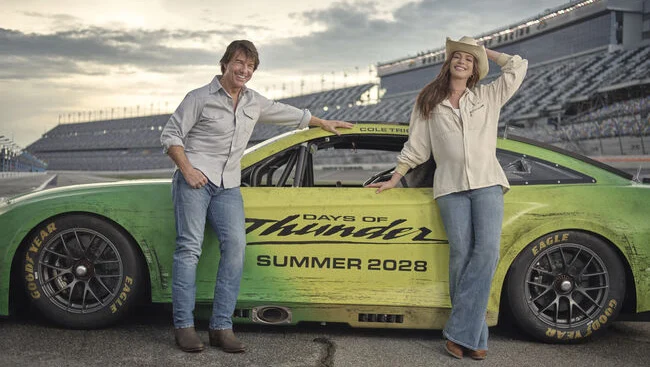
Beyond his industry-wide pronouncements, Cruise also shared details about the highly anticipated sequel to the 1990 stock car racing film, Days of Thunder. The project, tentatively titled Days of Thunder 2, is slated for a summer 2028 release and will feature Anne Hathaway in a supporting role.
Cruise revealed that the idea of revisiting the character of Cole Trickle, originally portrayed by him, has been a long-standing ambition. "I’ve been thinking about Cole Trickle for a long time," he told McAfee, drawing a direct line from his personal passion for motorsports to the film’s premise. "I love the sport. You know, I grew up like just taking cars in the back streets, before I had my license and racing on country roads and looking at dirt tracks and I love NASCAR and I love racing and airplanes and motorcycles."
He reminisced about the original Days of Thunder, a project he brought to producers Don Simpson and Jerry Bruckheimer, and the directorial vision of Tony Scott. "After the first one, also I just been thinking about what, how can I do it? How can I seat the audience into another journey with this character?" This suggests a desire to build upon the established lore and character arc, offering a fresh perspective and an engaging narrative for a new generation of viewers.
A key element of Cruise’s commitment to authenticity in his action films was reiterated when asked if he would be performing the driving sequences himself. With his characteristic enthusiasm, he confirmed, "Here’s the thing: if I’m making a movie about airplanes, I’m flying them. I’m driving." This dedication to performing his own stunts, a hallmark of his career, underscores his belief in the visceral impact of practical filmmaking and his willingness to fully immerse himself in the demands of his roles.
The announcement of Days of Thunder 2, alongside Cruise’s vocal support for Paramount’s expansive production plans, paints a picture of an artist deeply invested in the future of cinema, not just as a performer but as a proponent of a thriving and abundant creative ecosystem. His vision emphasizes community, opportunity, and the enduring power of film to entertain, inspire, and connect audiences worldwide.