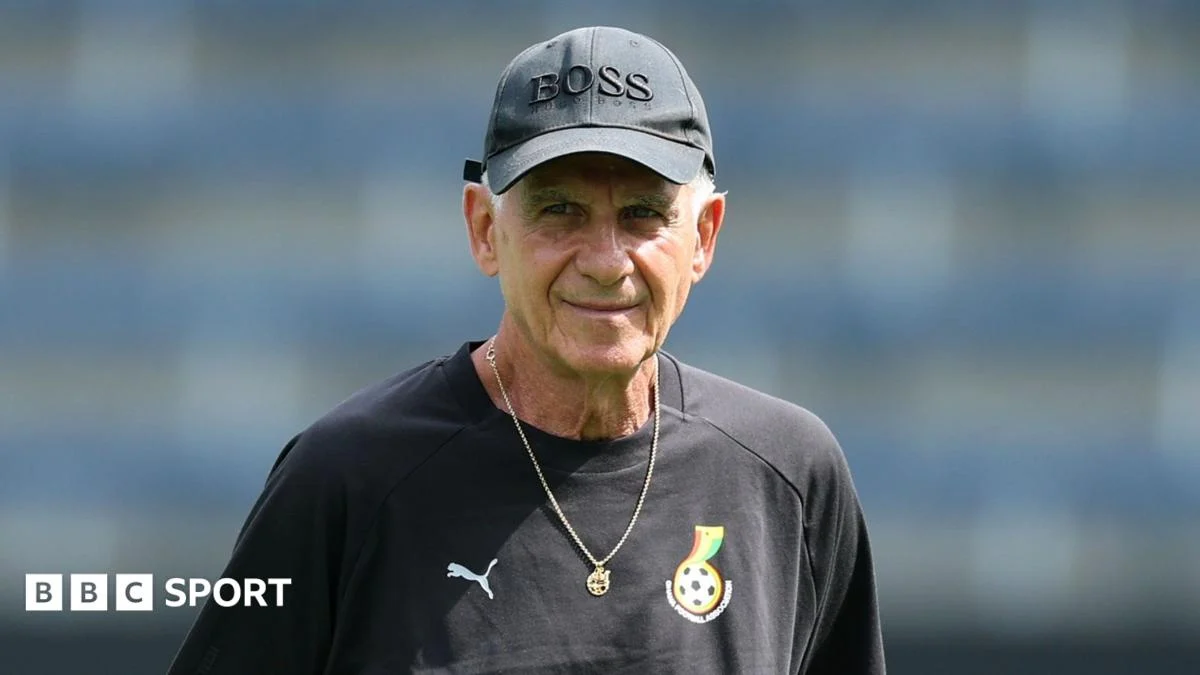
Carlos Queiroz has been officially reappointed as the head coach of Ghana’s men’s national football team, the Black Stars, marking a significant turn of events after his apparent announcement of departure following the recent FIFA World Cup campaign. The Ghana Football Association (GFA) confirmed the decision following extensive internal deliberations, signalling a commitment to continuity and a belief in Queiroz’s ability to guide the team through its next phase of international competition. While the specific duration of his new contract has not been disclosed, the GFA expressed confidence that the experienced Portuguese tactician is ideally positioned to usher in a "successful new phase on the international stage."
The GFA’s statement highlighted Queiroz’s "extensive international experience, technical expertise, and knowledge of the Black Stars" as key factors in their decision. This reappointment underscores the association’s strategic approach to team management, opting to retain a coach who, despite a premature exit from the World Cup, has a proven track record on the global stage. Queiroz, aged 73, initially took the helm of the Black Stars in April and guided them to qualification for the 2022 FIFA World Cup in Qatar. The team’s journey concluded in the last 32, where they suffered a narrow 1-0 defeat to Colombia, a result that led to Queiroz’s public statement on social media suggesting his tenure had concluded.
However, the GFA’s decision to re-engage him indicates a deeper assessment of his performance and future potential, moving beyond the immediate outcome of a single tournament. This move suggests a strategic focus on long-term development and stability, a sentiment echoed by Queiroz himself, who expressed "immense pride and honour" at the opportunity to continue his work with Ghana. His commitment, articulated through an Instagram post, emphasized the profound significance of coaching the Black Stars, describing it as "far more than coaching a football team" and a "privilege, a responsibility, and a mission to honour one of Africa’s greatest football nations and its incredible and passionate football people." He outlined a clear ambition: "improve every day, unite the nation, make Ghana stronger and fight for every victory with passion, humility and pride. The mission continues."
A Look Back: Queiroz’s Previous Stints and the World Cup Journey
Carlos Queiroz’s career is a tapestry woven with diverse experiences across continents and confederations. His extensive international coaching CV includes leading Iran, Portugal, and Egypt at major tournaments. He has also held head coaching positions with South Africa, Colombia, and Qatar, demonstrating a remarkable breadth of understanding of different footballing cultures and challenges. Prior to his first spell with Ghana, Queiroz’s most recent significant international role was with Egypt, where he managed the Pharaohs from 2018 to 2021, guiding them to the final of the 2021 Africa Cup of Nations.
His tenure with the Black Stars began in April 2022, a crucial period as the team was preparing for the final rounds of World Cup qualification. Queiroz inherited a squad with a rich footballing history and the weight of expectation from a passionate fanbase. The immediate priority was securing a place in the 2022 FIFA World Cup. Ghana’s qualification was secured in a dramatic play-off against Nigeria in March 2022, a feat achieved under the guidance of Otto Addo, who was then the interim coach. Queiroz took over shortly after this success, inheriting a team that had just achieved a significant milestone.
The 2022 FIFA World Cup in Qatar presented a formidable challenge for the Black Stars. Drawn into Group H alongside Portugal, Uruguay, and South Korea, Ghana faced a tough road. The tournament campaign began with a 3-2 defeat against Portugal, followed by a crucial 3-2 victory over South Korea, showcasing moments of brilliance and resilience. However, a 2-0 loss to Uruguay in their final group match, a game laden with historical significance due to the infamous handball incident from their 2010 World Cup quarter-final encounter, ultimately sealed their fate. The 1-0 defeat to Colombia in the final friendly match of 2022, which Queiroz apparently referenced as his departure, concluded a period of intense scrutiny and immediate transition. The GFA’s subsequent decision to retain him suggests a more nuanced evaluation of his overall impact and future strategy.
Background Context: The GFA’s Strategic Approach and Queiroz’s Pedigree
The reappointment of Carlos Queiroz by the Ghana Football Association (GFA) can be viewed within a broader strategic framework adopted by the association. In recent years, the GFA has often sought experienced coaches with a strong international pedigree, aiming to leverage their expertise to elevate the Black Stars’ performance on the continental and global stages. This approach is not unique to Ghana; many national football federations opt for seasoned managers who can navigate the complexities of international football, manage diverse player pools, and instill a winning mentality.
Queiroz’s background is particularly noteworthy. His two spells as assistant manager at Manchester United under the legendary Sir Alex Ferguson provided him with invaluable insights into the workings of a top European club, fostering a deep understanding of tactical discipline, player development, and high-performance environments. This experience, combined with his extensive head coaching roles with national teams, has equipped him with a comprehensive understanding of the demands placed upon a national team manager. He has a reputation for meticulous preparation and a structured approach to team building.
The GFA’s statement emphasizing his "technical expertise and knowledge of the Black Stars" suggests that during his initial tenure, Queiroz gained a deep understanding of the current generation of Ghanaian talent, their strengths, and areas for development. This continuity of knowledge is crucial for building a cohesive and effective team over time. Furthermore, the GFA’s acknowledgment of his "extensive international experience" points to their recognition of his ability to handle the pressure and scrutiny that comes with managing a national team at major tournaments. His past successes in qualifying and guiding teams through the group stages of World Cups and Africa Cup of Nations tournaments are likely key factors in the GFA’s renewed confidence.
The decision to re-engage Queiroz also signals a commitment to stability, a quality often desired in national team management. Frequent coaching changes can disrupt team dynamics, player confidence, and long-term tactical development. By sticking with Queiroz, the GFA is signaling an intent to build on the foundation laid during his initial period, rather than embarking on yet another rebuilding phase with a new coach. This stability is particularly important as Ghana prepares for the upcoming qualifiers for the 2027 Africa Cup of Nations.
Supporting Data: Ghana’s Footballing Landscape and Queiroz’s Track Record
Ghana’s footballing landscape is characterized by a passionate fanbase, a history of producing world-class talent, and a persistent ambition to recapture continental glory. The Black Stars are one of Africa’s most decorated nations in the Africa Cup of Nations, having won the tournament four times, with their last triumph dating back to 1982. Their consistent presence at the FIFA World Cup, including reaching the quarter-finals in 2010, has cemented their status as a major force in African football.
However, recent years have seen a dip in their continental fortunes, with their last AFCON final appearance in 2015 and a group-stage exit in the 2021 edition. The 2022 World Cup qualification was a significant achievement, but the subsequent performance in Qatar, while demonstrating flashes of potential, ultimately fell short of expectations. This context underscores the challenge Queiroz faces: to not only maintain Ghana’s competitive edge but also to elevate the team to its former heights.
Queiroz’s track record with various national teams provides a statistical basis for the GFA’s decision. For instance, during his tenure with Iran (2011-2019), he led the team to two consecutive World Cup appearances (2014 and 2018), achieving their highest ever points tally in a World Cup group stage in 2018. With Portugal, he guided them to the semi-finals of Euro 2000 and the quarter-finals of the 2010 World Cup. His experience with Egypt saw them reach the AFCON final in 2021. These achievements, while varied in outcome, demonstrate a consistent ability to qualify for major tournaments and to make teams competitive.
The GFA’s investment in Queiroz is likely based on the belief that his strategic acumen and tactical discipline can help the Black Stars overcome their recent challenges. The focus on preparing the team for a "successful new phase on the international stage" suggests a long-term vision that extends beyond immediate tournament results. This implies a commitment to developing a sustainable footballing philosophy, nurturing young talent, and fostering a strong team spirit. The upcoming qualifiers for the 2027 Africa Cup of Nations will serve as the immediate proving ground for this renewed partnership.
Official Responses and Future Mandate
The Ghana Football Association’s official statement provided a clear indication of their rationale behind reappointing Carlos Queiroz. The emphasis on his "extensive international experience, technical expertise and knowledge of the Black Stars" served as a direct endorsement of his capabilities and suitability for the role. The statement also articulated the GFA’s ambition for the team under Queiroz’s leadership: to prepare the side for "a successful new phase on the international stage." This phrase suggests a strategic outlook that aims for sustained success and growth, rather than focusing solely on short-term gains.
The GFA’s commitment to Queiroz, despite his apparent announcement of departure after the World Cup defeat to Colombia, highlights a pragmatic approach to team management. It indicates that internal discussions likely involved a comprehensive review of his initial tenure, considering not only the results but also the overall performance, team dynamics, and future potential. The decision to proceed with him suggests that the GFA believes he possesses the qualities necessary to address any shortcomings identified and to build a stronger, more cohesive unit.
Carlos Queiroz’s own reaction, expressed through his Instagram post, conveyed a deep sense of commitment and honor. His words, "Serving Ghana is far more than coaching a football team… It is a privilege, a responsibility and a mission," underscore the personal significance he attaches to the role. His clear articulation of ambition – "improve every day, unite the nation, make Ghana stronger and fight for every victory with passion, humility and pride" – sets a positive and forward-looking tone for his renewed tenure. This statement suggests a strong alignment between his personal vision and the GFA’s stated objectives.
While the specifics of his new mandate, including the exact duration of the contract and detailed performance objectives, remain undisclosed, the GFA has indicated that "further details on his mandate will be announced in due course." This suggests that a comprehensive plan is in place, and the GFA is committed to providing Queiroz with the necessary support and resources to achieve the outlined goals. The immediate focus will undoubtedly be on the qualifiers for the 2027 Africa Cup of Nations, which commence later this month.
Broader Impact and Implications
The reappointment of Carlos Queiroz as the head coach of Ghana’s men’s national team carries several significant implications for the future of Ghanaian football. Firstly, it signals a period of stability and continuity, which is often a crucial factor in building a successful national team. By retaining a coach who has already spent time with the squad, the GFA is aiming to avoid the disruptions that often accompany frequent managerial changes. This stability can foster stronger player relationships, a clearer understanding of tactical systems, and a more cohesive team environment.
Secondly, the decision reflects a strategic commitment to leveraging Queiroz’s extensive international experience. His past successes with various national teams, including Iran, Portugal, and Egypt, demonstrate his ability to navigate the complexities of international football, from qualification campaigns to major tournament performances. The GFA clearly believes that his expertise is vital in guiding the Black Stars through their upcoming challenges and in achieving their long-term aspirations.
The immediate impact of this reappointment will be felt in the upcoming qualifiers for the 2027 Africa Cup of Nations. Ghana has been drawn into Group C alongside Ivory Coast, The Gambia, and Somalia. These matches will serve as the first opportunity for Queiroz to implement any adjustments and for the team to demonstrate their progress under his renewed leadership. The GFA’s stated goal of preparing the team for a "successful new phase on the international stage" suggests an ambition to not only qualify for the AFCON but to also mount a serious challenge for the title, a feat that has eluded Ghana since 1982.
Furthermore, Queiroz’s commitment to "uniting the nation" and making "Ghana stronger" indicates a desire to reconnect with the fanbase and rebuild confidence. Following the mixed results of the World Cup and the subsequent uncertainty surrounding his future, this reappointment provides an opportunity for a fresh start and a renewed sense of optimism. His emphasis on "passion, humility and pride" suggests a coaching philosophy that values not only technical proficiency but also the emotional and psychological aspects of team performance.
The long-term implications of this decision will depend on Queiroz’s ability to deliver on the GFA’s expectations. Success in the upcoming AFCON qualifiers and a strong showing in the tournament itself would solidify his position and validate the GFA’s decision. Conversely, continued underperformance could lead to renewed pressure and scrutiny. However, the GFA’s apparent faith in his abilities suggests a belief in his long-term vision and his capacity to guide Ghanaian football towards sustained success. The focus will now be on how effectively Queiroz can translate his experience and strategic vision into tangible results on the pitch, as the Black Stars embark on this new chapter under his tutelage. The world of African football will be watching closely as Ghana aims to reassert its dominance on the continental stage.