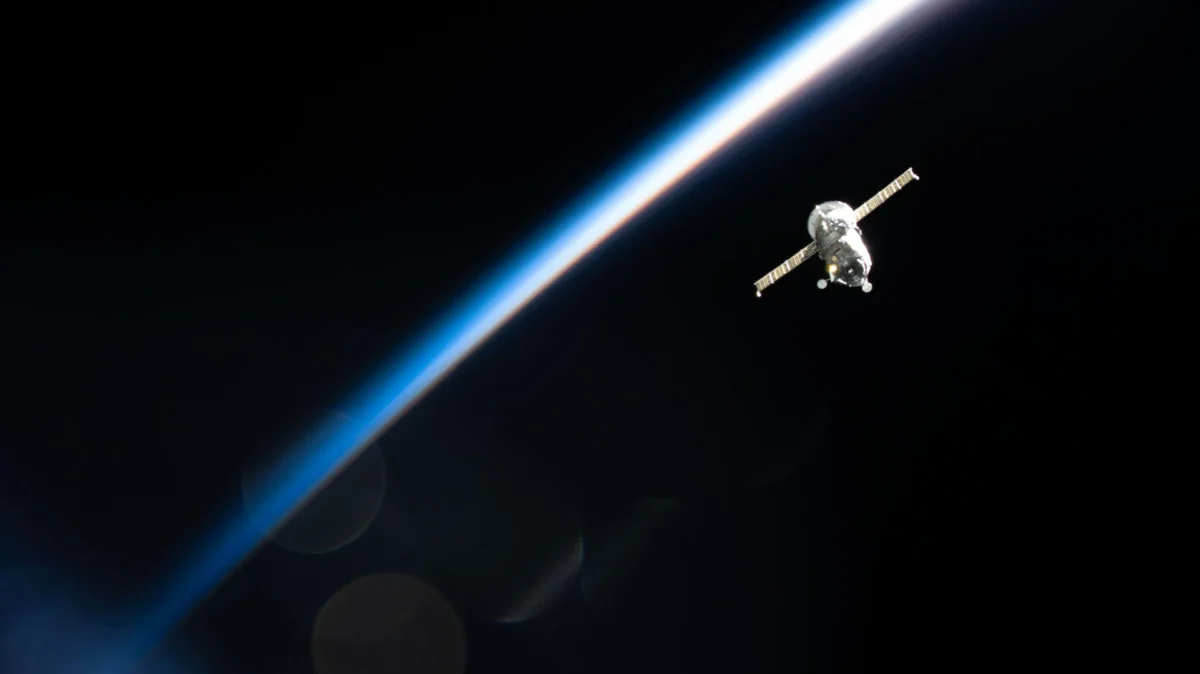
In a testament to enduring international collaboration in space, NASA is preparing to offer comprehensive live coverage for the upcoming launch and subsequent docking of a Roscosmos Progress cargo spacecraft. Designated Progress 96, this unpiloted resupply mission is slated to deliver approximately three tons of essential provisions, including food, fuel, and critical supplies, to the multinational crew currently residing aboard the International Space Station (ISS). This mission underscores the complex logistical backbone that sustains continuous human presence in low Earth orbit, an endeavor that has now spanned more than a quarter-century.
The Lifeline of Low Earth Orbit: The Progress Resupply Vehicle
The Progress spacecraft, a venerable workhorse in space logistics, represents a critical element in maintaining the operational viability and habitability of the International Space Station. Developed by Roscosmos, the state corporation responsible for Russia’s space activities, the Progress series has a long and distinguished history dating back to its inaugural flight in 1978. Derived from the manned Soyuz spacecraft, the Progress is specifically designed for automated cargo delivery and trash disposal. Its robust design and consistent performance have made it an indispensable component of the ISS resupply network, performing missions with remarkable regularity and reliability over several decades. Each Progress vehicle typically carries a diverse manifest, comprising dry cargo such as scientific experiments, spare parts, and personal items for the crew, alongside propellants for the station’s attitude control and reboost maneuvers, as well as water and oxygen. The average Progress mission delivers approximately 2.5 to 3 tons of cargo, a payload capacity crucial for replenishing consumables and supporting the station’s extensive scientific research agenda. This capacity is particularly vital for the long-duration expeditions undertaken by ISS crews, ensuring they have the necessary resources to live and work effectively in the challenging microgravity environment.
While other international partners, notably the United States with SpaceX’s Dragon and Northrop Grumman’s Cygnus spacecraft, also provide cargo delivery services to the ISS, the Progress remains a foundational pillar of the logistics chain. Its unique capabilities, including the ability to transfer propellants to the station and to perform reboost maneuvers to counteract atmospheric drag, highlight its specialized role. The unpiloted nature of the Progress missions is a testament to the advanced automation and remote control capabilities developed over decades of spaceflight, allowing for precise rendezvous and docking operations without direct human intervention onboard the cargo vessel itself.
Journey from Baikonur: Launch and Orbital Mechanics
The Progress 96 mission is scheduled to commence its journey on Wednesday, September 9, with liftoff from the historic Baikonur Cosmodrome in Kazakhstan. The launch window opens at 12:15 p.m. EDT (9:15 p.m. Baikonur time). NASA’s live launch coverage will begin promptly at 12 p.m. EDT, offering a window into the intricate pre-launch preparations and the powerful ascent into orbit. The launch vehicle for Progress 96 will be a Soyuz rocket, another cornerstone of Russian space engineering. The Soyuz rocket family boasts an unparalleled record of reliability, having launched thousands of missions since its inception in the 1960s. Its multi-stage design, powered by a cluster of engines in its initial stages, provides the necessary thrust to overcome Earth’s gravity and propel payloads into precise orbital trajectories.
The Baikonur Cosmodrome itself holds a storied place in space history, being the world’s first and largest operational space launch facility. Established by the Soviet Union in the 1950s, it was the launch site for Sputnik 1, the first artificial satellite, and Yuri Gagarin, the first human in space. Today, it remains a bustling hub for both crewed Soyuz missions and unpiloted Progress resupply flights to the ISS, symbolizing the continuity of space exploration efforts. The launch sequence for Progress 96 will involve a meticulous countdown, followed by ignition of the Soyuz rocket’s engines, generating immense thrust to lift off from the launchpad. As the rocket ascends through the atmosphere, it will shed its spent stages, each one propelling the remaining stages and payload higher and faster towards orbital velocity. The precise timing and execution of these events are crucial for placing the Progress spacecraft into the correct preliminary orbit, setting the stage for its subsequent journey to the space station.
Following orbital insertion, the Progress 96 will embark on a two-day transit to the International Space Station. While "express" rendezvous profiles can achieve docking in as little as three hours, the two-day approach is often selected for its operational flexibility, allowing ground controllers more opportunities to conduct system checkouts, refine orbital parameters, and ensure optimal conditions for rendezvous and docking. During this period, the spacecraft will perform a series of precisely calculated orbital maneuvers, using its onboard propulsion system to gradually adjust its trajectory and velocity, bringing it into proximity with the ISS. These maneuvers are guided by sophisticated navigation systems and telemetry data, ensuring a safe and controlled approach to the orbiting laboratory.
Autonomous Rendezvous and Docking at the International Space Station
The culmination of the Progress 96 mission will be its autonomous docking with the International Space Station. This critical maneuver is scheduled to occur at 2:37 p.m. EDT on Friday, September 11, following its two-day orbital chase. The Progress will link up with the Poisk module’s space-facing port. NASA’s live coverage of this highly anticipated arrival will begin at 1:45 p.m. EDT, allowing viewers to witness the final, delicate ballet of two spacecraft connecting in orbit.
The Poisk module, also known as the Mini-Research Module 2 (MRM2), is a Russian-built component of the ISS, serving as both a docking port for Soyuz and Progress spacecraft and an airlock for spacewalks. Its strategic location on the station’s Russian Orbital Segment makes it a vital gateway for logistics and crew rotation. The autonomous docking process relies on the sophisticated Kurs automated rendezvous system, a technology perfected over decades of Russian spaceflight. This system uses radar and optical sensors to guide the Progress spacecraft through its final approach, meticulously aligning it with the docking port. While the process is autonomous, the ISS crew and ground controllers maintain vigilant oversight, prepared to intervene if any anomalies arise. This capability for remote control and manual override serves as a critical safety feature, though such interventions are rarely needed due to the system’s proven reliability.
Upon successful docking, the crew will begin the process of unlatching the Progress and ingress, transferring the approximately three tons of vital cargo into the station. This influx of supplies is more than just sustenance; it represents the lifeblood of the orbiting laboratory. Food and water are obvious necessities, but the cargo also includes scientific equipment and samples for ongoing experiments, replacement parts for the station’s complex systems, medical supplies, and even personal mail and comfort items for the astronauts and cosmonauts, providing a crucial psychological link to Earth. The successful delivery ensures the continuous operation of the ISS, enabling critical research that benefits humanity on Earth and prepares for future deep-space missions.
A Continuous Cycle: Preceding and Future Operations
The arrival of Progress 96 is part of a continuous logistical cycle that maintains the International Space Station. Just two days prior to Progress 96’s launch, on Monday, September 7, the Progress 94 spacecraft will undock from the space station at approximately 11:18 a.m. EDT. This routine maneuver is essential for clearing a docking port for the incoming Progress 96 and for disposing of accumulated trash and waste materials from the station. Progress 94, having completed its mission as a cargo carrier and later as a storage unit for refuse, will then embark on its planned destructive re-entry into Earth’s atmosphere. Unlike the launch and docking events, NASA will not stream coverage of the Progress 94 undocking, as it is a standard operational procedure.
The lifecycle of a Progress vehicle typically involves several months docked to the ISS, serving as an additional storage bay while its cargo is gradually offloaded. Once emptied, it is filled with trash, discarded equipment, and waste products from the station. Upon undocking, the spacecraft is intentionally de-orbited, plummeting through Earth’s atmosphere. The friction generated during re-entry causes the vehicle and its contents to burn up harmlessly over the vast expanse of the Pacific Ocean, ensuring no debris poses a risk to populated areas. This controlled re-entry mechanism highlights the meticulous planning and safety protocols inherent in all aspects of ISS operations. Progress 96 is expected to follow a similar trajectory, remaining docked to the orbiting laboratory for about five months before its eventual departure and controlled destructive re-entry over the Pacific. This continuous cadence of resupply and disposal missions is a testament to the sophisticated planning and international cooperation required to sustain human life and scientific research in the challenging environment of space.
The International Space Station: A Quarter Century of Discovery and Collaboration
For over 25 years, the International Space Station has been an unparalleled outpost for human ingenuity and scientific advancement, maintaining a continuous human presence in space since November 2000. This remarkable achievement, born from the collaboration of five space agencies – NASA (United States), Roscosmos (Russia), ESA (Europe), JAXA (Japan), and CSA (Canada) – stands as a beacon of peaceful international cooperation. The ISS represents the largest modular space station ever constructed, an orbital complex approximately the size of a football field, flying at an altitude of roughly 250 miles (400 kilometers) above Earth.
The research conducted aboard the ISS is diverse and groundbreaking, encompassing fields from fundamental physics and material science to human physiology and Earth observation. Scientists leverage the unique microgravity environment to study phenomena impossible to replicate on Earth, such as protein crystallization for drug development, combustion processes, and fluid dynamics. Biomedical research on the ISS is particularly crucial, investigating the long-term effects of spaceflight on the human body – including bone density loss, muscle atrophy, and radiation exposure – providing vital data for protecting astronauts on future long-duration missions to the Moon and Mars. Furthermore, the station serves as a testbed for advanced technologies, from life support systems and robotics to new propulsion concepts, all designed to enhance the capabilities of future spacecraft and missions. Earth observation experiments conducted from the ISS contribute to our understanding of climate change, natural disasters, and ecological shifts, offering a unique global perspective. The sheer volume of scientific data generated annually from the ISS underscores its profound impact on advancing scientific knowledge and yielding research breakthroughs that have tangible benefits for life on Earth.
Strategic Implications and the Future of Space Exploration
The routine yet complex nature of the Progress 96 mission, like all resupply flights, carries significant strategic implications beyond merely delivering cargo. It symbolizes the ongoing vitality of international partnerships in space exploration, particularly between the United States and Russia, even amidst geopolitical tensions on Earth. This sustained cooperation on the ISS serves as a critical example of diplomacy and shared scientific objectives transcending earthly divides.
Moreover, the International Space Station is not merely an end in itself; it is a foundational stepping stone for humanity’s deeper exploration of space. The research conducted aboard the station, especially in understanding and mitigating the challenges of human spaceflight, directly informs programs like NASA’s Artemis. The Artemis program aims to return humans to the Moon, including the first woman and first person of color, and establish a sustainable lunar presence as a precursor to eventual human missions to Mars. The ISS provides an invaluable testbed for the technologies, operational procedures, and human health countermeasures that will be essential for these ambitious long-duration missions. From advanced life support systems and radiation shielding to crew autonomy and remote medical care, the lessons learned on the ISS are directly transferable to lunar habitats and Mars transit vehicles.
Beyond governmental initiatives, the ISS also plays a pivotal role in expanding commercial opportunities in low Earth orbit (LEO). Its presence has fostered a growing ecosystem of private companies providing cargo services, developing commercial modules, and exploring possibilities for private space stations. This commercialization is seen as crucial for lowering the cost of access to space, stimulating innovation, and creating a robust LEO economy that can support both scientific research and future space tourism or manufacturing ventures. The continued operation of the ISS, facilitated by missions like Progress 96, ensures the availability of a unique microgravity laboratory that commercial entities can leverage for their own research and development, paving the way for a more diverse and accessible space economy.
Live Coverage and Public Engagement
NASA’s commitment to providing live coverage of these events through its various platforms, including nasa.gov/live, is a cornerstone of its public outreach strategy. By offering accessible, high-definition broadcasts, NASA ensures that global audiences can witness the drama and precision of space launches and dockings in real-time. This transparency not only educates and inspires but also fosters a deeper appreciation for the complexities and achievements of space exploration. The ability to watch a Soyuz rocket lift off from Kazakhstan and a Progress spacecraft autonomously connect with the ISS from anywhere in the world underscores the global nature of this endeavor and invites public participation in the journey of discovery. These broadcasts, often accompanied by expert commentary, provide valuable context and insight into the engineering marvels and human dedication behind each mission.
In conclusion, the launch and docking of the Roscosmos Progress 96 cargo spacecraft represent more than a routine delivery; it is a critical continuation of the sustained international effort to explore and understand space. This mission reinforces the intricate logistical network supporting the International Space Station, highlights the enduring legacy of human-robotic collaboration, and serves as a vital step in humanity’s ambitious journey toward the Moon, Mars, and beyond. The scientific breakthroughs and technological advancements fostered by the ISS, continuously supported by these vital resupply missions, underscore its irreplaceable role in shaping the future of space exploration for generations to come. For those eager to follow the mission, further details about the International Space Station, its ongoing research, and its dedicated crew are available at nasa.gov/station.