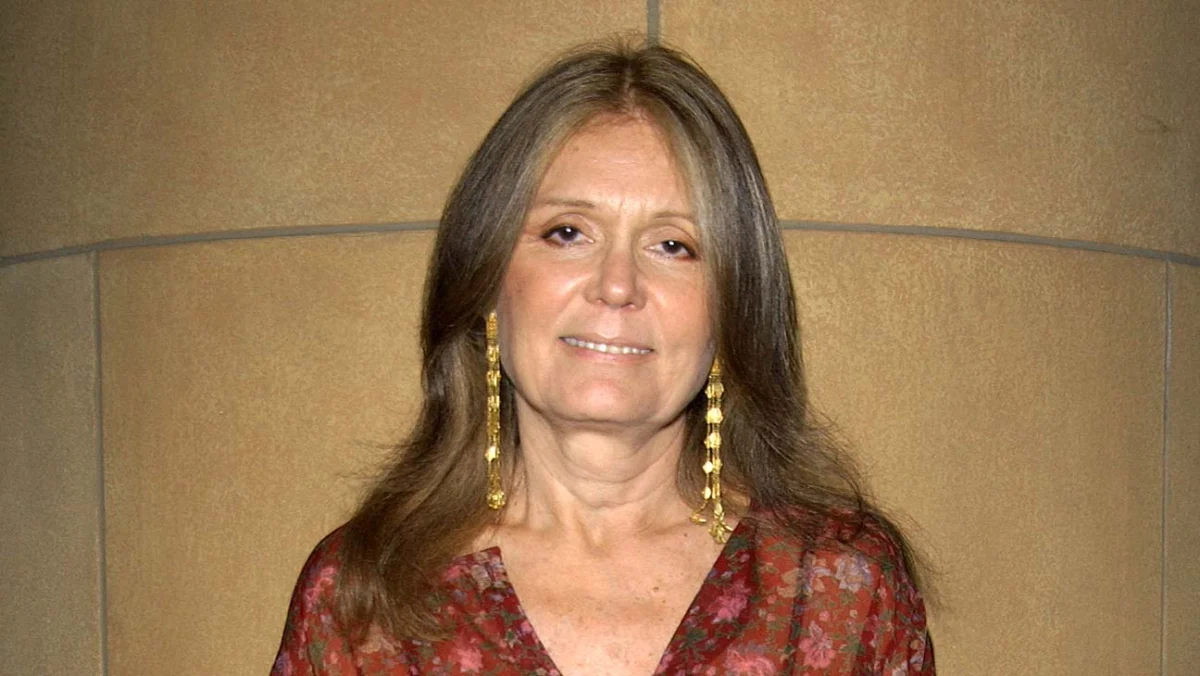
The world of activism, journalism, and feminist thought is in mourning following the announcement of the death of Gloria Steinem, a towering figure of the feminist movement and a relentless champion for gender equality. Steinem passed away peacefully at her home in New York City on Thursday, surrounded by loved ones, according to statements released on her and her foundation’s official Instagram accounts. She was 92 years old.
Steinem’s passing marks the end of an era for a woman whose life’s work profoundly reshaped societal perceptions of women’s roles and rights. Her influence extended far beyond the confines of activism, permeating the realms of media, politics, and cultural discourse for over six decades.
A Life Dedicated to Advocacy and Enlightenment
Born in Toledo, Ohio, in 1934, Gloria Steinem’s early life was marked by her mother’s struggles with mental health, experiences that would later inform her empathy and advocacy for marginalized individuals. After graduating from Smith College, Steinem embarked on a career in journalism, a platform she masterfully utilized to amplify her progressive ideals.
Her early career saw her penning incisive political columns and features for publications such as New York magazine, Esquire, and The New York Times Magazine. Her sharp wit and keen observational skills quickly established her as a prominent voice in the media landscape. This period also saw her contribute to the groundbreaking satirical television series That Was the Week That Was, earning her an Emmy nomination in 1965 alongside collaborators like David Frost and Buck Henry.
Steinem’s commitment to social justice was not confined to her writing. In 1971, she co-founded the National Women’s Political Caucus, an organization dedicated to increasing women’s participation in politics and advocating for policies that advanced gender equality. Simultaneously, she was instrumental in the creation of Ms. Magazine, a publication that became a vital organ for feminist discourse, providing a platform for women’s voices and experiences that had long been overlooked by mainstream media. Ms. Magazine quickly became a cultural touchstone, reaching hundreds of thousands of readers and fostering a sense of community and empowerment among women across the nation.
Beyond her journalistic and organizational achievements, Steinem was a prolific producer and advocate for crucial social issues. She produced and hosted HBO’s Emmy-winning 1993 documentary Multiple Personalities: The Search for Deadly Memories, which shed light on the complexities of child abuse and recovered memories. Later, in 2016, she lent her voice and vision to Viceland’s Emmy-nominated docuseries Woman, further exploring and highlighting the diverse experiences of women globally.
A Legacy of Progress and Empowerment
The news of Steinem’s death sent ripples of grief and admiration throughout the entertainment, political, and activist spheres. Social media platforms were quickly flooded with tributes from prominent figures who acknowledged her indelible impact on the progress of women’s freedom and rights.
Oprah Winfrey, a longtime admirer and friend, articulated the profound legacy Steinem leaves behind: "Every woman who has ever walked into a room knowing she belongs there; every woman who has demanded equal pay, equal respect, ownership of her own body, and the right to make her own choices; every girl who has grown up assuming that her dreams are hers to pursue – whether she knows Gloria Steinem’s name or not – is living, in some measure, inside the progress Gloria helped create. She leaves us with more freedom than she inherited and with the responsibility to keep widening that freedom for the women and girls who come next."
Actress and writer Lena Dunham shared a poignant reflection, recalling Steinem’s personal warmth and generosity: "It will never cease to amaze me that I had the chance to know you. But- despite your towering stature, your thousands of obligations, the urgency of your mission- you gave so many women the chance to know you. You weren’t just generous with your life force, your vision or your intellect: you were generous with your time, your laughter and even your jewelry (like the time I admired your silver vulva ring and you plucked it off your hand and placed it on mine)."
Meghan Markle, the Duchess of Sussex, also paid tribute, highlighting a personal connection forged through shared advocacy. Steinem had presented Markle with the Ms. Foundation’s Women of Vision Award in 2003. Markle reflected on their bond, noting Steinem’s philosophy of interconnectedness: "’we are linked, not ranked’ she would tell me, and the bracelet she gave me said exactly that. I still wear it with pride," Markle wrote on her Instagram, underscoring Steinem’s belief in collective strength.
Julianne Moore, who portrayed Steinem in the 2020 biographical drama The Glorias, spoke about the profound impact of embodying the activist: "The time I spent studying Gloria Steinem in order to play her was one of the most edifying of my life."
A Chronology of Influence
Gloria Steinem’s life was a continuous unfolding of activism and intellectual engagement. Her journey from a burgeoning journalist to a global feminist icon can be traced through key milestones:
- 1960s: Begins career in journalism, gaining recognition for her sharp writing and critical analysis. Covers significant social and political issues, laying the groundwork for her later activism.
- 1969: Publishes an exposé on Playboy bunnies, which brings her national attention and further solidifies her role as a feminist voice.
- 1971: Co-founds the National Women’s Political Caucus, a pivotal organization aimed at increasing women’s political power.
- 1972: Co-founds Ms. Magazine, which becomes a groundbreaking platform for feminist discourse and women’s empowerment. The magazine’s first issue, featuring Steinem on the cover, sold out rapidly, demonstrating a significant unmet demand for such content.
- 1970s-1980s: Becomes a leading spokesperson for the feminist movement, traveling extensively, giving speeches, and participating in public debates to advocate for women’s rights, including reproductive freedom, equal pay, and an end to gender-based violence.
- 1993: Produces and hosts the Emmy-winning HBO documentary Multiple Personalities: The Search for Deadly Memories.
- 2000s: Continues to be an active voice, engaging with new generations of activists and advocating for continued progress on gender equality and other social justice issues.
- 2016: Serves as executive producer and host for Viceland’s docuseries Woman.
- 2020: The biographical film The Glorias, chronicling her life and activism, is released, bringing her story to a wider audience.
- 2023: Passes away at the age of 92, leaving behind a profound and enduring legacy.
Broader Impact and Enduring Implications
Steinem’s influence transcended specific policy victories; she fundamentally altered the cultural conversation around gender. Her ability to articulate complex feminist theories in accessible language, coupled with her unwavering commitment to intersectionality—recognizing how various forms of oppression intersect—resonated deeply with millions.
Her work with the National Women’s Political Caucus, for instance, contributed to a measurable increase in women running for and holding political office over the subsequent decades. According to data from the Center for American Women and Politics at Rutgers University, the percentage of women in Congress has steadily risen since the 1970s, a trajectory undoubtedly influenced by the groundwork laid by Steinem and her contemporaries.
The establishment of Ms. Magazine provided a critical space for the dissemination of feminist ideas, fostering a generation of readers who became active participants in the movement. The magazine’s circulation, peaking at over 500,000 subscribers in the 1980s, signifies the widespread appeal and impact of its content.
Steinem’s advocacy for reproductive rights, a cornerstone of feminist struggle, has been particularly impactful. Her consistent voice in support of abortion access and bodily autonomy has been instrumental in shaping the ongoing debate and legal challenges surrounding these issues. Similarly, her tireless work for equal pay has contributed to a greater awareness of the gender wage gap, even as disparities persist.
In an era where the fight for equality often faces significant opposition, Steinem’s legacy serves as a powerful reminder of the importance of sustained activism, intellectual rigor, and unwavering hope. The numerous tributes from political leaders, artists, and activists underscore the widespread recognition of her profound contribution to social progress. Figures like former First Lady Michelle Obama, Senators Elizabeth Warren and Kamala Harris, and global journalists like Christiane Amanpour have all acknowledged her pioneering spirit and the lasting impact of her vision.
Christiane Amanpour, in her tribute, stated, "Gloria Steinem will go down in history as one of the most important activists of all time, leading a movement for the equality of half the world: its women. She lived a long and passionate life dedicated to this vital and basic cause. She did it with intellectual precision."
Kamala Harris, reflecting on her own career, noted Steinem’s inspiration: "Gloria Steinem was a trailblazing activist, organizer, and journalist – an icon in so many ways. I first met her in the late ’90s, when I was a young prosecutor specializing in crimes against women and children and co-founded an organization called Women Count, where our slogan…"
The enduring challenge, as many have noted in their tributes, is to continue the work Steinem championed. Her life’s mission was not merely to achieve a certain set of goals, but to cultivate a society where equality and justice are not aspirations, but fundamental realities. Her passing is a moment for profound reflection on the progress made and a renewed commitment to the unfinished work of liberation. The echoes of her voice, her wisdom, and her courage will continue to inspire generations to come.