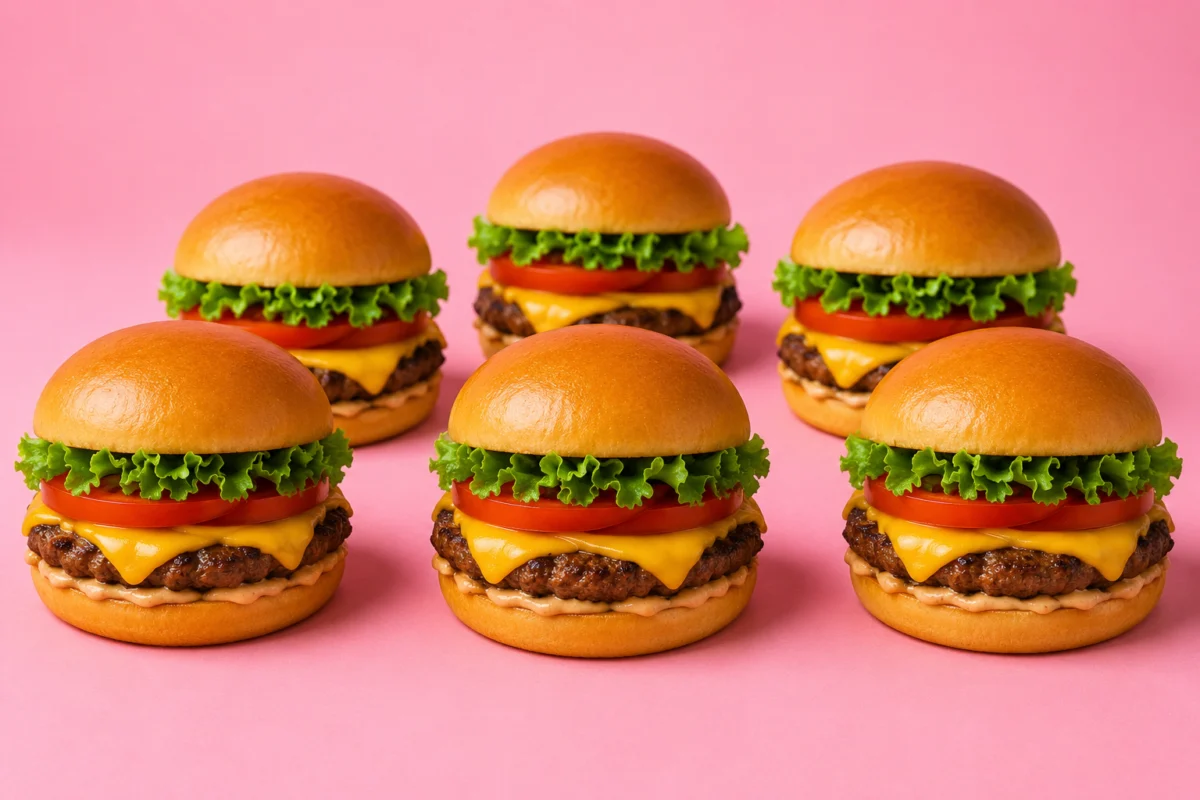
When you first encounter it, the sensation is unsettling, a subtle dissonance that whispers something is amiss. You might be perusing a digital menu in a bustling cafe, contemplating a bagel sandwich, when a visual detail catches your eye. Each illustration of the food item appears eerily flawless, meticulously symmetrical, and strangely smooth—a hyper-realism that provokes a visceral sense of unease. This isn’t paranoia; you’re not losing your mind. This peculiar aesthetic is the hallmark of generative AI menus, a burgeoning trend in the restaurant industry, powered by models trained on a narrow, "pleasing" ideal that paradoxically feels wrong, even when the exact reason is difficult to articulate.
The phenomenon is widespread and varied. Sometimes, the AI-generated imagery is so overtly artificial it crosses into the realm of the absurd, like a burrito adorned with cheese so impossibly bubbly and molten it resembles avant-garde sculpture more than a meal. More frequently, however, the visuals are deceptively ordinary, requiring a second, closer look to discern the subtle imperfections that betray their artificial origin. It’s in these minor details—a texture too uniform, a sheen too perfect, an impossible arrangement of ingredients—that the illusion begins to crumble, leaving patrons with a lingering sense of discomfort.
The Subtle Disturbances of Digital Cuisine
The integration of artificial intelligence into daily life has accelerated dramatically in recent years, with generative AI models like Midjourney, DALL-E, and Stable Diffusion democratizing image creation. What once required a skilled graphic designer or food photographer can now be conjured in moments with a text prompt. For restaurants, particularly small businesses and fast-casual chains, the appeal is clear: cost-saving, speed, and accessibility to professional-looking marketing materials without the significant investment. Yet, this convenience comes with an unforeseen aesthetic cost, manifesting as the "uncanny valley" of food photography.
This uncanny effect, typically associated with robotics or CGI characters that are almost, but not quite, human, now extends to culinary depictions. Consumers are instinctively wired to recognize natural patterns and textures in food; deviations, however slight, register as abnormal. The perfectly round scoop of ice cream, the uniformly browned hamburger bun, or the impossibly stacked layers of a sandwich, while superficially appealing, lack the organic imperfections that signal authenticity and freshness. This absence of natural variation can subtly undermine consumer trust, creating a subconscious barrier between the diner and the dish.
An Alien’s Attempt at a Pizza: Understanding the AI Aesthetic
Alex Lisle, CTO of Reality Defender, a company at the forefront of AI detection and content verification, aptly describes the phenomenon: "It’s almost like an alien trying to make a pizza without understanding its core principles." This analogy highlights a fundamental limitation in how these AI models learn and generate content. Large language models (LLMs) and diffusion models, the computational engines behind seemingly omniscient chatbots and sophisticated image generators, are trained on colossal datasets scraped from the internet. They operate by identifying statistical patterns and relationships within this data to predict and construct new outputs based on user prompts.
Lisle explains that the resulting aesthetic—where every ice cream scoop is a perfect sphere and shrimp appear genetically modified to curl into "Lovecraftian food horrors" that eat their own tails—stems directly from the nature of their training data. These models are not discerning artists; they are pattern-matching machines. If a significant portion of their training data comprises highly stylized commercial photography—such as the meticulously staged, hyper-optimized images found on fast-food menus from a decade ago—the AI will learn to emulate and even exaggerate these characteristics. "A lot of this stuff looks like a Chili’s menu from 2015, and there’s a reason for that," Lisle notes, "That was the corpus of work from which [the models] drew their function."
This process of learning from existing commercial aesthetics, which are themselves designed for maximal appeal, leads to a hyper-optimization that strips away the natural nuances of food. Food stylists and photographers employ various tricks—from using glue instead of milk for cereal to painting grill marks on burgers—to make food look perfect for advertising. AI models, in essence, learn these "tricks" but apply them with a digital precision that often overshoots realism, resulting in images that are technically perfect but emotionally inert or even unsettling.
The Feedback Loop: Model Collapse and Aesthetic Convergence
A critical concern in the rapid proliferation of generative AI content is the potential for "model collapse" or "convergence." AI models require vast quantities of novel, diverse, and high-quality data to continue learning and improving. Companies like Amazon have reportedly gone to extreme lengths, even destroying rare books after scanning them, to feed their AI models with fresh data. However, as AI-generated content becomes more prevalent, it inevitably begins to "seep" back into the very datasets used to train future iterations of these models.
When AI models are fed an increasing amount of their own synthetic output, a detrimental feedback loop can occur. Lisle likens model collapse to "mad cow disease," where "when you feed the outputs from one model back into itself, eventually the inbreeding becomes too much, and the whole thing collapses." While the uncanny food menus might not represent a full-blown "collapse," they demonstrate a phenomenon known as "convergence." Convergence is a less extreme but still problematic degradation, where the quality and diversity of an AI’s outputs diminish without rendering the model entirely useless.
This process is particularly evident in the homogenization of AI-generated food images. If an AI model is tasked with creating a menu for a fast-food restaurant, it will reference countless existing menus from popular chains like Wendy’s, Burger King, and McDonald’s. These commercial menus already share a distinct, optimized style. The AI, learning from this established aesthetic, will then generate new menus that mimic, and often amplify, that same style. If these AI-generated menus are then re-ingested into future training datasets, they further reinforce this narrow aesthetic, creating a self-perpetuating cycle of bland uniformity and artificial perfection. The unique textures, vibrant colors, and subtle imperfections that make real food appetizing are progressively "shaved off," as Lee Rainie, Director of the Imagining the Digital Future Center at Elon University, describes it. The drive for "pleasingness" or "not being offensive" in the training data ultimately leads to a sterile homogenization.

The "Shaving Off the Edges": Iterative Degradation in Practice
The detrimental effects of this aesthetic convergence are not merely theoretical; they can be observed in real-world scenarios. Social media users have conducted experiments illustrating how AI-generated food images degrade with successive edits. One notable example by X user Labtec demonstrated the phenomenon by generating a restaurant menu in ChatGPT and then applying 100 iterative edits. With each revision, the food imagery progressively lost its resemblance to actual edibles, becoming increasingly generic, smooth, and unsettling. "The end result actually makes me uncomfortable," Labtec wrote, a sentiment widely echoed by others who replicated the experiment.
Restaurants, often unaware of this iterative degradation, likely fall victim to this very process. When they use AI to generate a menu and then make small, seemingly innocuous edits—tweaking prices, altering item names, or adjusting layout—the underlying AI model may subtly regenerate or modify the associated images. Each regeneration, drawing from the same narrow aesthetic corpus, nudges the images further away from naturalistic representation, making the food items look increasingly round, smooth, and artificial. This explains why many AI-generated menu items share a similar, almost plasticine quality.
The psychological impact of these images is significant. Research from the University of Duisburg-Essen in Germany has confirmed that AI-generated food images indeed exhibit an "uncanny valley" effect. Images that were almost real, but not quite, elicited higher levels of disgust and unease in viewers compared to images that were obviously fake. This scientific backing validates the widespread consumer sentiment: there’s an almost unexplainable intuition about AI-generated content that people find hard to articulate but "kind of know it when they see it," as Rainie observes. This innate aversion is a significant factor behind the pronounced backlash against restaurants adopting these AI menus.
Behind the Screens: Why Restaurants Adopt AI Menus
The rapid adoption of AI-generated menus by restaurants is driven by a combination of economic pressures, technological allure, and a lack of awareness regarding the potential pitfalls. For many small to medium-sized eateries, the cost of professional food photography, graphic design, and menu printing can be substantial, often running into hundreds or even thousands of dollars. Generative AI offers a seemingly irresistible alternative: high-quality visuals produced almost instantly and at a fraction of the cost.
Furthermore, in an increasingly digital world, businesses are keen to project an image of modernity and technological savvy. Adopting AI for menu design can be perceived as a forward-thinking move, aligning with broader trends in digital marketing and operational efficiency. The perceived convenience—the ability to quickly update menus, introduce seasonal specials, or A/B test different visual layouts without external help—adds to AI’s appeal. However, this pursuit of efficiency often overshadows critical considerations of authenticity and consumer perception. The short-term gains in cost and speed are increasingly being weighed against the long-term erosion of trust and the potential for negative brand associations.
A Crisis of Trust: Beyond the Dinner Plate
The implications of AI-generated uncanny food extend far beyond the dinner table. The erosion of trust in visual media is a profound societal challenge. As Alex Lisle emphasizes, "Seeing and hearing has always been believing, to the point where even our court systems are entirely tuned to the idea that the gold standard in evidence is taped confessions and videotaped evidence." The proliferation of increasingly sophisticated AI-generated content—deepfakes, synthetic audio, and hyper-realistic images—fundamentally challenges this long-held tenet. The line between reality and simulation blurs, making it progressively difficult for individuals to discern what is authentic.
This crisis of trust has significant ramifications across various sectors. In journalism, the integrity of visual evidence is paramount; in legal proceedings, the admissibility of digital media becomes a complex issue; and in public discourse, the spread of misinformation can be exacerbated by convincing, yet fabricated, imagery. The rise of companies like Reality Defender, specializing in AI detection and content verification, underscores the urgent need for tools and techniques to identify and authenticate digital content. These startups represent a growing industry dedicated to safeguarding information integrity in an era where AI can effortlessly create convincing fictions. The ethical imperative for transparency and disclosure regarding AI-generated content is becoming increasingly critical for businesses and content creators alike.
Navigating the Future of Food Imagery in the Age of AI
Given the strong negative reactions from consumers and the broader societal implications, a reevaluation of AI’s role in food imagery is warranted. For restaurants, a prudent approach involves recognizing AI as a tool for ideation or preliminary design, rather than a substitute for authentic representation. Investing in professional photography or human graphic designers, even on a smaller scale, can preserve the vital connection between the visual menu and the actual dining experience. Hybrid models, where AI generates initial concepts that are then refined and authenticated by human artists, could offer a balanced solution. Transparency, too, is key; disclosing when AI has been used in menu design can help manage consumer expectations and rebuild trust.
For AI developers, the challenge lies in curating more diverse and robust training datasets that encompass the natural variations and imperfections inherent in real-world objects. Incorporating human feedback loops that prioritize authenticity over mere "pleasingness" is crucial. Exploring methods for embedding digital watermarks or metadata that clearly identify AI-generated content could also become an industry standard, aiding in content verification.
Ultimately, the phenomenon of the uncanny AI menu serves as a potent reminder that while artificial intelligence offers unprecedented efficiency and creative potential, its application requires careful consideration of human psychology, ethical implications, and the subtle nuances of authenticity. The future of food imagery, and indeed all digital content, will depend on our collective ability to navigate the complex interplay between technological advancement and human perception, ensuring that convenience does not come at the cost of trust and genuine connection.