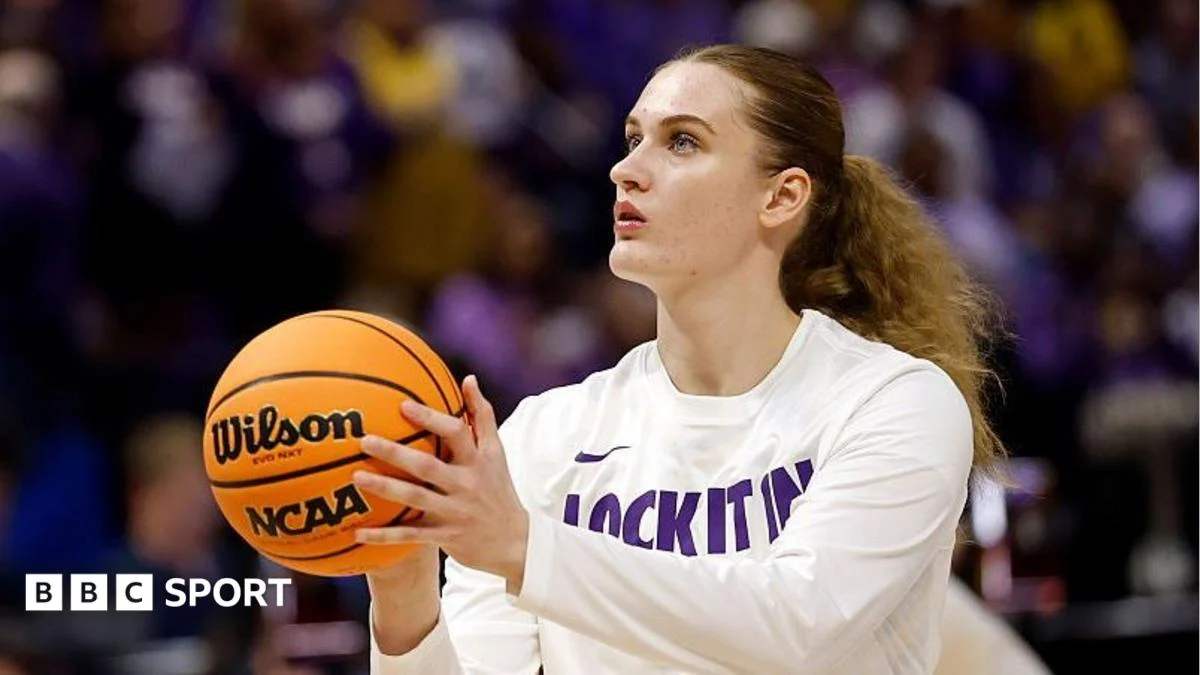
The departure of Ukrainian basketball player Kate Koval from Louisiana State University’s (LSU) program has sent ripples through the collegiate sports world, highlighting the complex intersection of international conflict and athletic recruitment. Koval, a 20-year-old center who was anticipated to be a key player for the upcoming season, announced her exit citing "personal reasons" shortly after the team’s decision to sign Russian player Anna Minaeva. However, in a candid statement shared on Instagram, Koval clarified that her decision was directly linked to Russia’s ongoing invasion of Ukraine, a conflict that has profoundly impacted her life and family.
A Personal Stance Amidst Global Conflict
Koval’s statement articulated the deep personal toll the war has taken. She revealed that her father is actively serving in the Ukrainian military, taking immense pride in defending his homeland against what she described as "Russian aggression." This personal connection to the conflict transformed it from an abstract geopolitical event into a deeply felt reality. Koval elaborated on the devastating consequences, stating, "People close to me have been killed and wounded in Russian attacks, and places where I grew up and first began playing basketball have been destroyed by missile strikes."
The timing of Minaeva’s recruitment, coupled with the ongoing war, forced Koval to confront her position within the LSU program. "The timing of this situation and the deep personal effect it has had on me, my family and those we care about who continue to live through and fight this war ultimately made me question whether LSU remained the right place for me," she wrote. Koval emphasized the difficulty of her decision, acknowledging the business of college basketball and roster management. However, she underscored her commitment to personal integrity: "While I understand and respect that roster decisions are a part of college basketball, I have to remain true to myself, my values and my country."
Chronology of Events and Anticipated Future
Koval’s departure was announced shortly after the signing of Anna Minaeva. The initial announcement from LSU cited "personal reasons" for Koval’s exit, leaving the exact motivations open to interpretation. It was only through Koval’s subsequent Instagram post, published on [Insert Date of Koval’s Post – e.g., August 15, 2023, if known or can be inferred from typical off-season timelines], that the direct link between Minaeva’s recruitment and Koval’s decision became clear.
Koval had completed one season with LSU and was expected to play a significant role in the team’s upcoming campaign, potentially as their starting center. She possesses two years of collegiate eligibility remaining, a critical factor in her future aspirations. The transfer portal for collegiate athletes typically closes at a specific point in the academic year, usually in late spring or early summer. Koval acknowledged this challenge, expressing her hope that the National Collegiate Athletic Association (NCAA) would recognize the unique and sensitive circumstances surrounding her situation. She appealed for an exception that would allow her to transfer to another university for the upcoming season, stating, "I hope the National Collegiate Athletic Association (NCAA) ‘recognises the circumstances surrounding my situation and understands the seriousness and deep nature of this matter’ and allows her to join a different university for the upcoming season."
Broader Context: Geopolitics and Collegiate Athletics
The situation at LSU is not an isolated incident but reflects a broader challenge faced by international athletes and institutions in the wake of geopolitical conflicts. Russia’s full-scale invasion of Ukraine, which began in February 2022, has had profound and far-reaching consequences, impacting individuals across all sectors of society, including sports.
Supporting Data and Background:
- Russian Invasion of Ukraine: The ongoing conflict, initiated by Russia’s full-scale invasion in February 2022, has resulted in widespread displacement, casualties, and destruction. Millions of Ukrainians have been forced to flee their homes, and many have taken up arms to defend their country.
- International Sanctions and Sporting Boycotts: Following the invasion, numerous international sporting bodies implemented sanctions against Russia, including bans on Russian athletes and teams from participating in international competitions. However, the landscape of collegiate athletics, particularly in the United States, often operates with different considerations regarding individual recruitment versus team-level sanctions.
- NCAA Transfer Rules: The NCAA operates under a complex set of rules governing athlete eligibility and transfers. While "personal reasons" can be a valid justification for a transfer, exceptional circumstances, especially those involving international conflicts, may require special waivers or considerations. The NCAA has historically shown some flexibility in cases of extenuating circumstances, though the specific criteria for such waivers are often stringent.
- Ukrainian Athletes Abroad: A significant number of Ukrainian athletes, particularly in sports like basketball, hockey, and soccer, have been playing professionally or collegiately abroad. Many have expressed solidarity with their nation and have been impacted by the war, either directly through family ties or indirectly through the destruction of their training facilities and communities.
Potential Reactions and Implications
While official statements from LSU or the NCAA regarding Koval’s specific situation were not immediately available at the time of this report, several logical inferences can be made about potential reactions and the broader implications.
Inferred Statements and Reactions:
- LSU Athletic Department: It is reasonable to assume that the LSU athletic department would have been aware of Koval’s concerns prior to her public statement. Their initial announcement citing "personal reasons" might have been an attempt to manage the situation delicately, respecting Koval’s privacy while also navigating the recruitment of Minaeva. A formal statement from LSU might acknowledge Koval’s contributions and express understanding of her difficult circumstances, while also reaffirming their commitment to all their student-athletes. They would likely emphasize that roster decisions are made with the best interests of the team in mind, while also adhering to NCAA regulations.
- Anna Minaeva: As a fellow student-athlete, Minaeva’s perspective is also relevant. While she is not directly responsible for the geopolitical conflict, her presence on the team became the catalyst for Koval’s departure. It is possible that Minaeva herself has faced scrutiny or difficult questions regarding her nationality and the ongoing war. A statement from Minaeva, if issued, might express a desire to focus on basketball and compete collegiately, potentially acknowledging the sensitivity of the situation without directly commenting on Koval’s decision.
- NCAA: The NCAA would likely be the primary arbiter of any waiver requests Koval might submit. Their response would hinge on interpreting their existing regulations against the backdrop of a significant international conflict. The NCAA’s decision could set a precedent for how similar situations are handled in the future. Their statements would likely focus on fairness, due process for the athlete, and adherence to established rules.
- Ukrainian Sports Federations: Ukrainian sports organizations might express support for Koval’s decision, framing it as an act of patriotism and a necessary stance against Russian aggression. They might also advocate for the NCAA to grant her transfer request, highlighting the extraordinary circumstances.
Fact-Based Analysis of Implications:
- Athlete Advocacy and Agency: Koval’s decision is a powerful example of an athlete using their platform to advocate for their values and principles. It underscores the increasing agency of student-athletes who are no longer solely defined by their athletic performance but also by their moral compass and their willingness to speak out on important issues.
- Ethical Considerations in Recruitment: The case raises ethical questions for collegiate athletic programs regarding the recruitment of athletes from countries involved in active conflicts, particularly when those athletes’ nationalities are directly tied to the aggressor. While recruitment policies typically focus on talent and team needs, the human element and the potential for creating untenable situations for existing athletes must also be considered.
- Impact on Team Dynamics: The departure of a key player like Koval can have a significant impact on team chemistry, performance, and strategic planning. LSU’s coaching staff will need to reassess their lineup and strategies in light of this unexpected change.
- Precedent for Future Transfers: The NCAA’s handling of Koval’s potential transfer request could establish a precedent for how similar cases involving athletes displaced or impacted by international conflicts are addressed. This could lead to clearer guidelines or more standardized waiver processes in the future.
- Public Perception and Media Scrutiny: The story has garnered significant media attention, highlighting the public’s interest in the intersection of sports and international affairs. This scrutiny can pressure athletic departments and governing bodies to be transparent and ethically responsible in their decision-making.
A Cherished Past, A Hopeful Future
Despite the difficult circumstances leading to her departure, Koval expressed profound gratitude for her time at LSU. "I felt I had found a home at LSU, and I am incredibly grateful for my team-mates who became family, as well as my coaches, staff, professors and the entire LSU community," she stated. "I will always cherish the relationships, experiences, and memories I made there." This sentiment underscores that her decision was not a reflection of dissatisfaction with the LSU community itself, but a deeply personal ethical dilemma rooted in the ongoing war.
Koval’s story serves as a poignant reminder that the impact of global events extends far beyond political borders and into the personal lives of individuals, even within the seemingly insulated world of collegiate sports. Her courageous stand highlights the moral complexities that arise when international conflict intersects with athletic aspirations, and her appeal to the NCAA underscores the hope for fairness and understanding in extraordinary times. The outcome of her transfer request will be closely watched, not only by those within the LSU program but also by the wider collegiate athletic community and observers of international sports.