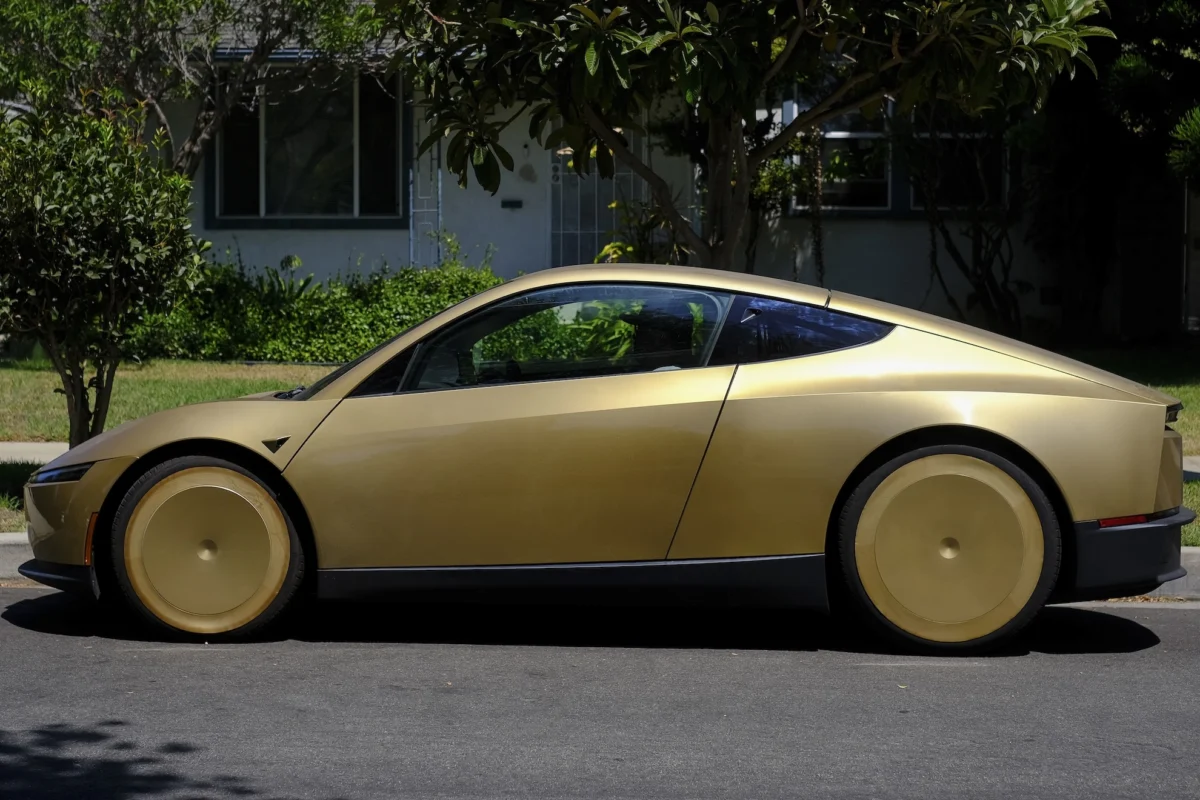
The National Highway Traffic Safety Administration (NHTSA), the United States’ paramount automotive safety regulator, has launched an urgent investigation into Tesla’s controversial decision to deploy its new Cybercab on public thoroughfares without conventional manual controls such as a steering wheel or pedals. This unprecedented probe, initiated on Friday morning, September 4, 2026, commenced mere hours after the inaugural Cybercabs began operating on the streets of Austin, Texas, marking a significant escalation in the regulatory oversight of autonomous vehicle technology. The federal inquiry, identified under NHTSA ID AQ26002, seeks to meticulously examine the underlying processes and technical data upon which Tesla based its self-certification of the Cybercab’s compliance with Federal Motor Vehicle Safety Standards (FMVSS), sparking immediate debate across the automotive industry and among public safety advocates.
The Regulatory Gauntlet: NHTSA’s Swift Action
Federal vehicle safety regulations have historically mandated the inclusion of manual controls, including brake pedals, within all road-going automobiles. However, the Department of Transportation (DOT) had recently, on June 25, 2026, put forth a proposal to potentially amend these long-standing requirements, specifically for vehicles engineered to operate autonomously. This proposed regulatory shift, which was widely seen as a potential boon for companies like Tesla that are aggressively pursuing fully autonomous fleets, remains in a consultative phase, underscoring the legal ambiguity surrounding Tesla’s latest deployment.
NHTSA’s official statement on Friday confirmed that Tesla had informed the agency of its self-certification of the Cybercab, asserting full compliance with all applicable FMVSS rules. Automakers traditionally undertake this self-certification process, attesting that their vehicles meet the rigorous federal safety benchmarks before being introduced to the market. However, the agency’s swift initiation of an "audit query" into Tesla’s certification stands as a testament to the novel and potentially contentious nature of the Cybercab’s design and its immediate public rollout. The investigation aims to "examine the process and technical data on which Tesla relied when certifying the Cybercab and related issues," with a particular focus on "the extent to which the company’s certification depended on determinations that certain federal motor standards are inapplicable to the Cybercab." This suggests NHTSA is scrutinizing whether Tesla unilaterally decided that certain safety standards designed for human-operated vehicles simply do not apply to a driverless platform.
Tesla’s Ambitious Vision and the Drive for Autonomy
Tesla, under the leadership of CEO Elon Musk, has long championed the vision of a fully autonomous future, with its "Full Self-Driving" (FSD) software being a cornerstone of its technological development. Musk has frequently, and sometimes controversially, set aggressive timelines for the widespread availability of Tesla robotaxis, promising a transformative shift in urban mobility. The launch of the Cybercab represents a pivotal, tangible step toward realizing this ambition, moving beyond software upgrades for existing vehicles to a purpose-built autonomous platform. The Cybercab, with its futuristic design and complete absence of traditional controls, embodies Tesla’s commitment to a truly driverless experience, aiming to revolutionize ride-sharing and personal transportation.
For years, Tesla has been gathering vast amounts of real-world driving data through its FSD beta program, utilizing its customer base as an extended testing fleet. While this approach has accelerated data collection, it has also drawn criticism from safety advocates who argue that such widespread public testing of evolving autonomous systems could pose undue risks. The Cybercab’s design, entirely devoid of human override mechanisms, elevates these safety concerns to a new level, necessitating an even more rigorous regulatory scrutiny than previous FSD iterations. The company’s decision to self-certify and immediately deploy these vehicles suggests a high degree of confidence in its autonomous technology and its interpretation of existing safety standards, a confidence now being directly challenged by federal regulators.
A Precedent Set: The Zoox Journey
NHTSA’s inquiry into Tesla’s Cybercab is not without precedent, drawing parallels to a similar regulatory process initiated against Zoox, an Amazon-owned autonomous vehicle company. In 2022, Zoox similarly self-certified its cube-like robotaxi, which also lacked conventional manual controls. This act prompted NHTSA to open what it termed a "special order," seeking comprehensive information from Zoox regarding its certification. The following year, in 2023, the agency formally launched an "audit query" against Zoox, mirroring the exact process now being applied to Tesla.
Zoox’s journey through the regulatory maze provides crucial context for Tesla’s current situation. While Zoox was still largely in its testing phase when the audit query began, the investigation undoubtedly slowed its path to commercialization. Zoox consistently maintained that its self-certification process was robust and sufficient. After extensive engagement with federal authorities, Zoox eventually received a temporary exemption from certain FMVSS standards in 2025, specifically allowing it to demonstrate its technology, but not yet to commercially operate and charge for rides. This exemption was a significant hurdle, requiring the company to formally file for a Part 555 exemption from eight specific FMVSS provisions.
The culmination of Zoox’s diligent regulatory navigation came in July 2026, when it received final federal approval for its exemption. This landmark decision eliminated one of the last major regulatory obstacles, permitting Zoox to launch its commercial robotaxi service. Under the terms of this temporary exemption, Zoox is authorized to add 2,500 vehicles per year to its commercial fleet for a period of two years. Weeks after receiving this final approval, Zoox commenced charging for rides in Las Vegas, becoming a trailblazer in the nascent commercial robotaxi market. The Zoox case clearly illustrates that even with self-certification, federal regulators can and will impose a lengthy and detailed review process, potentially delaying or restricting commercial operations until satisfied with the safety assurances.
The Evolving Landscape of Autonomous Vehicle Regulation
The regulatory environment for autonomous vehicles remains a complex and rapidly evolving domain. The existing FMVSS standards were largely drafted in an era when human drivers were an inherent part of every vehicle’s operation. Adapting these standards to accommodate vehicles entirely devoid of human controls presents a significant challenge for regulators. The Department of Transportation’s proposed rule change in June 2026 to remove manual control requirements for self-driving vehicles underscores the federal government’s acknowledgment of this evolving technological landscape. However, such changes are not instantaneous and typically involve extensive public comment periods, scientific review, and political considerations.
The political climate also plays a significant role. Zoox navigated the regulatory process under both the Biden and Trump administrations, experiencing the ebb and flow of executive priorities and departmental leadership. The Trump administration, for instance, showed a greater propensity for deregulation and fostering innovation, which might have influenced the initial proposals to relax manual control requirements. Conversely, the Biden administration has often emphasized consumer protection and safety, which could lead to a more cautious approach to new technologies. The timing of Tesla’s Cybercab launch, just months after the DOT’s proposal but before its finalization, places it squarely in this regulatory grey area, intensifying the scrutiny from NHTSA.
Industry Reactions and Safety Concerns
The immediate deployment of the Cybercab without a steering wheel or pedals has elicited a range of reactions across the automotive and technology sectors. Industry analysts are closely watching to see if Tesla’s aggressive strategy will force regulators to accelerate their rulemaking processes or if it will lead to a protracted legal battle. Safety advocacy groups have voiced concerns, emphasizing the importance of a robust regulatory framework to ensure public trust in autonomous technology. They argue that rushing unproven driverless vehicles onto public roads without adequate safeguards could erode public confidence and ultimately hinder the broader adoption of AVs.
Legal experts suggest that Tesla’s self-certification, while standard practice for conventional vehicles, faces a higher burden of proof when applied to a fundamentally new vehicle architecture that explicitly eschews traditional safety features. The core of NHTSA’s investigation will likely revolve around how Tesla demonstrated an "equivalent level of safety" without the mandated manual controls, or how it justified the inapplicability of those standards. This involves not only the performance of the autonomous driving system but also the vehicle’s design in the event of system failures or unforeseen circumstances. The public, already grappling with the complexities of existing semi-autonomous features, is likely to view fully driverless vehicles with a mix of excitement and trepidation, making clear regulatory oversight paramount.
Potential Roadblocks for Tesla’s Robotaxi Ambitions
The NHTSA investigation poses a significant potential roadblock for Tesla’s ambitious robotaxi rollout timeline. While Tesla has a history of pushing boundaries and sometimes clashing with regulators, a full-fledged audit query from NHTSA could lead to substantial delays. The Zoox precedent demonstrates that such investigations can span years, involving detailed submissions of technical data, safety analyses, and potentially independent third-party verification. Any findings of non-compliance or insufficient data could result in mandated modifications to the Cybercab’s design, operational restrictions, or even a recall of the deployed vehicles.
Furthermore, a protracted regulatory battle could impact Tesla’s financial performance and investor confidence, especially given the company’s high valuation often tied to its future growth prospects in areas like robotaxis. The costs associated with complying with a federal investigation, legal fees, and potential redesigns could be considerable. More importantly, public perception is critical for the success of any new transportation service. A prolonged safety investigation, particularly one involving a novel vehicle design, could generate negative headlines and foster skepticism among potential users, undermining the commercial viability of the Cybercab service in its early stages.
The Broader Implications for the Autonomous Driving Industry
The outcome of NHTSA’s investigation into Tesla’s Cybercab will have profound implications for the entire autonomous driving industry. It will set a crucial precedent for how federal regulators approach the deployment of vehicles designed from the ground up for full autonomy, especially those that deviate significantly from established safety standards. If Tesla is able to swiftly resolve the inquiry and continue its commercial operations, it could embolden other AV developers to adopt more aggressive deployment strategies. Conversely, if NHTSA imposes significant restrictions or requires extensive modifications, it could signal a more cautious and prescriptive regulatory path for the industry as a whole.
This investigation highlights the inherent tension between rapid technological innovation and the imperative of public safety. As autonomous technology matures, regulators worldwide are grappling with the challenge of fostering innovation while ensuring robust safety standards. The Tesla Cybercab probe could serve as a catalyst for clearer, more comprehensive federal guidelines for Level 4 and Level 5 autonomous vehicles, potentially leading to new FMVSS provisions specifically tailored for driverless operations. The lessons learned from this case, both for Tesla and for NHTSA, will undoubtedly shape the future trajectory of autonomous mobility, influencing everything from vehicle design and testing protocols to commercial deployment strategies and public acceptance. The road to a fully autonomous future, it appears, will continue to be paved with complex regulatory challenges.