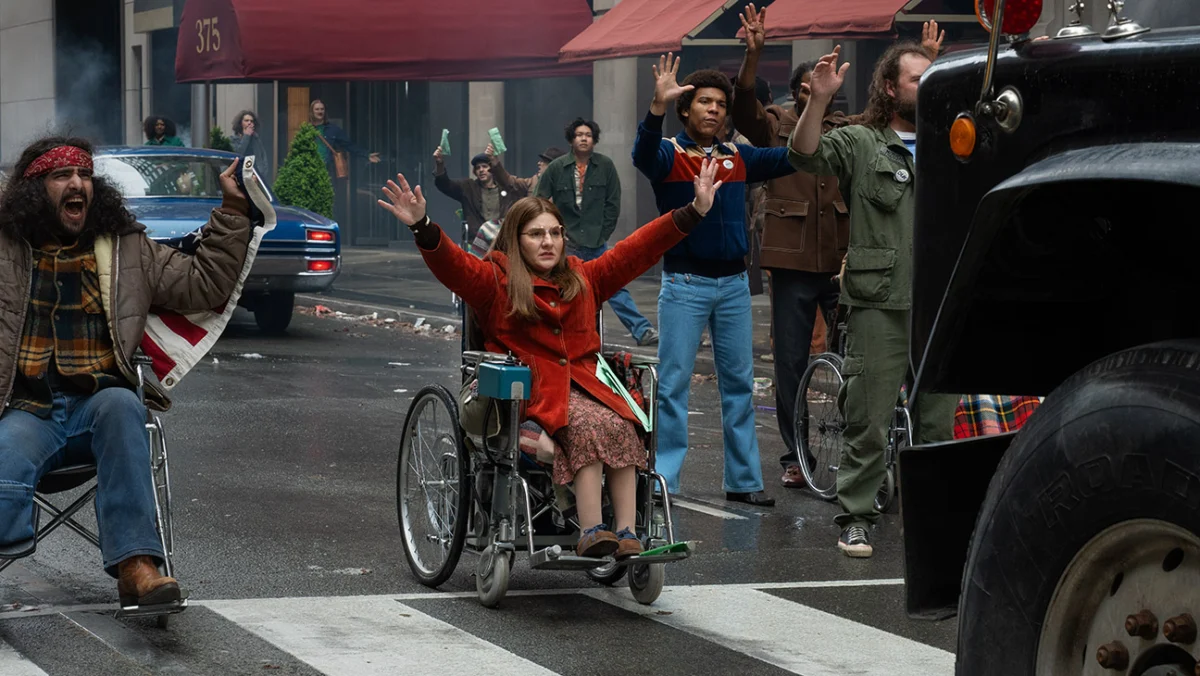
In the vibrant tapestry of late 1970s protest anthems, Iggy Pop’s "The Passenger" echoes with a potent resonance in the opening moments of Being Heumann. The immediate visual of wheels turning on pavement, a stark metaphor for movement and progress, quickly expands to reveal disability rights activist Judy Heumann navigating the bustling, often indifferent, urban landscape. Her determined journey, even in the face of an oncoming bus and blaring horn, sets the indelible tone for a film that unflinchingly chronicles a pivotal chapter in the American civil rights movement. Ruth Madeley’s portrayal of Heumann is a masterclass in embodying an “iron will and a take-charge attitude,” yet her fierce tenacity serves not to obscure, but to highlight the profound systemic challenges faced by individuals with disabilities in an era marked by a pervasive lack of accessibility. This compelling narrative, a triumphant return for director Siân Heder after her Oscar-winning CODA, draws directly from the real-life experiences of a coalition of activists who fought for their fundamental human rights, culminating in the longest occupation of a federal building in U.S. history.
The Seeds of the 504 Sit-In: A Fight for Federal Protections
The historical bedrock of Being Heumann lies in the Section 504 of the Rehabilitation Act of 1973. This landmark legislation, intended to provide the first federal civil rights protections for people with disabilities, remained largely unenforced for four years following its signing. This prolonged inaction ignited the fury and resolve of a community that had long endured systemic discrimination, exclusion, and the denial of basic opportunities. The Section 504 sit-in, as it came to be known, was not a spontaneous outburst but a calculated and necessary act of civil disobedience. The catalyst for the occupation was the urgent need to compel the Department of Health, Education, and Welfare (HEW) to implement regulations that would translate the promise of Section 504 into tangible change.
The San Francisco office of HEW became the unlikely battleground for this crucial struggle. On April 5, 1977, a diverse coalition of disability rights advocates, led by the indomitable Judy Heumann, occupied the building. Their demand was simple yet profound: the swift and comprehensive implementation of the Section 504 regulations. The occupation, initially met with skepticism and resistance, evolved into an unprecedented 28-day siege, a testament to the unwavering commitment of the protesters. This extended period of occupation was a strategic move, designed to disrupt government operations and force federal officials to acknowledge the urgency and legitimacy of their demands.
A Cinematic Echo of a Powerful Movement
Siân Heder, known for her sensitive direction in CODA, where she championed authentic representation by casting deaf actors in deaf roles, brings a similar integrity to Being Heumann. The film’s strength lies in its commitment to casting actors with disabilities to portray the diverse group of activists who spearheaded the 504 sit-in. This approach imbues the narrative with an unparalleled authenticity and emotional depth, allowing the lived experiences of the characters to resonate powerfully with the audience.
While audiences familiar with the Oscar-nominated documentary Crip Camp might find some narrative overlap, Heder and co-writer Rebekah Taussig are commended for their ability to distill a complex historical event into an accessible and emotionally resonant story. Their success in crafting a narrative that is both informative and deeply moving ensures that the film will reach a broad audience, particularly with its release on Apple TV on November 13th, following its theatrical debut.
The Enduring Relevance of Collective Action
Even as Being Heumann occasionally evokes the feel of an earnest, issue-driven television movie, its core questions remain strikingly relevant in contemporary society. The film probes the enduring power and necessity of protests and collective action in advocating for social change. Its most illuminating contribution lies in its capacity to educate a wider public about the systematic denial of basic human rights experienced by people with disabilities prior to the establishment of legal protections. The film’s timeliness is further amplified by recent political efforts to weaken existing disability rights protections, underscoring the ongoing vigilance required to safeguard these hard-won advancements.
The narrative skillfully depicts the profound courage, unwavering commitment, and remarkable cooperation that characterized the 504 sit-in. Activists from across the disability spectrum – including blind and deaf individuals, as well as wheelchair users – confronted internal disagreements and external political pressures. Their collective efforts forged a powerful front, demonstrating the transformative impact of unity in galvanizing change that would benefit millions.
Voices of Experience: Testimonies of Resilience
Some of the most poignant and affecting moments in the film are the direct testimonies of the activists as they finally engage with government representatives. These exchanges offer a raw and powerful glimpse into the decades of struggle, the denied educational opportunities, and the job rejections faced by individuals deemed unqualified despite their capabilities. The film doesn’t shy away from the tragic reality of countless individuals who were denied access to any form of assistance, effectively rendered invisible by their confinement to their homes. This stark reminder of the pre-existing conditions that necessitated the fight for basic rights adds a profound layer of gravity to the narrative.
Navigating the Political Landscape
At the heart of the governmental opposition stands HEW Secretary Joseph Califano, portrayed with a touch of buffoonery by Mark Ruffalo. Califano’s resistance is framed around the prohibitive cost of implementing the regulations, a figure of $2.4 billion in taxpayer dollars, which he argued necessitated further extensive review. Counterbalancing this opposition are figures like Democratic Congressman George Miller, played by Rob Delaney, and local television reporter Evan White, brought to life by Dylan O’Brien. White’s embedded reporting from within the occupied building, which eventually garners national attention, becomes a crucial element in amplifying the activists’ message. Both Delaney and O’Brien are noted for their characteristically impressive 1970s mustaches, adding a visual authenticity to the period setting.
Crucially, Heder and Taussig avoid portraying Miller, White, or even Califano in his eventual capitulation, as ableist saviors. The true backbone of the film is unequivocally the coalition led by Heumann. Her assertive leadership style, often characterized by her spirited defense, “I’m not an asshole. I’m just from Brooklyn,” reveals a leader who, while occasionally rubbing others the wrong way, remains the indispensable driving force behind the movement.
The Fabric of the Coalition: Key Figures and Their Contributions
Among the pivotal figures in the occupation is Kitty Cone, portrayed by Madeline Delp. Cone’s commitment to civility often contrasts with Heumann’s more direct approach, leading to moments where Heumann playfully dismisses her as a “Pollyanna.” The evolving friendship between these two women, marked by its realistic ebb and flow, culminates in a touching payoff in the film’s closing scenes.
Antwan Tolliver delivers a powerful performance as Brad Lomax, a member of the Black Panthers living with multiple sclerosis. Lomax’s pivotal role in securing essential provisions for the protesters, including a memorable scene where he enlists the party’s support for food deliveries, underscores the cross-community solidarity that bolstered the movement. Andrew Pilkington injects a much-needed dose of humor and intellectual depth as Hale Zukas, a pioneer in the independent living movement. Zukas, communicating via a pointer antenna and an alphabet board – a poignant reminder of the technological landscape before smartphones – articulates a central tenet of the movement: “Disability is not a tragedy. It’s a tremendous hassle.” This pithy statement encapsulates the pragmatic and resilient spirit of the activists.
The film also features compelling portrayals of allies such as Jim Pechin (Jon Beavers), a handsome military veteran, and Joni Breves (Roberta Colindrez), an openly lesbian activist. Both are drawn to Heumann’s “radical crip” energy, illustrating the multifaceted nature of the support network. The inclusion of the Ramones’ energetic anthem “Judy Is a Punk” during a breakthrough moment provides an extra layer of exhilaration, a well-earned triumph for Madeley’s dynamic performance.
Sustaining the Momentum: Challenges and Triumphs
As the sit-in stretches from days into weeks, the film’s dramatic momentum occasionally wanes, a natural consequence of covering an extended occupation that surpasses the two-hour mark. However, the inherent engagement of the characters, coupled with the authentic performances of the disabled actors, sustains audience investment. Their unwavering perseverance and the levity they maintain even amidst significant setbacks – including a particularly harrowing late-night police raid – make it impossible not to root for their success. Their irrepressible joy serves as a powerful tonic, and the film’s imaginative creation of a “sex tent” fashioned from protest banners and American flags offers a memorable testament to their indomitable spirit and creative resilience. The final success, the signing of the regulations, represents a victory not just for the immediate participants, but for generations of individuals who would benefit from these crucial protections.