The tranquil waters off the Gulf Coast of Mississippi, usually a beacon for recreational boaters, transformed into a perilous battleground for survival on Memorial Day weekend 2024. What began as an idyllic fishing expedition under a brilliant blue sky, punctuated by a mild three- to four-foot chop, quickly devolved into a desperate fight for life when a fishing vessel, approximately 40 miles offshore, vanished beneath the waves in a terrifyingly swift 30 seconds. This harrowing incident, involving a team of five, underscores the critical role of advanced search and rescue technology, particularly the Search and Rescue Satellite-Aided Tracking (SARSAT) system and personal locator beacons (PLBs), in saving lives at sea.
The Sudden Descent into Peril
The morning of the incident held all the hallmarks of a perfect day for deep-sea fishing. The five-person crew, experienced in navigating the Gulf’s expansive waters, had ventured far from shore, their focus on the promise of a bountiful catch. As they meticulously checked their sonar, scanning the depths for fish, an unforeseen catastrophe struck. The vessel, whose specific type and cause of sinking remain under investigation, succumbed with shocking speed. Within half a minute, the boat was gone, swallowed by the vast, indifferent ocean. The crew found themselves plunged into the water, fighting the immediate shock and the instinct to survive. Their struggle began instantly, a frantic effort to pull on life jackets and retrieve crucial supplies, like coolers that offered buoyancy and the slim hope of carrying a distress signal. In the immense expanse of the sea, human beings become virtually invisible, their small forms easily lost amidst the waves.
Easton Barrett, one of the five survivors, found himself facing the grim reality of their predicament. With his mobile phone, the only one among the crew, rendered useless by the lack of cell service 40 miles offshore, he recorded a brief, poignant farewell message. His intention was to secure the phone within a cooler, a desperate hope that someone, someday, might discover it and understand their final moments. This act, born of despair, highlights the isolation and helplessness that can engulf individuals stranded at sea without proper emergency communication tools. However, a crucial piece of equipment, almost an afterthought, was about to change their fate.
A Signal from the Abyss: The Activation of a PLB
Amidst the chaos and the growing dread, another team member, whose name has not been widely released, made a decisive action that would prove to be their salvation. A personal locator beacon (PLB), stowed away at the last minute, was activated. This small, yet incredibly powerful device, immediately initiated a chain of events that bridged the vast distance between their precarious position in the Gulf and the global network dedicated to saving lives. The PLB transmitted a distress signal to the Search and Rescue Satellite-Aided Tracking (SARSAT) technology, a sophisticated system of multiple satellites orbiting Earth.
Developed in part by NASA, the SARSAT system is a cornerstone of international search and rescue efforts. Upon receiving the emergency signal, which contains the transmitter’s precise location data, the nearest available ground station on Earth is alerted. This data is then relayed to a mission control center, which in turn mobilizes rescue coordination centers. For Barrett and his crew, this critical alert was directed to a U.S. Coast Guard station in Florida, setting in motion a rapid and coordinated rescue operation. The activation of that single PLB transformed an almost certain tragedy into a powerful testament to human ingenuity and preparedness.
Easton Barrett’s Advocacy and the Power of Preparedness
Reflecting on the near-fatal experience, Easton Barrett has since become a vocal advocate for water safety and the indispensable role of PLBs. "Ever since, I have tried to teach others about safety on the water and in the outdoors by using a PLB," Barrett stated, emphasizing the profound impact the device had on his life and the lives of his crewmates. "If that will save one life, it’s worth the effort." His message resonates deeply within the maritime community, serving as a stark reminder that even the most seasoned boaters can encounter unforeseen dangers, and that preparation is paramount.
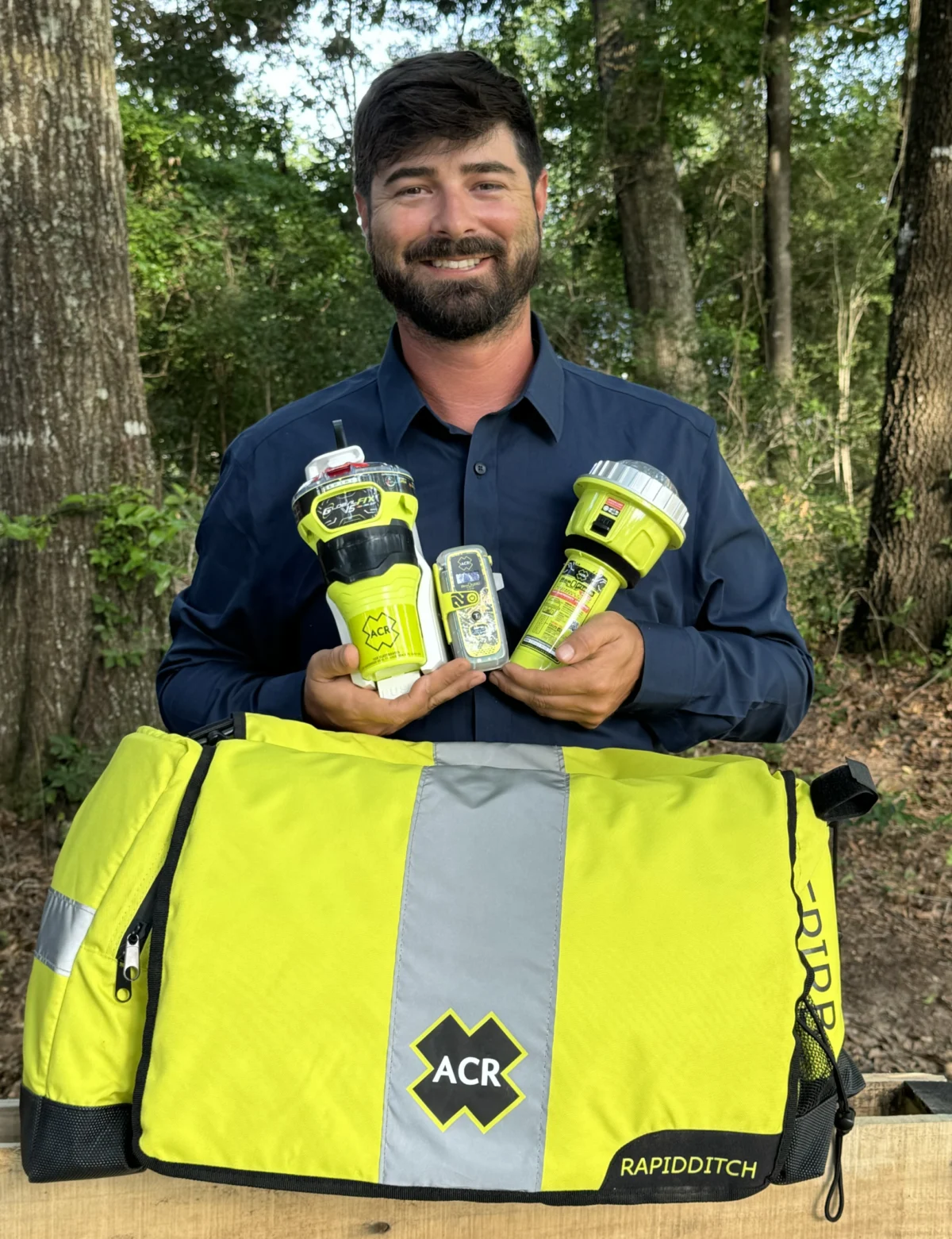
The beacon that ultimately saved Barrett and his crew was a registered ResQLink PLB, manufactured by ACR Electronics Inc. of Fort Lauderdale, Florida. These devices are designed to be rugged, buoyant, and handheld, with a substantial battery life typically ranging from five to ten years. Beyond sending a distress signal to satellites, a registered PLB also notifies the device owner’s designated emergency contacts, providing an additional layer of reassurance and swift action capability. All emergency beacons, regardless of manufacturer, must adhere to stringent international requirements to ensure their reliability and effectiveness when lives hang in the balance. The simple act of registering a PLB is often overlooked but is crucial, as it provides rescuers with vital information about the vessel, the individuals onboard, and emergency contacts, significantly aiding in the rescue process.
The Global Lifeline: The Cospas-Sarsat Program
The SARSAT system, a critical component of the broader international Cospas-Sarsat program, has a rich history rooted in international collaboration and technological innovation. SARSAT officially began operations in 1982, rapidly expanding into an international collaboration in 1985. The foundational flight and ground technologies that underpin this global system were originally conceived and developed at NASA’s Goddard Space Flight Center in Greenbelt, Maryland. This visionary project leveraged satellite technology to detect and locate distress signals from emergency beacons, dramatically reducing search times and improving rescue outcomes.
Today, the Cospas-Sarsat program is a formidable international partnership, comprising 62 satellites in various orbits (including low-Earth orbit, geostationary orbit, and medium-Earth orbit) and supported by 45 nations. These nations contribute services ranging from operating ground stations that receive distress signals to providing the rescue coordination centers and crews that respond to emergencies. The collective effort has yielded astonishing results: globally, the Cospas-Sarsat system has been credited with saving over 63,000 lives since its inception. This figure continues to grow, with each rescue, like that of Easton Barrett and his crew, adding to the program’s legacy. The system processes signals from various types of beacons, including Emergency Position-Indicating Radio Beacons (EPIRBs) for marine vessels, Emergency Locator Transmitters (ELTs) for aircraft, and Personal Locator Beacons (PLBs) for individual use on land or sea. The continuous evolution of the system, incorporating advancements like GPS integration directly into beacons, has significantly enhanced the accuracy and speed of location pinpointing.
The U.S. Coast Guard: Sentinels of the Sea
For the survivors of the Gulf Coast incident, the crucial link in the rescue chain was the U.S. Coast Guard. Tasked with a vast array of responsibilities, from maritime law enforcement to environmental protection, search and rescue remains one of their most vital and challenging missions. When the alert from the SARSAT mission control center reached the Florida Coast Guard, a specialized rescue boat was immediately dispatched. The Coast Guard operates 24/7, ready to respond to emergencies across millions of square miles of ocean and coastline. Their ability to mobilize rapidly, coupled with sophisticated search capabilities, is often the difference between life and death.
A Coast Guard spokesperson, commenting on the general importance of PLBs and the SARSAT system, stated, "Every second counts in a maritime emergency. The accuracy and speed with which a PLB, linked to the SARSAT system, can provide a precise location is invaluable. It significantly reduces our search area, allowing our crews to reach those in distress much faster and more efficiently. We consistently urge all mariners, from recreational boaters to commercial operators, to carry and register an appropriate emergency beacon." This statement underscores the operational efficiency gained by the Coast Guard through these technologies, transforming daunting open-water searches into targeted rescue missions.
The challenges faced by the Coast Guard are immense. Search and rescue operations in open water are inherently complex, influenced by weather conditions, sea state, distance from shore, and the sheer vastness of the search area. The "virtual invisibility" of survivors mentioned by the original article is a core problem the Coast Guard routinely confronts. Technologies like SARSAT directly address this by providing a digital "breadcrumb" trail, turning the invisible into the locatable.
Broader Implications for Maritime Safety and Preparedness
The 2024 Memorial Day weekend rescue off the Gulf Coast serves as a powerful contemporary example of how a confluence of individual preparedness, advanced satellite technology, and dedicated rescue services converge to save lives. It highlights several critical implications for maritime safety:
- The Indispensable Nature of PLBs: This incident provides compelling evidence that PLBs are not just recommended but are essential safety equipment for anyone venturing beyond cell service range, whether on water or in remote wilderness. The cost of a PLB pales in comparison to the potential cost of a life.
- The Power of Registration: The efficacy of a PLB is significantly enhanced by its proper registration. Registration provides rescuers with vital details about the user and vessel, which can be critical for identification and tailoring the rescue effort.
- Technological Reliance and Evolution: The SARSAT system, developed over decades by NASA and other government agencies, demonstrates the ongoing commitment to leveraging space technology for terrestrial benefits. Its continuous evolution, from initial Doppler-effect localization to GPS-enabled precision, reflects a dynamic response to the needs of global safety.
- International Cooperation: The Cospas-Sarsat program stands as a testament to successful international collaboration, transcending political boundaries to achieve a common humanitarian goal. This model of shared responsibility and pooled resources significantly amplifies the reach and effectiveness of global search and rescue.
- A Call for Boater Education: Easton Barrett’s advocacy post-rescue underscores the need for continuous education among recreational boaters regarding safety protocols, emergency equipment, and the critical importance of being prepared for the unexpected. Understanding how to use a PLB, having sufficient life jackets, and knowing basic survival skills are non-negotiable for safe maritime travel.
In an era where technology increasingly permeates every aspect of life, the story of the Gulf Coast rescue stands as a poignant reminder of its life-saving potential. From the ingenuity of NASA engineers to the vigilance of the U.S. Coast Guard and the foresight of a boater carrying a small, yet powerful device, this incident exemplifies how a global network, built on innovation and cooperation, continues to provide a lifeline from space, ensuring that even when disaster strikes far from shore, hope can still reach those in peril. The collective effort that led to the safe return of Easton Barrett and his crew underscores the profound impact of human dedication to safety and the relentless pursuit of technological solutions to protect lives across the planet’s vast and often unforgiving landscapes.