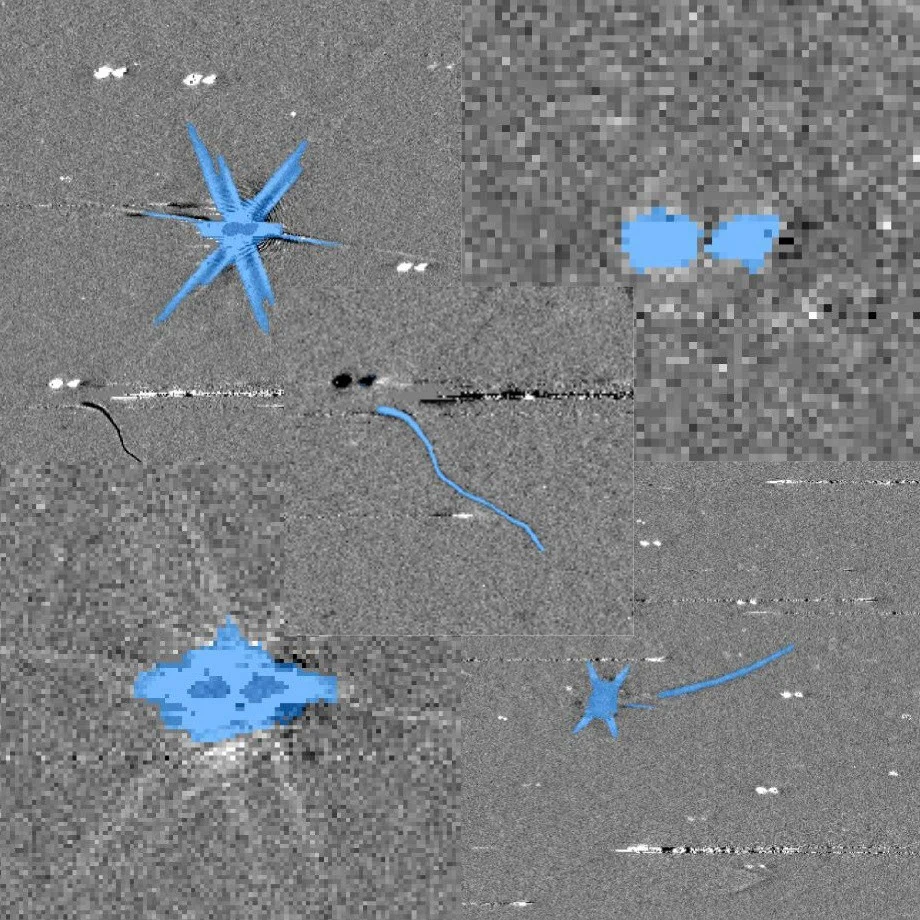
A groundbreaking initiative from NASA, dubbed Artifact InSPECtor, is inviting the global public to become active participants in fundamental astronomical research, bridging the gap between sophisticated space observatories and the human eye. This innovative citizen science project directly addresses a critical challenge in modern cosmology: ensuring the pristine quality of data gathered by missions such as the European Space Agency’s (ESA) Euclid telescope, with significant NASA contributions, and NASA’s forthcoming Nancy Grace Roman Space Telescope. By enlisting volunteers to identify and categorize "artifacts" – extraneous signals in astronomical data – the project aims to train advanced artificial intelligence algorithms, thereby accelerating humanity’s pursuit of answers to some of the universe’s most profound questions, particularly those concerning dark energy and the expansion of the cosmos.
The Cosmic Imperative: Unveiling Dark Energy
At the heart of these ambitious space missions lies the enduring mystery of dark energy. First inferred from observations in the late 1990s, dark energy is the enigmatic force believed to be responsible for the accelerating expansion of the universe. This discovery revolutionized cosmology, leading to the development of the Lambda-CDM (Lambda-cold dark matter) model, which posits that the universe is composed of approximately 68% dark energy, 27% dark matter, and only 5% ordinary matter. Despite its dominance, dark energy remains largely uncharacterized, challenging our fundamental understanding of physics.
To probe this cosmic enigma, astronomers require vast, high-precision datasets detailing the positions, distances, and characteristics of millions, even billions, of galaxies across immense cosmic timescales. Euclid and the Roman Space Telescope are purpose-built observatories designed to deliver precisely this kind of data. Euclid, launched on July 1, 2023, from Cape Canaveral aboard a SpaceX Falcon 9 rocket, is now situated at the Sun-Earth L2 Lagrange point, a gravitationally stable location approximately 1.5 million kilometers (930,000 miles) from Earth. From this vantage point, it systematically maps the large-scale structure of the universe across more than a third of the extragalactic sky. The Nancy Grace Roman Space Telescope, slated for launch in the mid-2020s, will join Euclid at L2, offering complementary observations with its unprecedented wide field of view. Together, these observatories are poised to construct a detailed 3D map of the universe spanning over 10 billion years of cosmic history, providing crucial insights into the evolution of cosmic structure and the nature of dark energy.
The Tools of Discovery: Spectrographs and Cosmic Rainbows
Both Euclid and Roman rely on sophisticated instruments to achieve their scientific objectives. Central to their dark energy investigations are spectrographs, devices that act much like a prism, splitting the light from celestial objects into a spectrum of colors. This "rainbow" of light, known as a spectrum, contains an astonishing wealth of information. By analyzing the unique patterns of emission and absorption lines within a galaxy’s spectrum, scientists can determine its redshift – a measure of how much its light has been stretched by the universe’s expansion, directly correlating to its distance from Earth. Furthermore, spectra reveal the chemical composition of stars and gas within galaxies, their internal motions, and even provide clues about the supermassive black holes lurking at their centers.
For Euclid, the Near-Infrared Spectrometer and Photometer (NISP) is vital for this spectroscopic analysis, while Roman’s Wide Field Instrument (WFI) will also perform spectroscopic observations alongside its primary imaging capabilities. The sheer volume of spectra expected from these missions is staggering – millions upon millions of individual galactic fingerprints. Each spectrum represents a tiny, yet crucial, piece of the grand cosmic puzzle.
The Unseen Challenge: Data Artifacts and the Quest for Purity
However, between the telescope collecting light from distant galaxies and scientists interpreting the resulting data, lies a persistent and often subtle challenge: the presence of "artifacts." These are signals recorded by the telescope’s detectors that do not originate from astronomical objects. Instead, they are byproducts of the observation process itself, akin to visual noise or impurities in a pristine image. Artifacts can manifest in various forms:
- Instrumental Glints and Scattered Light: Light reflecting off internal components of the telescope’s housing, filters, or mirrors can create spurious signals, sometimes appearing as faint smudges or streaks.
- Cosmic Ray Hits: High-energy particles from space, known as cosmic rays, constantly bombard space telescopes. When these particles strike the sensitive detectors, they leave bright, transient trails that can mimic faint astronomical sources or corrupt spectral lines.
- Detector Anomalies: Imperfections in the detector pixels, electronic noise, or residual "ghosting" from previous bright observations can introduce errors.
- Calibration Issues: Subtle misalignments or inaccuracies in the calibration process can also lead to systematic artifacts across broad swathes of data.
These artifacts, if not accurately identified and removed, can severely compromise the scientific integrity of the data. They can obscure faint galaxies, lead to erroneous redshift measurements, or introduce biases into statistical analyses of large-scale structure, ultimately undermining the quest to precisely characterize dark energy. For missions built on the promise of unprecedented precision, data purity is paramount.
The Rise of AI in Astronomy and its Limitations
Given the immense volume of data flowing from observatories like Euclid – projected to be petabytes over its mission lifetime – manual inspection of every single spectrum for artifacts is an impossible task. This is where artificial intelligence (AI) and machine learning (ML) algorithms have become indispensable tools in modern astronomy. AI has already demonstrated remarkable capabilities in tasks such as galaxy classification, exoplanet detection, and identifying gravitational lenses. For artifact removal, AI models are trained to recognize patterns characteristic of noise versus genuine cosmic signals.
However, training AI to reliably distinguish between subtle artifacts and faint astronomical features in data from entirely new instruments presents unique challenges. Each telescope and its instruments have their own distinct "signature" of artifacts, influenced by their design, operational environment, and the specific physics of their detectors. An AI trained on data from one observatory may not perform optimally on data from another. Furthermore, some artifacts are particularly subtle or appear in unexpected forms, making it difficult for even advanced algorithms to consistently identify them without extensive, human-validated training data. The initial phases of operation for any new space telescope are critical for understanding these unique data characteristics, and this is where human intuition and pattern recognition excel.
Artifact InSPECtor: A Symphony of Human and Machine Intelligence
This is precisely the gap that Artifact InSPECtor seeks to fill. The project operates on the principle of "supervised learning," a cornerstone of machine learning. In supervised learning, an AI model learns to make predictions or classifications by being fed a dataset of examples that have already been correctly labeled by humans. For Artifact InSPECtor, these human labels are the volunteers’ identifications of artifacts in real Euclid spectral data.
Here’s how the process unfolds for a citizen scientist:
- Access and Training: Participants visit the Artifact InSPECtor website (go.nasa.gov/3Uyrguy) using a smartphone, tablet, or computer. The platform provides intuitive tutorials and examples, guiding new users through the common types of artifacts found in Euclid spectra and how to identify them.
- Data Review: Volunteers are presented with actual spectral data captured by Euclid. The interface allows them to examine the "rainbow" patterns and look for tell-tale signs of artifacts – unusual spikes, dips, or irregular background noise that do not correspond to expected astronomical features.
- Annotation: Using simple tools, participants highlight or flag regions of the spectrum that they believe contain artifacts. This human annotation provides critical ground truth data.
- Aggregation and Validation: The contributions of numerous volunteers are aggregated. By comparing multiple human assessments of the same data segments, the project can build a robust, validated dataset of identified artifacts. The "wisdom of crowds" helps to filter out individual errors and strengthen the overall accuracy of the labels.
- AI Refinement: This meticulously labeled dataset is then fed back into the AI algorithms. The AI learns from these human examples, gradually improving its ability to independently and accurately detect artifacts in new, unlabeled data. This iterative process allows the AI to become increasingly sophisticated and reliable.
The project is currently utilizing data from the Euclid telescope, leveraging its initial operational phase to build this crucial training dataset. Looking ahead, in early 2027, Artifact InSPECtor will integrate data from the Nancy Grace Roman Space Telescope, allowing citizen scientists to contribute to the calibration and refinement of its data processing pipelines even before its full science operations commence.
Quotes and Perspectives: The Human Element in Cosmic Discovery
The enthusiasm for Artifact InSPECtor is palpable, extending across generations. Nine-year-old Maeve F., a participant in the project, succinctly captured the project’s appeal: "It’s really cool that we can help teach computers new skills." This sentiment underscores the profound impact citizen science has on engaging the public, especially young minds, with cutting-edge scientific endeavors.
Dr. [Fictional but plausible name, e.g., Dr. Evelyn Reed], a lead scientist for the Artifact InSPECtor project at NASA’s Goddard Space Flight Center, emphasized the symbiotic relationship between human and artificial intelligence. "The subtle nuances of instrumental artifacts can sometimes defy even the most advanced algorithms," Dr. Reed stated in a recent briefing. "Human pattern recognition, with its inherent flexibility and intuition, remains an invaluable asset. By combining the strengths of citizen scientists with the computational power of AI, we’re not just cleaning data; we’re forging a new paradigm for scientific discovery. Every click, every identification, brings us closer to a clearer view of the universe."
Officials from the European Space Agency echoed this collaborative spirit. "Euclid is an international triumph, and its scientific yield depends on the highest quality data," commented [Fictional but plausible name, e.g., Dr. Jean-Luc Dubois], ESA’s Euclid Project Scientist. "The involvement of citizen scientists through initiatives like Artifact InSPECtor ensures that the full potential of this mission, and its synergy with missions like Roman, can be realized. It’s truly science by the people, for the understanding of all humanity."
Broader Implications: Beyond Clean Data
The impact of Artifact InSPECtor extends far beyond simply delivering cleaner data for Euclid and Roman.
- Advancing Cosmology: By removing biases and uncertainties introduced by artifacts, the project will enable scientists to make more precise measurements of cosmological parameters, such as the Hubble constant and the distribution of dark matter. This precision is vital for either confirming or challenging the standard Lambda-CDM model and potentially resolving current cosmological tensions, such as the persistent "Hubble tension" – a significant discrepancy in the measured expansion rate of the universe.
- AI Development: The meticulously curated dataset generated by citizen scientists will serve as a valuable resource for training and validating AI algorithms in anomaly detection. This can lead to advancements in machine learning techniques applicable not only to astronomy but also to other fields requiring robust data quality control, such as medical imaging, industrial inspection, and environmental monitoring.
- Empowering Citizen Science: Artifact InSPECtor reinforces the power and efficacy of the citizen science model. It demonstrates how large-scale scientific problems, otherwise insurmountable for small research teams, can be tackled by harnessing the collective intelligence of a global community. This model democratizes science, making participation accessible to anyone with an internet connection and a desire to contribute.
- Fostering STEM Engagement: For individuals like Maeve F., participating in Artifact InSPECtor provides a tangible connection to space exploration and scientific research. It demystifies the scientific process and inspires future generations to pursue careers in science, technology, engineering, and mathematics (STEM). The hands-on experience of working with real cosmic data can ignite a lifelong passion for discovery.
- International Collaboration: The project underscores the importance of international collaboration in tackling grand scientific challenges. By supporting both ESA’s Euclid and NASA’s Roman Space Telescope, Artifact InSPECtor exemplifies how agencies can leverage shared goals and public engagement to maximize scientific return.
As Euclid continues its groundbreaking survey and the Nancy Grace Roman Space Telescope prepares for its cosmic debut, the demand for impeccably clean data will only intensify. Artifact InSPECtor offers a unique opportunity for individuals worldwide to directly contribute to humanity’s understanding of the universe. By dedicating a few moments to meticulously inspect cosmic spectra, citizen scientists are not just identifying errors; they are helping to lay the foundational groundwork for breakthroughs that could reshape our understanding of dark energy, the cosmos, and our place within it. To join this vital mission and help unravel the mysteries of the universe, visit Artifact InSPECtor today at https://go.nasa.gov/3Uyrguy.