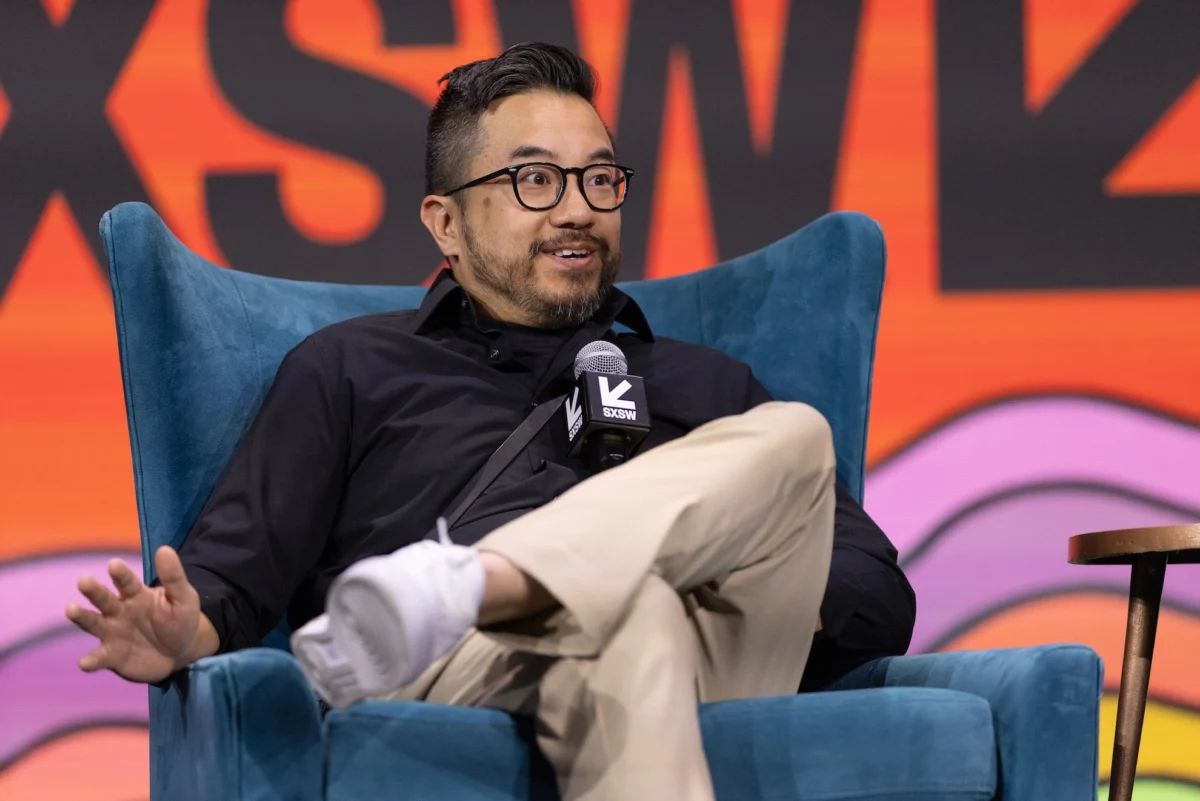
Y Combinator CEO Garry Tan has ignited a fresh debate in the rapidly evolving artificial intelligence landscape, asserting that U.S. regulators should refrain from intervening in the practice of "distillation" by Chinese AI labs and, furthermore, that American labs should actively engage in similar practices. This provocative stance, articulated in recent interviews with CNBC and TechCrunch, directly challenges the calls from leading frontier AI companies, notably Anthropic, for stricter controls on knowledge extraction from advanced models. Tan’s perspective underscores a fundamental divergence in the industry regarding intellectual property, market competition, and the future trajectory of AI development.
The Core Conflict: Distillation and Its Disputed Boundaries
At the heart of the controversy lies "distillation," a technical process where one AI model (often smaller and less powerful) extensively queries and learns from another, more advanced model. This technique aims to transfer knowledge, reasoning capabilities, and behavioral patterns from the "teacher" model to the "student" model. In its legitimate form, distillation is a common and accepted practice within AI research and development, used to create more efficient, specialized, or open-source models based on insights gained from larger, often proprietary, systems. For instance, a company might distill a massive general-purpose model into a smaller, domain-specific one for deployment on edge devices, significantly reducing computational overhead while retaining core functionalities.
However, the line between legitimate use and perceived illicit activity has become increasingly blurred, particularly as frontier AI models accrue immense value and proprietary knowledge. Anthropic, a prominent developer of advanced AI models like Claude, has been vocal in its concerns. The company recently released its second report detailing what it terms "illicit distillation attacks." This report, published this week, alleges that certain Chinese laboratories are engaging in unauthorized distillation, often by masking their identities, employing fraudulent means, and utilizing stolen credentials to gain access to proprietary models. Anthropic CEO Dario Amodei had previously urged U.S. regulators to crack down on such activities, framing them as a threat to intellectual property and the economic viability of frontier AI research.
Garry Tan’s Counter-Narrative: "Do Nothing" and "American Distillation"
Against this backdrop, Garry Tan, who helms one of Silicon Valley’s most prestigious and prolific startup accelerators, offers a starkly different vision. "I would do nothing," Tan unequivocally stated regarding regulatory intervention in Chinese distillation. More strikingly, he advocated for a proactive U.S. strategy: "We could argue that there should be an American distillation regime."
Tan clarified his proposal to TechCrunch, emphasizing that he envisions smaller, American open-weight AI labs freely employing distillation techniques on American frontier AI models. The goal, he explained, is to foster a more robust and diverse ecosystem of open-weight AI options within the U.S., thereby reducing reliance on potentially less transparent or controlled Chinese alternatives. This perspective challenges the notion that frontier AI labs should have absolute control over how their models’ outputs are utilized, especially when those outputs are derived from a vast corpus of publicly available data.
A Two-Fold Argument: Customer Rights and Data Provenance
Tan’s argument rests on two primary pillars, both of which touch upon fundamental principles of digital rights and data ethics. Firstly, he contends that it is an overreach for AI labs to dictate how their customers use the information derived from their models via API calls. If a customer is legitimately accessing a model, the subsequent use of the information gleaned should not be unduly constrained, he argues. This perspective aligns with a broader philosophy of user autonomy in the digital realm, suggesting that once data is legitimately accessed, its transformative use should be permitted.
Secondly, Tan highlights what he perceives as a double standard regarding data acquisition. He points out that proprietary AI labs themselves did not seek explicit permission when "vacuuming up as much human knowledge as they could to train their models." This often included ingesting vast amounts of copyrighted material without the express consent of intellectual property holders. Indeed, the past few years have seen a surge in high-profile lawsuits against major AI developers, including OpenAI and Meta, brought by authors, artists, and news organizations alleging copyright infringement in the training data of large language models. For instance, in July 2026, Anthropic itself was involved in a landmark $1.5 billion copyright settlement, underscoring the contentious nature of AI training data acquisition. Tan argues that if frontier labs freely utilized existing human knowledge, often without explicit licensing, then the knowledge embedded within their models, particularly when accessed legitimately, should be considered a more public good rather than a tightly controlled, proprietary asset.
"Controlling what users and customers do with API calls to closed weight models feels constraining, and there’s a role government can play here to normalize the fact that access to intelligence that was trained on broad public access data should itself also be more a form of a public good than something locked away behind restrictive terms of service," Tan told TechCrunch, articulating a vision where AI’s benefits are more widely distributed.
The Vision: Balancing Innovation and Accessibility
Tan, known for his deep engagement with AI technology—even once humorously describing himself as experiencing "cyber psychosis" due to his avid usage—envisions a crucial balance between frontier AI labs and open-weight AI labs. He acknowledges the indispensable role of frontier labs in pushing the boundaries of AI capabilities. "They are at the frontier and driving it forward. We want that to be fundable, and be a great business model ongoing," he told CNBC, recognizing the need for these companies to thrive and continue innovating.
Simultaneously, he champions the necessity of open-weight models to ensure widespread access and freedom. This duality, he believes, is essential for a healthy, competitive, and democratized AI ecosystem. The concern that drives much of his advocacy is the potential for an AI "doomer scenario" – not one of existential threat from superintelligence, but rather one of economic and societal stagnation caused by monopolization. "The nightmare scenario, the doomer scenario for AI is that there’s just one company," he stated. "It has the best access to capital. It has the best AI researchers. It runs away with it and suddenly there’s one company that’s monolithic. And that would be bad."
This fear is not unfounded. The current AI landscape sees a concentration of immense computing power, vast datasets, and top-tier talent in a handful of well-funded corporations. The development cost of a cutting-edge large language model can run into hundreds of millions of dollars, creating significant barriers to entry for smaller players. If only a few entities control the most advanced AI, it could lead to reduced innovation, higher costs, and a narrowing of perspectives embedded within the technology.
Broader Implications: Geopolitics, Competition, and Regulation
Tan’s statements carry significant implications for several critical areas:
- Geopolitical Competition: The call for an "American distillation regime" directly addresses the intense global competition in AI, particularly between the U.S. and China. By encouraging U.S. open-weight labs to distill from frontier models, Tan suggests a strategy to rapidly enhance domestic AI capabilities and foster a competitive advantage without necessarily relying on proprietary breakthroughs from a single source. This could be seen as a form of technological acceleration, leveraging existing advancements to propagate new, diverse applications.
- Market Dynamics and Competition: His advocacy for distillation challenges the business models of proprietary AI labs that rely on the exclusive ownership and licensing of their models. If distillation becomes widely accepted and legally protected, it could lower barriers to entry for new AI developers, potentially leading to a more vibrant and competitive market. This could also drive down the cost of AI services and accelerate the adoption of AI across various industries. However, it also raises questions about the incentives for investing billions in developing frontier models if their knowledge can be freely extracted.
- Regulatory Frameworks: Tan’s position places immense pressure on regulators who are already grappling with the complexities of governing AI. Current intellectual property laws, largely designed for static content, struggle to accommodate the dynamic nature of AI models and the knowledge they embody. The debate over distillation forces regulators to consider whether AI models, particularly those trained on vast public datasets, should be treated differently from traditional software or creative works. The concept of AI as a "public good" versus a proprietary product is a central dilemma that will shape future legislation. The European Union, for instance, has been at the forefront of AI regulation with its AI Act, which aims to classify AI systems by risk level, but even this framework is still evolving and may not fully address the nuances of distillation.
- Innovation and Ethical AI: While open-source AI is often lauded for its potential to democratize technology and enable rapid innovation, concerns remain about the ethical implications of widely distributed, potentially less controlled models. Distillation, if not carefully managed, could also lead to the propagation of biases or harmful capabilities present in the original models. However, a robust open-source ecosystem also allows for broader scrutiny and collaborative efforts to identify and mitigate such issues.
The Path Forward: An Unresolved Dilemma
The divergent views of industry leaders like Garry Tan and Dario Amodei highlight an unresolved tension at the heart of AI’s development. On one side, there’s the imperative to protect the immense investments and intellectual property of frontier AI labs, ensuring they have the incentive to continue pushing technological boundaries. On the other, there’s the desire to democratize access to powerful AI, prevent monopolies, and foster a diverse ecosystem that benefits society at large.
The regulatory landscape is still in its nascent stages, with governments worldwide attempting to strike a balance between fostering innovation and mitigating risks. The outcome of debates around practices like distillation will profoundly shape the future of AI, influencing not only who controls the technology but also how its immense power is developed, distributed, and ultimately utilized for the benefit or detriment of humanity. As AI continues its rapid advancement, the question of who owns the "knowledge" embedded within these intelligent systems will remain a central, contentious, and critical challenge.