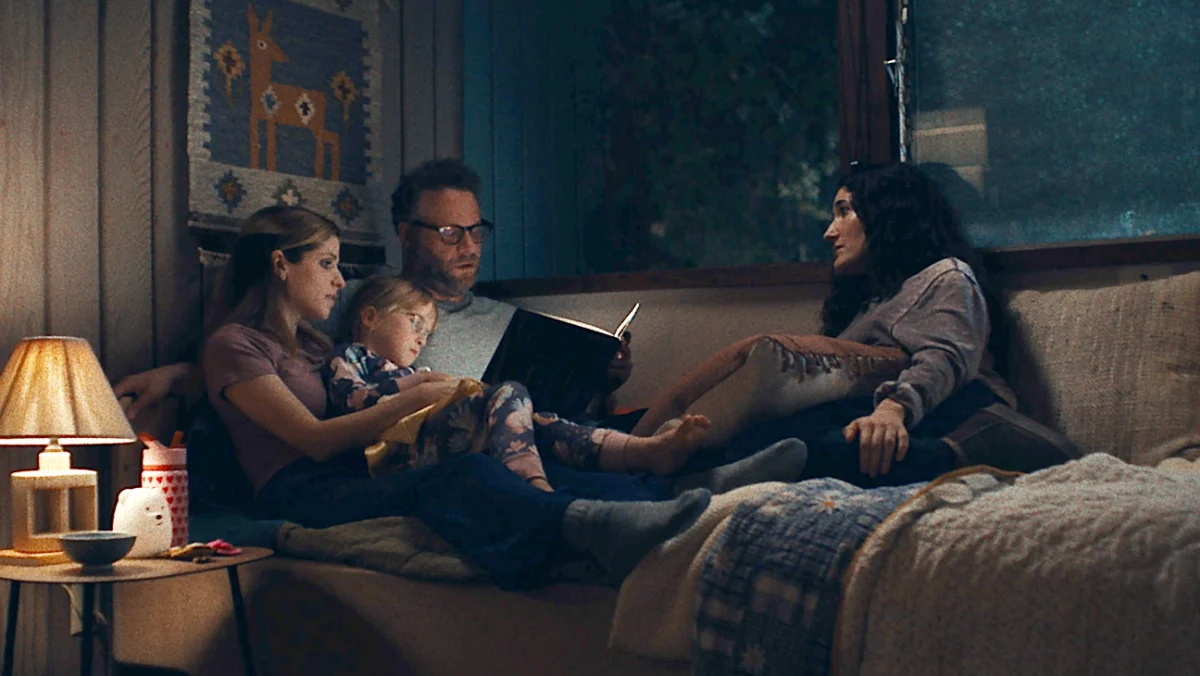
The question of parenthood, a deeply personal and often life-altering decision, takes center stage in Lauren Miller Rogen’s latest directorial venture, Babies, a film that artfully navigates the complexities of commitment, life choices, and the evolving landscape of modern relationships. Premiering at the prestigious Toronto International Film Festival as part of its Gala Presentations, the film centers on Annie and Aaron, a seemingly content Los Angeles couple portrayed by Anna Kendrick and Seth Rogen, who, after seventeen years of shared history, find themselves contemplating a profound question: are they missing a crucial element in their lives, a "bouncing bundle of something" that might redefine their existence?
The film, which runs for a concise 1 hour and 37 minutes, is described as a "genuine crowd-tickler," suggesting a blend of humor and heartfelt exploration that resonates with contemporary audiences. Miller Rogen, drawing inspiration from her own life experiences, builds upon the foundation laid by her 2018 directorial debut, Like Father. With Babies, she delves into a subject of considerable relevance, finding fertile ground for both comedy and the examination of weightier themes such as life choices, the human condition, and the often-uncertain state of society. The film is slated for a theatrical release by Roadside Attractions and Vertical in the coming year, with Anna Kendrick’s performance being highlighted as particularly strong, serving as a believable on-screen surrogate for the director’s own introspection.
The Genesis of a Question: A Fourth of July Revelation
The catalyst for Annie and Aaron’s introspection appears to be a seemingly ordinary Fourth of July pool party. Surrounded by a multitude of family units, the couple feels distinctly outnumbered, prompting Annie to embark on a series of internal monologues. Through these reflections, she meticulously dissects the perceived pros and cons of parenthood, informed by the diverse examples of family life unfolding around her. This moment of observation serves as the inciting incident, nudging them to officially address a topic they had previously left unaddressed in their seventeen-year union.
The film’s narrative is further enriched by a stellar supporting cast, including Issa Rae as Annie’s business partner, Becky, and Zach Cherry as her husband, Ethan, who are navigating the challenges of raising their third child alongside a teenager. Dan Stevens appears as Luke, the estranged husband of Annie’s realtor friend Eliza, played by Kate Berlant. Eliza and her young daughter, Eve (portrayed by Delaney and Parker Evans), become temporary residents in Annie and Aaron’s home, offering a de facto "test drive" of child-rearing responsibilities. This domestic arrangement, while seemingly benign, introduces unexpected complexities, such as the persistent battle of toilet training and the delicate nuances of parenting, as exemplified by Eliza’s caution to Aaron regarding "attaching shame to her body" after a lighthearted fart joke.
Navigating Parental Legacies and Personal Futures
Beyond the immediate sphere of friendships, Babies also explores the impact of familial legacies and the anxieties they can engender. Annie grapples with the declining health of her mother, who is in the later stages of Alzheimer’s disease, and the evident loneliness of her father, played by the consistently reliable David Strathairn. In an effort to support her father, Annie encourages him to join a dating site, leading to a dinner encounter with Susan, a lively recently widowed woman portrayed by Sharon Stone. The outcome of this romantic overture, however, is far from promising, adding another layer of emotional weight to Annie’s contemplation of her own future and the potential for her own children to witness similar hardships. The specter of her mother’s illness raises profound questions about the inheritance of caregiving burdens and the potential for witnessing the erosion of loved ones.
Miller Rogen’s Directorial Acumen: Balancing Levity and Depth
Lauren Miller Rogen demonstrates a keen understanding of comedic timing and emotional resonance in her direction. The film masterfully balances the lighter, often absurd, aspects of life with the profound anxieties that accompany significant life choices. Her script, praised for its "knowing" quality, seamlessly integrates "big-picture life lessons and poop jokes with equal finesse." This juxtaposition is vividly illustrated in a memorable scene at the Los Angeles County Museum of Art, where a particular installation provides one of the film’s most uproarious comedic moments, a testament to the film’s ability to find humor in unexpected places.
Anna Kendrick’s Tour de Force Performance
Anna Kendrick’s portrayal of Annie is central to the film’s success. As the director’s on-screen surrogate, Kendrick delivers a "richly conveyed" performance, capturing every facet of Annie’s complex journey of self-discovery. Her internal struggles and external observations are brought to life with remarkable aplomb, particularly evident at a baby shower for Becky. In a scene where she confronts the pretentiousness of some of the attendees, Kendrick’s character delivers a powerful and memorable critique, highlighting the film’s examination of societal expectations surrounding motherhood. While the film occasionally leans into "diminishing comic returns of one too many inner monologues," Kendrick’s performance remains a consistent anchor, elevating the material and ensuring emotional engagement.
A Strong Ensemble and Enduring Chemistry
Complementing Kendrick’s central performance is Seth Rogen, who is described as "never better." He shares a "warm, easy chemistry" with Kendrick, which forms the bedrock of their on-screen relationship. The supporting cast further bolsters the film’s appeal. Kate Berlant’s portrayal of the "comically neurotic" Eliza offers a nuanced and often hilarious depiction of a woman navigating personal upheaval. David Strathairn’s "affectingly sympathetic turn" as Annie’s father adds a layer of emotional depth and gravitas, underscoring the film’s exploration of aging, loneliness, and the enduring bonds of family.
Contextualizing Babies within the Contemporary Dialogue on Parenthood
The themes explored in Babies resonate deeply within the current societal discourse surrounding family planning and the evolving definition of a fulfilling life. In recent years, there has been a growing awareness and open discussion about "childfree" choices and the societal pressures that often accompany the expectation of parenthood. Data from various demographic studies indicates shifts in birth rates and family structures across developed nations, suggesting that the questions Annie and Aaron grapple with are not isolated incidents but rather part of a broader cultural re-evaluation. For instance, the Pew Research Center has reported on declining fertility rates in the United States, with a significant portion of childless adults citing personal choice as a primary reason. This backdrop provides a relevant context for Babies, positioning it as a film that taps into a growing segment of the population’s evolving perspectives.
Furthermore, the film’s exploration of the challenges of modern parenthood, including the pressures of societal expectations, the financial and emotional toll, and the complexities of raising children in an increasingly uncertain world, speaks to contemporary anxieties. The rise of social media and the curated presentation of "perfect" family lives can exacerbate feelings of inadequacy or FOMO (fear of missing out) for those considering or navigating parenthood. Babies, by offering a more grounded and relatable portrayal of these considerations, offers a refreshing counterpoint to idealized narratives.
The film’s premiere at the Toronto International Film Festival, a globally recognized platform for independent and auteur cinema, signals its potential to spark conversations beyond the multiplex. TIFF, which has a long history of showcasing films that tackle significant social and personal issues, provides an ideal venue for Babies to reach a discerning audience and generate critical discussion. The festival’s curated selection often reflects current trends in filmmaking and audience interest, and the inclusion of Babies in its Gala Presentations suggests a strong belief in its artistic merit and thematic relevance.
Implications and Broader Impact
The success of Babies could have several implications. For the filmmakers, it represents a significant achievement in exploring mature themes with a blend of humor and sincerity. For audiences, it offers a relatable and thought-provoking examination of a universal life decision. The film’s ability to connect with viewers on an emotional level, while also prompting introspection, could contribute to a more open and nuanced public conversation about parenthood, childfree choices, and the myriad paths to personal fulfillment. In a landscape often dominated by more overtly commercial fare, films like Babies that prioritize character-driven narratives and meaningful thematic exploration hold the potential to foster deeper engagement and critical dialogue. The film’s anticipated release by Roadside Attractions and Vertical, known for distributing independent and critically acclaimed films, further suggests a strategic approach to reaching an audience that appreciates nuanced storytelling. The "astute charmer" has the potential to not only entertain but also to provoke essential conversations about what it truly means to build a life, with or without children.