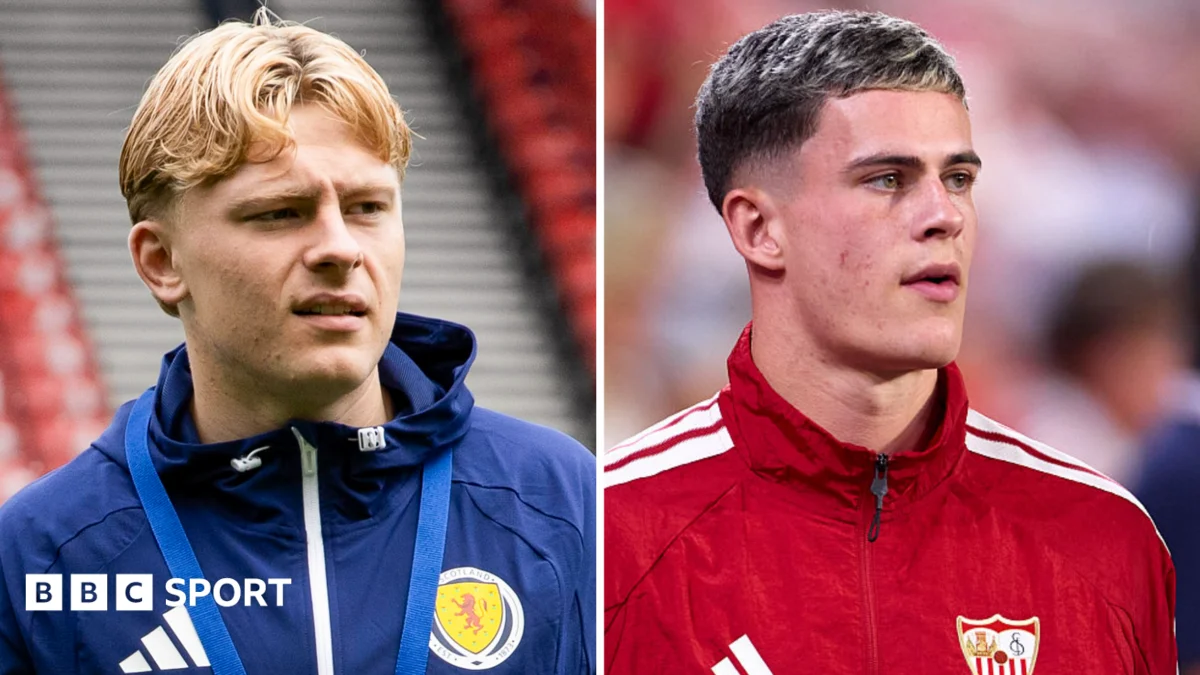
The impending announcement of Elias Van Den Broeck’s inaugural Scotland squad, scheduled for 11:00 BST, marks a pivotal moment for the national team, signaling a significant shift in strategy and personnel. Van Den Broeck, the recently appointed Belgian head coach, is widely expected to integrate emerging talent and inject fresh dynamism into an ageing squad, with particular attention being paid to the potential inclusion of young forward Oleksandr Ure. Ure, a 22-year-old talent currently plying his trade in Spain, is eligible to represent Ukraine but his potential call-up by Van Den Broeck underscores the new manager’s proactive approach to securing promising players for Scotland’s future. The Belgian’s tenure officially begins with two crucial Nations League B fixtures: an opener against Slovenia on Saturday, September 26th, followed by a clash with Switzerland three days later.
Van Den Broeck’s Mandate: Rejuvenation and Resilience
The appointment of Van Den Broeck followed the resignation of his predecessor, a former Kilmarnock manager, after Scotland’s failure to advance from the group stages of a major tournament for the first time in a considerable period. This outcome, deeply disappointing for the nation’s footballing faithful, created a palpable expectation that the new coach would prioritize a significant overhaul. Van Den Broeck, known for his tactical acumen and his success in developing young players at club level, is seen as the ideal candidate to usher in this new era. His philosophy is anticipated to focus on building a more cohesive and energetic unit, capable of sustained performance against top European opposition. The inclusion of Ure, who has yet to find the net in his Spanish club career but possesses a raw talent that has caught the eye, would be a strong indicator of Van Den Broeck’s commitment to this rejuvenation strategy.
The Gorgie Connection: Hopes High for Heart of Midlothian Contingent
Adding to the anticipation surrounding the squad announcement is the optimism emanating from Gorgie, the home of Heart of Midlothian Football Club. Wouter Vrancken, the current head coach of Hearts and a fellow Belgian, has expressed his "confidence" that several players from his squad will be included in Van Den Broeck’s maiden selection. This optimism is not unfounded, as Hearts have enjoyed a strong start to their domestic campaign, underpinned by impressive performances from their attacking unit. The front three, comprising striker James Wilson and wingers Calvin Miller and Josh McPake, have consistently garnered praise for their dynamic play and goal-scoring contributions. Their recent performances have not only impressed Vrancken but have also caught the attention of former Scotland captain Scott Brown, who has voiced his "high hopes" for these wingers, acknowledging their significant role in the club’s early-season success. Their inclusion would signify a tangible reward for their consistent club form and a potential pathway for them to showcase their talents on the international stage.
A New Dawn: The Tactical Implications of Van Den Broeck’s Approach
The strategic implications of Van Den Broeck’s impending squad selection are far-reaching. His tenure marks a departure from the established order, and his willingness to integrate younger, less experienced players, such as Ure, suggests a long-term vision. This approach carries inherent risks, particularly in the immediate fixtures against Slovenia and Switzerland, where experience and seasoned leadership are often paramount. However, the potential rewards are substantial. A younger, more dynamic squad could offer increased intensity, pressing capabilities, and a greater adaptability to different tactical approaches.
The integration of players like Miller and McPake, who have demonstrated their ability to unlock defenses and create scoring opportunities in the Scottish Premiership, could provide Scotland with much-needed attacking verve. Their performances for Hearts have highlighted their individual strengths: Miller’s pace and dribbling ability, and McPake’s directness and eye for goal. If they can translate this form to the international arena, they could offer potent threats to opposition defenses. James Wilson, as the central striker, would be tasked with providing a focal point for the attack, his ability to hold up play and link up with the wingers being crucial to the team’s offensive fluidity.
The decision regarding Oleksandr Ure’s inclusion, if it materializes, is particularly intriguing. While his statistics in Spain may not yet be prolific, his eligibility for Ukraine suggests a player with a profile that appeals to international selectors. His potential inclusion could be a strategic move to secure a player with dual nationality early in his career, preventing him from potentially representing another nation in the future. This proactive stance reflects a broader trend in international football, where nations are increasingly diligent in identifying and nurturing talent with multiple allegiances.
The Road Ahead: Nations League Challenges and Future Prospects
The immediate challenge for Van Den Broeck and his new-look squad lies in the upcoming Nations League fixtures. Scotland’s performance in this competition will set the tone for his reign and provide an early indication of the team’s progress. Slovenia, a nation that has consistently punched above its weight in international football, will present a stern test in the opening match. Their disciplined approach and ability to grind out results will require Scotland to be both tactically sound and resilient. The subsequent encounter with Switzerland, a team known for its technical proficiency and attacking prowess, will further test the mettle of the new squad.
These fixtures are not merely about securing points; they are about building team cohesion, instilling Van Den Broeck’s tactical principles, and allowing the new generation of players to gain invaluable international experience. The outcome of these matches will undoubtedly shape public perception and provide crucial insights into the direction of the national team under its new leadership.
Historical Context: A Legacy of Unfulfilled Potential
Scotland’s footballing history is punctuated by periods of great promise followed by frustrating underachievement. The recent failure to qualify for the knockout stages of a major tournament reignited this familiar narrative. The national team has, at times, struggled to consistently compete with the elite nations, often falling short in crucial moments. This has led to a yearning for a fresh approach, a manager with a clear vision and the courage to implement it. Van Den Broeck’s appointment, coupled with the anticipated influx of new talent, offers a glimmer of hope for a brighter future. The success of his tenure will ultimately be measured by his ability to foster a winning mentality, cultivate a talented pool of players, and guide Scotland to sustained success on the international stage.
The inclusion of players like Ure, Miller, McPake, and Wilson, if they are indeed named in the squad, represents a calculated gamble. These players, while showing promise at club level, have yet to prove themselves at the highest international level. However, the history of football is replete with examples of players who have risen to the occasion when given the opportunity. Van Den Broeck’s faith in their abilities, and his willingness to entrust them with significant responsibility, could be the catalyst for a new generation of Scottish internationals to emerge and make their mark.
The upcoming squad announcement is more than just a list of names; it is a statement of intent. It is the first concrete manifestation of Elias Van Den Broeck’s vision for the Scottish national team. The footballing world will be watching with keen interest to see how this new era unfolds, and whether the Tartan Army can finally embark on a sustained period of success. The foundations are being laid, and the coming weeks and months will reveal whether these foundations are strong enough to build a championship-contending team. The anticipation is palpable, and the journey towards a revitalized Scottish footballing identity has officially begun.