One year into their intensive training, NASA’s 2025 Astronaut Candidate Class stands at a pivotal juncture, meticulously honing the diverse skill sets essential for the agency’s ambitious future in human spaceflight. From the rugged volcanic fields of Iceland to the sophisticated simulators of the Johnson Space Center, these ten individuals are being forged into the next generation of explorers, destined for missions spanning low Earth orbit, the lunar surface as part of the Artemis program, and ultimately, the daunting journey to Mars. Introduced to the public on September 22, 2025, from their home base in Houston, the candidates are approximately halfway through their rigorous two-year curriculum, a testament to NASA’s unwavering commitment to expanding humanity’s presence in the cosmos. Their comprehensive regimen, encompassing geology, advanced flight operations, survival techniques, and international collaboration, underscores the multifaceted demands of modern space exploration and the unparalleled preparation required for missions of unprecedented complexity and duration.
Forging the Artemis Generation: Terrestrial Training for Lunar Frontiers
A cornerstone of the 2025 class’s training is an extensive focus on geology, a critical discipline given their potential assignments to future Artemis missions targeting the Moon. These missions, particularly Artemis III and subsequent expeditions, are designed not only to return humans to the lunar surface after more than half a century but also to establish a sustainable long-term human presence, necessitating advanced scientific understanding of the lunar environment. Astronauts will act as field geologists, collecting samples, deploying scientific instruments, and identifying promising sites for future exploration and resource utilization. To prepare for this unique role, candidates initiated their geology curriculum in May with intensive classroom sessions at the Johnson Space Center. These foundational courses covered planetary geology, mineralogy, petrology, and the specific geological features of the Moon, including its regolith, impact craters, and potential subsurface ice deposits.
Following their theoretical grounding, the candidates transitioned to practical field training, beginning with an expedition to the Rio Grande del Norte National Monument in New Mexico. This terrestrial analog site offers diverse geological formations, including ancient volcanoes, rift valleys, and basaltic lava flows, which provide an excellent proxy for understanding lunar surface processes. Here, under the guidance of NASA geologists and mission specialists, the candidates practiced core geological observation techniques, learned to identify various rock types, and mastered the use of specialized sampling tools designed to collect pristine specimens while minimizing contamination. They also engaged in simulated traverses, navigating challenging terrain, and making real-time scientific decisions, all while communicating their findings back to a simulated mission control.
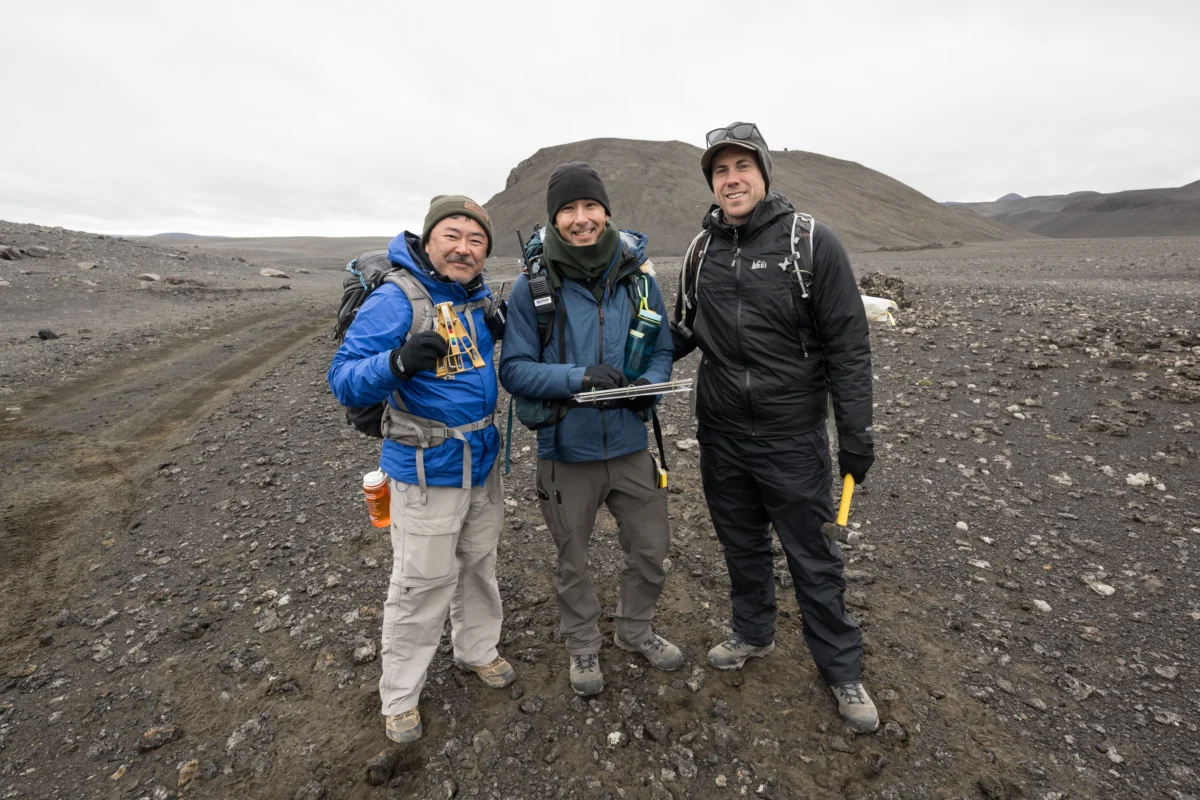
The training further escalated in July, when several candidates joined seasoned NASA astronauts and dedicated Artemis mission support teams for advanced geology field training in Iceland. Iceland’s unique geological landscape, shaped by its position on the Mid-Atlantic Ridge and extensive volcanic activity, presents an unparalleled environment for simulating lunar and even Martian conditions. Its vast lava fields, basaltic formations, and glacial features offer direct parallels to the Moon’s volcanic plains and impact-modified terrains. In this extreme environment, candidates refined their skills in geologic observation, collecting samples with tools akin to those that will be used on the Moon, and employing advanced navigation techniques, including GPS-denied scenarios to simulate lunar conditions where traditional navigation aids may be limited. Crucially, this training emphasized teamwork and effective communication under stress, skills that are paramount for successful lunar surface operations where rapid decision-making and seamless coordination are essential for mission success and astronaut safety. The experience in Iceland not only built their scientific acumen but also instilled a profound understanding of the operational challenges and psychological resilience required for pioneering lunar expeditions.
Mastering the Skies: Aeronautical Prowess and High-Altitude Acclimatization
Beyond the Earth’s surface, a significant portion of astronaut training is dedicated to mastering the complexities of flight, whether it involves learning to pilot advanced aircraft or sharpening existing aeronautical skills. This rigorous aviation component is designed to instill confidence, enhance coordination, and cultivate adaptability and resilience in high-stakes, dynamic environments, mirroring the conditions encountered during spacecraft launch, orbital maneuvers, and atmospheric re-entry. The summer months saw the 2025 class engaging in pivotal flight training, including missions aboard NASA’s venerable WB-57 high-altitude research aircraft. These long-range, twin-engine jets, operational since the 1960s, are capable of flying at altitudes exceeding 60,000 feet, providing a unique platform for scientific research and simulating aspects of the upper atmosphere and near-space environment. For the astronaut candidates, flights in the WB-57 offer invaluable experience with high-altitude physiology, pressure suit operations, and exposure to the stark visual transition between the blue sky and the blackness of space. This experience is critical for understanding the physiological effects of reduced atmospheric pressure and the operational nuances of life support systems at extreme altitudes.
Concurrently, the class commenced training in NASA’s T-38 supersonic jets. The T-38 Talon, a two-seat, twin-engine supersonic jet trainer, has been the backbone of NASA’s astronaut flight readiness program for decades. Flying the T-38 allows candidates to develop and maintain proficiency in high-performance aircraft operations, including intricate maneuvers, instrument flight, formation flying, and emergency procedures. This training is not merely about piloting skills; it is a profound exercise in crew resource management, decision-making under pressure, and spatial orientation, all of which are directly transferable to the demands of operating complex spacecraft. The ability to maintain situational awareness and execute precise controls in a high-speed, dynamic environment is a fundamental prerequisite for any astronaut.
Complementing their flight hours, candidates also spent considerable time in one of Johnson Space Center’s specialized altitude chambers. These unique facilities are engineered to simulate physical pressure levels ranging from standard sea level conditions to the near-vacuum of space. Dressed in full flight suits and helmets, candidates enter these chambers to familiarize themselves with the physiological and operational conditions they will encounter during high-altitude flights and, more importantly, in the vacuum of space. The chamber training is crucial for understanding the risks associated with rapid depressurization, recognizing the symptoms of hypoxia (oxygen deprivation), and practicing various protocols and interventions designed to ensure their safety. This hands-on experience with life support systems, pressure garment integrity, and emergency procedures is indispensable, building a deep understanding of their own physiological responses and the critical importance of their equipment in sustaining life in extreme environments.
Building Resilience: Survival Training and Emergency Preparedness

While the primary focus of astronaut training is on mission success, a significant portion is dedicated to preparing for the improbable: surviving unforeseen contingencies. The 2025 class continued their intensive survival training, equipping them with the skills and mental fortitude necessary to endure in remote and hostile environments, should an unexpected landing occur after a mission. This aspect of training acknowledges the inherent risks of space travel and ensures that astronauts are capable of self-sufficiency and leadership in crisis situations.
A key component of this preparedness involves extensive water survival exercises conducted in Johnson Space Center’s Neutral Buoyancy Laboratory (NBL). The NBL, a massive indoor pool measuring 202 feet long, 102 feet wide, and 40 feet deep, is primarily known for simulating microgravity for spacewalk training. However, its expansive, controlled environment also serves as an ideal setting for simulating splashdowns and water survival scenarios. Candidates, dressed in survival gear, practice egressing from mock-up spacecraft capsules into the water, deploying life rafts, and signaling for rescue. These exercises are not merely physical; they are designed to test and build teamwork, decision-making skills under duress, and the ability to maintain composure in an emergency. The NBL environment allows for controlled repetitions, enabling candidates to internalize procedures and develop the muscle memory crucial for effective responses in a real-world emergency. The lessons learned here draw upon decades of aerospace experience, including insights from historical incidents where water landings, both planned and unplanned, tested the mettle of space crews.
Beyond water survival, comprehensive training covers a spectrum of terrestrial survival techniques, including wilderness navigation, shelter construction, fire starting, and procurement of food and water in diverse climates. These skills, while seemingly far removed from spaceflight, are vital for global missions, particularly given that spacecraft could theoretically land anywhere on Earth in an emergency. The emphasis is on adaptability, resourcefulness, and the ability to maintain group cohesion and morale in isolation. This holistic approach to survival training ensures that, no matter the challenge, the astronauts are prepared to overcome it.
Global Collaboration and Operational Mastery: Preparing for a Connected Cosmos
The demands of modern space exploration extend far beyond individual technical skills, increasingly requiring seamless international collaboration and an intimate understanding of complex spacecraft systems. The 2025 astronaut candidates are undergoing intensive Russian language classes and cross-cultural training, reflecting the enduring legacy and ongoing importance of international partnerships, particularly with the Russian Roscosmos agency, for operations aboard the International Space Station (ISS). Proficiency in Russian is not merely a courtesy; it is an operational necessity, enabling direct communication with Russian crewmates, ground control, and the ability to interpret Cyrillic labels on critical spacecraft systems, such as the Soyuz spacecraft and the Russian segment of the ISS. This linguistic and cultural immersion fosters a deeper understanding and trust, crucial for multinational crews operating in the confined, high-stakes environment of space.
In parallel with their linguistic and cultural studies, candidates are immersed in the intricacies of spacecraft systems used in human spaceflight missions. This includes detailed instruction on the operational procedures, avionics, propulsion, life support, and environmental control systems of various vehicles, including the Orion spacecraft (destined for lunar missions), and potentially commercial crew vehicles like SpaceX’s Crew Dragon and Boeing’s Starliner, which transport astronauts to the ISS. Much of this training takes place within full-scale mockups of these space vehicles at Johnson Space Center. These high-fidelity simulators provide a realistic environment for candidates to practice routine operations, troubleshoot simulated malfunctions, and rehearse emergency procedures, such as fire suppression, depressurization events, and ammonia leaks.
Spacewalk training, a critical skill for any astronaut, is also conducted extensively at the Neutral Buoyancy Laboratory (NBL). Here, candidates don specialized Extravehicular Mobility Units (EMUs) – the iconic white spacesuits – and practice tasks in a weightless environment simulated by the buoyancy of water. They learn to operate power tools, repair mock-up spacecraft components, install new equipment, and navigate outside the confines of a spacecraft. This training is vital for maintaining and upgrading space stations, performing scientific experiments on the lunar surface, and potentially conducting repairs on deep-space vehicles. The NBL allows for countless hours of practice, building the physical strength, dexterity, and cognitive load management required for the demanding and unforgiving environment of an actual spacewalk. Furthermore, candidates are receiving comprehensive instruction in emergency procedures, maintenance, and repair protocols for spacecraft, ensuring they are not just operators but also skilled technicians capable of responding to any challenge that might arise millions of miles from Earth.
The Rigorous Path and Future Outlook: Paving the Way for Humanity’s Next Leap
The journey to becoming a NASA astronaut is one of the most selective and demanding career paths on Earth. The 2025 class emerged from a pool of thousands of highly qualified applicants, each possessing exceptional academic credentials, professional experience in fields ranging from science and engineering to medicine and aviation, and an unshakeable commitment to exploration. Their selection marked the beginning of a transformation, turning brilliant individuals into cohesive teams prepared for the ultimate challenge. The comprehensive nature of their training reflects the evolving landscape of space exploration, moving beyond low Earth orbit to encompass the ambitious goals of the Artemis program and the long-term vision of human missions to Mars.
As the 2025 class progresses towards its projected graduation in 2027, they are steadily building the operational expertise, scientific knowledge, and technical background that will be indispensable for advancing NASA’s deep space exploration goals. Upon graduation, they will formally join NASA’s active astronaut corps, a highly specialized group of individuals who represent the pinnacle of human achievement and capability. From that point, they will await their first flight assignments, which could see them contributing to critical research taking place aboard the International Space Station, serving as pioneers on the Moon to prepare for future Mars missions, or perhaps even being among the first humans to journey to the Red Planet.
The implications of this training are profound. Each skill mastered, from geological analysis in an alien landscape to precision piloting of supersonic jets, contributes to the overarching objective of establishing a long-term, sustainable human presence beyond low Earth orbit. The candidates’ ability to conduct complex scientific investigations, operate advanced spacecraft systems, and adapt to unforeseen challenges in extreme environments will be crucial for unlocking new discoveries, pushing the boundaries of technology, and inspiring future generations. Their work will not only expand our understanding of the universe but also drive innovation on Earth, creating new technologies and fostering international cooperation. The 2025 class embodies the spirit of human endeavor, representing humanity’s collective aspiration to explore, discover, and ultimately, to thrive among the stars. Their journey from candidates to full-fledged astronauts is a testament to the rigorous preparation required to embark on the next golden age of space exploration, bridging the gap from Earth to the Moon, and from the Moon to Mars.