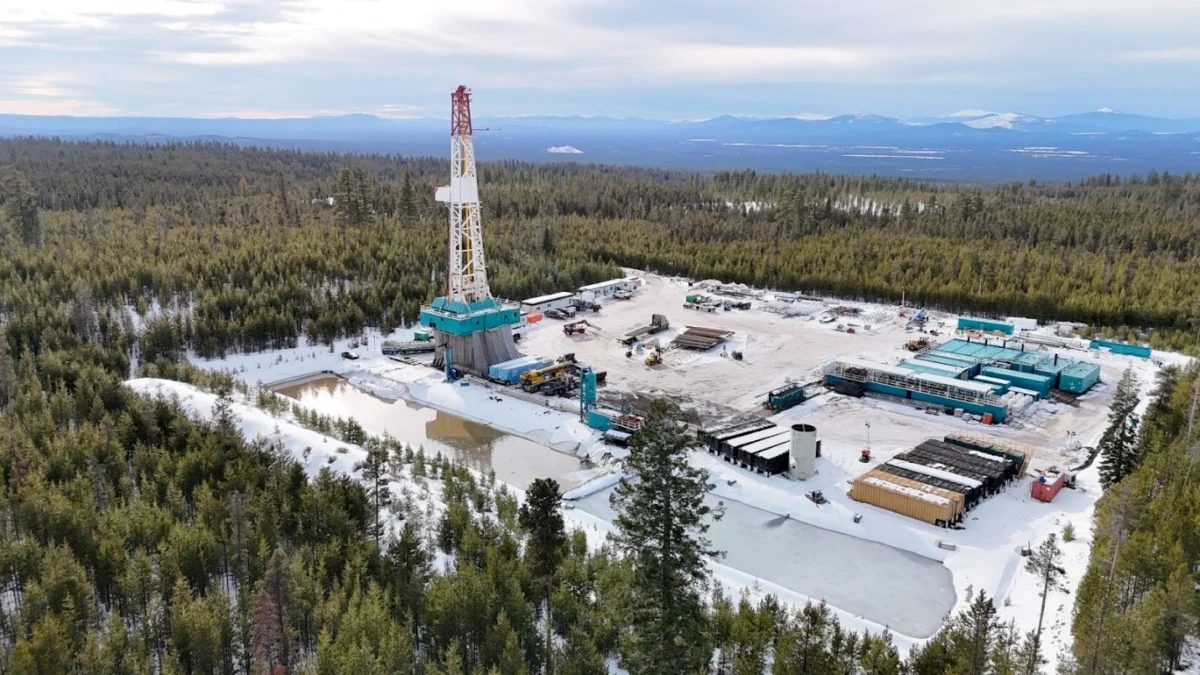
Geothermal startup Mazama Energy has successfully closed an oversubscribed Series B funding round, raising $135 million, the company announced on Thursday. This significant capital infusion marks a pivotal moment for the burgeoning enhanced geothermal systems (EGS) sector, positioning Mazama to accelerate the development of its groundbreaking technology that taps into super-hot rock formations deep beneath the Earth’s surface. The fresh funding is specifically earmarked to advance the company’s efforts in developing horizontal wells, each engineered to generate an impressive 15 megawatts (MW) of electricity, a substantial leap in geothermal power output.
The Dawn of Enhanced Geothermal Systems (EGS)
The global energy landscape is undergoing a profound transformation, driven by an urgent need for sustainable, reliable, and dispatchable power sources. Traditional geothermal energy, while clean, has historically been limited to regions with specific geological conditions where natural hydrothermal reservoirs exist – areas where hot water or steam is naturally accessible near the Earth’s surface. This geographical constraint has long prevented geothermal from achieving its full potential as a widespread baseload power solution.
Enhanced Geothermal Systems (EGS), however, represent a paradigm shift. Unlike their predecessors, EGS technologies actively engineer geothermal reservoirs in hot, dry rock formations that lack sufficient natural permeability or fluid content. This involves injecting water at high pressure into deep wells to create or enlarge fractures in the hot rock, establishing a circulation pathway. Cold water is then pumped down one well, heated by the surrounding rock, and brought back up another production well as hot water or steam to drive turbines and generate electricity. The key innovation lies in transforming abundant, ubiquitous hot rock into a viable energy resource, effectively making geothermal energy accessible in far more locations worldwide.
Mazama Energy is at the forefront of this revolution, pushing the boundaries even further by targeting "super-hot rocks" at extreme depths and temperatures. The company’s unique approach leverages advanced drilling techniques and thermodynamic principles to unlock unprecedented energy density.
Mazama’s Super-Hot Rock Innovation: The Supercritical Advantage
Mazama Energy’s strategy focuses on drilling past 10,000 feet, aiming for depths of approximately 15,000 feet. The company has demonstrated remarkable efficiency, achieving drilling past 10,000 feet in just 15 days. At these extraordinary depths, the Earth’s internal heat generates temperatures reaching 750°F (400°C). This extreme heat, combined with high pressures inherent at such depths, transforms water into a "supercritical" fluid. This unique state of matter is neither purely liquid nor purely gas, exhibiting properties of both, allowing it to absorb and transport significantly more energy than ordinary steam.
This supercritical fluid capability is a game-changer for geothermal efficiency. Mazama projects that each of its wells will be capable of producing up to 10 times more power than traditional geothermal technologies. This leap in output per well significantly improves the economic viability and scalability of geothermal projects, reducing the surface footprint and increasing the overall power density of a geothermal plant. The ability to extract vast amounts of energy from a single well drastically enhances the return on investment and reduces the environmental impact per unit of energy generated.
Strategic Funding and Investor Confidence
The $135 million Series B round was led by Centaurus Capital and Doerr Capital, signaling strong institutional belief in Mazama’s technology and market potential. The round also saw significant participation from major energy players, including ConocoPhillips and Shell Ventures, highlighting a broader trend of traditional fossil fuel companies diversifying their portfolios into renewable energy solutions. Their involvement lends considerable credibility and strategic partnerships to Mazama’s ambitious plans.
Existing investors, including the influential Khosla Ventures and Gates Frontier (Bill Gates’s investment fund focused on climate change solutions), returned to participate in the round, reaffirming their long-term commitment to Mazama’s vision. Khosla Ventures, which incubated Mazama Energy, has been a consistent champion of disruptive clean energy technologies. New investors joining the round included SiteGround Capital, H. Barton Asset Management, and the Jeffrey and Marieke Rothschild Foundation, further broadening the financial and strategic backing for the company. The oversubscribed nature of the Series B round underscores robust investor appetite for scalable, reliable, and clean baseload power solutions, especially those with the potential to address critical energy demands.
Ambitious Development Pipeline and Future Projections
Mazama Energy plans to begin generating electricity as early as next year, marking a crucial milestone in its commercialization journey. The company’s initial site in Oregon, often referred to as Project Cascade, holds immense promise. Mazama has revised its potential output estimate for this site sharply upwards, from an initial projection of 5 gigawatts (GW) by investor Vinod Khosla last year, to an astonishing 10 GW of electricity potential. To put this in perspective, 10 GW is roughly equivalent to the generating capacity of ten large nuclear power plants or a vast array of conventional fossil fuel plants, representing a significant contribution to regional and national energy grids.
While the Oregon site is still in its early stages of development, Mazama aims to complete its full development by 2030, at which point it anticipates generating 200 MW of electricity from this location. This phased approach allows for continuous technological refinement and scaled deployment. Demonstrating its commitment to rapid expansion, Mazama has already secured land for a second development site, signaling a clear pathway for replication and growth beyond its initial Oregon project. The company’s ability to swiftly move from exploration to securing multiple sites reflects an aggressive strategy to capture market share in the rapidly evolving clean energy sector.
EGS: The "Dark Horse" for AI Data Centers and Grid Stability
The exponential growth of artificial intelligence (AI) and its burgeoning demand for computing power has created an unprecedented surge in electricity consumption by data centers. These facilities require not only massive amounts of power but also highly reliable, 24/7, uninterrupted electricity supply to ensure continuous operation and data integrity. While many tech companies and data center developers have traditionally relied on natural gas due to its dispatchability and relatively lower cost compared to other fossil fuels, this choice comes with significant carbon emissions and susceptibility to price volatility.
Enhanced geothermal startups like Mazama are increasingly recognized as the "dark horse" in this critical battle to power AI data centers and other large grid loads. Unlike intermittent renewable sources such as solar and wind, which require extensive battery storage or backup generation to provide continuous power, EGS offers true baseload, 24/7, carbon-free electricity. This makes it an ideal solution for data centers, which cannot tolerate even momentary power interruptions. The consistent and predictable output of EGS aligns perfectly with the operational demands of AI infrastructure, offering a robust, environmentally responsible alternative to fossil fuels. The commitment to Environmental, Social, and Governance (ESG) principles by major corporations further incentivizes the adoption of such clean, reliable energy sources.
Global Energy Implications and Market Potential
The potential payoff for tapping into super-hot rock resources is staggering. According to research by the University of Twente and the Clean Air Task Force, exploiting just 1% of the worldwide super-hot rock resource could generate more than 63 terawatts (TW) of electricity. To contextualize this, the current global electricity consumption is approximately 25,000 terawatt-hours (TWh) per year, or an average continuous power demand of around 2.85 TW. The theoretical potential of super-hot rock, therefore, dwarfs current global energy needs, offering a virtually inexhaustible and geographically diverse clean energy source.
This vast potential positions EGS as a critical component in global decarbonization efforts. It offers a pathway to significantly reduce reliance on fossil fuels, mitigate climate change, and achieve energy independence for many nations. The ability to deploy baseload renewable power in regions not traditionally suited for conventional geothermal could revolutionize energy grids worldwide, providing stability and resilience that intermittent renewables alone cannot. Furthermore, the development of EGS technology creates high-skilled jobs, fosters technological innovation, and can stimulate economic growth in host communities.
Challenges and the Path Forward
Despite its immense promise, the path to widespread EGS deployment is not without its challenges. The primary hurdles include the significant upfront capital investment required for deep drilling and infrastructure development, which Mazama’s Series B funding helps address. Technological complexities associated with drilling at extreme depths and temperatures, managing high pressures, and ensuring the long-term integrity of engineered reservoirs also demand continuous innovation. While hydraulic stimulation is used, it differs significantly from fracking for oil and gas, primarily involving water and not large volumes of proppants, and usually targeting deep, stable rock formations. However, public perception and regulatory frameworks around induced seismicity, though typically minor for EGS, remain an important consideration.
Regulatory streamlining and supportive government policies will be crucial for accelerating EGS deployment. Permitting processes for such large-scale energy projects can be lengthy and complex, requiring coordinated efforts from various agencies. Standardization of technologies and best practices will also help drive down costs and reduce risks associated with pioneering projects.
Industry analysts widely view Mazama Energy’s successful funding round as a strong indicator of growing investor confidence in the EGS sector. "This funding round signals a turning point for enhanced geothermal, moving it from niche R&D to serious commercial deployment," remarked an energy sector analyst, highlighting the industry’s maturation. Environmental advocates echo this sentiment, with one representative stating, "EGS offers a crucial pathway to reliable, clean energy, addressing the intermittency challenges of other renewables and providing a consistent power source for critical infrastructure like AI data centers, which are often overlooked in decarbonization discussions."
Mazama Energy, with its robust funding, innovative supercritical fluid technology, and ambitious development plans, is poised to become a significant player in the global energy transition. Its success could pave the way for a new era of baseload, carbon-free power, fundamentally reshaping how the world meets its ever-growing energy demands, particularly those from rapidly expanding sectors like artificial intelligence. The journey to fully harness the Earth’s deep heat is complex, but Mazama’s recent achievements suggest that the future of energy may indeed lie beneath our feet.