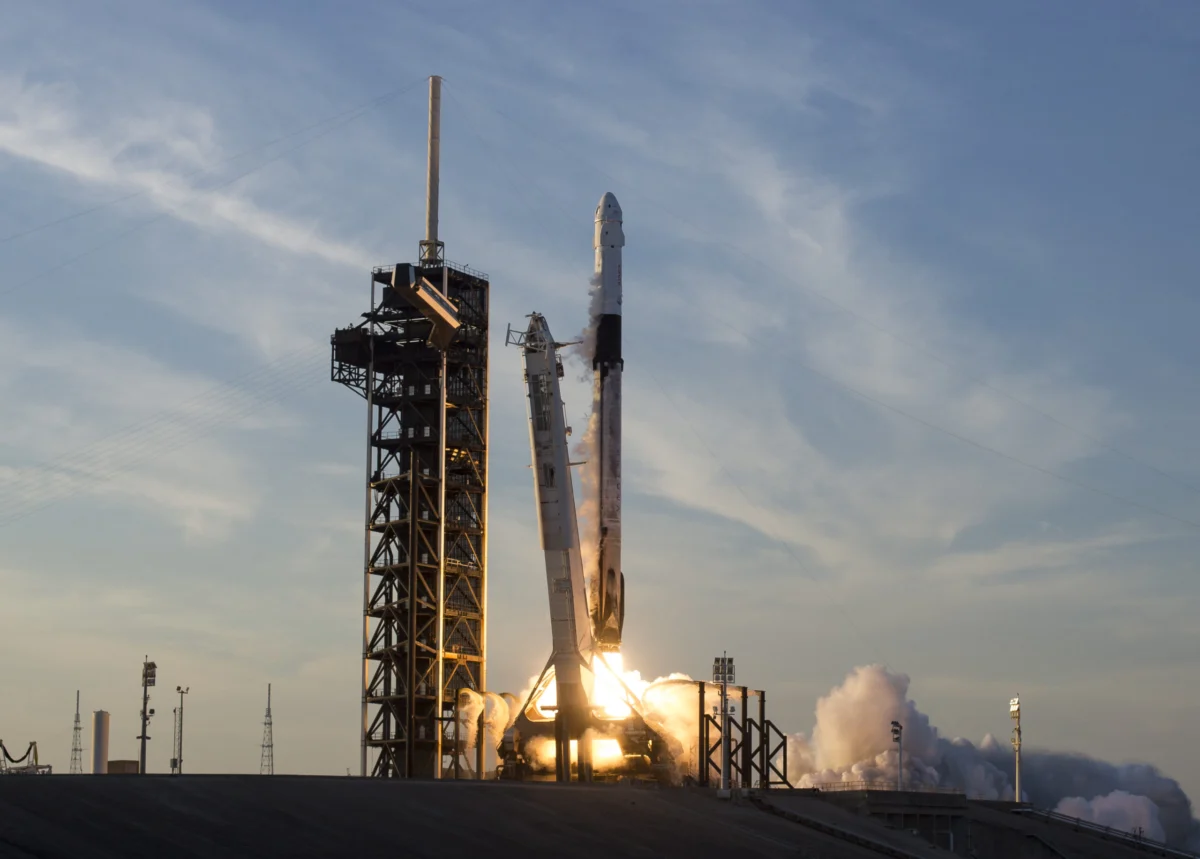
NASA has formally awarded SpaceX three additional crew transportation missions to the International Space Station (ISS), a critical move to ensure the continuous presence of U.S. astronauts aboard the orbiting laboratory. This contract modification, announced on September 18, 2026, brings the total number of crew rotation missions assigned to SpaceX under the Commercial Crew Transportation Capability (CCtCap) contract to 17. The new missions, designated Crew-15, Crew-16, and Crew-17, underscore NASA’s commitment to maintaining independent and reliable access to the ISS, a cornerstone of international scientific collaboration and human exploration.
Details of the Expanded Contract
The recent award constitutes a firm fixed-price, indefinite-delivery/indefinite-quantity contract modification. This contractual structure provides NASA with flexibility while locking in costs for the specified services. The total value of this modification for the three additional missions, along with all associated mission services, stands at $946 million. This comprehensive sum covers a wide array of operations crucial for human spaceflight, including ground processing, launch services utilizing SpaceX’s Falcon 9 rocket, in-orbit operations of the Dragon spacecraft, and meticulous return and recovery procedures. Furthermore, the contract encompasses essential cargo transportation for each mission and guarantees a critical "lifeboat" capability for the astronauts while the Dragon spacecraft is docked to the International Space Station, ensuring an emergency return option if needed.
The period of performance for these newly awarded missions extends through 2030, aligning with the current projected operational lifespan of the ISS. With this modification, the cumulative value of the CCtCap contract with SpaceX reaches an impressive $5.92 billion, reflecting the significant investment and trust NASA has placed in its commercial partners to sustain human presence in low Earth orbit. This expansion follows a notice of intent issued by the agency in May, signaling NASA’s proactive approach to securing its future transportation needs. The current sole-source modification does not, however, preclude NASA from pursuing future contract adjustments or new agreements for additional transportation services should evolving requirements necessitate them.
The Genesis of Commercial Crew Transportation
The Commercial Crew Program (CCP) and its cornerstone CCtCap contracts represent a paradigm shift in how NASA approaches human spaceflight. Following the retirement of the Space Shuttle Program in 2011, the United States faced a significant challenge: a gap in its independent human spaceflight capability. For nearly a decade, NASA relied solely on Russia’s Soyuz spacecraft to transport its astronauts to the ISS, a situation that raised concerns about cost, scheduling, and strategic independence.
In response, NASA initiated the CCP, a visionary public-private partnership designed to foster a robust commercial space industry capable of providing safe, reliable, and cost-effective crew transportation services to and from the ISS. The agency awarded the initial CCtCap contracts in 2014 to two industry leaders: Boeing for its Starliner spacecraft and SpaceX for its Crew Dragon. The core philosophy behind CCtCap was to leverage the innovation and efficiency of the private sector, allowing NASA to purchase services rather than owning and operating the hardware itself. This model aimed to stimulate commercial development, reduce operational costs for the agency, and free up NASA’s resources to focus on ambitious deep-space exploration missions, such as the Artemis program’s return to the Moon and eventual journey to Mars.
Under the CCtCap framework, NASA establishes stringent safety and performance requirements, and then certifies that a provider’s integrated space transportation system—comprising the spacecraft, launch vehicle, ground systems, and mission operations—meets these rigorous standards before astronauts are cleared to fly. This certification process is exhaustive, involving extensive testing, flight demonstrations, and detailed reviews of every aspect of the system.
SpaceX’s Proven Track Record and Certification
SpaceX has emerged as a trailblazer in this new era of commercial human spaceflight. The company achieved a pivotal milestone in November 2020 when NASA formally certified its Crew Dragon spacecraft and Falcon 9 rocket for crew transportation. This certification came after the successful Demo-2 mission in May 2020, which saw NASA astronauts Robert Behnken and Douglas Hurley become the first humans launched from American soil on a commercially built and operated spacecraft. This historic flight marked the return of independent U.S. human spaceflight capability after nine years and validated the CCtCap model.
Since then, SpaceX has consistently delivered on its commitments, executing multiple operational crew rotation missions to the ISS. Each mission, utilizing the reusable Dragon spacecraft atop a Falcon 9 rocket, is designed to transport up to four astronauts, along with vital pressurized cargo, to the space station. The current Crew-12 mission, which is presently docked to the ISS, exemplifies the routine and reliable nature that SpaceX has brought to human spaceflight operations. The Dragon spacecraft’s capabilities, including its automated docking system, sophisticated environmental controls, and robust safety features, have solidified its role as a dependable workhorse for ISS crew transport. The reusability of both the Dragon capsule and the Falcon 9’s first stage also offers significant cost efficiencies, a key objective of the Commercial Crew Program.
Ensuring Redundancy and Sustained Access
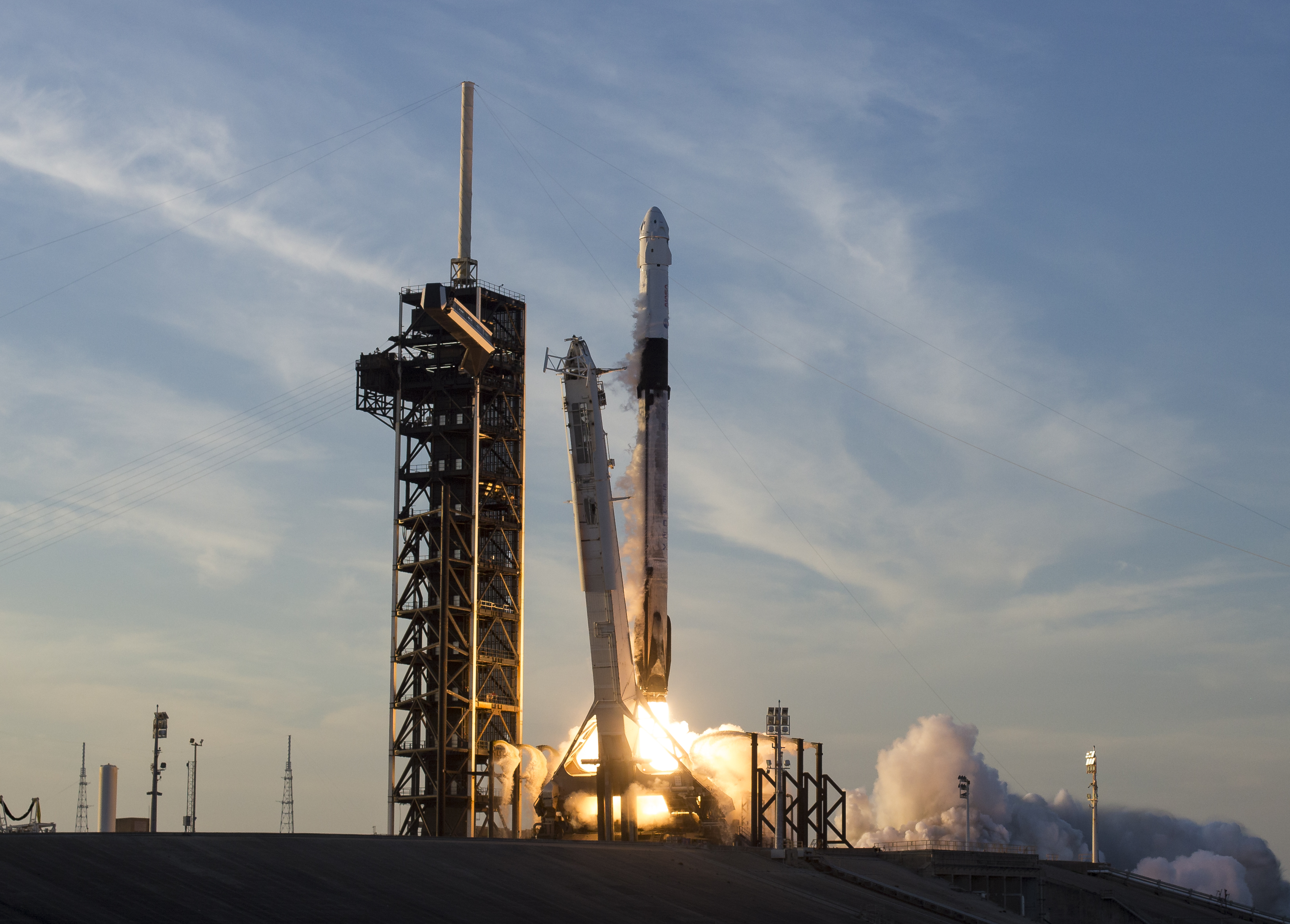
A critical aspect of NASA’s Commercial Crew strategy is the maintenance of access to the space station with two unique commercial crew industry partners. This dual-provider approach is not merely about competition; it is fundamentally about ensuring redundancy and resilience. Should one provider experience technical issues, launch delays, or other unforeseen challenges, the other partner can step in to maintain a continuous flow of crew and cargo to the ISS. This redundancy significantly enhances mission assurance and reduces the risk of the United States losing independent access to the orbiting laboratory, a lesson learned from past dependencies.
While SpaceX has demonstrated remarkable consistency, the development of Boeing’s Starliner spacecraft has faced notable delays and technical hurdles, including issues discovered during its uncrewed Orbital Flight Test (OFT-1) in 2019 and a subsequent OFT-2 in 2022 that successfully reached the ISS but highlighted further refinements needed before crewed flight. Boeing’s Crew Flight Test (CFT) with astronauts onboard is anticipated in the near future, marking a crucial step toward its full certification. The ongoing need for additional SpaceX missions, therefore, directly addresses the imperative to keep the ISS fully staffed and operational while Boeing works towards its full operational readiness. This ensures that scientific research, maintenance activities, and the overall functionality of the ISS are not compromised by potential gaps in transportation services.
The International Space Station: A Beacon of Collaboration
The International Space Station itself is a marvel of engineering and international cooperation, orbiting approximately 250 miles (400 kilometers) above Earth. It serves as humanity’s most advanced orbiting laboratory, hosting a wide array of scientific experiments across disciplines ranging from biology and physics to materials science and human physiology in microgravity. These experiments are crucial for understanding the long-term effects of spaceflight on the human body, developing new technologies, and making discoveries that benefit life on Earth.
The ISS is a collaborative project involving five participating space agencies: NASA (United States), Roscosmos (Russia), JAXA (Japan), ESA (Europe), and CSA (Canada). Continuous human presence is vital for its operation, maintenance, and the execution of its ambitious research agenda. Crew members typically live and work on the station for approximately six months, requiring regular rotations to ensure fresh scientific perspectives, specialized skills, and the mental well-being of the astronauts. The ability to reliably transport these crews is paramount to the station’s continued success and its role as a stepping stone for future deep-space exploration. The extension of SpaceX’s contract through 2030 directly supports the station’s planned operational lifespan, which may be extended further into the decade.
Broader Implications and Future Outlook
The award of these additional missions to SpaceX carries significant broader implications for NASA, the commercial space industry, and the future of human spaceflight.
- Assured Access to Space: Foremost, it solidifies the United States’ independent and assured access to low Earth orbit, reducing geopolitical vulnerabilities and allowing NASA to manage its space operations with greater autonomy and flexibility.
- Validation of Commercial Model: The sustained success of the CCtCap program, particularly with SpaceX, serves as a powerful validation of NASA’s public-private partnership model. This success story is likely to influence future NASA procurements for lunar missions (e.g., Human Landing System for Artemis) and other space infrastructure, fostering an even more vibrant and competitive commercial space sector.
- Economic Impact: The nearly $1 billion investment for these three missions represents a significant economic boost for the aerospace industry, supporting high-tech jobs, driving innovation, and reinforcing the U.S. as a leader in space technology.
- Focus on Deep Space: By offloading routine ISS transportation to commercial providers, NASA can dedicate more of its internal resources, engineering talent, and budget towards its ambitious deep-space exploration initiatives, including the Artemis program’s goal of returning humans to the Moon and eventually sending them to Mars.
- Transition to Commercial Space Stations: As the ISS approaches its eventual decommissioning (currently planned for 2030), NASA envisions a future where commercial space stations will take over the role of providing platforms for research and manufacturing in low Earth orbit. The success of CCtCap and the maturation of commercial providers like SpaceX are crucial prerequisites for this transition, demonstrating that the private sector can reliably operate complex human spaceflight infrastructure.
Official Perspectives
While no specific new statements were released with this particular contract modification, the ongoing narrative from NASA officials consistently emphasizes the strategic importance of the Commercial Crew Program. "Ensuring we have multiple robust and reliable transportation options for our astronauts is fundamental to the sustained success of the International Space Station and our broader human exploration goals," a NASA spokesperson might reiterate. "The continued partnership with commercial providers like SpaceX allows us to maintain critical research in low Earth orbit while pushing the boundaries of human exploration further into the solar system."
Similarly, representatives from SpaceX would likely express their continued commitment to this partnership. "We are honored to continue our collaboration with NASA in providing safe and reliable transportation for astronauts to the International Space Station," a SpaceX executive might comment. "These additional missions are a testament to the dedication of our teams and the proven performance of our Dragon and Falcon 9 systems, enabling vital scientific discovery and human presence in space."
A Continuous Timeline of Progress
The journey to this expanded contract has been marked by a clear chronology of strategic decisions and technological achievements:
- 2011: Space Shuttle Program retires, initiating a period of reliance on Russian Soyuz for U.S. astronaut transport.
- 2014: NASA awards Commercial Crew Transportation Capability (CCtCap) contracts to SpaceX and Boeing, aiming to restore independent U.S. human spaceflight.
- May 2020: SpaceX’s Demo-2 mission successfully launches NASA astronauts to the ISS, marking the first crewed flight from U.S. soil in nearly a decade.
- November 2020: NASA certifies SpaceX’s Crew Dragon system for regular operational missions.
- Since 2020: SpaceX consistently conducts operational crew rotation missions, including the currently orbiting Crew-12.
- May 2026: NASA issues a notice of intent to purchase additional crew transportation missions from SpaceX.
- September 2026: NASA officially awards SpaceX the Crew-15, Crew-16, and Crew-17 missions, extending services through 2030.
This latest contract modification is more than just a financial transaction; it is a clear affirmation of a successful strategy that has revitalized American human spaceflight, fostered a dynamic commercial space industry, and secured the vital continuous presence of astronauts on the International Space Station for years to come. As NASA looks toward a future of lunar outposts and Martian expeditions, the lessons learned and the capabilities forged through programs like CCtCap will undoubtedly serve as foundational pillars for humanity’s next giant leaps.