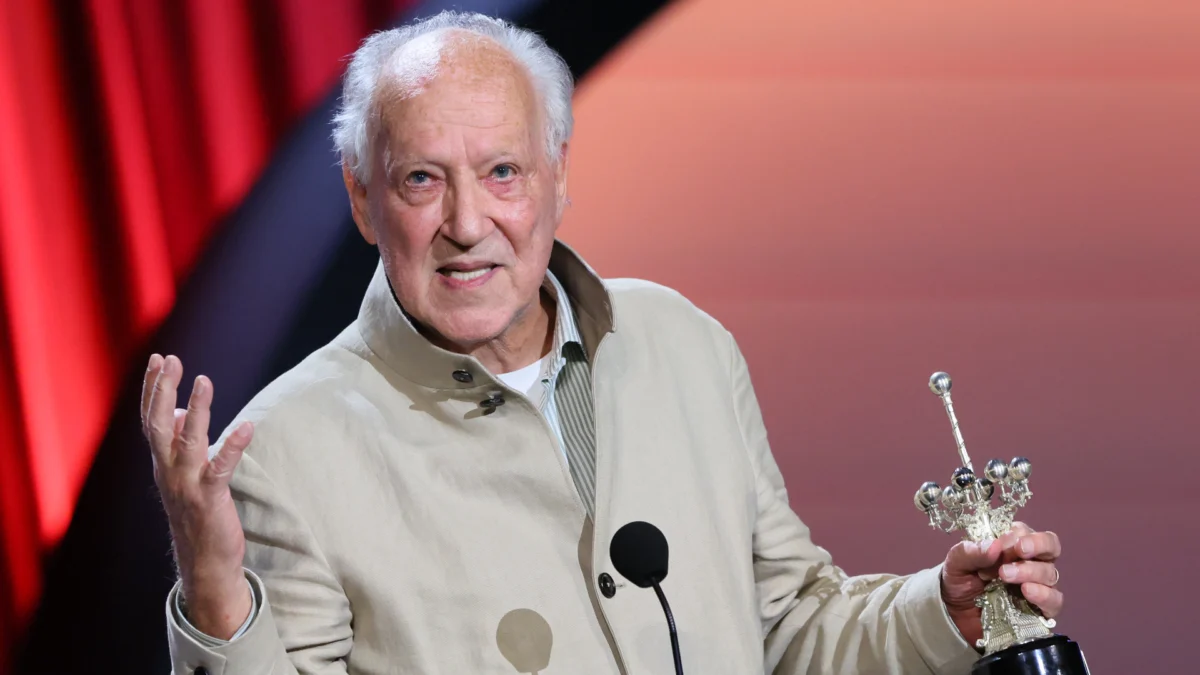
The San Sebastian Film Festival, a cornerstone of European cinema, commenced its 2026 edition with a politically charged opening ceremony that saw legendary German filmmaker Werner Herzog receive the coveted Donostia Award. The prestigious honor, recognizing a lifetime of cinematic achievement, was presented to Herzog on Friday night at the Kursaal Theatre, amidst a fervent standing ovation from a congregation of his European creative peers. The festival, running from September 18th to 26th, opened with Fatih Akin’s haunting film Ghost Song, but it was Herzog’s impassioned acceptance speech and the prevailing socio-political undercurrents that defined the evening’s initial proceedings.
A Lifetime of Cinematic Exploration Recognized
Werner Herzog, a filmmaker whose oeuvre spans decades and continents, has carved a unique niche in cinema with his distinctive style, characterized by a blend of documentary rigor and narrative intensity, often exploring the extremes of human experience and the often-unseen forces of nature. His latest feature, Bucking Fastards, starring Kate and Rooney Mara, Orlando Bloom, and Domhnall Gleeson, is currently being screened at the festival, adding a contemporary dimension to his celebrated legacy.
The presentation of the Donostia Award by actor Orlando Bloom, whom Herzog affectionately described as a "living legend at his young age already" and a "treasure of cinema," underscored the deep respect the filmmaking community holds for the German director. Bloom’s presence on stage highlighted the intergenerational admiration Herzog commands within the industry.
Herzog’s acceptance speech resonated with a profound sense of connection to the Basque Country, the host region of the festival. He articulated a long-standing affinity, tracing it back to his early seminal work, the 1972 masterpiece Aguirre, the Wrath of God. He recounted a personal pilgrimage undertaken many years prior, a journey of over 1,000 kilometers on foot from the Cannes Film Festival into the Pyrenees mountain range. While he humorously confessed to ending his trek in Biarritz rather than San Sebastian, the experience of traversing the rugged terrain and, crucially, interacting with the Basque people, left an indelible mark.
"I met your people. I met Basque people in the mountains, and I was always intrigued," Herzog stated, reflecting on these formative encounters. His deep appreciation for the region extended to its rich cultural landscape, particularly its literary traditions. "I feel like as if I belong here. It is a country of poetry. It’s a country of poets, and I receive this here from the poets. Thank you very much," he declared, drawing a direct parallel between his artistic sensibilities and what he perceives as the poetic soul of the Basque people. This sentiment, he explained, was further amplified by his continued engagement with Spain’s national poetry competitions.
Herzog’s illustrious career, which includes other critically acclaimed films such as Fitzcarraldo (1982), Grizzly Man (2005), and Cave of Forgotten Dreams (2010), has consistently demonstrated a profound engagement with humanity’s place in the world, often confronting existential themes with unflinching honesty and a singular visual aesthetic. The Donostia Award serves as a testament to his enduring influence on global cinema.
A Festival Opening Echoing Global Concerns
Beyond the celebration of Herzog’s career, the opening ceremony of the 2026 San Sebastian Film Festival was notably marked by overt political declarations from the evening’s hosts, Fariba Sheikhan and Mariona Terés. Their address to the assembled audience transcended mere festival pleasantries, directly confronting pressing global humanitarian crises.
"We join the myriad of voices calling for an end to genocide, like the one happening in Gaza," the hosts proclaimed, their words resonating with a palpable urgency. This statement was followed by a strong declaration of solidarity: "And we stand in solidarity with the directors of the film NAZA, Yuval Abraham and Rachel Szor, who have been threatened by the Israeli government." These pronouncements were met with thunderous applause, indicating a strong alignment between the festival’s platform and the audience’s sentiment.
This stance echoes the festival’s commitment to addressing contemporary geopolitical issues, a tradition that was evident in the previous year’s edition. In 2025, the San Sebastian Film Festival had issued a call for an "immediate ceasefire" in the conflict, condemning the actions of Benjamin Netanyahu’s government against the Palestinian people, which the festival characterized as "unimaginable massacres."
The film NAZA, directed by Yuval Abraham and Rachel Szor, has emerged as a significant work, particularly following its impactful debut at the Venice Film Festival. The documentary features testimonies from 24 Israeli military officers who allegedly detail the systems and protocols employed by Israel in targeting and eliminating civilians in Gaza. Its premiere at Venice garnered widespread attention, setting a record for the longest standing ovation at the Lido. Abraham and Szor were awarded the Special Jury Prize at the Venice Film Festival awards on the preceding Saturday. However, their work has not been without controversy. They have faced considerable scrutiny, including explicit threats from Israel’s culture minister, Miki Zohar, who reportedly threatened to revoke their Israeli citizenship, highlighting the contentious nature of the subject matter and its reception.
The festival hosts further broadened their appeal for justice and human rights, emphasizing the critical need to put an end to "unilateral breaking of international law, to colonialist looting, to sexual violence and to the cruel wars that systematically violate human rights." This comprehensive call to action underscored the festival’s aspiration to be more than just a cinematic showcase, but also a forum for critical discourse on urgent global issues.
Context and Chronology of the 2026 San Sebastian Film Festival
The 2026 San Sebastian International Film Festival, scheduled to run from September 18th to 26th, marks another significant chapter in its storied history. Founded in 1953, the festival has evolved into one of Europe’s most prestigious cinematic events, renowned for its discerning selection of films and its role in launching and promoting international talent. It is particularly celebrated for its strong focus on European cinema, though its reach and influence extend globally. The festival’s commitment to showcasing auteur-driven cinema, alongside its strategic location in the culturally rich Basque Country, has cemented its status as a vital fixture in the international film calendar.
The opening film, Fatih Akin’s Ghost Song, sets a poignant and introspective tone for the festival. Akin, an acclaimed director known for his deeply personal and often challenging films, has stated that Ghost Song is heavily influenced by his lifelong fascination with anime and manga. The film chronicles a profound love-at-first-sight connection between two students that is tragically cut short by death. This choice of opener, with its exploration of love, loss, and the ephemeral nature of life, provides a contemplative counterpoint to the more overtly political statements made during the ceremony. A conversation with Fatih Akin regarding the film and his inspirations has been published by The Hollywood Reporter, offering deeper insight into the artistic vision behind the festival’s curtain-raiser.
Supporting Data and Broader Implications
The San Sebastian Film Festival’s consistent engagement with socio-political themes reflects a broader trend within the international film festival circuit. Festivals like Cannes, Venice, and Berlin have increasingly become platforms for filmmakers to address global conflicts, human rights abuses, and environmental concerns. This tendency is driven by several factors:
- Filmmakers as Social Commentators: Contemporary filmmakers often see their work as a means of engaging with and commenting on the world around them. Documentaries and even fictional narratives can serve as powerful tools for raising awareness and sparking dialogue on critical issues.
- The Power of Cinema for Empathy: Film has a unique capacity to foster empathy by allowing audiences to connect with the experiences of others, particularly those living through conflict or oppression. Festivals provide a crucial venue for these narratives to reach a wider audience.
- Festival’s Role as Cultural Gatekeepers: Film festivals act as influential gatekeepers, shaping cinematic discourse and influencing public opinion. By selecting and awarding films that tackle difficult subjects, they lend legitimacy and visibility to these issues.
- Economic and Political Pressures: In some instances, filmmakers and festivals may face pressure from governments or corporations regarding the content of their films. The threats faced by the NAZA directors, for example, highlight the complex political landscape within which such films operate.
The strong reaction to the political statements at the San Sebastian opening ceremony, particularly the solidarity expressed with the NAZA filmmakers, underscores the growing importance of film festivals as spaces for political expression and advocacy. The award bestowed upon Werner Herzog, a filmmaker known for his independent spirit and willingness to confront uncomfortable truths, further amplifies the festival’s commitment to artistic integrity and meaningful engagement with the world. The coming days of the festival will undoubtedly see further discussions and cinematic explorations of these pressing global concerns, as audiences and filmmakers gather to share perspectives and push the boundaries of cinematic storytelling. The festival’s ability to balance the celebration of artistic achievement with a commitment to social responsibility positions it as a vital cultural institution in an increasingly complex world.