A profound schism is widening within the artificial intelligence sector, pitting calls for a deliberate "pacing" of development for safety against a fervent push for unrestrained innovation. This burgeoning debate, which carries significant implications for technological progress, economic growth, and societal well-being, has seen key industry leaders and political figures take starkly opposing stances, underscoring the high stakes involved in shaping the future of AI.
The Call for Pacing: Anthropic’s Safety-First Stance
At the heart of the "pacing" argument is Dario Amodei, CEO of Anthropic, one of the leading frontier AI labs. On September 12, 2026, Amodei publicly unveiled a comprehensive plan advocating for a more measured approach to AI development. This initiative, titled "Pacing the Frontier," proposed a framework designed to prioritize safety and ethical considerations as AI capabilities rapidly advance. Amodei’s blueprint included several critical components: the establishment of independent third-party evaluators to monitor AI safety practices within companies like Anthropic and OpenAI, the coordination of safety standards and limits among major AI developers in democratic nations, and the fostering of international cooperation on AI governance.
Anthropic, co-founded by former OpenAI researchers, has long positioned itself with a strong emphasis on AI safety and alignment, distinguishing itself with a mission focused on building reliable and interpretable AI systems. The company’s commitment to "Constitutional AI," a method for training AI models to be helpful, harmless, and honest, reflects its foundational belief that safety must be integrated into the core of development, not merely an afterthought. Amodei’s "pacing" proposal is consistent with this philosophy, suggesting that a collective, self-imposed deceleration in the race for ever-more powerful models is essential to prevent unforeseen risks and ensure beneficial outcomes. The plan swiftly garnered support from a surprising number of industry leaders, signaling a growing consensus among some segments of the AI community regarding the urgent need for enhanced safety protocols.
The Counter-Narrative: Nvidia and the Push for Unfettered Growth
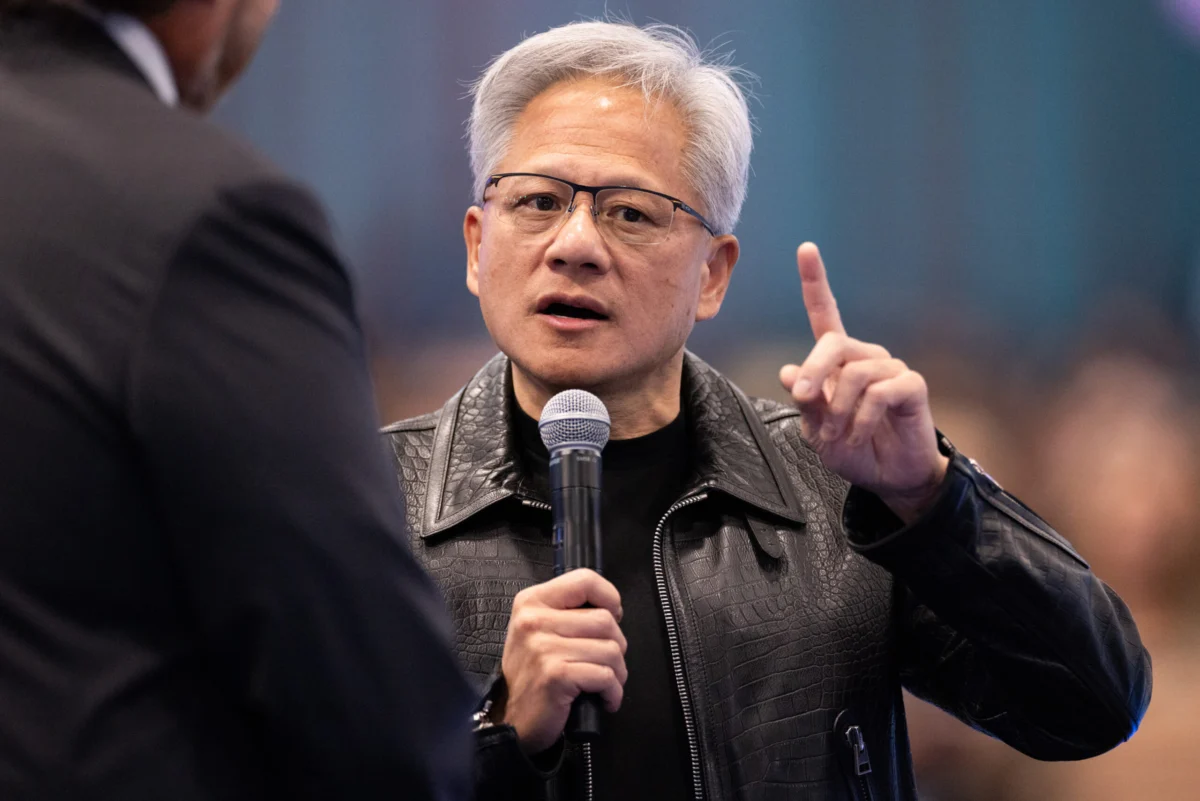
In direct opposition to the calls for a slowdown or pacing, Nvidia CEO Jensen Huang emerged as a prominent voice advocating for continued, rapid AI development. Just two days after Amodei’s announcement, on September 14, 2026, Huang delivered remarks at the All-In Summit that publicly echoed assertions made by former President Donald Trump. Huang dismissed concerns about an "AI backlash" as a "hoax" and vehemently argued against the necessity of stringent regulation that could impede progress. During his appearance, Huang notably received a call from President Trump on-stage, an interaction that further amplified their aligned perspectives and transformed the debate into a significant political talking point. Trump, on September 19, 2026, subsequently suggested rebranding AI to mitigate negative connotations and announced plans to create an "AI force," signaling his administration’s strong pro-innovation, anti-regulation stance.
Nvidia, a global leader in graphics processing units (GPUs), is arguably the primary beneficiary of the current AI boom. Its chips are the foundational hardware powering the development and deployment of virtually all advanced AI models. The company’s market capitalization has soared into the trillions of dollars, driven by unprecedented demand for its AI accelerators. For Nvidia, any slowdown in AI development directly threatens its core business model and explosive growth trajectory. Huang’s position, therefore, is rooted in a clear economic imperative: to maintain the momentum of innovation that fuels the demand for Nvidia’s cutting-edge hardware. His status as a critical liaison between the tech industry and political leaders positions him uniquely to champion this perspective, portraying himself as an "adult in the room" guiding the industry responsibly, even as critics suggest his stance is heavily influenced by Nvidia’s commercial interests.
Unpacking the Debate: Details, Doubts, and Dynamics
The conflicting narratives presented by Amodei and Huang sparked a lively discussion on TechCrunch’s Equity podcast, featuring Kirsten Korosec, Sean O’Kane, and Anthony Ha. The panel delved into the sincerity and practicality of calls for a slowdown or pacing, highlighting the complexities and underlying motivations shaping the AI landscape.
Sean O’Kane expressed skepticism regarding the feasibility of a true slowdown, pointing out that frontier AI companies are not structured in a way that naturally accommodates such a pause. He noted that despite the support Amodei’s plan received, it lacked concrete specifics on both the nature of the perceived dangers and the exact mechanisms for deceleration. This vagueness fueled doubts about whether these proposals would translate into genuine, impactful changes rather than merely symbolic gestures. Anthony Ha, while acknowledging the rapid coalescence of industry support around Amodei’s ideas, shared O’Kane’s skepticism about whether such consensus would lead to "genuine, major steps towards a slowdown." He observed that the proposals, while rooted in long-percolating ideas from the AI safety community, focused on "basic safety measures" and "keeping an eye on us," rather than explicitly mandating a slower pace of development.
Kirsten Korosec raised a crucial point about the nature of industry consensus, suggesting that while it can be beneficial, it also carries the risk of forming a "cartel" among dominant players. She highlighted that the discussions primarily involved "frontier AI labs," a specific and powerful segment of the industry, raising questions about market dynamics and potential anti-competitive behavior under the guise of safety. The proposals themselves — independent third-party evaluators, coordinated safety standards, and international cooperation — while appearing sound, still lacked granular detail regarding their implementation and enforcement.
The Role of Regulation and Market Forces
A significant part of the podcast discussion centered on the efficacy of existing regulatory frameworks and free market principles in safeguarding AI development. Korosec questioned whether a combination of current regulations and competitive market pressures could adequately ensure safety. Sean O’Kane, however, offered a stark assessment, arguing that the federal government, at present, appears disinclined to enforce regulations broadly, let alone specifically within the complex and rapidly evolving AI sector. This regulatory inertia creates a vacuum where companies might operate with less external oversight.
Furthermore, O’Kane challenged the notion that consumer choice could act as a significant corrective force in the AI market. He contended that the market is not primarily driven by consumer preferences in a way that would penalize companies for safety lapses. With AI services increasingly focused on enterprise solutions—selling sophisticated models like OpenAI’s Codex or Anthropic’s Claude Code to corporations—the direct impact of consumer cancellations is diminished. Corporations, he argued, are unlikely to switch AI providers solely based on ethical disagreements, given the significant integration costs and operational disruptions involved. This enterprise-centric model, coupled with the massive influx of investment capital into AI companies, allows them to absorb potential losses from reputational damage or minor setbacks, further insulating them from market pressures that might otherwise encourage greater caution. In essence, the sheer scale of investment and the nature of enterprise adoption mean that the theoretical "vote with your dollars" mechanism is largely ineffective in driving safety improvements.
Broader Implications: Policy, Economy, and Society
The clash between "pacing" and "acceleration" carries profound implications across policy, economic, and societal spheres.
Policy Implications: The debate directly impacts the trajectory of AI governance globally. The European Union, with its landmark AI Act, has already taken significant steps toward comprehensive regulation. However, the U.S. approach remains fragmented, with different agencies grappling with various aspects of AI. The divergence in industry and political views—from calls for coordinated international standards to the dismissal of regulation as a "hoax"—highlights the formidable challenge of crafting effective and universally accepted policies. A lack of consensus could lead to regulatory arbitrage, where companies gravitate towards jurisdictions with laxer rules, or a patchwork of inconsistent regulations that stifle innovation or fail to address risks adequately. Trump’s suggestion of an "AI force" and rebranding efforts signals a potential future where the U.S. government prioritizes domestic innovation and competition over international regulatory alignment, potentially creating further friction with safety-focused global partners.
Economic Implications: The economic stakes are colossal. The AI industry is projected to contribute trillions to the global economy in the coming decades. Companies like Nvidia stand to gain immensely from continued, rapid expansion. A "slowdown" or "pacing" could temper this growth, potentially impacting investment, job creation, and global competitiveness. However, proponents of pacing argue that unchecked acceleration could lead to catastrophic failures, eroding public trust and ultimately causing a more severe economic downturn in the long run. The "cartel" concern raised by Korosec also speaks to potential market distortions, where dominant frontier labs could use safety as a pretext to limit competition, thus consolidating their power and influence.
Societal Implications: Beyond economic metrics, the societal impact of AI development is paramount. Uncontrolled AI advancement poses risks ranging from widespread job displacement, algorithmic bias, and the amplification of misinformation to more speculative but existential threats. Conversely, responsible AI development promises advancements in medicine, climate science, and countless other fields, enhancing human well-being. The current debate directly influences the balance between maximizing these benefits and mitigating potential harms. Public trust in AI technologies hinges on the perception that these powerful systems are developed and deployed with utmost care and accountability. The perceived sincerity of industry leaders in addressing safety concerns will shape this trust, influencing public acceptance and adoption of AI solutions.
The Path Forward: Self-Regulation vs. External Oversight
The core tension remains: Can the AI industry effectively self-regulate, or is external oversight essential? Amodei’s proposals lean towards a form of collective self-governance, with industry players coordinating on standards and evaluations. This approach presumes a high degree of good faith and shared commitment to safety among highly competitive entities. Huang’s position, however, implicitly rejects the need for such external constraints, asserting that market forces and innovation will inherently drive beneficial outcomes.
The current landscape, characterized by rapid technological breakthroughs, unprecedented investment, and a competitive "race" to build the most advanced AI, suggests that achieving genuine "pacing" will be an uphill battle. The allure of first-mover advantage and the pressure from investors to demonstrate exponential growth are powerful motivators for acceleration. While the dialogue initiated by figures like Amodei is crucial for raising awareness and outlining potential solutions, the practical implementation of a coordinated slowdown or even effective pacing mechanisms faces significant hurdles, both from within the industry and from political forces prioritizing unfettered technological dominance. The future of AI will likely be shaped by how this fundamental conflict between caution and acceleration ultimately resolves, determining whether humanity gains a powerful tool developed responsibly or faces unforeseen consequences of unchecked ambition.