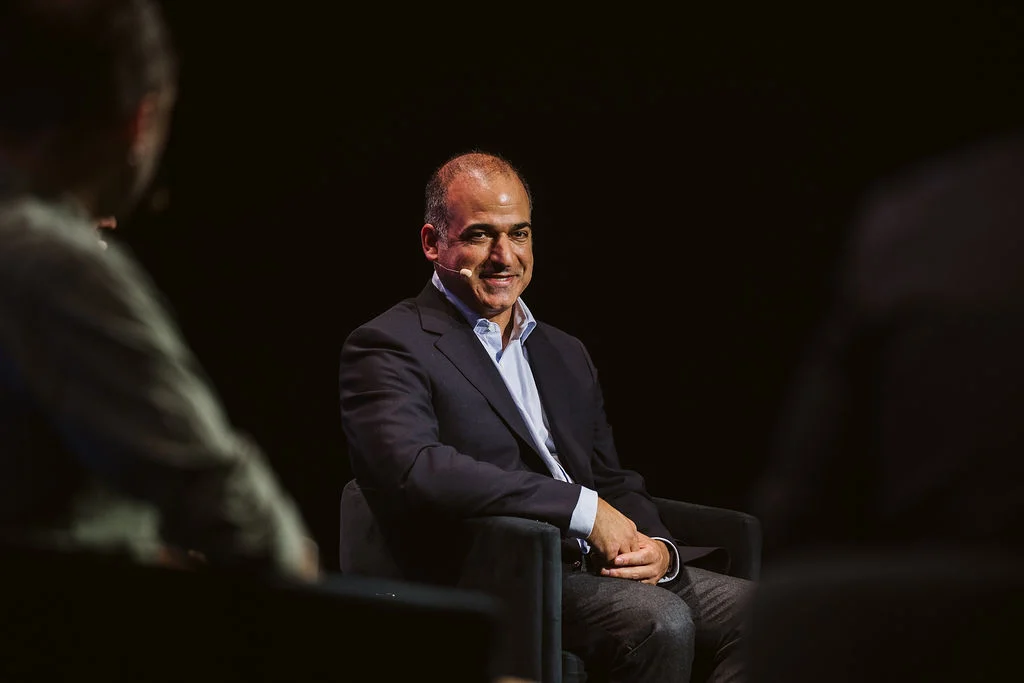
The recent All In conference, a prominent gathering for technology innovators and investors, provided a unique vantage point into one of artificial intelligence’s most intriguing and deliberately obscured frontiers: world models. During a moderated panel discussion on this topic, it became evident that while significant buzz and substantial funding are flowing into this sector, the leading players are operating under an unusual veil of secrecy regarding their commercialization strategies. This strategic opacity, though frustrating for those seeking clarity, appears to be a calculated maneuver in a highly competitive and nascent technological landscape.
Unraveling the Concept of World Models in AI
At its core, a world model in AI is a sophisticated computational system designed to build an internal, predictive representation of its environment. Unlike traditional AI models that might specialize in specific tasks like image recognition or natural language processing, world models aim to understand the underlying physics, dynamics, and spatial relationships of the real world. This capability is often described as automating "spatial intelligence," allowing AI systems to reason, plan, and interact with their surroundings in a far more nuanced and human-like manner.
The theoretical foundations for world models are not entirely new, drawing inspiration from cognitive science and earlier AI attempts to build general intelligence. However, recent advancements in deep learning, computational power, and vast datasets have brought these ambitions closer to reality. Proponents argue that world models represent a crucial step towards Artificial General Intelligence (AGI), enabling systems to learn from experience, predict outcomes, and adapt to novel situations without explicit programming for every scenario. They are envisioned as the "common sense" layer for AI, allowing machines to grasp the causal relationships that govern our physical world.
Key Players and Their Lofty Ambitions
Two entities currently stand out in the burgeoning world model space: AMI Labs, co-founded by AI pioneer Yann LeCun, and Fei-Fei Li’s World Labs. Both organizations have successfully garnered considerable attention and secured substantial financial backing from investors eager to capitalize on the next wave of AI innovation. Yann LeCun, a recipient of the Turing Award for his foundational work in deep learning, lends immense credibility to AMI Labs, signaling its potential for groundbreaking research. Fei-Fei Li, renowned for her work on ImageNet and a leading voice in human-centered AI, brings a similar gravitas to World Labs.
Despite their illustrious leadership and significant capital, both labs exhibit a curious characteristic: a low ranking on what some industry observers term "the trying-to-make-money scale." This metric, recently highlighted by TechCrunch, assesses the tangible commercial output and revenue generation efforts of AI research entities. For AMI Labs and World Labs, the emphasis appears to remain heavily on fundamental research and capability demonstration rather than immediate product market fit or aggressive monetization strategies. This approach stands in stark contrast to many other well-funded AI startups that often prioritize rapid product development and revenue growth.
The Elusive Path to Commercialization
The lack of concrete commercialization plans became strikingly clear during the All In conference panel. When pressed on where the technology would genuinely see widespread application, the discussion often veered into ambiguity. Michael Rabbat, a co-founder of AMI Labs and its VP of World Models, epitomized this reticence. His response to direct inquiries about AMI’s product roadmap was terse: "We’ll talk about it when we’re ready to talk about it." Further clarification via email offered little more insight, stating, "We’re still in a research and building phase, so we’re not talking publicly about any product plans or timeline."
This caginess, while understandable for a company less than a year old, appears to be a systemic characteristic of the entire world model domain. World Labs’ Marble platform, perhaps the most publicly showcased offering in the sector, exemplifies this. Its demonstrations encompass a wide array of potential applications, from straightforward media creation and building explorable environments for video games to advanced CGI effects and robotics use cases. However, the overarching impression is that Marble primarily serves as a sophisticated capability demonstrator rather than a ready-for-market product with a defined target audience or business model. The broad spectrum of applications, while impressive, underscores the exploratory nature of current endeavors.
Frustration in the Supply Chain: A Ripple Effect of Secrecy
The strategic secrecy surrounding world models extends beyond the labs themselves, creating challenges even for their essential suppliers. Alex de Vigan, CEO of Physicl, a data supplier critical to the burgeoning world model ecosystem, voiced his frustration on the sidelines of the All In conference. Physicl provides specialized datasets that are instrumental in training these complex AI systems, yet de Vigan remains largely in the dark about the precise nature of the end products. "I wish they would tell us more. We could build more useful data if we knew what they were working on," he lamented.
This sentiment highlights a significant operational friction. Data suppliers, who play a crucial role in the AI value chain, operate more effectively when they understand the specific requirements and objectives of their clients. Without this insight, their ability to curate, optimize, and innovate their data offerings is hampered, potentially slowing down the overall development cycle of world model technologies. This suggests that while secrecy might protect competitive advantages, it also introduces inefficiencies and potentially strains relationships within the ecosystem.
The Versatility Paradox: A Blessing and a Curse
Part of the mystery surrounding world models stems from their inherent versatility. The foundational concept – creating a navigable, predictive map of the world – has a breathtakingly broad range of potential applications. A simple analogy can be drawn to the AI models powering self-driving cars, which construct real-time spatial representations to navigate complex traffic scenarios. However, the same underlying modeling approach that enables a Waymo vehicle to weave through urban environments could theoretically be adapted to a humanoid robot performing complex manual tasks in a factory, or even to transform a few minutes of video footage into a fully explorable virtual environment for entertainment or training purposes.
AMI Labs has already hinted at its exploratory forays into diverse sectors, including manufacturing, biomedicine, robotics, and even AI software for medical professionals through its Nabia partnership. This wide-ranging experimentation, while showcasing the technology’s immense potential, also contributes to the ambiguity. It’s improbable that AMI will pursue all these avenues simultaneously, leading to questions about which specific applications are gaining traction and why. This "versatility paradox" makes it difficult for external observers to pinpoint the labs’ strategic priorities, further deepening the enigma.
The ‘Dark Forest’ Hypothesis: A Strategic Necessity in AI Innovation
The prevailing theory among industry insiders for this pervasive secrecy draws a direct parallel to the "Dark Forest" hypothesis, a concept popularized by science fiction author Cixin Liu in his acclaimed novel, The Dark Forest. In Liu’s universe, civilizations across the cosmos are forced into a state of perpetual silence and concealment. Any signal of existence instantly marks a civilization as a threat, inviting immediate and decisive destruction from unknown, superior entities. Applied to the cutthroat world of AI, the metaphor suggests that in a landscape populated by unknown competitors, revealing one’s true capabilities or strategic direction too early is an invitation for rivals to converge, replicate, and potentially surpass.
No one genuinely doubts the existence of numerous viable business opportunities built upon world model technology. Analysts from firms like McKinsey and PwC have projected the global market for spatial AI and advanced robotics, which heavily rely on world models, to reach hundreds of billions of dollars by the early 2030s, driven by advancements in autonomous systems, virtual reality, and smart manufacturing. Early investment rounds for world model startups have frequently exceeded hundreds of millions, sometimes even surpassing the billion-dollar mark, indicating robust investor confidence.
However, as long as fundraising remains relatively easy and plentiful, there is little immediate pressure for these labs to narrow their focus or prematurely disclose their commercial intentions. In fact, there’s a compelling strategic rationale not to. If AMI Labs were to announce tomorrow that they had achieved a breakthrough in developing a humanoid robot capable of unprecedented dexterity (a hypothetical "OpenClaw") or had created a next-generation Hollywood rendering system that revolutionizes media production, it would instantly trigger intense interest from a multitude of competitors.
This revelation would not only alert other world model companies but also attract "neolabs" – emerging, highly agile startups – and established AI giants like OpenAI and Anthropic, who possess vast resources and can pivot rapidly. These potential rivals, buoyed by their own access to significant capital, could quickly mobilize to replicate or even improve upon the disclosed innovation, eroding the first-mover advantage.
Funding Dynamics and the Competitive Landscape
The dynamics of easy fundraising, while enabling prolonged research and development under the radar, also present a double-edged sword. The same capital that allows AMI Labs and World Labs to operate in stealth mode is simultaneously empowering a host of potential rivals. As the path to market for world model applications eventually clarifies, the competitive landscape is guaranteed to intensify dramatically.
This inevitability of competition reinforces the "dark forest" strategy. While the emergence of rivals is a foregone conclusion, delaying that confrontation for as long as possible is a paramount strategic objective. By keeping their precise product plans and timelines under wraps, these leading labs buy themselves precious time to solidify their technological lead, build robust intellectual property, and potentially achieve a critical mass of development before facing direct competition. It’s a high-stakes game of hide-and-seek, where the prize is dominance in what could be one of the most transformative AI paradigms of the century.
Timeline of Key Developments (Inferred and Actual):
- Mid-2010s: Renewed academic interest in world models and predictive learning, fueled by advancements in deep reinforcement learning and neural networks.
- Late 2010s: Initial foundational research by AI pioneers like Yann LeCun and Fei-Fei Li lays groundwork for dedicated world model labs.
- Early 2020s: Significant private investment begins flowing into AI research focusing on spatial intelligence and environmental understanding.
- 2025: Formation of AMI Labs (co-founded by Michael Rabbat, with Yann LeCun’s involvement) and World Labs (led by Fei-Fei Li), rapidly securing substantial seed and Series A funding rounds, reportedly in the hundreds of millions.
- 2026 (Current Period): Public demonstrations from World Labs’ Marble platform showcase broad capabilities. AMI Labs hints at partnerships in manufacturing, biomedicine, robotics, and medical AI (Nabia).
- 2026 (All In Conference): Panel discussion highlights the strategic secrecy, with executives like Michael Rabbat maintaining tight-lipped responses on commercialization. Suppliers like Physicl express frustration over lack of information.
- Future (Projected): Industry analysts predict the market for spatial AI and advanced robotics, underpinned by world models, to grow exponentially, with potential commercial breakthroughs anticipated in the late 2020s to early 2030s. Ethical considerations regarding AI autonomy and control are expected to become more prominent as world models mature.
Broader Impact and Implications
The rise of world models carries profound implications across numerous sectors and for the future trajectory of AI itself.
- Robotics: World models could unlock a new era for robotics, enabling machines to understand and navigate complex, unstructured environments with unprecedented dexterity and autonomy. This has transformative potential for manufacturing, logistics, healthcare (e.g., surgical robots, elder care), and dangerous tasks.
- Autonomous Systems: Beyond self-driving cars, world models could enhance autonomous drones, underwater vehicles, and space exploration robots, allowing them to make more informed decisions in dynamic and unpredictable settings.
- Virtual and Augmented Reality: Creating realistic, interactive, and adaptive virtual worlds could be revolutionized, offering immersive experiences for entertainment, training, and remote collaboration.
- Scientific Discovery: World models could assist in simulating complex scientific phenomena, from molecular interactions to climate patterns, accelerating research in fields like biomedicine and materials science.
- Ethical and Societal Considerations: As AI systems gain a deeper understanding of the world, questions of control, safety, and potential misuse will become more pressing. Ensuring responsible development and deployment will be paramount to prevent unintended consequences.
In conclusion, the world of AI world models is a vibrant yet enigmatic frontier. Led by luminaries and backed by significant capital, these labs are poised to deliver foundational breakthroughs in artificial intelligence. However, their deliberate strategy of operational secrecy, rooted in the "Dark Forest" hypothesis, reflects a shrewd understanding of the competitive dynamics inherent in high-stakes technological innovation. While this secrecy frustrates those seeking immediate clarity on commercial applications, it is a calculated gamble to secure a dominant position in what promises to be a truly transformative era for artificial intelligence. The question remains not if these powerful new AI capabilities will emerge, but when, and under whose watchful eye.
This post was first published on September 18, 2026.
When you purchase through links in our articles, we may earn a small commission. This doesn’t affect our editorial independence.