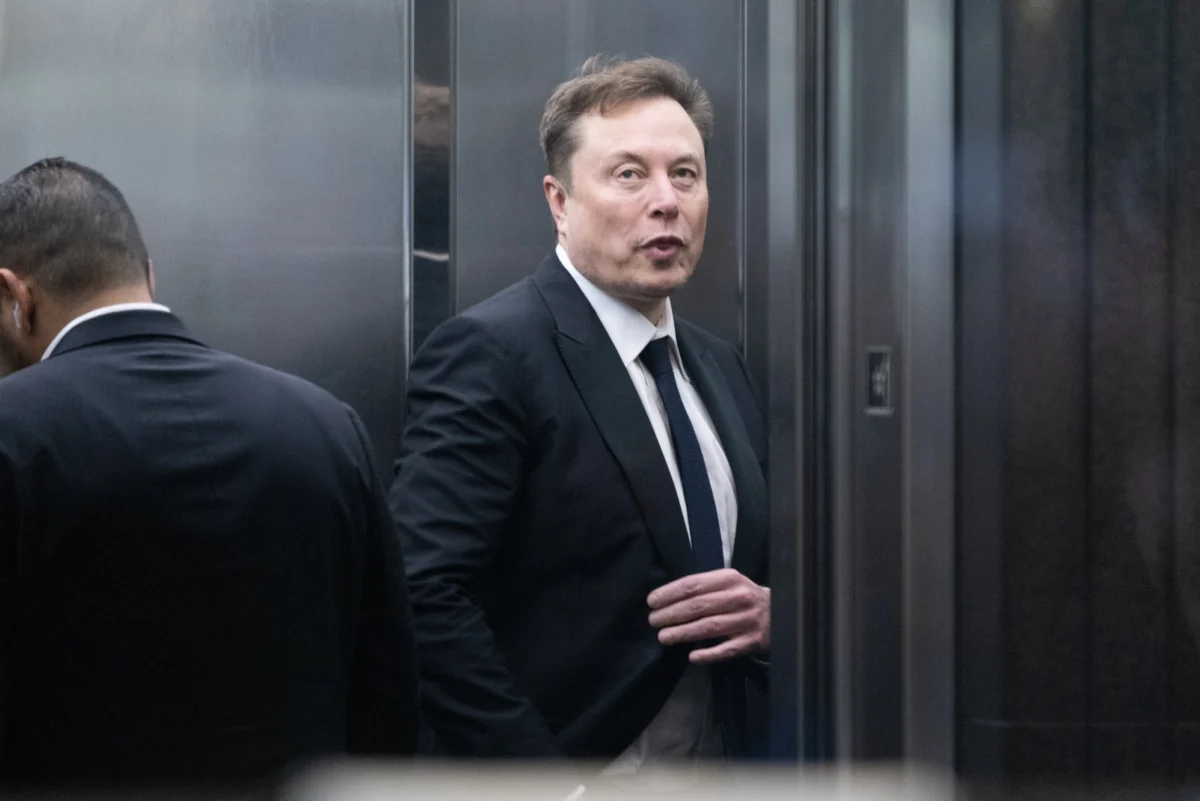
Elon Musk, the prolific entrepreneur behind Tesla, SpaceX, and X (formerly Twitter), has once again captivated the global imagination with a sweeping declaration regarding the future of transportation. On September 20, 2026, Musk asserted that his tunneling venture, The Boring Company (TBC), is actively developing a "simple precursor Hyperloop" designed to drastically cut travel time between Austin and San Antonio to under 30 minutes. The announcement, made via his widely followed X account, was swiftly echoed and endorsed by The Boring Company’s official account, which expressed its "excitement and honor to build this massive infrastructure project." This audacious proposal, if realized, could redefine connectivity within one of the United States’ fastest-growing mega-regions, though it arrives amidst a backdrop of both the company’s notable achievements and a history of ambitious projects that have yet to fully materialize.
The Visionary’s Blueprint: Understanding the Hyperloop Concept
The Hyperloop concept itself originated from Musk’s mind in 2013, when he released a white paper titled "Hyperloop Alpha." This document outlined a revolutionary fifth mode of transportation, proposing a system of sealed tubes through which pressurized pods would travel at high speeds, free from air resistance or friction. The core idea involves creating a near-vacuum environment within the tubes, allowing pods to levitate using magnetic levitation or air bearings and accelerate to speeds potentially exceeding 700 miles per hour (over 1,100 km/h) with minimal energy consumption. Musk’s original vision aimed to provide an alternative to high-speed rail, arguing for a system that would be faster, cheaper, and more energy-efficient, particularly for routes up to 900 miles (1,500 km).
Since its inception, the Hyperloop concept has inspired a wave of innovation, with several companies globally embarking on development efforts. Firms like Virgin Hyperloop One (now rebranded as Hyperloop One under DP World ownership) and Hyperloop Transportation Technologies (Hyperloop TT) have conducted test runs, achieving speeds of hundreds of miles per hour with passenger pods in controlled environments. However, these projects have consistently grappled with monumental technical challenges, including maintaining a near-perfect vacuum over long distances, developing robust propulsion and levitation systems, ensuring passenger safety in a low-pressure environment, and managing the immense costs associated with infrastructure development and land acquisition. The regulatory frameworks for such a novel transportation system also remain largely undefined, posing significant hurdles to deployment. The "precursor Hyperloop" terminology used by Musk suggests a potential deviation from the full, high-vacuum, ultra-high-speed vision, possibly implying a system that utilizes a partial vacuum or other simplifications to expedite development and reduce complexity, though specific technical details were not provided.
The Boring Company’s Journey: From Traffic Solutions to Tunneling Innovations
The Boring Company was founded by Elon Musk in 2016 with an initial, somewhat tongue-in-cheek, mission: to solve urban traffic congestion by building an extensive network of underground tunnels. Musk famously declared his frustration with Los Angeles traffic as the catalyst for the company’s creation. TBC’s initial proposals involved high-speed subterranean routes for cars, which would be transported on electric skates. This evolved into the "Loop" concept, where modified Tesla vehicles would carry passengers through smaller, less complex tunnels at speeds up to 150 mph (240 km/h).
The company’s track record, as noted in the original brief, has been a mix of ambitious announcements and tangible, albeit limited, operational success. Many of TBC’s high-profile early projects—such as a proposed tunnel system in Chicago connecting O’Hare International Airport to downtown, a vast network beneath Los Angeles, and an ambitious East Coast corridor linking New York City and Washington, D.C.—have not materialized as initially conceived. These projects often faced significant local opposition, regulatory complexities, environmental concerns, and questions regarding their economic viability and scalability. For instance, the Chicago project, initially a high-speed transit link, stalled amidst changing political landscapes and questions about its public benefit versus cost. Similarly, the LA tunnels were scaled back significantly due to community concerns and permitting hurdles.
However, The Boring Company has demonstrated its capabilities with the Las Vegas Convention Center Loop. Operational since 2021, this system utilizes a network of tunnels and surface routes, transporting passengers in Tesla vehicles between various points within the convention center campus. While not a Hyperloop in the traditional sense, it serves as a proof of concept for TBC’s tunneling technology and operational model, moving thousands of passengers efficiently during peak events. Critics have pointed out its limited scope and the fact that it essentially moves cars in tunnels rather than revolutionizing mass transit, but proponents laud its effectiveness in reducing internal convention center congestion.
A significant development preceding Musk’s latest announcement was The Boring Company’s successful closure of a $3 billion funding round led by the United Arab Emirates earlier in September 2026. This substantial capital injection, which reportedly valued the company at over $30 billion, underscores renewed investor confidence and provides TBC with considerable resources to pursue its next phase of projects. The UAE’s involvement suggests a strategic interest in advanced infrastructure solutions, potentially viewing TBC’s technology as a viable option for addressing future urban and intercity transportation needs, perhaps even in their own rapidly developing regions. This funding provides a crucial financial backbone for the ambitious Austin-San Antonio "precursor Hyperloop" proposal, moving it beyond mere speculation into the realm of potential execution.
The Texas Triangle: A Corridor Ripe for Disruption?
The proposed Austin-San Antonio Hyperloop targets one of the most dynamic and rapidly expanding corridors in the United States, often referred to as part of the "Texas Triangle" (Dallas-Fort Worth, Houston, San Antonio, Austin). This region has experienced explosive population growth and economic development over the past two decades, attracting major tech companies, businesses, and a diverse workforce.
Austin, the state capital, has emerged as a tech hub, drawing comparisons to Silicon Valley, with a population exceeding one million within its city limits and a metropolitan area growing even faster. San Antonio, a city rich in history and culture, is Texas’s second-largest city by population, serving as a vital economic and military center. The distance between the two city centers is approximately 80 miles (around 130 kilometers), a journey that currently takes between 1.5 to 2 hours by car, depending on traffic, and often longer during peak periods. Existing public transportation options between the two cities are limited, primarily consisting of intercity bus services, which face the same traffic challenges.
The I-35 corridor connecting Austin and San Antonio is notoriously congested, consistently ranking among the busiest and most traffic-laden highways in the nation. This congestion impacts not only daily commuters but also freight logistics and overall economic efficiency for the entire region. The prospect of reducing an almost two-hour drive to a sub-30-minute journey is incredibly appealing to residents, businesses, and policymakers alike, offering the potential for a transformative impact on commuting patterns, regional integration, and economic productivity. Such a link could effectively merge the two metropolitan areas into a single, more fluid economic zone, facilitating greater labor mobility and business interaction.
A Digital Spark: The Context of Musk’s Announcement
Musk’s announcement of the Austin-San Antonio Hyperloop project was not made in a formal press conference or official company statement, but rather through his preferred medium: a post on X. The comment was a direct reply to an AI-generated video depicting a generic, yet compelling, science fiction future replete with human colonies on distant worlds and advanced transportation systems. Musk had previously reposted this video, accompanying it with the declaration, "This is the future we shall bring into being." This context is highly characteristic of Musk’s communication style, which frequently blurs the lines between futuristic vision, aspirational goal, and concrete business plan.

His public persona and communication strategy often involve sharing ambitious, sometimes fantastical, concepts that resonate with a global audience fascinated by technological progress. This approach has proven effective in generating excitement, attracting talent, and securing investment for his various ventures. However, it also draws criticism for often presenting unverified claims or projects that face immense real-world obstacles.
Historian Jill Lepore, in a recent interview, offered a pertinent critique of this aspect of Musk’s approach, noting that he, and indeed many in the tech industry, seem to be "led by bad readers" who favor a brand of science fiction that "completely defeats and defies all of his political beliefs." Lepore’s observation highlights a perceived disconnect between the techno-utopian ideals often espoused by Musk—a future of advanced technology solving humanity’s problems—and the complex socio-political realities, ethical considerations, and democratic processes that govern the implementation of such large-scale projects. This critique suggests that while Musk’s vision is grand, its translation into a beneficial, equitable, and sustainable reality requires more than just technological prowess; it demands careful consideration of societal impact and democratic accountability.
Navigating the Labyrinth: Challenges and Feasibility
The path to realizing a "simple precursor Hyperloop" between Austin and San Antonio is fraught with significant challenges, spanning technical, regulatory, financial, and public acceptance domains.
Technical Hurdles: What is a "Simple Precursor"?
The precise definition of a "simple precursor Hyperloop" remains undefined. If it implies a system with less extreme vacuum levels or lower speeds than the original Hyperloop Alpha, it could simplify engineering challenges and reduce costs. However, even a "simple" system would still require robust tunneling infrastructure, advanced propulsion and levitation systems, and sophisticated safety protocols. TBC’s current Las Vegas Loop operates at much lower speeds (around 35-40 mph) and without a vacuum. Scaling this technology to intercity distances, higher speeds (necessary for a sub-30-minute journey), and a partial vacuum environment represents a significant technological leap. Key considerations include the reliability of vacuum pumps over long distances, the structural integrity of the tubes to withstand external pressures, and the development of emergency braking and escape systems.
Regulatory and Environmental Approval
Building an 80-mile underground transportation system in a densely populated and environmentally sensitive region like Central Texas would necessitate navigating a complex maze of local, state, and potentially federal regulations. This includes extensive environmental impact assessments (EIAs) to evaluate potential effects on groundwater, geological stability, and local ecosystems. Land acquisition for tunnel portals, ventilation shafts, and maintenance facilities would require eminent domain processes or voluntary agreements with numerous private landowners, a historically contentious and time-consuming undertaking in Texas. Obtaining permits from various state agencies, including the Texas Department of Transportation (TxDOT) and environmental commissions, would be a multi-year process involving public hearings and potential legal challenges.
Financial Viability and Funding Models
While The Boring Company recently secured $3 billion in funding, the cost of a project of this magnitude is likely to be far greater. Estimates for Hyperloop projects globally have ranged from tens of millions to hundreds of millions of dollars per mile, making an 80-mile route potentially a multi-billion-dollar endeavor. Funding models would likely involve a combination of private investment (from TBC and its partners), potential public-private partnerships (P3s) with the state of Texas or local governments, and possibly federal infrastructure grants. The economic viability would depend heavily on projected ridership, ticket pricing, and the ability to generate revenue beyond passenger fares, such as through freight transport or real estate development around stations.
Public and Political Buy-in
Overcoming public skepticism, particularly given TBC’s history of unmaterialized projects, will be crucial. Public acceptance hinges on demonstrating the safety, reliability, and accessibility of the system. Local political support from both Austin and San Antonio city councils, county commissioners, and state legislators will be indispensable for securing necessary approvals and potentially public funding. Education campaigns and transparent communication about the project’s scope, benefits, and mitigation strategies for potential negative impacts will be essential to foster broad community support.
Stakeholder Reactions and Expert Perspectives
While official reactions to Musk’s latest claim are still nascent, logical inferences can be drawn about potential responses from various stakeholders:
- Texas State and Local Officials: Given Texas’s pro-business environment and the dire need for traffic solutions in the Austin-San Antonio corridor, state and local officials would likely express cautious optimism and an openness to explore the proposal. They would emphasize the need for thorough feasibility studies, environmental reviews, and a clear financial plan. Any commitment would likely be contingent on TBC demonstrating technical and financial viability and a clear path through the regulatory process.
- Transportation Experts and Urban Planners: Experts in transportation infrastructure and urban planning would likely view the announcement with a mix of intrigue and skepticism. While acknowledging the potential for innovative solutions to congestion, they would raise critical questions about cost-effectiveness compared to traditional rail or expanded highway capacity, the scalability of TBC’s technology, and its integration into existing transportation networks. Concerns about equitable access, potential land use impacts, and the long-term sustainability of such a system would also be prominent.
- Environmental Groups: Environmental advocacy groups would likely scrutinize the project for its potential ecological footprint. Concerns could include the impact of tunneling on local aquifers and water resources, energy consumption of the Hyperloop system (even if designed to be efficient), and potential disruption to natural habitats during construction. They would advocate for stringent environmental protections and transparent assessments.
- The Public and Commuters: Commuters facing daily traffic woes would undoubtedly be excited by the prospect of drastically reduced travel times. However, this excitement would likely be tempered by a degree of skepticism, echoing the sentiment around other grand infrastructure promises that have failed to materialize or have been plagued by delays. There would be a strong demand for assurances regarding affordability, safety, and accessibility for all segments of the population.
Looking Ahead: The Road to a Hyperloop Future
The announcement of a "simple precursor Hyperloop" between Austin and San Antonio marks another chapter in Elon Musk’s relentless pursuit of audacious technological frontiers. For the project to move beyond a visionary claim, several critical steps must follow. The Boring Company will need to release more specific technical details about what constitutes a "simple precursor Hyperloop" and demonstrate its capability to deliver such a system at scale. This would likely involve comprehensive feasibility studies, detailed engineering plans, and a robust financial strategy that outlines funding sources and projected returns.
Engagement with local and state governments will be paramount, requiring TBC to present compelling cases for the project’s public benefit, navigate the complex permitting and environmental review processes, and potentially forge public-private partnerships. The success of the Las Vegas Loop provides a tangible reference point, but scaling that success to an intercity high-speed system presents an entirely new magnitude of challenge.
The broader implications of such a project, if successful, could be profound. It could serve as a blueprint for high-speed intercity travel in other congested corridors, fundamentally altering urban planning paradigms and regional economic development. It would also further solidify Musk’s reputation as a transformative figure capable of bringing seemingly impossible visions to fruition. Conversely, if the project falters or fails to deliver on its ambitious promises, it could deepen public skepticism about highly experimental infrastructure projects and add to the list of unmaterialized ventures associated with The Boring Company.
As the Austin-San Antonio corridor continues its rapid growth, the need for innovative transportation solutions is undeniable. Whether Musk’s latest Hyperloop claim will evolve from a digital declaration into a tangible reality remains to be seen, but it undoubtedly ignites a renewed conversation about the future of travel and the audacious visions required to redefine it. The journey, much like the proposed Hyperloop itself, promises to be fast-paced, complex, and closely watched.