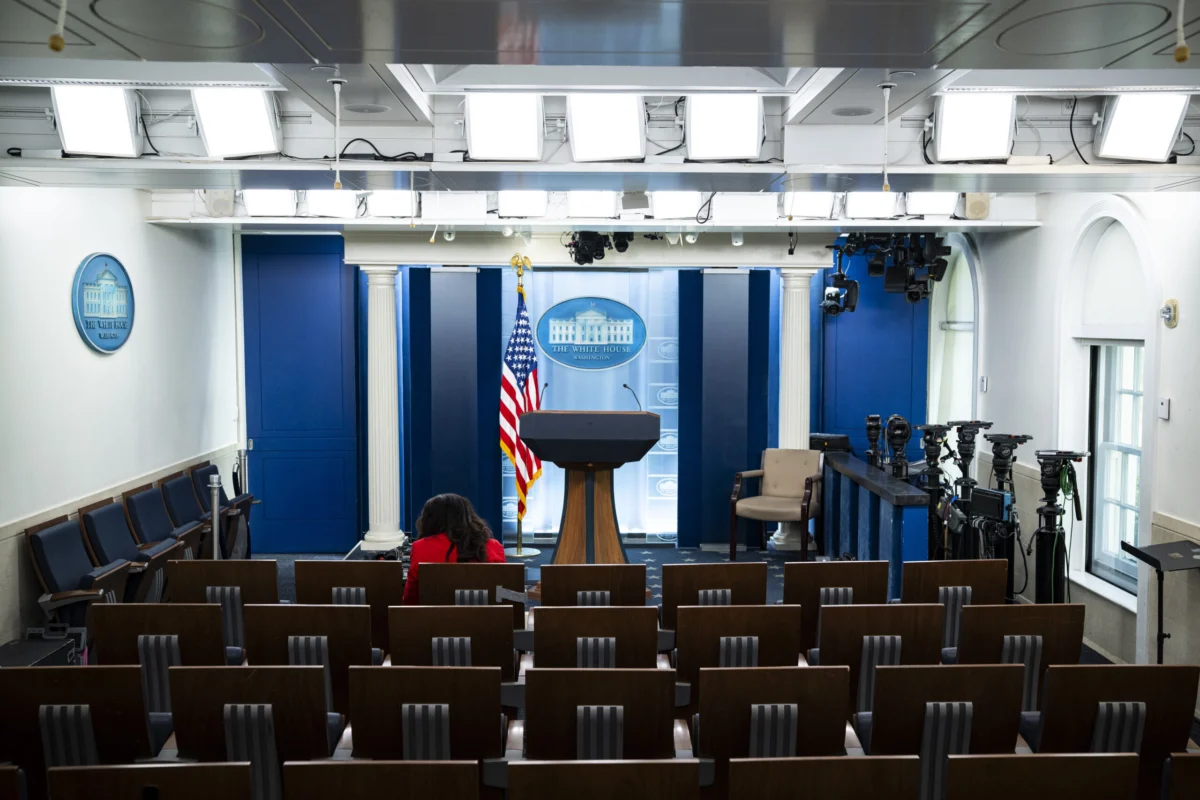
CNN, MS NOW, and Politico have initiated legal action against the Trump administration, challenging the White House’s decision to revoke their press credentials. This move effectively bars journalists from these organizations from entering the White House complex, significantly impeding their ability to cover the President and his staff. The news outlets contend that this action represents a direct assault on First Amendment rights and undermines the fundamental principle of an independent press free from government interference.
In a joint statement released early Monday morning, the three media organizations declared their intention to file the lawsuit. "This morning, we notified the government that we are filing a lawsuit today to protect our First Amendment rights and defend the principle that the government does not decide what the press reports or publishes," the statement read. "Without notice or process, the White House revoked our journalists’ credentials because it objected to our reporting. Left unchallenged, this threatens press freedom and the public’s right to independent journalism free from government interference."
The timing of the revocation is particularly noteworthy. CNN was scheduled to serve as the primary TV press pool on Monday, a day when President Trump was slated to travel to New York for meetings with Mayor Zohran Mamdani and French President Emmanuel Macron on the sidelines of the U.N. General Assembly. The loss of access for CNN means that crucial visual and audio coverage of these high-profile diplomatic engagements will be significantly hampered, potentially impacting the public’s understanding of these events.
Legal Basis of the Challenge
The lawsuit, spearheaded by renowned First Amendment litigator Ted Boutros, argues that President Trump’s decision to revoke the press credentials is in direct conflict with established legal principles and constitutional guarantees. The filing asserts that the ban constitutes a "profound conflict with the law" and is "the most direct assault on the First Amendment nor a more blatant violation of our most fundamental constitutional principles."
The legal document cites the landmark Supreme Court case New York Times Co. v. Sullivan, 376 U.S. 254 (1964), emphasizing its affirmation of a "profound national commitment to the principle that debate on public issues should be uninhibited, robust, and wide-open, and that it may well include vehement, caustic, and sometimes unpleasantly sharp attacks on government and public officials." This foundational ruling underscores the vital role of a free and unfettered press in a democratic society.
Furthermore, the lawsuit contends that the Constitution protects the "liberty and property interests" that news organizations and White House reporters possess in their press credentials. These credentials grant them access necessary to inform the public about the workings of the executive branch. The filing argues that "No official can deprive Plaintiffs of those interests on a whim—with no notice, no process, and no warning—as the President did here." This highlights the alleged arbitrary nature of the White House’s action, bypassing established procedures and due process.
Chronology of Events
The escalating conflict began with President Trump’s announcement of the ban in a post on Friday. This initial declaration caused some confusion within the White House, as journalists from the affected outlets were still present on the grounds. However, the practical implications of the ban became evident on Saturday morning when journalists from CNN, MS NOW, and Politico attempted to enter the White House complex and discovered that their credentials had indeed been revoked.
In subsequent public appearances, President Trump articulated his rationale for the ban, attributing it to the cumulative coverage from these news organizations over the past few years, rather than a specific story. He characterized the reporting from these outlets as "purposely negative," "one-sided," and "never good." During one Oval Office appearance, President Trump reportedly referred to his own action as "the ban on the free press," a statement that has been included in the lawsuit. This acknowledgment, critics argue, further underscores the administration’s intent to control the narrative and penalize critical reporting.
President Trump also reportedly suggested that he anticipated legal challenges and that the outcome would hinge on the presiding judge. This sentiment echoes past instances where the administration has faced legal opposition regarding press access.
Historical Context and Precedents
This incident is not without historical precedent. During President Trump’s first term, CNN correspondent Jim Acosta was also banned from the White House. However, a judge intervened, ordering the return of Acosta’s pass by citing First Amendment protections. The Associated Press (AP) has also faced similar challenges, having been barred from covering certain events after its style guide declined to use a specific term for a body of water, an instance that also led to legal action. These past events suggest a recurring pattern of tension between the Trump administration and news organizations that engage in critical reporting, and highlight the legal battles that often ensue.
The current lawsuit is particularly significant because it involves multiple prominent news organizations simultaneously challenging the administration’s actions. The collective legal front amplifies the gravity of the situation and the perceived threat to press freedom.
Statements and Reactions
Beyond the joint statement from the three news outlets, individual organizations have voiced their strong opposition. A spokesperson for MS NOW reiterated the commitment to providing accurate and independent reporting, emphasizing the public’s right to information. Politico, known for its in-depth political coverage, also underscored the importance of unfettered access to policymakers and governmental proceedings.
While official statements from the White House have been limited, President Trump’s public remarks have characterized the decision as a response to unfavorable coverage. The administration’s stance, as articulated by the President, suggests a belief that it has the authority to grant or revoke access based on the perceived fairness and accuracy of reporting. This interpretation, however, is directly contested by the news organizations and their legal team, who argue that such discretion cannot be exercised in a manner that stifles legitimate journalism.
Broader Implications and Analysis
The lawsuit filed by CNN, MS NOW, and Politico carries significant implications for the future of press freedom in the United States. The core of the legal challenge rests on the interpretation and application of the First Amendment in the context of White House press access. If the administration’s actions are upheld, it could set a dangerous precedent, empowering future administrations to selectively deny access to journalists based on editorial content. This could lead to a more controlled and less transparent government, where critical scrutiny is actively discouraged.
The revocation of credentials, beyond being a symbolic act, has tangible consequences. It restricts reporters’ ability to gather information directly from the source, attend press briefings, and observe the President and his staff in their professional environment. This limitation can lead to a less informed public, as the media’s capacity to report comprehensively and accurately is diminished.
The reliance on historical legal precedents, such as New York Times Co. v. Sullivan, underscores the argument that the First Amendment is designed to protect even speech that is critical or disagreeable to those in power. The lawsuit aims to reinforce the principle that the government cannot act as an arbiter of truth or decide what constitutes acceptable reporting.
The outcome of this legal battle will be closely watched by journalists, policymakers, and the public alike. It represents a crucial test of the constitutional safeguards designed to ensure a free and independent press, a cornerstone of democratic societies. The legal proceedings will likely delve into the definition of "liberty and property interests" in press credentials and the extent to which the executive branch can exercise discretionary power over access without violating constitutional rights. The case also raises questions about the role of the judiciary in mediating disputes between the press and the government, particularly when fundamental rights are at stake. The administration’s stated rationale of responding to "negative" coverage will be scrutinized against the backdrop of established legal interpretations of free speech and press protections.