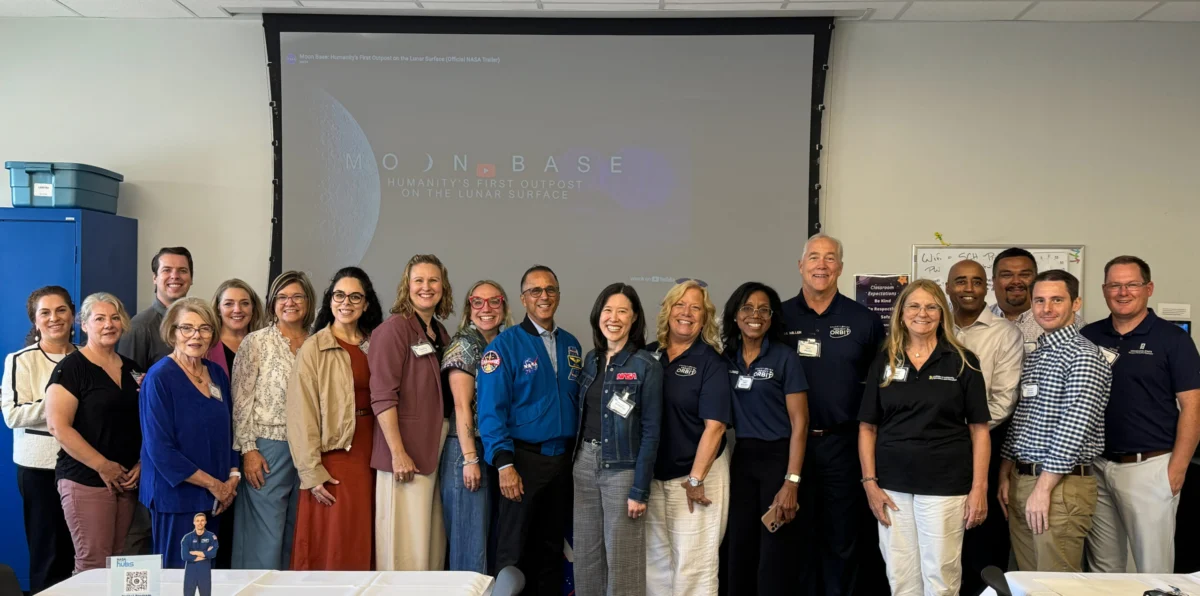
Houston, TX – In a pivotal move to fortify the nation’s burgeoning aerospace sector, NASA officially inaugurated its State Hubs for Skilled Technical Workforce initiative on September 15, 2026, during a landmark gathering at Space Center Houston. The event brought together agency leadership, the seven inaugural State Hub awardees, and a consortium of state and federal partners. The primary objective of this high-level convening was to synchronize strategic approaches, build collaborative momentum, and delineate actionable next steps, with a keen focus on fostering robust partnerships, engaging small businesses, and addressing the critical demand for a skilled technical workforce in the rapidly expanding space economy.
The Strategic Imperative: Fueling the Future of Space
The launch of the State Hubs initiative underscores NASA’s profound commitment to cultivating a robust talent pipeline capable of supporting both its ambitious missions and the dynamic growth of the commercial space industry. The global space economy, valued at approximately $546 billion in 2022, is projected by some analyses to exceed $1 trillion by 2030. This exponential growth translates directly into an escalating demand for a diverse array of skilled professionals, from advanced manufacturing technicians and robotics specialists to data analysts and propulsion engineers. However, a significant skills gap currently exists, threatening to impede innovation and progress.
Elaine Ho, associate administrator for NASA’s Office of STEM Engagement, articulated the agency’s vision from NASA Headquarters in Washington. "The NASA State Hubs initiative is a top priority for the agency, because we know the space economy is really accelerating across the country," Ho stated, emphasizing the urgency and national scope of the program. "It’s energizing to watch our partners come together to put real plans into action to help students advance into well-paying, rewarding technical jobs. I am excited about what’s ahead." Her remarks highlighted not only the economic opportunities but also the profound societal impact of preparing individuals for high-demand, future-proof careers.
A Coordinated National Effort: From Selection to Strategy
The formal kickoff event followed an intensive selection process, which concluded in August with the announcement of seven projects representing states strategically positioned across the country: California, Colorado, Florida, Georgia, Minnesota, Texas, and Utah. These states were chosen for their existing aerospace infrastructure, commitment to STEM education, and demonstrated potential to develop innovative workforce solutions tailored to regional needs. Each selected Hub is tasked with designing and implementing programs specifically attuned to its state’s unique aerospace industry landscape and workforce priorities, thereby ensuring that students receive training and opportunities that are directly relevant and in demand.
The Houston meeting served as a crucial platform for the newly formed network. Project leaders from each State Hub, alongside representatives from NASA, state governments, and federal agencies, engaged in intensive peer-to-peer discussions. The agenda included detailed presentations from each State Hub outlining their initial strategies and proposed programs. These sessions facilitated an invaluable exchange of best practices, allowed for the identification of common challenges, and fostered a shared understanding of the intricate workforce needs, essential skillsets, credentialing pathways, and evolving hiring trends within the aerospace sector. The collaborative environment was designed to align individual state efforts with a cohesive national strategy, maximizing collective impact.
Addressing Systemic Challenges in the STEM Workforce Pipeline
A significant portion of the meeting was dedicated to candid discussions surrounding the systemic challenges currently impacting the broader STEM workforce pipeline. Agency leadership and awardees collectively identified several critical barriers that hinder the development and retention of skilled technical talent:
- Limited Coordination Between Stakeholders: A pervasive issue highlighted was the insufficient coordination among industry players, community colleges, universities, K-12 education systems, and state economic development entities. This fragmentation often results in training programs that are not fully aligned with industry needs, leading to a mismatch between graduate skills and employer demands. The State Hubs aim to serve as central coordinating bodies, bridging these gaps and fostering integrated ecosystems.
- Difficulty Scaling Job Programs: Many successful local or regional workforce development programs struggle to expand their reach and impact across an entire state or to replicate their successes nationally. This challenge often stems from funding constraints, lack of standardized curricula, and administrative hurdles. The NASA initiative seeks to identify scalable models and provide the framework and resources necessary for broader implementation.
- Misconceptions About Manufacturing Jobs: Despite the high-tech, precision-driven, and innovative nature of modern aerospace manufacturing, outdated perceptions often deter students from pursuing careers in this vital field. There is a critical need to rebrand manufacturing as a dynamic and rewarding career path that leverages advanced robotics, additive manufacturing, and digital fabrication techniques, rather than simply manual labor. The Hubs will play a role in educating students, parents, and educators about the true nature of these skilled technical roles.
These challenges are not unique to the aerospace industry but are exacerbated by its rapid technological advancements and stringent safety requirements. By directly confronting these issues, the State Hubs initiative seeks to build a more resilient, responsive, and robust workforce development infrastructure.
The Economic and National Security Implications
The implications of a well-executed State Hubs initiative extend far beyond mere job creation. Economically, a skilled aerospace workforce acts as a powerful catalyst for regional growth, attracting private investment, fostering innovation clusters, and creating high-paying jobs that circulate wealth within local communities. The aerospace sector typically boasts a high economic multiplier effect, meaning each job in aerospace supports several other jobs in related industries and services.
From a national security perspective, maintaining leadership in space is paramount. A robust domestic technical workforce ensures that the United States retains its competitive edge in space exploration, satellite technology, defense applications, and scientific discovery. Relying on foreign talent or experiencing critical workforce shortages could compromise national interests and strategic capabilities. The State Hubs are, therefore, a strategic investment in America’s future prowess in space and technology.
A Detailed Look at the Hub States and Their Potential Contributions
While each Hub will tailor its approach, the selection of states like California, Florida, and Texas highlights existing strengths in the aerospace domain:
- California: With its deep roots in Silicon Valley and aerospace giants, California’s Hub is likely to focus on advanced materials, software development, artificial intelligence, and cutting-edge manufacturing techniques relevant to new space ventures and autonomous systems.
- Colorado: Home to a significant concentration of space companies and federal space agencies, Colorado’s Hub could emphasize satellite technology, space operations, remote sensing, and cybersecurity tailored for space assets.
- Florida: As the nation’s primary launch destination, Florida’s Hub will undoubtedly prioritize launch vehicle assembly, ground support operations, propulsion systems, and aerospace logistics, leveraging its extensive spaceport infrastructure.
- Georgia: With a growing tech sector and strong manufacturing base, Georgia’s Hub might focus on aerospace manufacturing, avionics, and MRO (Maintenance, Repair, and Overhaul) services, supporting both commercial and defense aerospace.
- Minnesota: Known for its innovation in medical devices and precision manufacturing, Minnesota’s Hub could concentrate on advanced materials, micro-electronics, and specialized components crucial for space applications, as well as data analytics.
- Texas: Possessing a diverse aerospace ecosystem ranging from human spaceflight operations (Johnson Space Center) to commercial spaceports and manufacturing facilities, Texas’s Hub is poised to address a broad spectrum of technical skills, including systems engineering, robotics, and advanced fabrication.
- Utah: With strong academic institutions and an emerging tech industry, Utah’s Hub could emphasize rocketry, composites manufacturing, and specialized engineering for propulsion and defense applications.
This geographical and industrial diversity ensures a comprehensive national approach, addressing varied needs and leveraging distinct regional strengths.
The Path Ahead: Implementation and Transformative Impact
In the immediate months following the kickoff, the NASA State Hub awardees are tasked with finalizing their detailed programmatic approaches. This critical phase involves solidifying partnerships with local industries, educational institutions, and community organizations, as well as developing specific curricula and training modules. The subsequent delivery of programming, tools, and resources will be instrumental in directly connecting students across their respective states with the essential technical skills and invaluable hands-on experiences required to thrive in the aerospace workforce.
These programs are expected to include a blend of classroom instruction, vocational training, apprenticeships, internships, and project-based learning. Emphasis will be placed on certifications and credentials that are recognized and valued by industry employers, ensuring that graduates are job-ready upon completion. Furthermore, the initiative will likely involve outreach programs targeting K-12 students to ignite early interest in STEM fields and guide them towards viable technical career pathways.
Ultimately, the NASA State Hubs initiative represents a profound investment in human capital. By fostering a skilled and adaptable technical workforce, NASA and its partners are not merely filling job vacancies; they are actively mapping out the trajectory for a future aerospace landscape. This collaborative endeavor aims to empower career-ready workers who can design, build, and operate the next generation of space technologies, advance NASA’s groundbreaking missions, and, crucially, sustain America’s leadership in the global space domain for decades to come. The success of this initiative will be measured not only in the number of individuals trained but also in the enduring resilience and innovative capacity of the nation’s space enterprise.
For more information on NASA State Hubs, interested parties are encouraged to visit: https://www.nasa.gov/learning-resources/nasa-state-hubs