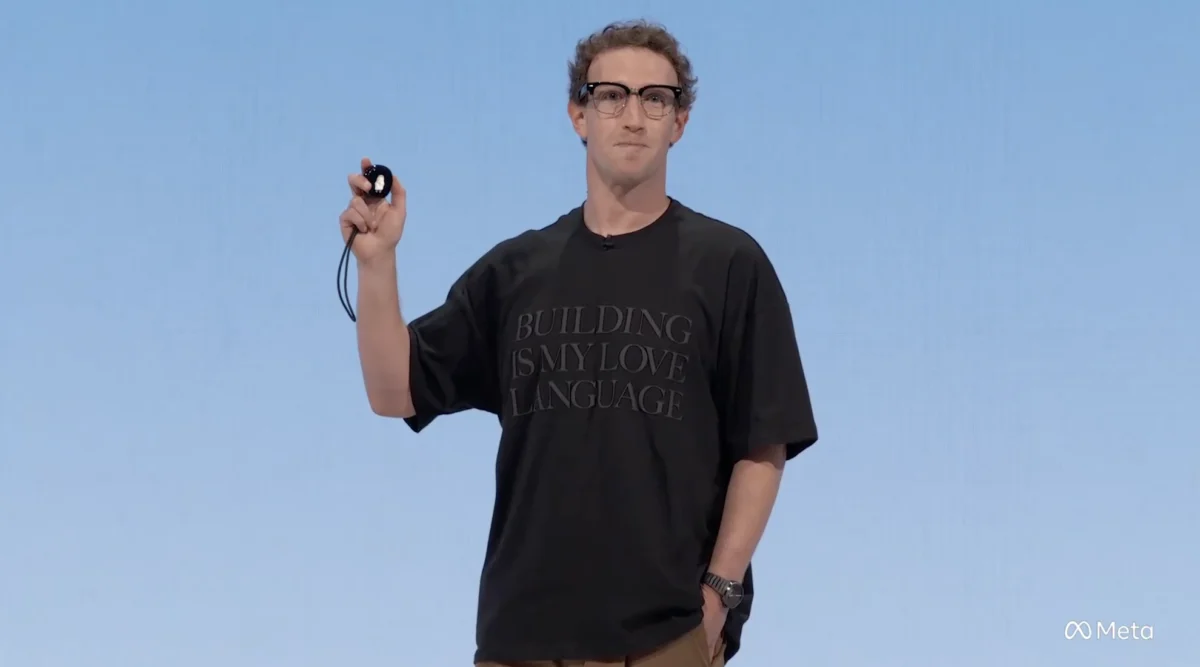
The concept of a dedicated AI amulet has, in recent years, become somewhat of a recurring motif in the consumer technology landscape, often drawing a mix of intrigue and skepticism. Devices like the short-lived "Friend" AI wearable have contributed to a perception that physical AI companions can, for many consumers, feel more like a novelty than an essential tool, frequently eliciting a collective eye-roll rather than widespread adoption. Despite this prevailing sentiment, Meta Platforms, Inc. has decisively entered this nascent arena, announcing its own AI wearable, the Muse Charm. This compact device is meticulously engineered to provide users with an additional, seamless conduit to its recently launched and reportedly popular personal AI agent, Muse.
The Unveiling at Meta Connect: A Strategic "One More Thing"
The introduction of the Muse Charm was a highlight of Meta’s annual Connect event, an eagerly anticipated gathering where the tech giant traditionally showcases its latest advancements in virtual reality, augmented reality, and artificial intelligence. CEO Mark Zuckerberg unveiled the device during a classic "one more thing" segment, a theatrical reveal often reserved for significant product announcements. The Connect event, typically held in late September or early October, serves as Meta’s primary platform to articulate its long-term vision for the metaverse and its underlying technologies, including the crucial role of AI. Past events have seen the debut of new Quest headsets, foundational metaverse concepts, and significant updates to Meta’s AI research initiatives. The decision to introduce Muse Charm at such a high-profile event underscores Meta’s strategic commitment to hardware innovation and the pervasive integration of AI into daily life, despite the market’s cautious reception of similar devices.
Zuckerberg acknowledged during the keynote that the Muse Charm is not yet ready for immediate shipment. He informed attendees that his team was in the final stages of "finalizing laying out the components," indicating that the engineering and manufacturing processes were nearing completion. He assured potential consumers that the devices would be "ready to ship in time for the holidays in December," positioning the Muse Charm as a potential gift item for the crucial year-end shopping season. This timeline suggests a rapid development cycle, indicative of Meta’s aggressive push into the AI hardware space.
Muse Charm: A Tangible Link to the Digital Assistant
At its core, the Muse Charm is designed as a physical embodiment of the Muse AI agent. This palm-sized totem can be conveniently carried in a user’s pocket or easily attached to a keychain, ensuring its constant availability. A key visual element of the device is its tiny integrated screen, which displays a "cute digital avatar" known internally as "Jolly." This avatar represents the Muse agent, giving the AI a friendly, approachable persona, reminiscent of digital pets or virtual companions that have resonated with users in the past.
The primary mode of interaction with the Muse Charm is through voice commands. Users can speak directly to the device, and in turn, the embedded AI agent is designed to comprehend and presumably execute a wide array of tasks on their behalf. This functionality positions the Muse Charm as a truly ambient computing device, aiming to provide immediate access to AI assistance without the need to retrieve a smartphone, unlock it, and open a specific application.
During his keynote address, Zuckerberg elaborated on the technical sophistication packed into the compact form factor. "We packed the whole Muse experience, including the whole real-time voice and avatar stack, into something that fits on a keychain and is always available to talk to," he stated. He highlighted the intuitive user interface, explaining, "You just go ahead and tap here in the fingerprint sensor in the corner, and you can start talking without having to unlock a phone or open an app." This emphasis on immediate, frictionless access is central to the Muse Charm’s value proposition.
Zuckerberg further stressed the device’s utility in scenarios where other Meta wearables, such as smart glasses, might not be in use. "So if you’re not wearing glasses, this is going to be by far the fastest way to talk to your Muse and to show what’s going on around you," he added. This statement hints at Meta’s broader strategy for a multi-device AI ecosystem, where different wearables cater to varying user contexts and preferences, all seamlessly integrating with the core Muse AI agent.
The "Tamagotchi" Analogy and Meta’s Strategic Play
The design and proposed functionality of the Muse Charm have drawn comparisons to the popular Tamagotchi digital pet from the 1990s. This analogy, noted by industry observers, stems from the Muse Charm’s lightweight, personality-infused character (via the "Jolly" avatar), and its primary purpose of maintaining an always-on connection between users and Meta’s software ecosystem. The Tamagotchi’s success lay in its simplicity and the emotional connection users formed with their digital companion, a blueprint Meta might be subtly leveraging for its AI agent.
From a strategic perspective, the Muse Charm represents a relatively low-stakes yet significant venture for Meta into the AI wearables market. While the company has heavily invested in virtual and augmented reality hardware through its Quest line of headsets and Ray-Ban smart glasses, dedicated AI wearables present a distinct set of challenges and opportunities. The Muse Charm allows the social media giant to experiment with this new form factor, gather crucial user data, and refine its AI agent’s capabilities in a real-world, always-on context. Crucially, it serves as another vector for distributing its increasingly sophisticated AI agent to a broader audience, fostering deeper engagement with Meta’s burgeoning AI services.
Navigating a Crowded and Skeptical AI Wearables Landscape
Meta’s entry into the AI wearable market comes at a time when consumer sentiment is cautiously optimistic at best, and outright skeptical at worst, regarding dedicated AI devices. The past few years have seen a flurry of announcements and product launches from various companies attempting to carve out a niche in this space. Devices like the Humane AI Pin and the Rabbit R1 have garnered significant media attention, promising a future where AI integrates seamlessly into daily life, often bypassing the smartphone interface.
However, these devices have also faced considerable criticism regarding their practical utility, high price points, and perceived redundancy. Many analysts have questioned whether a dedicated AI wearable offers enough unique value to justify its existence alongside ubiquitous smartphones and increasingly capable smartwatches. Concerns about latency, battery life, and the accuracy of natural language processing in real-time environments have also plagued early entrants. The "cliché" status of the AI amulet, as noted, is a direct consequence of these market challenges and the difficulty in demonstrating a compelling, indispensable use case that transcends existing technologies.
For Meta, this environment presents both a challenge and an opportunity. By positioning the Muse Charm as an extension of its popular Muse AI agent rather than a standalone, all-encompassing device, Meta might be attempting to mitigate some of the market’s skepticism. The device’s perceived "low-stakes" nature could allow Meta to iterate quickly, gather feedback, and adapt its strategy without the immense pressure associated with a flagship product launch.
Broader Implications and Strategic Positioning
The launch of Muse Charm is not an isolated event but rather a critical component of Meta’s overarching strategy to embed AI into every facet of its ecosystem. The company has invested billions in AI research and development, viewing it as fundamental to the future of social connection, the metaverse, and its competitive standing against rivals like Google, Apple, and Microsoft.
Competitive Landscape: The AI wearable market is heating up, with tech giants and startups alike vying for dominance. Google’s Pixel devices are integrating advanced AI features, while Apple is rumored to be developing its own sophisticated AI-driven hardware. Meta’s approach with Muse Charm could be seen as a way to establish a foothold in the ambient computing space, complementing its AR/VR efforts and ensuring that its AI agent is readily accessible across multiple form factors.
Data and Personalization: An always-on AI wearable like Muse Charm offers Meta an unparalleled opportunity to collect real-time contextual data about user interactions, preferences, and environments. This data, if handled responsibly and transparently, could be invaluable for personalizing the Muse AI agent’s responses, improving its accuracy, and developing new features. However, it also raises significant privacy concerns, which Meta will need to address proactively to build user trust. The company’s history with data privacy means it will face intense scrutiny regarding how user data from Muse Charm is collected, stored, and utilized.
Ambient Computing and the Future: The Muse Charm aligns with the broader industry trend towards ambient computing, where technology seamlessly integrates into our environment, responding to our needs intuitively without explicit interaction. By making the Muse agent constantly available, Meta aims to make AI assistance a natural extension of daily life, reducing friction and enhancing productivity or entertainment. This vision suggests a future where users interact with AI not just through screens, but through voice, gestures, and contextual awareness across a network of interconnected devices.
Technological Hurdles and User Adoption: Despite the strategic intent, the Muse Charm will face significant technological hurdles. Ensuring robust voice recognition in diverse environments, minimizing latency for real-time interactions, extending battery life in an always-on device, and maintaining data security will be critical. Furthermore, user adoption will depend heavily on the device’s ability to demonstrate clear, consistent value. If the Muse Charm can reliably perform tasks, provide useful information, and foster a genuine sense of companionship through the "Jolly" avatar, it stands a chance of overcoming market skepticism. Its success will likely hinge on the quality of the underlying Muse AI agent and its ability to integrate seamlessly with users’ existing digital lives.
Conclusion: A Calculated Bet in the AI Frontier
The Meta Muse Charm represents a calculated, yet ambitious, bet by Meta on the future of AI wearables. By leveraging its established AI agent, Muse, and offering a low-friction access point, Meta is attempting to sidestep some of the pitfalls that have plagued previous entrants into this challenging market. The device’s introduction at Connect underscores Meta’s unwavering commitment to embedding AI at the core of its ecosystem, paving the way for a more ambient and interconnected digital future. As consumers increasingly seek convenient and personalized technological experiences, the Muse Charm could either become another fleeting curiosity in the tech landscape or a pivotal step in Meta’s journey to redefine human-computer interaction in the age of artificial intelligence. Its ultimate success will provide invaluable insights into consumer readiness for dedicated AI companions and the evolving role of AI in our daily lives.