The robotics industry stands at a pivotal juncture, grappling with the anticipated "ChatGPT moment" – a breakthrough where a general-purpose robot can seamlessly adapt to and perform tasks across any environment. While experts and investors remain divided on the immediacy of this revolution, with predictions ranging from mere years to a full decade away, a new player, Feather Robotics, is strategically positioning itself to thrive regardless of the timeline. Founded last year, Feather is not embarking on the ambitious, capital-intensive path of developing both the physical hardware and a foundational, yet-to-be-deployed "brain," as seen with industry giants like Tesla and Figure. Instead, Feather is carving out a unique niche by providing a robust, modular hardware and software toolkit, empowering developers to tackle real-world tasks today.
The Elusive "ChatGPT Moment" and Robotics’ Grand Challenge
The "ChatGPT moment" in artificial intelligence refers to the rapid public adoption and transformative impact of large language models, showcasing AI’s emergent capabilities. For robotics, this signifies the advent of a truly versatile, general-purpose machine capable of learning, adapting, and performing a myriad of complex physical tasks in unstructured environments without extensive pre-programming. This ambition has been a long-standing goal, fraught with significant technical hurdles. Historically, robots have excelled in repetitive, precisely defined tasks within controlled industrial settings. Moving beyond this requires advancements in areas such as dexterous manipulation, real-time perception, robust navigation, and, crucially, generalizable AI that can understand and execute human-like instructions in dynamic situations.
Companies like Tesla, with its Optimus bot, and Figure AI, backed by substantial investment, are pursuing this full-stack approach, aiming to develop both the sophisticated humanoid body and the comprehensive artificial intelligence to power it. This strategy, while potentially revolutionary if successful, demands immense research and development resources, prolonged timelines, and faces the inherent challenge of integrating highly complex hardware and software systems from scratch. Their mission is to build foundational models for physical intelligence, akin to how OpenAI built GPT for language. However, the commercial deployment of such advanced, general-purpose robots remains largely aspirational, leaving a significant gap for immediate, practical applications.
Feather Robotics: A Different Blueprint for Innovation
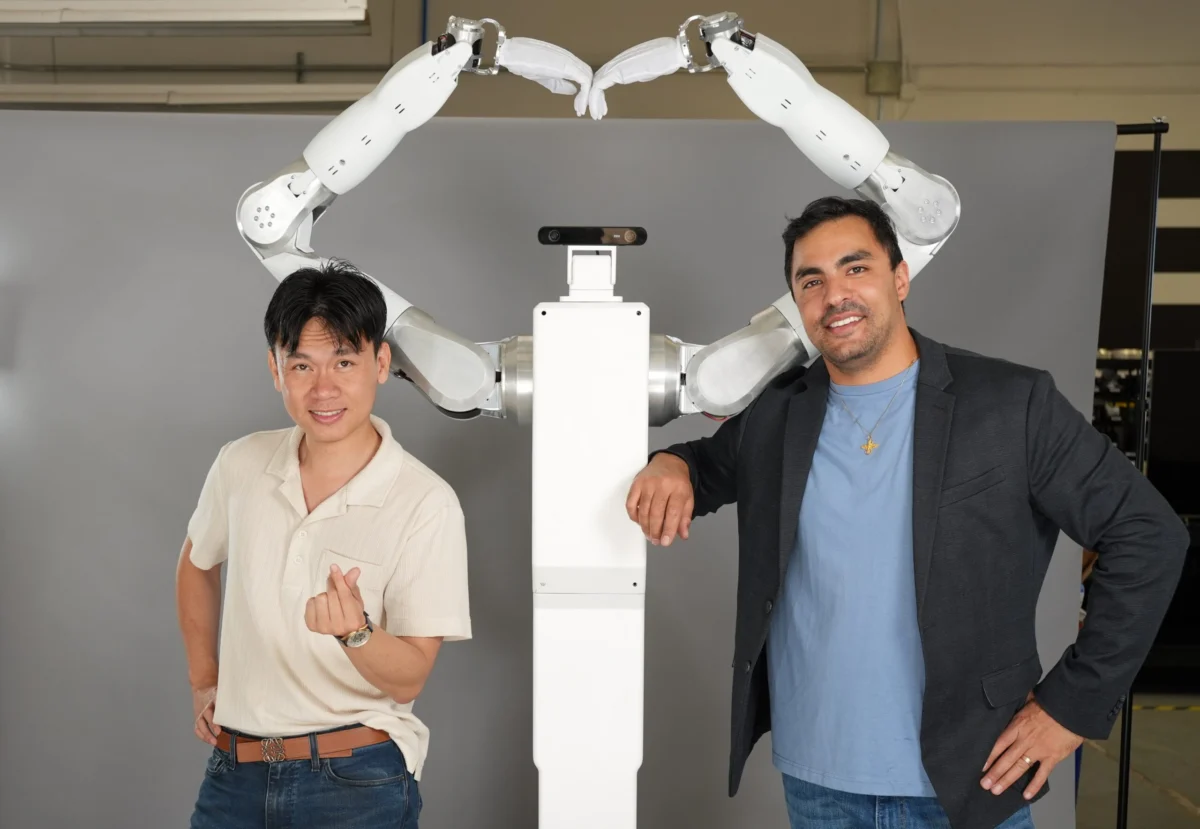
Feather Robotics, co-founded by Hoa Mai and Parsa Bakhtiari, believes a different approach is necessary to accelerate the adoption and development of practical robotics. Hoa Mai, who previously sold his humanoid startup to 1X Technologies, and Parsa Bakhtiari, a former Tesla Model 3 engineer who reported directly to Elon Musk, leveraged their extensive experience to devise a strategy centered on accessibility and modularity. Their vision is to create the "Android of robotics" – an open, adaptable platform that fosters a vibrant ecosystem of developers and application-specific innovations.
"You can’t buy a Tesla robot today and develop on top of it," Mai explained to TechCrunch, highlighting a critical bottleneck in the current industry landscape. "We realized that this is not how most companies became successful. Hardware players like Nvidia or Apple started with a product that worked and was deployable, and then they added complexity over time." This philosophy underpins Feather’s foundational strategy: provide a reliable, functional base that developers can immediately utilize, iterate upon, and customize for diverse applications.
This pragmatic vision quickly attracted significant investor interest. Gradient Ventures, Google’s AI-focused venture fund, recognized the potential of Feather’s approach and led the startup’s previously announced $7.6 million pre-seed funding round. This early backing underscores investor confidence in the modular platform strategy as a viable path to commercialization and ecosystem growth in a sector otherwise dominated by moonshot projects.
Product and Early Market Success
Since its inception, Feather Robotics has made rapid progress, rolling out a modular robotic system designed for maximum flexibility. The system allows developers to customize hardware components, such as adjusting arm lengths or integrating specialized end-effectors, to suit specific use cases. This adaptability significantly reduces the barrier to entry for businesses and researchers looking to deploy robotic solutions without investing in bespoke hardware development.
The company has already begun selling its robots to customers, achieving an impressive milestone of surpassing $1 million in revenue. While Feather maintains confidentiality regarding its specific clientele, it has revealed compelling examples of its robots in action. In Japan, Feather’s robots are actively working as cooks in restaurant kitchens, demonstrating their capability in semi-structured environments requiring precision and consistency. Concurrently, other Feather units are deployed in science laboratories, performing cleaning tasks, which speaks to their utility in environments demanding high standards of hygiene and repetitive, meticulous operations.
Crucially, Feather’s hardware is designed to be software-agnostic, capable of running models from any leading robotics AI provider. This open-platform approach is a cornerstone of its "Android of robotics" vision, allowing developers to leverage existing or emerging AI solutions from companies like Generalist, Skild, or Physical Intelligence. This interoperability ensures that Feather’s robots can stay at the cutting edge of AI advancements without being tied to a proprietary software stack, further enhancing their versatility and longevity.
Mai confirmed the company’s readiness for wider deployment, stating, "We’ve been selling small quantities of these robots, and now that we resolved like almost all the issues over the last year of field testing, we’re getting ready for a big product launch." This systematic approach, emphasizing rigorous field testing and iterative improvement, is critical for building trust and ensuring reliability in practical robotic applications.
Competitive Landscape and Strategic Positioning
Darian Shirazi, General Partner at Gradient Ventures, provides a clear perspective on Feather’s unique position in the US market. He categorizes the current hardware robotics landscape into three distinct segments: startups like Sunday, which focus on domestic household robots; heavyweights such as Figure and Tesla, which are pursuing general-purpose, full-stack machines; and Feather Robotics. According to Shirazi, Feather stands alone as the only U.S. startup developing a modular humanoid platform, giving it a significant competitive advantage.
This domestic focus is particularly relevant given the evolving geopolitical climate. Mai acknowledges that Feather has "taken a page from Chinese robotics companies like Unitree," which have made considerable strides in developing affordable humanoid robots. However, with new foreign-made models facing increasing restrictions from entering the U.S. market, Feather is uniquely positioned as a homegrown option. This strategic advantage not only shields it from direct foreign competition but also appeals to domestic customers seeking reliable, compliant, and accessible robotic solutions.
A critical differentiator for Feather is its aggressive price point. The robot costs $30,000, which is approximately half the price of Unitree’s H2 Edu model. This affordability is a game-changer for businesses considering automation. Shirazi emphasizes the economic appeal, stating, "You would hire a laborer for $50,000 to $60,000 a year, you’d have to train [them]. They’d have to have HR. They’d have to have all these different support mechanisms. You can now buy a Feather robot to do that." This direct cost comparison highlights the compelling return on investment (ROI) that Feather robots offer, especially in sectors struggling with labor shortages, rising wages, and high overhead costs associated with human employees. The potential for a robot to perform tasks for a one-time capital outlay equivalent to roughly six months of a human worker’s fully burdened cost presents a powerful economic argument for adoption.
Furthermore, Feather Robotics has demonstrated exceptional operational efficiency. Shirazi notes that the startup has spent only a fraction of its pre-seed funding, a testament to its lean operational model and effective resource management. This financial prudence is highly attractive to investors and signals a sustainable growth trajectory.
The Vision: An Ecosystem of Physical AI
Feather’s long-term strategy hinges on a fundamental belief: the true value in robotics will emerge from a vibrant ecosystem built around accessible hardware. This vision mirrors the evolution of the personal computer and smartphone industries, where open platforms (like Windows or Android) enabled countless developers to create diverse applications, thereby exponentially expanding the market’s utility and reach.
Hoa Mai articulates this future with conviction: "If we think about the market size today for physical AI companies, it’s very small. But if you think about how many physical AI application companies will probably exist in five years, we expect it to be in the thousands." This projection underscores Feather’s ambition to be the foundational platform that powers this anticipated explosion of physical AI applications.
The implications of such an ecosystem are vast. Imagine modular robots performing specialized tasks in logistics, elder care, agriculture, construction, hazardous material handling, and even entertainment. Each of these sectors could see the emergence of dedicated application developers building custom software and hardware modules on Feather’s platform, much like app developers create solutions for smartphones. This decentralized innovation model could accelerate the deployment of robotics far beyond what a few full-stack developers could achieve alone.
Broader Impact and Future Outlook
The rise of modular, affordable humanoid robotics platforms like Feather’s carries significant economic and societal implications. Economically, it offers a tangible solution to persistent labor shortages in various industries, potentially boosting productivity and efficiency. While concerns about job displacement are valid, the growth of a robotics ecosystem also promises to create new jobs in robotics engineering, maintenance, application development, and system integration. The cost-effectiveness of these robots could enable smaller businesses to automate, leveling the playing field and fostering innovation across a broader spectrum of enterprises.
Societally, the increasing presence of adaptable robots in daily life will necessitate discussions around ethical guidelines, safety protocols, and the evolving relationship between humans and machines. Feather’s strategy, by decentralizing development, might also democratize access to robotics technology, allowing a wider range of stakeholders to contribute to its responsible evolution.
Looking ahead, Feather Robotics is poised for its "big product launch," which is expected to scale its operations and bring its modular robots to an even broader market. The company’s success could redefine investment strategies in robotics, shifting focus towards platform plays that enable ecosystem growth rather than solely backing capital-intensive, full-stack ventures. As the industry continues its quest for the true "ChatGPT moment" in physical AI, Feather Robotics is making a strong case that the path to widespread robotic adoption lies in empowering developers with accessible, adaptable tools, building the "Android of robotics" one modular component at a time.