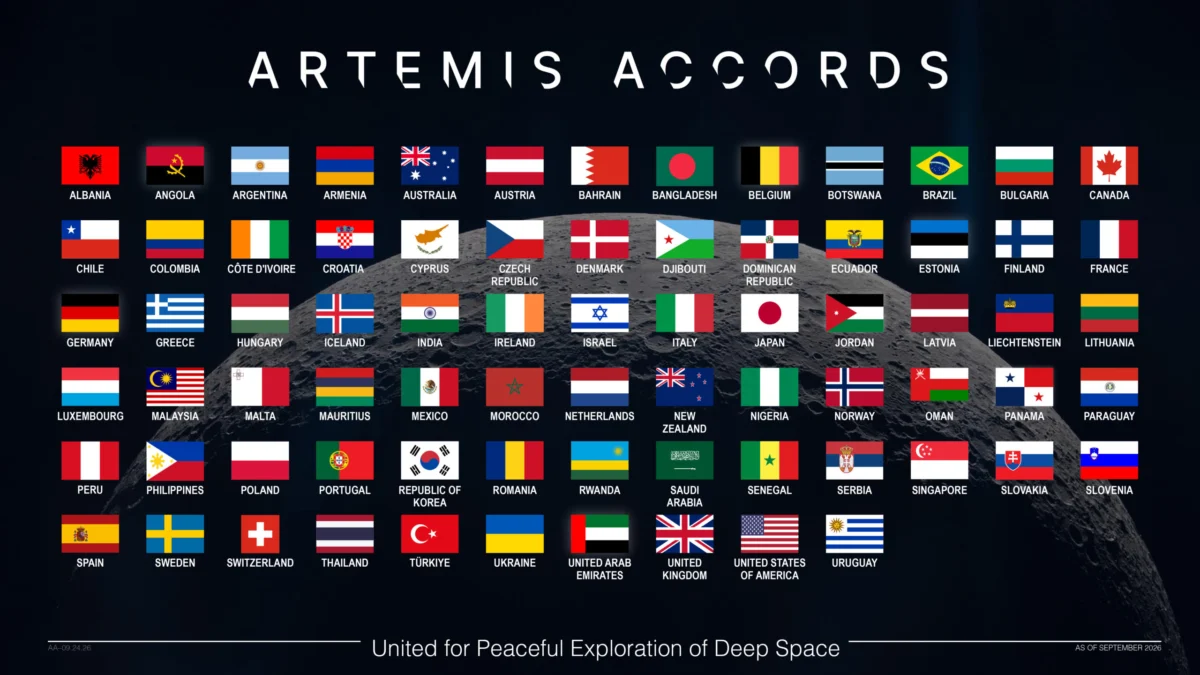
Côte d’Ivoire officially became the 75th signatory of the Artemis Accords on Thursday, marking a significant milestone in the expanding global coalition dedicated to responsible space exploration. The signing ceremony, held in the nation’s largest city, Abidjan, saw Côte d’Ivoire commit alongside a growing number of like-minded nations to the principles of peaceful, transparent, and responsible exploration of the Moon, Mars, and beyond. This accession not only underscores Côte d’Ivoire’s burgeoning interest and investment in space science and technology but also represents a pivotal moment for African engagement in the international framework for lunar and deep-space activities.
The Genesis and Principles of the Artemis Accords
Established in 2020 by the National Aeronautics and Space Administration (NASA) and the U.S. Department of State, initially with seven other founding nations, the Artemis Accords emerged as a critical response to the accelerating pace of lunar activities by both governmental and private entities. The Accords are designed to operationalize key provisions of the 1967 Outer Space Treaty, adapting them to the complexities and opportunities of 21st-century space exploration. They represent the first set of practical, non-binding principles aimed at enhancing transparency, safety, and coordination among nations as they venture further into space.
The core tenets of the Artemis Accords are foundational to fostering a stable and predictable environment for future space endeavors. These principles include:
- Peaceful Purposes: All activities conducted under the Accords must be exclusively for peaceful purposes, aligning with Article IV of the Outer Space Treaty. This commitment seeks to prevent conflict and foster cooperation in the shared domain of space.
- Transparency: Signatories agree to conduct their activities openly, sharing information about their policies and plans to minimize misunderstandings and enhance safety.
- Interoperability: Nations commit to developing interoperable systems and standards, crucial for ensuring the long-term sustainability and efficiency of multinational space missions, particularly in areas like docking, communication, and life support.
- Emergency Assistance: Signatories pledge to render all reasonable assistance to personnel in distress in outer space, reflecting the humanitarian principles enshrined in existing space law.
- Registration of Space Objects: Adherence to the Convention on Registration of Objects Launched into Outer Space (1976) ensures a transparent and publicly accessible record of space activities.
- Release of Scientific Data: The Accords promote the open sharing of scientific data derived from space exploration, benefiting the global scientific community and advancing humanity’s collective understanding.
- Preserving Heritage Sites: Acknowledging the historical significance of certain lunar and other celestial sites, signatories commit to their protection and preservation.
- Space Resources: The Accords provide a framework for the responsible utilization of space resources, emphasizing that such activities should be conducted in a safe and sustainable manner, in compliance with the Outer Space Treaty. This principle is particularly pertinent given the increasing interest in lunar regolith, water ice, and other materials.
- Deconfliction of Activities: Signatories commit to taking reasonable precautions to prevent harmful interference with other nations’ activities in space, including the establishment of "safety zones" where necessary.
- Orbital Debris Mitigation: Recognizing the growing threat of space debris, the Accords encourage signatories to plan for the safe disposal of spacecraft and to mitigate the generation of new orbital debris.
By subscribing to these principles, nations not only open the door to opportunities for future lunar exploration with partners like NASA but also contribute to shaping a global framework for what many envision as a new "Golden Age of exploration and innovation." The rapid growth from eight founding nations to 75 in just four years underscores the international community’s recognition of the Accords’ importance in guiding sustainable and cooperative space exploration.
Côte d’Ivoire’s Ascent in Space: A Chronology of Engagement
Côte d’Ivoire’s journey to becoming a signatory of the Artemis Accords is rooted in years of strategic investment and international cooperation in space science and technology. The nation has progressively built its capabilities and institutional framework, demonstrating a clear vision for harnessing space for national development and scientific advancement.
The foundation for this ambition was laid well before the formal establishment of a dedicated space agency. Since 2019, the National Office of Technical Development (BNETD) of Côte d’Ivoire has actively collaborated with NASA on critical Earth observation and geodesy projects. Geodesy, a specialized field that measures Earth’s shape, gravity, and movement, is vital for a wide range of applications, from accurate mapping and navigation to understanding sea-level rise and tectonic plate movements. Through this collaboration, Ivorian and American experts have worked together to advance global geodetic networks, refine space-based measurement techniques, and deepen understanding of the intricate interactions within Earth’s systems. This partnership has provided invaluable experience and expertise to Ivorian scientists and engineers, preparing them for more complex space endeavors.
Building on these foundational collaborations and recognizing the escalating importance of space for national security, economic growth, and environmental monitoring, Côte d’Ivoire took a significant step in 2025 with the establishment of its own Space Agency (ASC-CI). This agency was mandated to coordinate all national efforts across a spectrum of space-related activities, including Earth observation, space weather monitoring, astronomy, satellite navigation, and satellite communications. The creation of ASC-CI signaled Côte d’Ivoire’s intent to become a key player in the African space arena, leveraging space technology to address domestic challenges such as agricultural productivity, disaster management, urban planning, and climate change adaptation.
The culmination of these efforts arrived in 2026, when the nation’s Minister of Higher Education and Scientific Research, Adama Diawara, officially signed the Artemis Accords on behalf of Côte d’Ivoire. The ceremony was a highlight of the Africa Space Expo (ASPEX 2026), an event that itself symbolizes the continent’s growing ambitions in space. The presence of Chargé d’affaires Junaid Munir from the U.S. Department of State as a witness underscored the diplomatic significance of this partnership.
Strategic Significance and Official Endorsements
The accession of Côte d’Ivoire to the Artemis Accords has drawn commendation from international partners, highlighting the mutual benefits of this expanded cooperation. NASA’s Deputy Administrator, Matt Anderson, articulated the broader vision behind this partnership: "The United States and Côte d’Ivoire already cooperate on Earth. Today, we expand that partnership beyond it. Joining the Artemis Accords opens new opportunities for our scientists, engineers, and institutions to work together as humanity returns to the Moon and prepares for what comes next. We’ve aligned on the principles. The opportunities are in front of us. And now we can get to work." Anderson’s remarks emphasize the transition from terrestrial collaboration to a shared future in lunar and deep-space exploration, driven by shared values and scientific ambition.
The domestic sentiment was equally enthusiastic. Tidiane Outtara, Director General of the Space Agency of Côte d’Ivoire, hailed the signing as a "great achievement, and important for Côte d’Ivoire’s ambitions and for the rest of the African Union members." This statement is particularly resonant, positioning Côte d’Ivoire not just as an individual actor but as a potential catalyst and model for other nations within the African Union. It reflects a desire for regional leadership and collective advancement in the space domain. While Minister Adama Diawara’s specific remarks from the ceremony were not detailed, his act of signing underscored the highest level of government commitment to this strategic direction, signaling a long-term national policy objective.
Implications for Côte d’Ivoire and the African Continent
Côte d’Ivoire’s decision to join the Artemis Accords carries multifaceted implications, both nationally and regionally. For Côte d’Ivoire, it signifies:
- Enhanced International Standing: Accession to such a prominent international framework elevates Côte d’Ivoire’s profile on the global stage, demonstrating its commitment to international norms and its capacity for advanced scientific and technological engagement.
- Access to Advanced Capabilities: The Accords facilitate greater collaboration with signatory nations, potentially providing Côte d’Ivoire with access to cutting-edge space technologies, specialized training programs, and valuable scientific data that might otherwise be inaccessible. This could accelerate the development of its domestic space industry and research capabilities.
- Stimulation of Domestic Talent: Participation in international space missions and projects under the Accords is expected to inspire and cultivate a new generation of Ivorian scientists, engineers, and innovators, addressing potential brain drain and fostering local expertise.
- Economic Opportunities: Involvement in the global space economy, estimated to be worth hundreds of billions of dollars, can open new avenues for economic diversification. This includes potential for direct investment in space infrastructure, growth of satellite service industries, and technology transfer that benefits other sectors.
- Contribution to National Development: Leveraging advanced Earth observation data and satellite communication capabilities can significantly improve Côte d’Ivoire’s capacity for climate change adaptation, food security through precision agriculture, disaster warning systems, and resource management.
On the broader African continent, Côte d’Ivoire’s move is highly symbolic. Africa has witnessed a remarkable surge in space activities over the past two decades, with several nations launching satellites and establishing national space agencies. As of 2023, over 50 African satellites have been launched by more than 15 countries, and numerous African nations are actively developing their space programs. Tidiane Outtara’s emphasis on the "rest of the African Union members" highlights Côte d’Ivoire’s potential to:
- Serve as a Model: Côte d’Ivoire’s structured approach to space development and its commitment to international frameworks like the Artemis Accords could serve as an encouraging blueprint for other African nations contemplating their own space strategies and international engagements.
- Foster Regional Collaboration: The move could catalyze greater pan-African cooperation in space, potentially leading to joint projects, shared infrastructure, and coordinated policy development across the continent, addressing common challenges more effectively.
- Strengthen Africa’s Voice in Space Governance: As more African nations engage with international frameworks, the continent’s collective voice in shaping future space law and policy gains greater weight, ensuring that African perspectives and priorities are represented in global discussions.
The Global Tapestry of Space Cooperation
The expansion of the Artemis Accords to include Côte d’Ivoire further strengthens its position as a leading framework for cooperative and sustainable space exploration. The Accords stand in contrast to other emerging models of space governance, such as those proposed by nations like China and Russia, which often emphasize different priorities or bilateral agreements. The increasing number of signatories, representing diverse geopolitical and economic backgrounds, underscores a growing international consensus around the principles of transparency, peaceful exploration, and responsible resource utilization.
For U.S. space diplomacy, the inclusion of Côte d’Ivoire represents a success in strengthening ties with African nations and promoting American values of openness and collaboration in space. It demonstrates the inclusive nature of the Artemis program, which envisions a return to the Moon not as a national endeavor but as a multinational effort, paving the way for eventual human missions to Mars. This broad participation ensures that the benefits and responsibilities of humanity’s expansion into space are shared equitably among nations committed to a common vision.
As humanity looks towards establishing a sustainable presence on the Moon and preparing for the arduous journey to Mars, the principles enshrined in the Artemis Accords will be crucial. Côte d’Ivoire’s entry into this coalition not only signifies its own bright future in space but also contributes to building a more cooperative, transparent, and peaceful pathway for all of humankind’s ventures beyond Earth. The opportunities for scientific discovery, technological innovation, and international collaboration are now more vast than ever, and Côte d’Ivoire stands ready to contribute to this ambitious new chapter in human exploration.