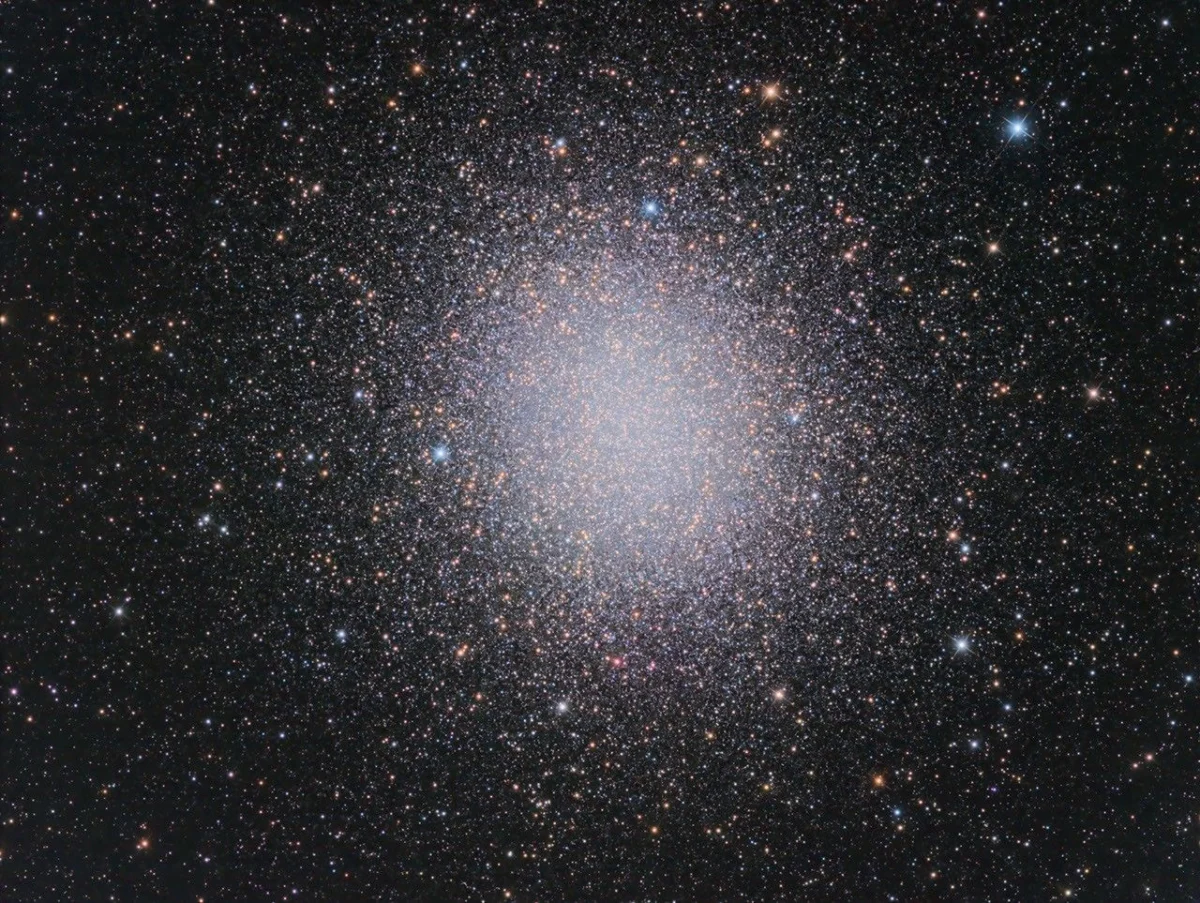
The Astronomy Picture of the Day (APOD), a long-standing public outreach initiative by NASA and Michigan Technological University, recently showcased a breathtaking image of Omega Centauri (NGC 5139), a stellar marvel that continues to challenge conventional astrophysical understanding. This daily feature, which has captivated enthusiasts and professionals alike since its inception in 1995, presents a different image or photograph of our universe each day, accompanied by a concise, expert-written explanation from a professional astronomer. The latest selection, depicting a dense globular cluster of stars, serves as a poignant reminder of the cosmos’s enduring mysteries and the ongoing quest to unravel them. The image, sourced from NASA’s vast archives, highlights Omega Centauri’s intricate structure and its pivotal role in advancing our knowledge of stellar dynamics, galactic evolution, and the enigmatic nature of black holes.
The Astronomy Picture of the Day (APOD): A Daily Cosmic Window
APOD’s mission extends beyond mere aesthetic appreciation; it aims to make cutting-edge astronomical discoveries and phenomena accessible to a global audience. Each day, millions visit the site, drawn by the allure of a universe unfolding in vivid detail. The selection process ensures scientific accuracy and educational value, with explanations penned by seasoned astronomers who translate complex concepts into understandable narratives. This pedagogical approach has cemented APOD’s status as a vital educational resource, fostering curiosity and inspiring future generations of scientists. The featured image of Omega Centauri is a testament to this commitment, offering both visual splendor and profound scientific insight. It underscores APOD’s enduring relevance as a bridge between the scientific community and the general public, democratizing access to the wonders of space exploration and discovery.
Unveiling Omega Centauri: A Stellar Metropolis
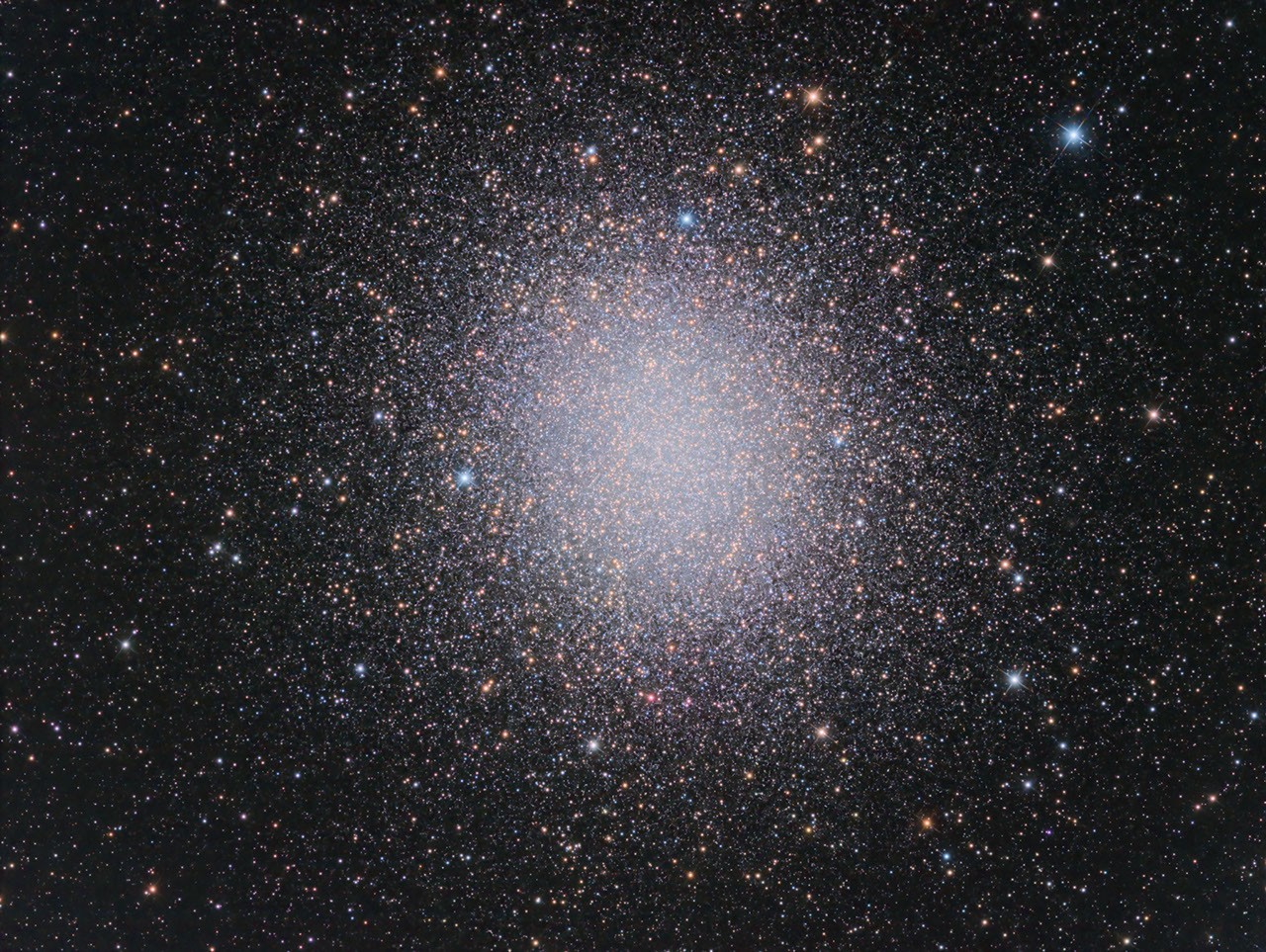
Omega Centauri, cataloged as NGC 5139, is not merely another star cluster; it is the largest and brightest of the approximately 200 known globular clusters that traverse the halo of our Milky Way galaxy. Located some 15,000 light-years from Earth, this colossal stellar system packs an estimated 10 million stars—many of them considerably older than our Sun—into a spherical volume spanning about 150 light-years in diameter. Its sheer density and luminosity make it a prominent object in the southern night sky, visible even to the naked eye under optimal conditions. The telescopic view, as presented by APOD, reveals a mesmerizing spectacle: a myriad of stars, many exhibiting a distinct yellowish hue indicative of their advanced evolutionary stage as red giants. These aging stars are easily discernible amidst the cluster’s vast population, offering astronomers crucial clues about stellar life cycles in extremely crowded environments.
Globular clusters are typically considered cosmic relics, formed early in the universe’s history. They are generally characterized by a homogeneous population of stars, all born around the same time from the same primordial gas cloud and possessing similar chemical compositions. This uniformity makes them excellent laboratories for studying stellar evolution, as astronomers can observe stars of different masses progressing through their life cycles in unison. However, Omega Centauri stands apart, presenting an enigmatic departure from this standard model, a characteristic that has fueled decades of intense scientific scrutiny and debate.
The Anomaly of Multiple Stellar Populations
What truly sets Omega Centauri apart as an "enigmatic" object is the discovery of its multiple stellar populations. Unlike typical globular clusters, which are thought to have formed from a single burst of star formation, Omega Centauri exhibits a broad spread in both stellar ages and chemical abundances. This means that its stars were not all born at the same time, nor do they share the same ‘metallicity’ – the proportion of elements heavier than hydrogen and helium. Some stars are significantly older and metal-poor, while others are younger and comparatively metal-rich.
This multi-generational and chemically diverse stellar mix poses a significant challenge to the conventional understanding of globular cluster formation. Standard models predict that the gravitational collapse of a single, massive gas cloud would lead to a population of stars with a uniform age and chemical fingerprint. The presence of distinct populations in Omega Centauri suggests a far more complex formation history, indicating that star formation occurred in multiple episodes, possibly from gas enriched by previous generations of stars, or that the cluster itself accreted stars from different origins. This anomaly has prompted astrophysicists to reconsider the very definition and formation mechanisms of globular clusters, marking Omega Centauri as a crucial outlier in the galactic landscape.
A Galactic Ghost: The Remnant Core Hypothesis
The most compelling explanation for Omega Centauri’s unusual properties is the hypothesis that it is not, in fact, a true globular cluster in the traditional sense, but rather the stripped-down remnant core of a small dwarf galaxy that was long ago engulfed and tidally disrupted by the much larger Milky Way. This "galactic cannibalism" theory offers an elegant solution to the puzzle of its multiple stellar populations and its exceptional size and mass.
In this scenario, a dwarf galaxy, complete with its own complex star formation history and possibly even a central black hole, ventured too close to the Milky Way. Over billions of years, the immense tidal forces exerted by our galaxy would have systematically ripped away the outer stars and gas of the smaller galaxy, leaving behind only its dense, gravitationally bound core. This core, retaining the diverse stellar populations of its former host galaxy, would then appear to us as Omega Centauri.
Supporting this hypothesis are several key pieces of evidence. The sheer mass and luminosity of Omega Centauri are disproportionately high for a typical globular cluster. Furthermore, observations have revealed subtle differences in the orbital motions of its stars, suggesting a more complex internal dynamic than expected for a simple cluster. The chemical signatures of its stars also bear a striking resemblance to those found in the remnants of known dwarf galaxies, reinforcing the idea of a past galactic merger. If confirmed, this theory profoundly impacts our understanding of the hierarchical growth of galaxies, suggesting that the Milky Way itself has grown through countless such accretion events, with Omega Centauri serving as a visible "ghost" of one such ancient encounter.
Hubble’s Enduring Legacy: Hunting for a Central Black Hole
The Hubble Space Telescope has been instrumental in unraveling many of Omega Centauri’s secrets, dedicating over two decades to its meticulous study. One of the most groundbreaking discoveries to emerge from these long-term observations is the compelling evidence for a massive black hole residing near the cluster’s very heart. This finding, announced by NASA’s Hubble team, represents a significant stride in astrophysics, as it provides strong support for the existence of intermediate-mass black holes (IMBHs).
IMBHs are a theoretical class of black holes that bridge the vast size gap between stellar-mass black holes (typically a few to tens of solar masses, formed from the collapse of massive stars) and supermassive black holes (millions to billions of solar masses, found at the centers of most large galaxies). Their existence has been a long-standing puzzle, with few definitive observational proofs. The evidence for a black hole in Omega Centauri comes from meticulously mapping the motions of stars in its innermost regions. Astronomers observed that stars near the cluster’s core were moving at speeds far exceeding what could be explained by the combined gravitational pull of the visible stars alone. This "excess" gravitational force strongly points to the presence of a compact, unseen mass – a black hole – influencing the stellar dynamics.
The estimated mass of this central black hole in Omega Centauri is approximately 40,000 times that of our Sun. Such a mass falls squarely within the predicted range for IMBHs. The detection of an IMBH within Omega Centauri further bolsters the dwarf galaxy remnant hypothesis. Supermassive black holes are characteristic features of galaxy centers, and if Omega Centauri is indeed the stripped core of a defunct dwarf galaxy, then the presence of its own central black hole would be a natural consequence of its former galactic identity. This discovery not only provides crucial evidence for IMBHs but also offers a unique laboratory to study the co-evolution of black holes and their host stellar systems in an extremely dense environment.
The Broader Context of Globular Clusters and Galactic Evolution
Globular clusters are often referred to as "fossils" of the early universe. Their ancient stellar populations preserve vital information about the conditions prevailing shortly after the Big Bang and the initial phases of galaxy formation. By studying their ages, compositions, and spatial distribution, astronomers can piece together the evolutionary history of galaxies like our Milky Way.
Omega Centauri, with its peculiar characteristics, offers a particularly rich tapestry of information. Its unique blend of stellar populations, its immense size, and the potential presence of an IMBH provide a singular case study for understanding:
- Galaxy Formation and Mergers: Omega Centauri serves as a tangible example of how larger galaxies grow by accreting smaller ones. It illustrates the destructive power of tidal forces and the enduring legacy left behind by such cosmic collisions.
- Stellar Dynamics in Dense Environments: The extreme stellar density in Omega Centauri provides an unparalleled natural laboratory for studying how stars interact gravitationally, how they exchange energy, and how stellar evolution might be influenced by close encounters in a crowded stellar city.
- The Formation and Evolution of Black Holes: The putative IMBH in Omega Centauri offers critical insights into the formation pathways of these elusive objects. It helps bridge the theoretical gap between stellar-mass black holes and the supermassive giants, informing models of how black holes grow and influence their host galaxies.
- Challenging Paradigms: Omega Centauri’s anomalies force astronomers to refine existing theories about globular cluster formation and evolution, pushing the boundaries of astrophysical understanding. It demonstrates that the universe often holds surprises that defy straightforward classification.
The implications of Omega Centauri’s unique nature extend to broader cosmological questions, including the dark matter distribution in dwarf galaxies and the processes that govern the assembly of galactic halos.
Future Research and Observational Prospects
Despite the wealth of data gathered by Hubble and other observatories, many questions about Omega Centauri persist. What was the exact nature of the dwarf galaxy it once was? Are there other, fainter remnants of its outer stars still observable in the Milky Way’s halo? How precisely did the central black hole form and interact with its dense stellar surroundings over billions of years?
Future observations, particularly with next-generation telescopes like the James Webb Space Telescope (JWST), promise to shed more light on these enduring mysteries. JWST’s unparalleled infrared capabilities will allow astronomers to peer through the dust and gas in Omega Centauri’s core with unprecedented clarity, potentially revealing more about its stellar populations, the dynamics around its central black hole, and the chemical abundances of its oldest stars. Such detailed observations could provide definitive evidence for the dwarf galaxy hypothesis, further constrain the mass and properties of the IMBH, and even uncover additional clues about the Milky Way’s ancient merger history. The ongoing quest to understand Omega Centauri exemplifies the dynamic and evolving nature of astronomical research.
Navigating the Cosmos: APOD’s Evolving Digital Presence
In parallel with the scientific advancements, the platform delivering these cosmic insights, APOD, also continues to evolve. Recent operational updates include a change in APOD’s email for image submissions and a migration of its main NASA site from apod.nasa.gov to science.nasa.gov/apod. These logistical adjustments reflect NASA’s continuous efforts to optimize its digital infrastructure, enhance user experience, and streamline content delivery. Such migrations are common in the rapidly evolving digital landscape, ensuring that valuable public resources like APOD remain accessible, secure, and integrated within broader institutional frameworks. Despite these behind-the-scenes changes, APOD’s core mission – to deliver a daily dose of cosmic wonder and scientific enlightenment – remains unwavering, promising future glimpses into the universe’s most captivating phenomena, such as "reflections on a starry night," the subject of tomorrow’s featured image.
In conclusion, Omega Centauri stands as a beacon of astrophysical intrigue, challenging established paradigms and pushing the boundaries of our understanding of stellar and galactic evolution. Its recent feature on APOD underscores its significance, bringing this complex cosmic narrative to a global audience. As technology advances and new observational tools become available, Omega Centauri will undoubtedly continue to yield profound insights into the fundamental processes that shape our universe, reaffirming the boundless potential for discovery that lies within the cosmos.