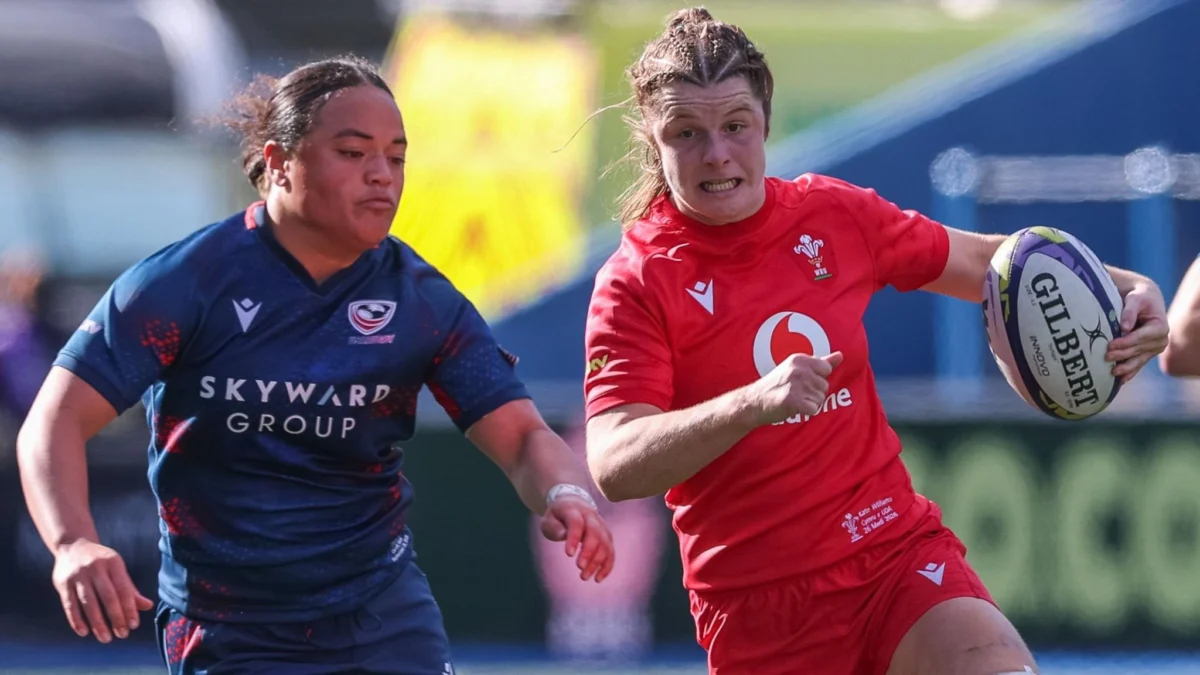
Head coach Sean Lynn acknowledged the disappointment but highlighted progress following Wales’s agonizing 26-24 loss to the United States in the WXV competition. Despite a spirited second-half comeback, a series of uncharacteristic individual errors proved costly for the Welsh side at Cardiff Arms Park. The defeat, while a setback, comes after an emphatic victory over South Africa, offering a mixed picture of the team’s development as they head into a crucial break.
A Tale of Two Halves and Missed Opportunities
The WXV, a global women’s rugby union competition designed to provide more high-profile matches for Tier 1 and Tier 2 nations, has become a critical platform for teams like Wales to test themselves against some of the world’s best. This particular fixture against the USA, ranked fifth globally compared to Wales’s eighth, was always anticipated to be a stern challenge. Wales entered the match buoyed by their dominant performance against South Africa, a resounding 39-10 victory that saw them score eight tries. This confidence, however, did not fully translate onto the pitch against the Eagles, who ultimately proved too clinical.
The first half saw Wales struggle to find their rhythm, falling behind by 14 points. However, a significant shift in momentum occurred as the Welsh team managed to claw their way back into contention, demonstrating resilience and attacking intent. The second half began with renewed hope, but the momentum was unfortunately short-lived. A spate of individual errors, described by Lynn as "unforced," provided the USA with crucial territory and possession, which they capitalized on to regain control of the match. While Wales managed to narrow the scoreline significantly in the dying moments, the final whistle confirmed a narrow two-point defeat.
Coach’s Perspective: Grit and Areas for Improvement
Despite the sting of the loss, Head Coach Sean Lynn remained focused on the positives he witnessed. "I saw some grit, I saw some effort there," he stated in his post-match assessment. "Before, when we were 21-7 down, I would have seen heads drop, but we’re in a good place and came back. Now it’s about us learning how to see games off and going back to the simple things we’re doing well."
Lynn’s comments reflect a coach who is looking for sustained development rather than isolated performances. The ability to come back from a significant deficit, he emphasized, is a sign of a team with growing mental fortitude. This is a stark contrast to previous eras where teams might have succumbed to such pressure. The challenge now, according to Lynn, lies in translating that resilience into closing out matches against top-tier opposition. The "simple things" he refers to likely encompass fundamental aspects of game management, such as maintaining possession, disciplined defensive structures, and clinical execution in the opposition’s 22.
Historical Context and Tournament Standing
This match against the USA was a significant fixture in the context of Wales’s WXV campaign. The competition, now in its second year, aims to provide a structured annual international calendar for women’s rugby. Wales’s participation is part of a broader strategic effort to elevate the profile and competitiveness of their women’s program. Their WXV 1 campaign, which features the top six women’s teams in the world, is a proving ground.
Historically, Wales has had a challenging record against the United States. Prior to this fixture, the two nations had met six times, with Wales securing only one victory. This statistic underscores the magnitude of the task Wales faced and the significance of even a narrow defeat against a team they have historically struggled against. The WXV format, with its concentrated schedule of matches, offers limited opportunities for reflection and rapid adaptation, making each game a crucial learning experience.
Key Moments and Analysis of Errors
The narrative of the match was undeniably shaped by the pattern of play in the second half. While the exact sequence of errors was not detailed in initial reports, the implication is that a series of dropped balls, missed tackles, or ill-advised passes at critical junctures allowed the USA to build pressure and score. In Test match rugby, such lapses in concentration are often ruthlessly punished. The USA, as a team with a strong defensive record and a reputation for clinical finishing, would have capitalized on any perceived weakness.

Wales co-captain Kate Williams articulated this frustration eloquently, stating, "As a team, we were there at the 60th minute; we just needed to execute and we didn’t." Her poignant observation, "What happens then is you’re just looking at each other, because it’s a mistake here, a mistake there; we just needed to come together and do what we’re good at, which is being physical and taking it to them," captures the internal dynamic of a team struggling with cohesion under pressure. The feeling that the game was "lost" rather than "won" by the opposition is a powerful indicator of the team’s internal assessment of their performance.
Looking Ahead: Preparation for Japan
Following the WXV 1 encounter with the USA, Wales faces a vital week of reflection and preparation. Their next assignment involves a double-header against Japan, another competitive side in the WXV landscape. These matches, scheduled for October 24th and 31st, will offer a direct opportunity to implement the lessons learned from the USA game. Japan, also known as the Sakura Fifteen, are a developing force in women’s rugby and will undoubtedly present a different set of challenges.
The team’s return to camp will likely involve a deep dive into the video analysis of the USA match, focusing on identifying specific areas for improvement. The emphasis on "going back to the simple things" suggests a focus on reinforcing core skills and tactical discipline. For a team aiming to consistently compete at the WXV 1 level, mastering these fundamentals is paramount. The "week off" is not a period of rest but rather a strategic pause for recalibration and intensified training, ensuring they are better equipped for the upcoming fixtures.
Broader Implications for Welsh Women’s Rugby
The WXV competition represents a significant step forward for Welsh women’s rugby. By regularly facing teams ranked higher, Wales gains invaluable experience that is crucial for long-term development. While defeats are disappointing, they provide essential data points for coaches and players to identify weaknesses and build strengths. The increased media attention and fan engagement around these matches also contribute to raising the profile of the sport within Wales.
The commitment to developing a competitive 80-minute team, as stated by Lynn, is a long-term goal. The WXV 1 competition serves as a high-pressure environment to accelerate this development. The performances in this tournament will ultimately shape the future trajectory of the Welsh women’s national team, influencing player selection, coaching strategies, and investment in the women’s game. The narrow loss to the USA, while frustrating, is a testament to the team’s growing competitive spirit and their ambition to ascend the global rankings. The challenge now is to harness this spirit and translate it into consistent victories.
The USA’s Perspective and Tournament Context
While the focus remains on Wales’s performance, the USA’s victory is also noteworthy. As a team consistently ranked among the world’s elite, their performance against Wales demonstrates their ability to secure wins even when not at their absolute best, a hallmark of experienced sides. Their tactical discipline and ability to capitalize on opposition errors were key factors in their success. In the broader WXV 1 context, the USA’s win solidifies their position as a strong contender, demonstrating their readiness to challenge for the tournament’s top honors. The competition’s structure, with teams playing each other once, means that every match carries significant weight in the overall standings.
Player Voices: Frustration and Unity
The emotional toll of a close defeat was palpable in the words of co-captain Kate Williams. Her admission of being "deflated" after the USA showing is a relatable sentiment for any athlete who feels a game has slipped through their fingers. Her plea for the team to "come together and do what we’re good at" highlights the internal dynamics of team sport – the struggle to maintain cohesion when individual errors disrupt the collective flow.
However, the underlying sentiment of unity and shared experience, even in defeat, is a critical component of team building. While the immediate aftermath is characterized by frustration, the long-term impact of such shared challenges can forge stronger bonds within the squad. The "togetherness" that Wales hooker Kelsey Jones, mentioned in accompanying media figures, likely refers to this shared experience and the team’s collective resolve to learn and improve.
The upcoming fixtures against Japan will be a direct test of this resolve. Can Wales bounce back from the USA disappointment and demonstrate the progress Sean Lynn believes is evident? The answers will unfold on the pitch in the coming weeks, providing further insights into the evolving landscape of Welsh women’s rugby on the international stage. The WXV competition continues to serve as a crucial barometer of their progress, offering both the highs of victory and the invaluable, albeit painful, lessons of defeat.