The move comes at a critical juncture for the digital asset industry. As institutional interest in tokenized real-world assets (RWAs) and blockchain-based settlement grows, Payward is positioning itself to capture a share of the legacy financial markets, which are valued in the hundreds of trillions of dollars. By building "common rails," Payward aims to bridge the gap between the transparency of decentralized finance (DeFi) and the liquidity and scale of traditional finance (TradFi).
The Strategic Vision: Beyond the Exchange Model
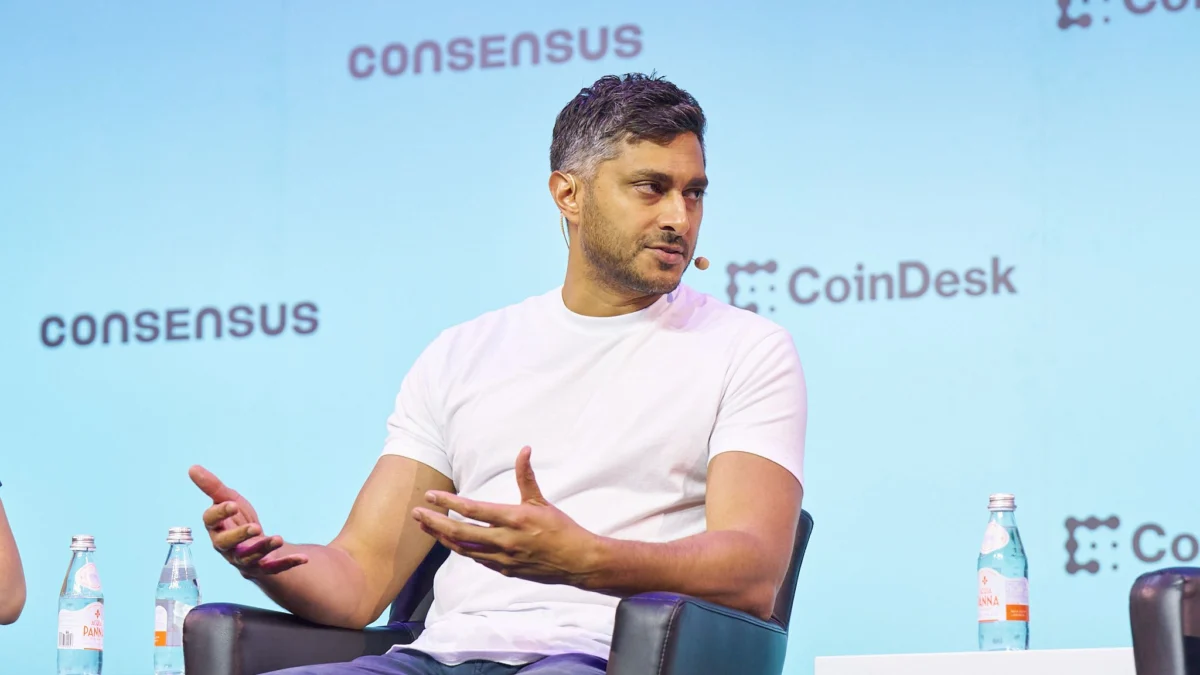
For over a decade, Kraken has been synonymous with secure cryptocurrency trading. However, the volatility of retail-driven markets has prompted the company to seek more stable, recurring revenue streams. Arjun Sethi, who joined as co-CEO alongside David Ripley, brings a background in venture capital and scaling high-growth technology firms. His arrival signals a shift toward viewing the company not merely as a marketplace, but as a technology provider.
"The goal is to build the common rails that will support the next century of finance," Sethi noted in a recent strategy briefing. This vision involves integrating all of Payward’s offerings into a unified architecture. Currently, most financial institutions operate on fragmented systems where payments, custody, and trading occur in silos, often requiring days for settlement. Payward’s "common rails" approach seeks to utilize blockchain technology to allow these processes to happen near-instantaneously on a single platform.
This strategy is backed by significant capital. Payward has reportedly allocated billions of dollars toward research and development, global licensing, and strategic acquisitions. The company’s recent activities suggest a focus on vertical integration, ensuring that every step of the financial lifecycle—from the creation of an asset to its eventual trade and storage—can be handled within the Payward ecosystem.
A Chronology of Transformation: From 2011 to the Infrastructure Era
The evolution of Payward is a reflection of the broader maturation of the cryptocurrency industry. Understanding the current "infrastructure bet" requires a look at the company’s developmental timeline:
- 2011–2013: The Foundation. Founded by Jesse Powell in the wake of the Mt. Gox collapse, Kraken focused on security and transparency, becoming one of the first exchanges to undergo a "Proof of Reserves" audit.
- 2014–2019: Global Expansion. The company expanded its footprint across Europe, North America, and Asia, securing key licenses and building a reputation for high-liquidity professional trading.
- 2020–2022: Institutional Awakening. Recognizing the shift toward institutional adoption, Kraken launched "Kraken Bank" (the first Special Purpose Depository Institution in Wyoming) and expanded its staking services.
- 2023: Leadership Transition. David Ripley succeeded Jesse Powell as CEO, initiating a period of organizational streamlining and a renewed focus on regulatory compliance.
- 2024–2025: The Infrastructure Pivot. With the appointment of Arjun Sethi as co-CEO, the company launched "Kraken Institutional" and announced the development of "Ink," a proprietary Layer 2 blockchain network built on the Optimism Superchain.
This chronology illustrates a steady move away from being a pure-play retail exchange toward becoming a multifaceted financial services conglomerate. The launch of Ink is particularly significant, as it provides the physical "rails" upon which Payward’s unified services will run, allowing for lower fees and higher throughput for both retail and institutional users.
Unifying Trading, Payments, and Asset Management
The core of Payward’s new strategy is the elimination of friction between different financial verticals. By placing trading, payments, and asset management on common rails, the company addresses several pain points that have long plagued the industry.
Integrated Payments and Settlement
Traditional payment systems, such as SWIFT or ACH, are often slow and expensive. Payward’s infrastructure bet involves leveraging stablecoins and blockchain settlement to offer real-time global payments. This is not just for crypto-to-crypto transactions but for moving value across borders in a way that is compliant with international regulations. By integrating payments directly into the trading platform, users can move from cash to assets and back again without the typical multi-day delays associated with banking transfers.
Institutional-Grade Asset Management
With the success of Bitcoin and Ethereum ETFs in the United States, the demand for sophisticated asset management tools has skyrocketed. Payward is responding by building out its custodial and sub-custodial services. The company is no longer just holding assets for retail users; it is positioning itself to manage billions in assets for hedge funds, family offices, and corporate treasuries. This requires a level of security and reporting that mirrors traditional prime brokerage services.
The Role of Tokenization
A key component of the "financial infrastructure" goal is the tokenization of traditional assets like treasury bills, stocks, and real estate. Payward’s common rails are being designed to handle these tokenized assets with the same ease as Bitcoin. If a user can trade a tokenized U.S. Treasury bill and a digital currency on the same platform with instant settlement, the efficiency gains over current financial systems are enormous.
Supporting Data: The Market Opportunity
The scale of the market Payward is targeting is vast. According to reports from the Boston Consulting Group (BCG) and other financial analysts, the tokenization of real-world assets is projected to become a $16 trillion industry by 2030.
| Sector | Estimated Global Value | Payward’s Target Role |
|---|---|---|
| Global Equities | ~$100 Trillion | Trading & Tokenized Settlement |
| Real Estate | ~$320 Trillion | Asset Management & Fractionalization |
| Global Payments | ~$2.2 Trillion (Annual Revenue) | Blockchain-based Rails |
| Institutional Custody | ~$40 Trillion (AUC) | Digital Asset Custodian |
By capturing even a fraction of a percent of these markets, Payward would move from being a multi-billion dollar exchange to a multi-trillion dollar infrastructure provider. Current data shows that institutional participation in digital assets is growing at a compound annual growth rate (CAGR) of over 20%, a trend Payward is aggressively positioning itself to lead.
Regulatory Compliance and Global Expansion
Betting billions on infrastructure requires a massive investment in legal and regulatory frameworks. Payward has faced its share of challenges, including high-profile settlements with the U.S. Securities and Exchange Commission (SEC) regarding its staking products. However, the company has used these experiences to pivot toward a "compliance-first" global strategy.
In Europe, Payward has been proactive in preparing for the Markets in Crypto-Assets (MiCA) regulation, which provides a unified framework for digital assets across the EU. The company has secured licenses in various jurisdictions, including the Netherlands, Ireland, and Spain, allowing it to offer a consistent suite of services to the world’s largest single market.
In the United Kingdom and Australia, Payward continues to work closely with regulators to define the boundaries of digital asset custody and trading. This global patchwork of licenses is a significant part of the "infrastructure" the company is building; a technological stack is useless if it cannot be legally accessed by the world’s largest pools of capital.
Broader Impact and Industry Implications
The shift by Payward represents a broader trend of "convergence" between the crypto world and traditional finance. If successful, the implications for the global economy are profound:
- Democratization of High-Finance: By lowering the cost of asset management and fractionalizing expensive assets like real estate, Payward’s infrastructure could allow retail investors to access markets previously reserved for the wealthy.
- Increased Market Efficiency: Instant settlement reduces counterparty risk and frees up capital that is currently trapped in the "settlement gap."
- Pressure on Traditional Banks: As companies like Payward begin to offer banking-like services with higher efficiency and lower costs, traditional financial institutions will be forced to either innovate or risk obsolescence.
- Standardization of Blockchain Tech: By building "common rails" that others can potentially use, Payward is helping to create a standard for how digital and traditional assets interact.
Critics of the strategy point to the immense difficulty of unseating entrenched financial giants like JPMorgan Chase or BNY Mellon. These institutions have decades of relationships and deep-rooted regulatory moats. Furthermore, the technical challenge of building a unified stack that is both secure enough for trillions of dollars and fast enough for high-frequency trading is non-trivial.
Conclusion: The Long-Term Horizon
Arjun Sethi and the leadership at Payward are clearly playing a long game. While the daily price of Bitcoin continues to dominate headlines, the real story for Payward is the quiet, expensive, and complex work of rebuilding the plumbing of the global financial system.
By betting billions on becoming the "common rails" for finance, the company is moving beyond the volatile world of crypto speculation and into the heart of global commerce. If the gamble pays off, the name Kraken will be associated not just with an exchange for digital coins, but with the very infrastructure that moves money around the world. The transition from a "crypto exchange" to a "financial utility" is perhaps the most ambitious move in the history of the digital asset industry, and its success or failure will likely define the next decade of financial technology.