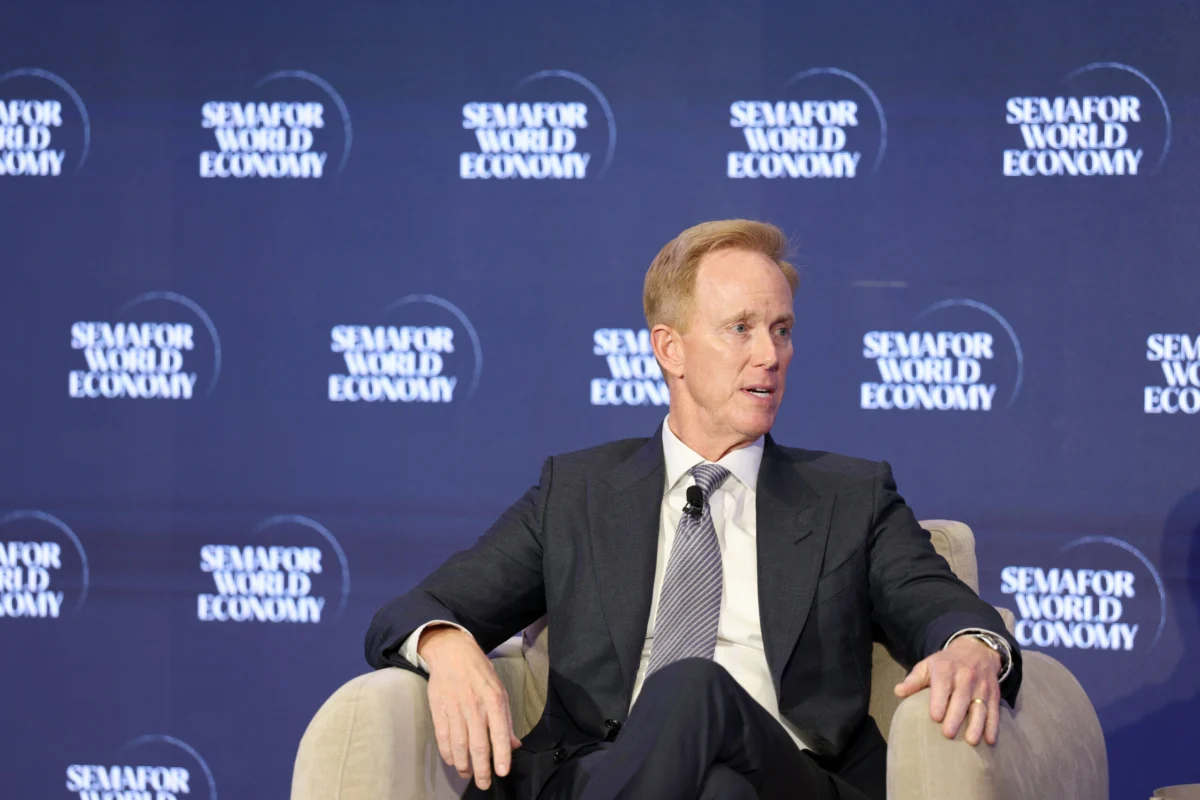
Mattel, the iconic toy manufacturer that has successfully transformed into a leading intellectual property (IP)-driven play and family entertainment company, announced a significant leadership transition on Wednesday. Roger Lynch, a seasoned executive and current Mattel board member, has been appointed as the new Chief Executive Officer and Chairman, taking the helm from Ynon Kreiz. Kreiz is departing the company to assume a leadership role at another publicly traded entity, marking the end of his eight-year tenure that was instrumental in steering Mattel’s ambitious expansion into the entertainment sector.
The announcement, made simultaneously by both Mattel and Condé Nast, where Lynch currently serves as CEO, signals a deliberate move to leverage Lynch’s extensive experience in navigating and growing global companies within evolving industry landscapes. His appointment underscores Mattel’s commitment to further solidifying its position as a powerhouse in IP creation and monetization, a strategy that has already yielded substantial success, most notably with the blockbuster "Barbie" film.
A New Era for Mattel: Lynch’s Vision and Kreiz’s Legacy
Roger Lynch, who has been an integral part of the Mattel board since 2018, brings a wealth of experience from his leadership roles at major media conglomerates. His departure from Condé Nast, a company renowned for its prestigious portfolio of publications including Vogue, The New Yorker, Vanity Fair, and Wired, highlights his proven ability to manage diverse and influential brands. Mike Perlis, currently the lead independent director at Condé Nast, will step in as interim CEO, ensuring continuity at the media giant during this transition.
Ynon Kreiz’s departure marks the culmination of a transformative period for Mattel. During his eight-year leadership, Kreiz was the driving force behind the company’s strategic pivot from a traditional toy manufacturer to a comprehensive entertainment entity. This shift was characterized by a concerted effort to leverage Mattel’s extensive library of beloved brands into film, television, digital content, and other media. The unprecedented global success of the "Barbie" movie, which shattered box office records and garnered critical acclaim, stands as a testament to Kreiz’s vision and execution. Beyond "Barbie," Mattel has actively developed and released a slate of other film and television projects, further diversifying its revenue streams and expanding its brand reach.
Leadership Endorsements and Strategic Continuity
The decision to appoint Roger Lynch was met with widespread approval from the Mattel board. Judy Olian, a key board member who led the succession process, lauded Lynch as a "visionary leader with a track record of growing global companies at the forefront of changing industry and consumer trends." Olian emphasized Lynch’s invaluable contributions to shaping Mattel’s strategic direction during its expansion into entertainment and digital products, stemming from his direct involvement as a board member.
"Throughout his service on the Board, Roger has been an invaluable contributor to shaping the company’s direction in the midst of its expansion into entertainment and digital products," stated Olian in a press release. "The Board is most grateful for Ynon’s eight years of transformational leadership, and wishes him every success in his new role. Ynon leaves an invaluable legacy of transitioning Mattel from a toy manufacturer to a leading IP-driven play and family entertainment company. Knowing Roger as we do, we are confident that he and the talented Mattel team will build on that powerful foundation, and continue to advance our strategy to leverage our iconic brand portfolio."
Lynch expressed his honor and excitement about taking on the new role. "I am honored by the Board’s confidence in me and couldn’t be more excited to lead the incredible team at Mattel," Lynch commented. "Throughout my years on the Board, I have admired Mattel’s brands, its talented people, and unique culture. I am especially grateful to Ynon for his many years of outstanding leadership and service to the company. During his tenure, Mattel has leveraged the power of its world-class brands, attracted exceptional entertainment partners, and strengthened its balance sheet. The company is well positioned for its next phase of profitable growth and its exciting new chapter."
Ynon Kreiz reflected on his tenure with a sense of pride and optimism for Mattel’s future. "It has been a privilege to lead Mattel, with a global team dedicated to its mission and purpose, and I am proud of all we have achieved together," Kreiz stated. "Mattel is in a position of strength, with a world-class brand portfolio, product offering, and global capabilities. I am grateful to the Board, management team, and entire Mattel organization for their commitment and collaboration during the past eight years, and I have every confidence the company will continue to thrive under Roger’s leadership."
Steven Newhouse, Co-President of Advance Publications, also acknowledged Lynch’s contributions at Condé Nast. "Roger has led Condé Nast successfully through a period of enormous change," Newhouse remarked. "On behalf of our Board, we are grateful for his leadership, and pleased that he will continue to serve on the Board. Roger built a great team and positioned the business well for what comes next. With Mike stepping in alongside that team, we expect a seamless transition and look forward to building on the progress Roger has made."
The Strategic Significance of Mattel’s Evolution
Mattel’s transformation is a compelling case study in corporate adaptation within a rapidly evolving consumer landscape. Historically known for its iconic toy brands such as Barbie, Hot Wheels, and Fisher-Price, the company faced increasing pressure from digital entertainment and changing play patterns. Under Ynon Kreiz, Mattel embarked on an aggressive strategy to reimagine its IP as a springboard for a broader entertainment ecosystem. This involved not only producing films and television shows but also forging strategic partnerships, expanding into digital gaming, and developing immersive brand experiences.
The success of the "Barbie" movie, which grossed over $1.4 billion worldwide, was a watershed moment. It demonstrated the immense commercial potential of Mattel’s intellectual property when translated into compelling storytelling and high-quality production. This financial and cultural triumph provided tangible evidence for investors and stakeholders of the viability of Mattel’s entertainment-focused strategy. Data from the film’s performance can be viewed as a key indicator of the market’s appetite for IP-driven entertainment originating from established toy brands.
A Timeline of Transformation and Key Milestones
- 2014: Ynon Kreiz appointed Chairman and CEO of Mattel.
- 2015-2018: Mattel undergoes significant restructuring and cost-cutting measures amidst declining sales.
- 2018: Roger Lynch joins the Mattel Board of Directors.
- 2019 onwards: Mattel intensifies its strategy to leverage its IP into entertainment, announcing a slate of film and television projects.
- 2020-2022: Mattel’s digital gaming division experiences growth, and the company expands its presence in direct-to-consumer channels.
- July 2023: "Barbie" movie is released, becoming a global cultural and commercial phenomenon.
- Early 2024: Mattel announces its intention to further expand its IP-driven entertainment initiatives, including a "Hot Wheels" movie.
- Wednesday, [Insert Date]: Mattel announces Roger Lynch as new CEO and Chairman, succeeding Ynon Kreiz.
This timeline illustrates a deliberate and phased approach to strategic repositioning, moving from crisis management to a period of significant growth and brand revitalization driven by entertainment.
The Broader Implications for the Entertainment and Toy Industries
Roger Lynch’s appointment at Mattel is poised to have significant implications for both the toy manufacturing and entertainment sectors. His experience at Condé Nast, a company that has successfully navigated the digital disruption of the media industry, suggests a continued focus on innovation and adaptation. Lynch is expected to build upon the strong foundation laid by Kreiz, further optimizing Mattel’s ability to monetize its iconic brands across multiple platforms.
For the toy industry, Mattel’s success serves as a powerful blueprint. It demonstrates that established toy companies can evolve beyond traditional product sales by embracing their IP as a gateway to broader consumer engagement. This could inspire other toy manufacturers to explore similar strategies, potentially leading to a new wave of IP-driven entertainment originating from the world of toys.
In the entertainment industry, Mattel’s ascendancy as a content producer challenges traditional studio models. By controlling its own valuable IP, Mattel possesses a unique advantage in greenlighting and developing projects that resonate with global audiences. Lynch’s leadership may see an acceleration of these initiatives, with potential for more ambitious and diverse content offerings. His background in media also suggests a keen understanding of digital distribution, streaming, and emerging content formats, which will be crucial for Mattel’s future growth.
The transition at Mattel is more than just a change in leadership; it represents the ongoing evolution of a legacy brand in the 21st century. With Roger Lynch at the helm, the company is set to continue its trajectory as a formidable player in the global entertainment landscape, leveraging its unparalleled collection of beloved brands to create new experiences for generations to come. The focus will undoubtedly remain on unlocking the full potential of its IP, a strategy that has proven to be a powerful engine for profitable growth and sustained relevance in an ever-changing marketplace.