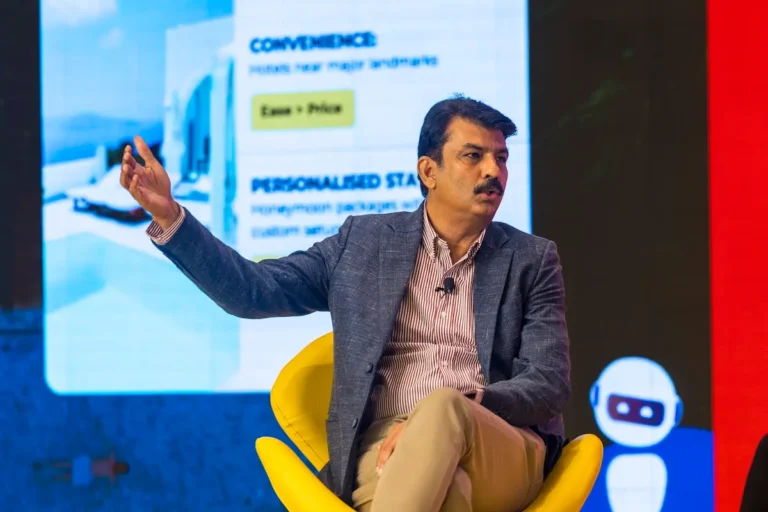



In a move that has drawn significant attention from corporate governance experts and the technology sector alike, Airbnb has disclosed the sale of specific intellectual property to a private artificial intelligence laboratory founded and controlled by its own Chief Executive Officer, Brian Chesky. The transaction, which occurred in November 2024, also involves Airbnb’s Chief Technology Officer, Ahmad Al-Dahle, who holds a financial stake in the new entity and is actively contributing to its operations. According to a recent quarterly filing with the Securities and Exchange Commission (SEC), the deal resulted in a total cash influx of $7.1 million for Airbnb, covering both the purchase of the intellectual property and the reimbursement of associated expenses.
The disclosure highlights a unique and complex "related-party transaction," a term used in corporate finance to describe deals between a company and its high-ranking insiders or their affiliated entities. While such transactions are subject to intense regulatory scrutiny, Airbnb has maintained that the deal was executed with full transparency and under the oversight of a special committee composed of independent, disinterested directors. This committee was tasked with ensuring that the terms of the sale were fair to Airbnb’s shareholders and that the arrangement did not compromise the fiduciary duties of Chesky or Al-Dahle to the home-sharing giant.
Details of the Transaction and Financial Disclosure
The $7.1 million transaction represents a multi-faceted agreement. According to the SEC filing, the sum is not solely for the transfer of intellectual property rights but also includes reimbursements for expenses Airbnb incurred during the development or transfer phases of the technology in question. While the specific nature of the intellectual property has not been detailed in the public filing, industry analysts suggest it likely involves foundational AI models, proprietary datasets, or algorithmic frameworks related to personalization, search optimization, or automated guest-host interactions—areas where Airbnb has invested heavily over the past five years.
The timing of the transaction in November suggests a strategic move to clear the intellectual property from Airbnb’s balance sheet before the close of the fiscal year, allowing the private lab to begin independent operations. By spinning off this IP to a venture led by its own executives, Airbnb appears to be creating a satellite environment for high-risk, high-reward AI research that might be too experimental or resource-intensive to conduct within the constraints of a publicly traded company.
The Role of Leadership and Potential Conflicts of Interest
The involvement of both the CEO and the CTO in an external entity that buys assets from their primary employer is a rare occurrence in the S&P 500. Brian Chesky, who has led Airbnb since its inception in 2008, has recently become one of the most vocal proponents of AI in the travel industry. Ahmad Al-Dahle, who joined Airbnb after significant tenures at Apple and Meta, brings the technical expertise necessary to lead a specialized AI laboratory.
To mitigate concerns regarding a conflict of interest, Airbnb’s board of directors utilized its "related-party transaction policy." This policy is designed to prevent "self-dealing," where executives might use their influence to acquire company assets at a discount. The special committee’s approval serves as a legal and ethical safeguard, asserting that the $7.1 million price tag reflects a fair market valuation of the IP. Furthermore, Airbnb has stated in its filings that the roles of Chesky and Al-Dahle at the private lab will not alter their current responsibilities or time commitments to Airbnb. The company emphasized that both executives continue to prioritize Airbnb’s long-term growth and operational excellence.
A Timeline of Airbnb’s Artificial Intelligence Evolution
To understand the context of this sale, one must look at Airbnb’s trajectory regarding machine learning and AI over the last decade.
- 2014–2018: Airbnb begins implementing basic machine learning for its "Smart Pricing" tool and search ranking algorithms.
- 2019–2021: The company expands AI use to fraud detection and "Party Prevention" technology, using predictive modeling to identify high-risk bookings.
- 2023: Brian Chesky announces that AI will be the "foundational shift" for the company, promising a complete overhaul of the app interface to create a "concierge-like" experience.
- Early 2024: Airbnb acquires GamePlanner.ai, a stealth AI startup, for approximately $200 million, signaling an aggressive push into generative AI.
- November 2024: The company sells specific IP to the Chesky-controlled private lab, marking a shift toward a hybrid model of in-house development and externalized executive-led research.
This timeline suggests that while Airbnb is acquiring external AI talent (as seen with GamePlanner.ai), it is also refining its internal portfolio by offloading certain technologies to a more focused, private environment led by its core visionary.
The Strategic Logic: Why a Private AI Lab?
The creation of a private lab controlled by Chesky and Al-Dahle raises questions about why this research could not be conducted within Airbnb. Historically, large tech companies have struggled with the "Innovator’s Dilemma," where the need to meet quarterly earnings expectations prevents the pursuit of radical, disruptive technologies that may take years to monetize.
By operating a private lab, Chesky and Al-Dahle can explore AI applications that may be "platform-agnostic"—technologies that could eventually benefit Airbnb but might also have applications in other industries. This structure allows for a level of agility and secrecy that a public company cannot maintain. If the lab develops a breakthrough in general-purpose AI, Airbnb would likely have a "right of first refusal" or a licensing agreement to integrate those features back into its platform, effectively using the lab as an external R&D incubator funded and managed by its top talent.
Corporate Governance and Shareholder Reactions
Institutional investors typically view related-party transactions with a degree of caution. The primary risk is the diversion of executive focus. With Chesky and Al-Dahle splitting their cognitive bandwidth between Airbnb and a private venture, shareholders may worry about the "key man risk" associated with Airbnb’s leadership.
However, some analysts argue that this arrangement could be a net positive. "If this lab produces the next generation of AI-driven travel interfaces, and Airbnb has a direct pipeline to that tech because of Chesky’s involvement, it could provide a massive competitive advantage over rivals like Expedia or Booking.com," noted one technology sector analyst. The $7.1 million payment also provides immediate liquidity and removes the carrying costs of maintaining that specific IP on Airbnb’s books.
The role of the "independent and disinterested directors" is crucial here. These board members, who have no financial stake in the private lab, are the primary defenders of shareholder interests. Their approval suggests that the transaction was not a "gift" to the executives but a calculated business decision aimed at streamlining Airbnb’s focus while participating in a broader AI ecosystem.
Broader Implications for the Tech Industry
The Airbnb deal reflects a growing trend in Silicon Valley where the lines between corporate leadership and personal entrepreneurial ventures are becoming increasingly blurred. Similar dynamics have been observed with leaders like Elon Musk, who manages multiple high-profile entities (Tesla, SpaceX, xAI, and X) simultaneously, often moving talent and ideas between them.
This "multi-entity leadership" model suggests that in the age of AI, the traditional model of a CEO dedicated 100% to a single corporate entity may be evolving. For companies like Airbnb, which are trying to transition from a service-based marketplace to a technology-first platform, allowing executives to lead external research hubs may become a strategy for talent retention and cutting-edge innovation.
Financial Stability and Future Outlook
Airbnb’s financial health remains robust, which provides the company with the flexibility to engage in such sophisticated intellectual property maneuvers. In its most recent earnings reports, Airbnb has shown strong cash flow and a massive cash reserve, making the $7.1 million from the IP sale a relatively small figure in the context of its multi-billion-dollar balance sheet. This suggests the deal was motivated more by strategic alignment and IP management than by a need for capital.
Looking ahead, the industry will be watching for the first outputs from Chesky’s private AI lab. If the lab produces innovations that are eventually integrated into the Airbnb app—such as hyper-personalized travel planning or advanced automated hosting assistants—the $7.1 million deal will be viewed as the beginning of a successful symbiotic relationship. Conversely, if the lab’s work remains entirely separate or competes with Airbnb’s internal goals, the board may face tougher questions regarding the initial approval of the sale.
For now, Airbnb remains committed to its trajectory. The company has integrated AI into nearly every facet of its operation, from guest reviews and photo organization to customer service and pricing. The sale of IP to the Chesky-Al-Dahle venture is a clear signal that the company’s leadership believes the future of travel is inextricably linked to the evolution of artificial intelligence, and they are willing to restructure the traditional corporate boundaries to lead that charge.
As the AI landscape continues to shift rapidly, the results of this November transaction will serve as a case study in corporate governance, executive compensation, and the management of intellectual property in the 21st century. Whether this move proves to be a masterstroke of innovation or a complication in corporate structure will depend on the breakthroughs that emerge from this new, private laboratory in the years to come.