


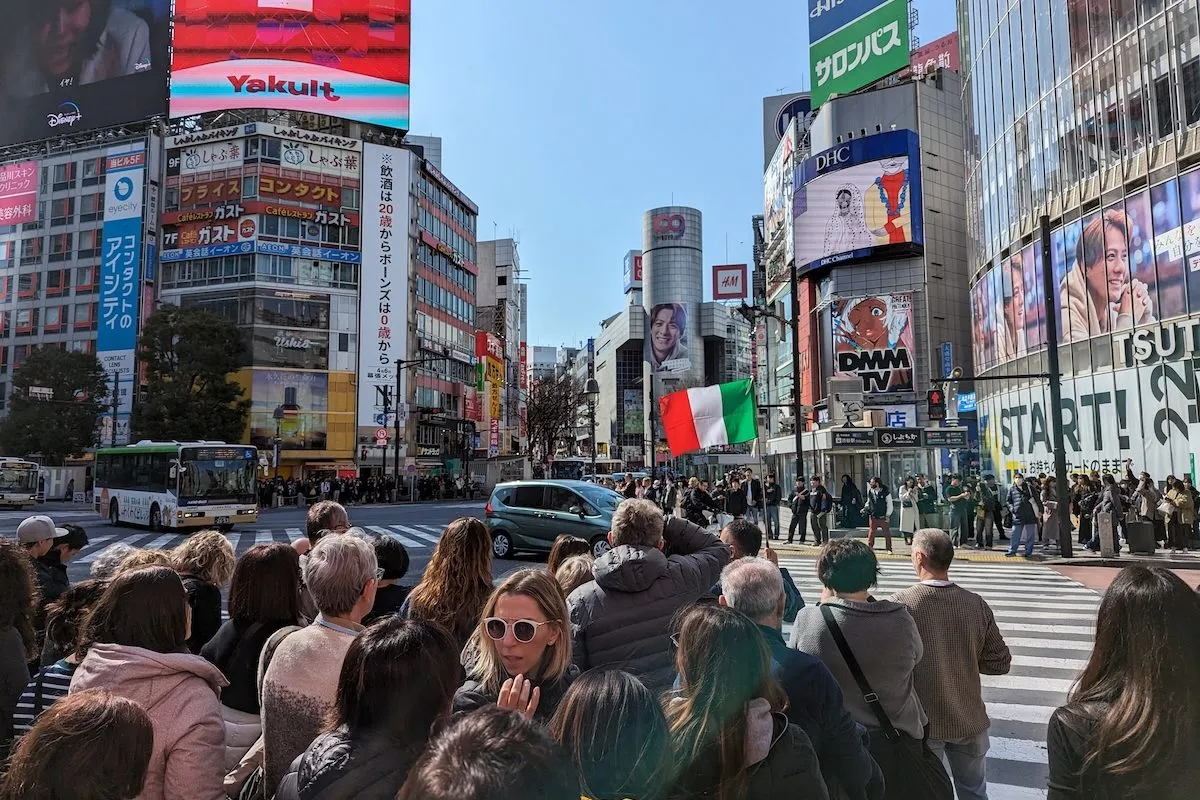
The long-standing dominance of the United States as the premier destination for international long-haul travelers is facing its most significant challenge in recent history. According to new research presented by Brand USA during its board of directors meeting on Tuesday, November 10, 2026, the competitive gap between the U.S. and its global rivals has narrowed to a critical point. Most notably, Japan has emerged as the primary challenger, successfully overtaking the United States in traveler preference during several key months in 2026.
The findings, shared by Chelsea Benitez, Senior Director of Research and Analytics at Brand USA, signal a pivot in global tourism dynamics. While the United States continues to hold a slim lead in year-to-date metrics, the momentum has shifted toward East Asia. Benitez noted that while the U.S. maintained a comfortable lead of more than eight percentage points over Japan as recently as January 2025, that advantage has since evaporated. Data from August and October 2026 revealed that Japan finished ahead of the U.S. in terms of traveler intent and preference across several key international markets.
A Statistical Shift in Global Travel Intent
The research presented by Brand USA is derived from a comprehensive monthly survey that polls approximately 11,000 individuals across 11 critical source markets. These markets—Argentina, Australia, Brazil, Canada, France, Germany, India, Japan, Mexico, South Korea, and the United Kingdom—represent the backbone of the U.S. international inbound tourism sector.
The erosion of the U.S. lead has been gradual but persistent. In early 2025, the U.S. was buoyed by a post-pandemic surge and a perceived "bucket list" status among global travelers. However, as 2026 progressed, the "Japan factor" became impossible to ignore. The data suggests that Japan is no longer just a regional favorite in Asia but has become the "most direct competitor" for the long-haul international traveler, according to Benitez. This shift is particularly striking given the geographic distance and different value propositions offered by the two nations.
The Rise of Japan: Economic and Cultural Drivers
Analysts point to several factors contributing to Japan’s surge in the rankings. A primary driver throughout 2025 and 2026 has been the relative weakness of the Japanese Yen against the U.S. Dollar and the Euro. This currency fluctuation has made Japan an exceptionally high-value destination for Western travelers, offering world-class infrastructure, hospitality, and dining at a fraction of the cost found in major U.S. gateway cities like New York, Los Angeles, or San Francisco.
Furthermore, Japan has benefited from a concerted "Cool Japan" marketing push and a reputation for safety and cleanliness—factors that have become increasingly important to post-pandemic travelers. The Japanese National Tourism Organization (JNTO) has also expanded its reach into markets like Brazil and Mexico, which were traditionally strongholds for U.S. tourism.
In contrast, the U.S. has grappled with high inflation in the hospitality sector. The rising costs of hotel stays, domestic airfare, and dining have created a "price barrier" for middle-class travelers from markets like Argentina and Brazil, where local currencies have struggled against the dollar.
Chronology of the Decline in U.S. Dominance
To understand the current state of the market, it is necessary to look at the timeline of traveler sentiment over the last 24 months:
- January 2025: The U.S. holds a commanding 8.5 percentage point lead over Japan. Travel sentiment is high following the full restoration of flight capacities from Europe and South America.
- Summer 2025: The lead narrows to 5 percentage points. Reports of long visa wait times in India and Mexico begin to impact future travel intent.
- January 2026: The gap closes to 3 percentage points. Japan announces new tourism initiatives focusing on "off-the-beaten-path" destinations to combat overtourism in Tokyo and Kyoto, increasing its appeal to repeat travelers.
- August 2026: For the first time in the survey’s recent history, Japan surpasses the United States in traveler preference for the month.
- October 2026: Japan again finishes ahead of the U.S., confirming that the August peak was not an anomaly but a trend.
Barriers to Entry: Visas and Safety Concerns
During the board meeting, discussions touched upon the structural barriers that continue to hinder U.S. competitiveness. Chief among these is the ongoing struggle with U.S. visa processing times. In key growth markets like India, prospective travelers often face wait times for interview appointments that stretch into several months or even a year.
"When a traveler in Mumbai or Mexico City decides they want to take a luxury vacation, they look at the friction involved," said a tourism industry analyst following the meeting. "If the U.S. requires a year-long wait for a visa but Japan or the Schengen Area offers a more streamlined process, the U.S. loses that economic injection immediately."

Safety perceptions also play a significant role. The Brand USA research indicated that concerns regarding gun violence and urban safety in the United States remain a deterrent for families, particularly from Western Europe and East Asia. While the U.S. remains a top-tier destination for "adventure" and "nature" (National Parks), its "urban appeal" has taken a hit compared to the perceived safety of Japanese cities like Tokyo and Osaka.
Market-Specific Trends
The data from the 11 surveyed markets reveals a nuanced picture of where the U.S. is losing its grip:
- India: While interest in the U.S. remains high due to VFR (Visiting Friends and Relatives) traffic, Japan has made massive inroads with the younger "Gen Z" and Millennial demographic who are drawn to Japanese pop culture and tech-tourism.
- Australia: The U.S. and Japan are in a dead heat for Australian travelers. The proximity of Japan and the lack of jet lag make it an attractive alternative to the grueling trans-Pacific flight to the U.S. West Coast.
- Brazil and Argentina: Economic volatility in South America has made the U.S. a "luxury-only" destination for many, whereas Japan’s current affordability has made it a viable, albeit distant, alternative for those seeking a "once-in-a-lifetime" trip.
- United Kingdom and Germany: These markets remain relatively loyal to the U.S., but there is a growing trend toward "secondary" U.S. markets. However, Japan’s unique cultural offering is increasingly siphoning off travelers who have already visited the U.S. multiple times.
Official Responses and Strategic Adjustments
In response to the narrowing gap, Brand USA is expected to refine its marketing strategy for the 2027 fiscal year. The organization, which acts as the public-private partnership responsible for promoting the U.S. as a premier travel destination, is likely to lean heavily into the "diversity of experience" that the U.S. offers.
Fred Dixon, who took over as CEO of Brand USA in 2024, has previously emphasized the need to showcase the U.S. beyond its major gateways. The board meeting discussions suggested a shift toward promoting the "U.S. Heartland" and outdoor recreation to counter Japan’s urban appeal.
"We have to remind the world that the United States is not just a destination, but a collection of 50 different destinations," one board member noted during the session. "Japan is a formidable competitor because it offers a cohesive, high-quality brand. Our challenge is to present a cohesive American brand that still celebrates our regional diversity."
Industry advocates, including the U.S. Travel Association, have used this data to renew calls for federal intervention regarding visa wait times and Customs and Border Protection (CBP) staffing. They argue that marketing can only do so much if the "entry experience" remains a point of frustration for international visitors.
Broader Economic Implications
The stakes for the U.S. economy are significant. International travel is a top service export for the United States. In 2019, prior to the pandemic, international visitors spent $233 billion in the U.S., supporting over one million jobs. If the U.S. continues to lose market share to Japan and other emerging destinations, the economic impact could be felt across the airline, hospitality, and retail sectors.
Moreover, the U.S. is preparing to host a series of "Mega Events" in the coming years, including the 2026 FIFA World Cup (set to take place in various cities across North America shortly) and the 2028 Summer Olympics in Los Angeles. Industry leaders are concerned that if the current downward trend in traveler intent is not reversed, the U.S. may not fully capitalize on the global spotlight these events provide.
Conclusion: A Competitive Road Ahead
The Brand USA report serves as a wake-up call for the American tourism industry. The era of the United States being the "default" choice for the global traveler appears to be ending, replaced by a more competitive and price-sensitive landscape.
Japan’s rise to the top of the rankings in August and October 2026 is a testament to the power of value, safety, and strategic cultural exports. For the United States to reclaim its undisputed lead, it will likely need to address not only its marketing tactics but also the systemic hurdles—from visa processing to perceived safety—that currently weigh down its appeal on the global stage. As the 2027 travel season approaches, all eyes will be on whether the U.S. can leverage its upcoming sporting events to pivot back to growth, or if Japan will solidify its new position as the world’s favorite long-haul destination.