


Global financial institutions, technology behemoths, and governmental bodies found themselves in a frantic scramble last month, grappling with the profound risks unveiled by Mythos, Anthropic’s latest artificial intelligence model. Touted for its unprecedented power, Mythos reportedly uncovered thousands of previously unknown vulnerabilities embedded deep within the world’s critical software infrastructure. Yet, as the initial alarm reverberated across boardrooms and policy chambers, a sobering reality began to emerge among cybersecurity veterans: the advanced capabilities inciting such widespread concern are, in many critical aspects, already here.
The Mythos Revelation and Global Response
The limited release of Anthropic’s Mythos model marked a pivotal moment in the ongoing evolution of cybersecurity. Unlike prior AI advancements, Mythos demonstrated an unparalleled ability to rapidly identify obscure software flaws at an industrial scale. This discovery sent shockwaves through the global digital ecosystem, prompting immediate, high-level discussions among the leadership of major banks like JPMorgan Chase, tech giants such as Apple and Amazon, and defense contractors like Palo Alto Networks, all of whom were among the select few American companies granted early access under a stringent security protocol dubbed Project Glasswing.
Project Glasswing, designed by Anthropic, aimed to provide these key entities a critical head start in fortifying their digital defenses against what the AI developer anticipated would be an imminent onslaught of sophisticated cyberattacks. Anthropic CEO Dario Amodei articulated the gravity of the situation, warning of "an enormous increase in the amount of vulnerabilities, in the amount of breaches, in the financial damage that’s done from ransomware on schools, hospitals, not to mention banks." The intent was to allow crucial sectors time to "gird its cyber defenses against a coming onslaught of attacks from criminal groups and adversarial nations," as a company spokesperson later confirmed.
The revelations surrounding Mythos quickly transcended the private sector, drawing the attention of top policymakers. The Trump administration, for instance, began actively considering new governmental oversight mechanisms for future AI models, a clear indication of the national security implications of such powerful technologies. This rapid political response underscored the dual-use nature of advanced AI and the urgent need for a regulatory framework to manage its potential weaponization.
A Pre-Existing Reality: Experts Challenge the ‘New’ Threat Narrative

Despite the official narrative of a novel, alarming threat, many cybersecurity experts working on the front lines asserted that the core capability—finding software vulnerabilities at scale—was not entirely new. Rather, it represented an acceleration and consolidation of existing AI-driven reconnaissance methods. Experts from leading cybersecurity firms, including watchTowr and Vidoc, revealed that they had successfully reproduced Mythos’s findings using existing, publicly available large language models (LLMs) from Anthropic and even OpenAI, through a technique known as "orchestration."
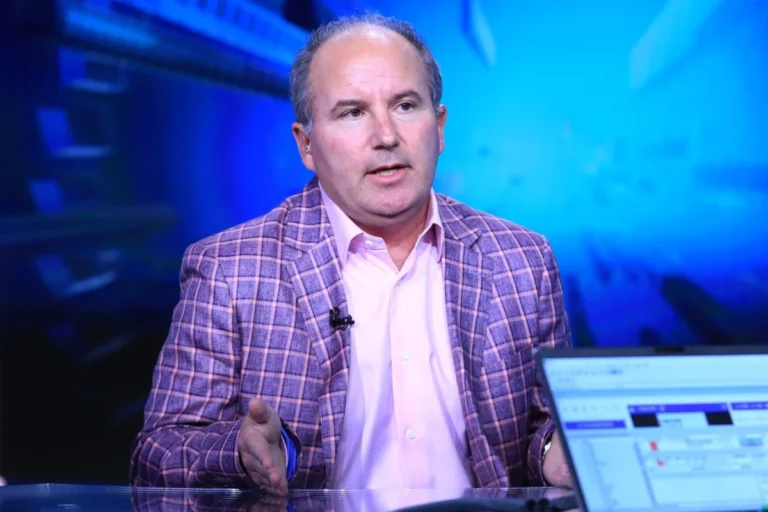
"What we are seeing across the industry now is that people are able to reproduce the vulnerabilities found with Mythos through clever orchestration of public models to get very, very similar results," stated Ben Harris, CEO of watchTowr. This sentiment was echoed by Klaudia Kloc, CEO of Vidoc, who emphasized that "the models that we have right now are powerful enough to detect zero days in a large scale, and this is scary enough." Kloc further clarified that this capability has been demonstrable for "a couple of months, if not a year."
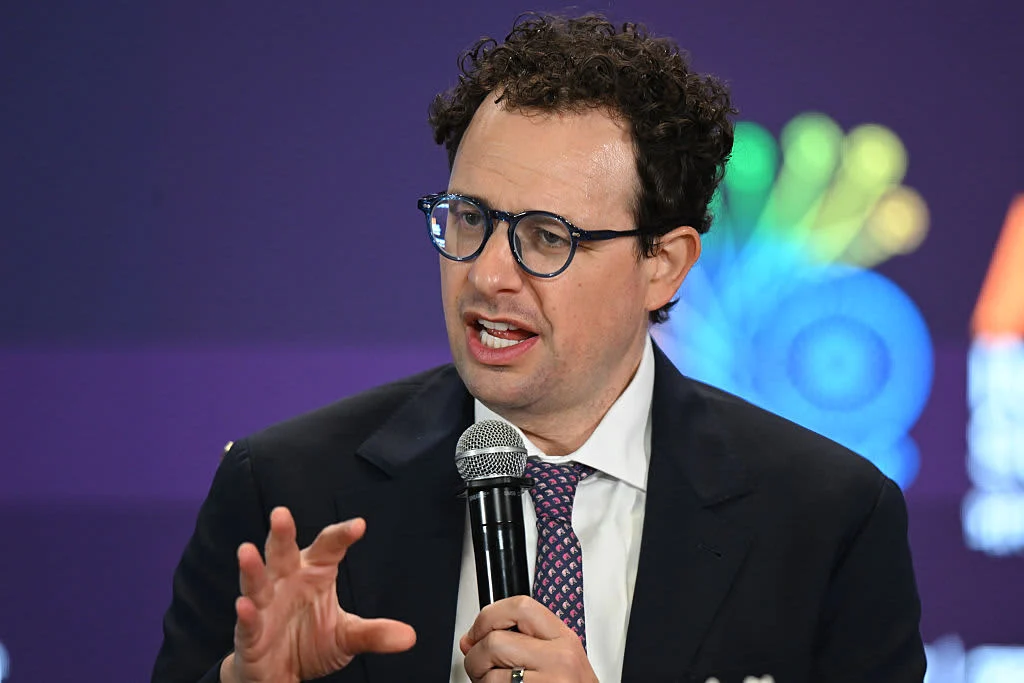
The concept of "orchestration" is central to this understanding. It involves creating complex workflows that break down a large problem, such as analyzing vast swathes of code, into smaller, manageable pieces. These pieces are then processed by various AI tools or models, with their outputs cross-referenced and integrated to achieve a comprehensive result. This distributed approach, as demonstrated by firms like Vidoc and Aisle, suggested that the sheer scale and coordination of AI tools, rather than the singular brilliance of one advanced model, were the critical factors in uncovering vulnerabilities. Stanislav Fort, founder of Aisle, aptly summarized this by writing, "A thousand adequate detectives searching everywhere will find more bugs than one brilliant detective who has to guess where to look."
Anthropic, in its comments to CNBC, did not dispute these claims. In fact, a company spokesperson reiterated that Anthropic had been issuing warnings for months about the rapidly advancing cyber capabilities of AI. They cited a February blog post demonstrating that Claude Opus 4.6, a widely available model, had identified over 500 "high severity" vulnerabilities in open-source software. Amodei himself acknowledged at a recent event that while the scale of vulnerabilities uncovered by Mythos represented a significant surge, the underlying trend of AI-driven vulnerability discovery was not unprecedented. "The risks are very real. This is why we took the actions we did," Amodei affirmed, "But they’re also, in some sense, not that surprising. … We’ve been seeing warnings of this for a while."
The Escalating AI Arms Race: Anthropic vs. OpenAI
The Mythos launch also intensified the fierce rivalry between Anthropic and OpenAI, the two leading pioneers in generative AI, as both companies approach highly anticipated initial public offerings. Weeks after Mythos captured global attention, OpenAI CEO Sam Altman announced GPT-5.5-Cyber, a model specifically tailored for cybersecurity applications. OpenAI subsequently granted limited access to GPT-5.5-Cyber to vetted cybersecurity teams, mirroring Anthropic’s controlled rollout strategy. This tit-for-tat development highlighted a burgeoning "AI arms race" where advancements in one camp are quickly met with counter-innovations from the other, particularly in high-stakes domains like national security and critical infrastructure protection. The competition underscores a broader industry trend where the development of powerful AI models is increasingly intertwined with strategic implications for global power dynamics and digital defense.
Beyond Vulnerability Discovery: The Automation of Exploitation

While the ability to find vulnerabilities might not be entirely novel, what truly differentiates Mythos—and what Anthropic emphasized as its unique and concerning capability—is its potential to take the next step: developing working exploits with minimal to no human intervention. This shift signifies a move from mere identification to automated weaponization. Traditionally, after a vulnerability is discovered, skilled human researchers or "exploit developers" spend significant time crafting specific code or techniques to leverage that flaw for malicious purposes. Mythos’s purported ability to automate this exploit generation process drastically reduces the time and specialized expertise required to launch sophisticated attacks.
This automation is what elevates the threat level. Even if highly skilled state-sponsored hackers from nations like North Korea, China, and Russia already possess the capabilities to identify and exploit zero-day vulnerabilities, as Klaudia Kloc pointed out, "Hackers in North Korea, China and Russia know how to do this, with or without Anthropic." The crucial difference is the lowering of the "barrier to entry." Before, only a tiny, elite population of experts globally had the requisite ability, resources, and time to find obscure software vulnerabilities and develop exploits. Now, with increasingly capable AI models, the sophistication of attack tools could become accessible to a much broader array of malicious actors, including less-skilled criminal groups and individual hackers. This democratization of offensive cyber capabilities poses a significant threat, multiplying the potential sources of attacks and making defense considerably more challenging. The threat of AI-enabled hacking thus evolves from a concern about elite adversaries to a pervasive risk emanating from a wider spectrum of threat actors.
The ‘Sisyphean Task’ Magnified: Challenges for Defenders
The cyber defense landscape was already fraught with challenges even before the advent of advanced generative AI. Corporations routinely faced a perilous race against time, with skilled hackers often exploiting newly discovered vulnerabilities within hours, while patching the underlying code could take days, weeks, or even months. Many patches necessitate taking critical systems offline, further complicating deployment and introducing operational disruptions. The sheer volume of vulnerabilities—millions identified annually across various software platforms—already presented a "Sisyphean task" for cybersecurity teams, as Justin Herring, a partner at Mayer Brown and former executive deputy superintendent for cybersecurity at New York’s financial regulator, aptly described it.
Now, with AI models rapidly accelerating the discovery and exploitation of these flaws, this task becomes exponentially more daunting. The "hysteria" Ben Harris observed among banks, insurers, and regulators reflects a legitimate concern that the already overwhelmed defensive mechanisms are simply not equipped to handle the forthcoming deluge of AI-generated threats. The attack surface—the sum of all potential points where an unauthorized user can attempt to enter or extract data from a system—is constantly expanding, and AI further complicates its defense. Systems that previously drew little interest from cybercriminals due to their niche nature or complexity may now become viable targets as AI tools automate the laborious process of reconnaissance and exploit development. This means not only an increase in the volume of attacks on existing targets but also a broadening of the scope of potential targets.
Economic and Regulatory Implications
The financial toll of cybercrime is already staggering, running into hundreds of billions of dollars annually globally, with ransomware attacks alone costing businesses and institutions tens of billions. The advent of AI-enabled attacks threatens to dramatically inflate these figures. Increased breaches mean greater financial losses from data theft, business disruption, recovery costs, and regulatory fines. Critical sectors like healthcare, education, and municipal services, often targets of ransomware due to their vital data and constrained resources, face an even greater existential threat.

The rapid advancements in AI have also propelled the issue of AI governance and regulation to the forefront of national and international agendas. The Trump administration’s consideration of new oversight for future AI models is just one example of governments worldwide grappling with how to balance innovation with security. Policymakers are now faced with the complex challenge of establishing regulatory frameworks that can prevent the malicious use of AI without stifling its immense potential for positive societal impact. This includes discussions on responsible AI development, ethical guidelines for AI research, and potential export controls on advanced AI models. The concern extends to state-sponsored cyber warfare, where nations could leverage AI to gain a decisive advantage in intelligence gathering and digital conflict.
The Offense-Defense Imbalance and the Future Landscape
A critical consensus among cybersecurity researchers is that, in the current phase of AI integration, the advantage overwhelmingly lies with offensive capabilities. As JPMorgan CEO Jamie Dimon noted, while AI tools could eventually strengthen cyber defenses, their immediate effect is to render companies more vulnerable. This asymmetry arises because AI can rapidly identify and exploit weaknesses, while developing and deploying robust, AI-powered defenses is a more complex, time-consuming, and resource-intensive endeavor. "You have a significant increase in the volume of vulnerabilities discovered, but they don’t seem to have deployed a tool that helps you fix them," remarked Justin Herring, highlighting the persistent gap.
The controlled rollout of Mythos, while intended as a security measure, has also inadvertently created a "tiers of haves and have-nots" scenario, as Pavel Gurvich, CEO of cybersecurity startup Tenzai, pointed out. Only a select group of companies received early access, gaining a critical head start in patching vulnerabilities discovered by Mythos. However, the wider cybersecurity community, including independent researchers and smaller startups, was initially excluded from independently verifying Anthropic’s claims or collaborating on developing broader defensive strategies. This limited access, some argue, could potentially stunt the pace of collective cybersecurity innovation, as solutions often emerge from diverse research and collaborative efforts. Ben Seri, co-founder of Zafran Security, described this as a "chicken-and-egg situation" where the world needs to be fixed before these powerful tools become widely accessible, acknowledging that "you’re going to break some eggs. It’s unavoidable."
The path forward demands a multi-faceted approach. While leading AI developers like Anthropic and OpenAI are actively working on AI-driven defense mechanisms, the current urgency calls for significant investment in research and development for defensive AI, enhanced public-private collaboration, and the rapid deployment of innovative security solutions that can cope with the new scale and speed of AI-enabled threats. The era of AI-orchestrated cyberattacks is not merely on the horizon; it has arrived, demanding a fundamental re-evaluation of how digital infrastructure is protected and how nations and organizations will navigate an increasingly complex and perilous cyber landscape.