

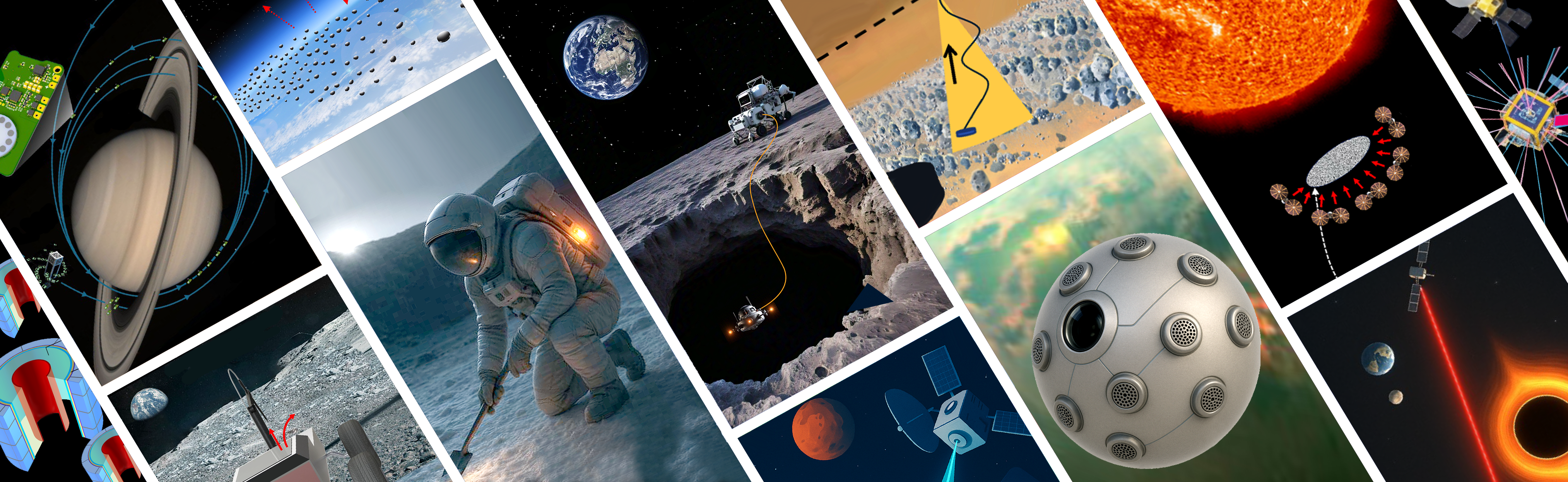
Washington D.C. – On July 29, 2026, the National Aeronautics and Space Administration (NASA) announced a significant investment in its future capabilities, awarding 18 new Phase I grants totaling $3.2 million through its NASA Innovative Advanced Concepts (NIAC) program. These awards are designed to foster groundbreaking, early-stage technological concepts that could revolutionize aerospace engineering, from enhancing lunar and Martian exploration to deepening humanity’s understanding of the cosmos and addressing Earth-centric challenges. Each of the 18 selected projects will receive up to $175,000 for a nine-month initial investigation, providing crucial seed funding for ideas that, while not yet official NASA missions, hold the potential for transformative impact.
The NIAC program, a cornerstone of NASA’s Research and Technology Mission Directorate, serves as an innovation incubator, identifying and nurturing concepts that could lead to "great leaps" rather than incremental advancements. Greg Stover, director of the Advanced Research and Technology division at NASA Headquarters, underscored the agency’s ambitious trajectory. "NASA has outlined an ambitious vision for the future of space exploration; we’re returning to the Moon to stay, advancing to Mars, and pushing to deepen our understanding of space," Stover stated. "Achieving that will require more than incremental technological advancement. It means we need great leaps. These awards are the kinds of innovation the world needs NASA to help foster." This sentiment highlights NASA’s strategic imperative to cultivate disruptive technologies necessary to overcome the profound challenges inherent in sustained human presence beyond Earth and increasingly complex scientific endeavors.
The Strategic Imperative: Fostering Transformative Technologies
The NIAC program operates on the principle that today’s audacious ideas can become tomorrow’s mission-critical technologies. Unlike traditional mission-driven research, NIAC specifically targets concepts that are far-reaching and potentially disruptive, often decades away from implementation. This approach allows researchers, known as NIAC Fellows, to explore high-risk, high-reward ideas without the immediate pressure of mission deadlines or existing technological constraints. The program seeks out proposals with both transformative potential and a credible path towards eventual feasibility, ensuring that while concepts are futuristic, they are grounded in scientific and engineering principles.
Phillip Williams, NIAC’s acting program executive, eloquently described the program’s role: "Every innovation, every leap in technology, starts with a seed of an idea. The NIAC program allows NASA to germinate those seeds and determine if there’s something that could be grown to benefit future space missions and our nation’s aerospace economy." This "seed" metaphor encapsulates the program’s foundational role in the agency’s long-term planning, recognizing that the biggest breakthroughs often begin as speculative concepts requiring initial investment to mature.
The 2026 Phase I selections reflect a broad spectrum of challenges and opportunities across NASA’s strategic goals, encompassing lunar infrastructure development, advanced planetary exploration, deep space science, and Earth observation. The diverse array of projects underscores the multidisciplinary nature of space exploration and the need for innovation across numerous scientific and engineering domains.
Charting the Future of Lunar Exploration and Infrastructure
As NASA and its international partners accelerate efforts towards a sustained lunar presence under the Artemis program, several of the 2026 NIAC awardees are focused on critical technologies for exploring the Moon and building its future infrastructure. These concepts are directly aligned with the agency’s "Moon to Mars" vision, which posits the Moon as a crucial proving ground and staging post for future human missions to the Red Planet.
Among the pioneering lunar concepts is a proposed system to support hovering robots designed to explore the enigmatic lava tubes beneath the Moon’s surface. These subterranean networks, potentially formed by ancient volcanic activity, are of immense scientific interest as they could harbor pristine geological records, water ice, or even provide natural shelters for future human habitats, protecting astronauts from radiation and extreme temperature swings. Developing robots capable of navigating these complex, unlit environments without direct contact with the surface presents significant engineering hurdles, which this NIAC concept aims to address. The ability to hover could overcome challenges posed by uneven terrain, deep pits, and loose regolith, enabling unprecedented access to these geological wonders.
Another critical area of focus is thermal management for small mobile exploration robots. Lunar environments are characterized by extreme temperature fluctuations; daytime temperatures can soar above 100°C (212°F), while the two-week-long lunar night plunges temperatures to below -170°C (-274°F). Maintaining operational temperatures for delicate electronic components and sensitive instruments on small, agile robots is a formidable challenge. The NIAC-funded concept aims to develop innovative methods to manage these extremes, ensuring prolonged operational capability and maximizing scientific return from these robotic scouts. Efficient thermal management is vital not only for small robots but also for any future sustained presence on the Moon, impacting everything from power systems to human habitats.
Furthermore, a groundbreaking concept proposes incorporating radioisotopic heat sources directly into astronaut suits. The lunar night, lasting approximately 14 Earth days, presents an existential threat to humans due to the extreme cold. While existing suit designs offer insulation, prolonged exposure during extravehicular activities (EVAs) in deep shadow or during the lunar night necessitates supplementary heating. Radioisotopic heat sources, which generate heat through the natural decay of radioactive isotopes, offer a compact and reliable solution. This technology could dramatically extend the duration and range of astronaut operations in frigid lunar conditions, enhancing scientific exploration and enabling critical construction or maintenance tasks during the lunar night. The safe and effective integration of such sources into advanced spacesuits represents a significant step forward in astronaut survivability and operational flexibility.
Pushing the Boundaries of Solar System Exploration
Beyond the Moon, NIAC awardees are also looking to tackle some of the solar system’s most formidable environments and scientific mysteries. Venus, Earth’s enigmatic sister planet, presents an imposing challenge for research vehicles due to its crushing atmospheric pressure, corrosive sulfuric acid clouds, and surface temperatures hot enough to melt lead. Prolonged missions to Venus are exceptionally difficult, with most probes succumbing rapidly to the extreme conditions. One NIAC awardee is exploring novel methods for hardening instruments and spacecraft components to withstand these punishing conditions for longer durations. Breakthroughs in this area could unlock unprecedented opportunities for in-depth study of Venus’s atmosphere, geology, and potential for past habitability, which remains a key area of planetary science.
Planetary rings, such as those famously circling Saturn, Uranus, and Neptune, are dynamic laboratories for understanding planet formation and dynamics. Two distinct NIAC concepts aim to revolutionize the study of these magnificent structures. One ambitious project envisions deploying a swarm of up to 10,000 tiny satellites, or "nanosats," to precisely map and analyze the rings of Saturn. This distributed sensor network could gather unprecedented spatial and temporal data on ring particle distribution, composition, and dynamics, revealing insights into their formation and evolution. Such a swarm could detect subtle gravitational perturbations, observe transient phenomena, and build a comprehensive 3D model of the rings with unparalleled detail.
Complementing this, another concept focuses on creating a sophisticated system for collecting samples directly from planetary rings. While flybys and orbiters have provided invaluable remote sensing data, direct sample return from a ring system would offer a treasure trove of information about the primordial materials that formed the outer solar system. Such a system would need to contend with high-velocity impacts from ring particles, navigate complex orbital mechanics, and employ advanced robotic manipulation to acquire and safely store samples. Success in this area could fundamentally alter our understanding of planetary system formation and the composition of these iconic cosmic features.
Unveiling the Universe and Safeguarding Earth
The scope of NIAC’s vision extends far beyond our immediate cosmic neighborhood, with several projects addressing profound questions about the universe and even directly impacting life on Earth. Some awardees are exploring innovative ways to power interstellar spacecraft, a grand challenge that requires breakthroughs in propulsion technology to achieve meaningful speeds for traversing the vast distances between stars. Concepts might include advanced nuclear propulsion, antimatter drives, or novel beam-driven propulsion systems, pushing the very limits of physics and engineering. These long-term visions, while aspirational, lay the groundwork for humanity’s eventual journey to other star systems.
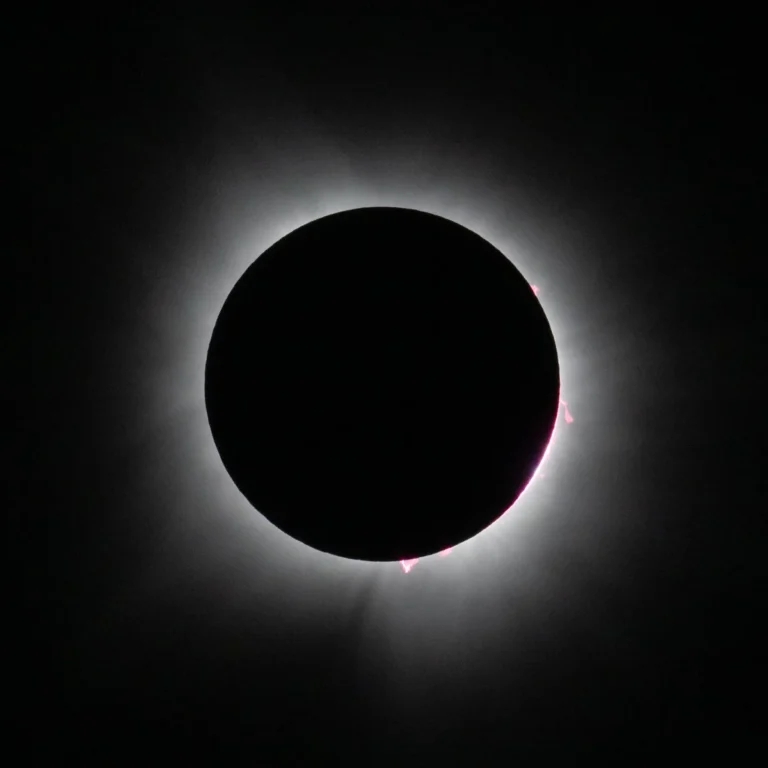
Further pushing the boundaries of astronomical observation, other concepts aim to map out continents on exoplanets, observe the photon rings around black holes, and detect subtle gravitational waves. Mapping exoplanet continents would represent a monumental leap in characterizing potentially habitable worlds, moving beyond mere detection to understanding surface features and atmospheric dynamics. Observing the photon ring around a black hole, a phenomenon predicted by general relativity where light orbits the black hole multiple times before escaping or being captured, would offer a unique test of extreme gravity and black hole physics, building upon recent triumphs in black hole imaging. Meanwhile, detecting and analyzing subtle gravitational waves could unlock new insights into the formation and evolution of galaxies, providing a new window into the early universe and the most cataclysmic cosmic events.
Closer to home, some NIAC projects are directly addressing critical issues for life on Earth. One concept investigates the potential use of spaceborne dust to reduce solar radiation, a form of geoengineering that could help mitigate climate change by slightly dimming the sun. While highly speculative and with significant ethical and practical considerations, such concepts highlight the diverse range of problems NIAC is willing to explore. Another crucial area of research involves enhancing awareness and mitigation strategies for space debris orbiting Earth. With thousands of defunct satellites, rocket bodies, and fragments threatening operational spacecraft, developing better tracking, prediction, and removal technologies is paramount for ensuring the long-term sustainability of space activities.
The NIAC Program: A Legacy of Innovation
The NIAC program, re-established in 2011 after an initial run as the NASA Institute for Advanced Concepts from 1998 to 2007, has a proven track record of identifying and nurturing nascent technologies. Its multi-phase structure is designed to progressively mature concepts:
- Phase I: Provides initial funding (up to $175,000 for nine months) for basic feasibility studies and concept development. This is the stage for the 18 new awards.
- Phase II: Offers further funding (up to $600,000 for two years) for concepts that successfully complete Phase I and demonstrate significant promise, allowing for more detailed design, analysis, and proof-of-concept work.
- Phase III: A rare opportunity for highly mature NIAC concepts to receive additional funding (up to $2 million for two years) to transition directly into a NASA mission directorate, a commercial product, or another government program.
This phased approach ensures that only the most promising and technically sound ideas advance, maximizing the return on investment in early-stage research. Historically, NIAC has supported concepts that have later evolved into critical technologies for missions across NASA’s portfolio, from advanced propulsion systems to innovative robotics and new observation platforms. For example, concepts related to small satellite propulsion, deployable structures, and autonomous systems have often found their way into mainstream NASA programs or inspired commercial ventures. The program’s success is measured not just by the scientific papers produced, but by the tangible impact these "germinated seeds" have on the agency’s capabilities and the broader aerospace economy.
Looking Ahead: The Role of NIAC Fellows
The researchers, known as NIAC Fellows, who have been granted these Phase I awards, are now tasked with the challenging yet exhilarating work of investigating their concepts. Their nine-month initial investigations will involve rigorous analysis, preliminary design, and the identification of potential technical hurdles and opportunities for further development. This foundational work is crucial for determining the viability and long-term potential of these visionary ideas.
The selection process for NIAC awards is highly competitive, drawing proposals from universities, NASA centers, and private industry across the United States. The proposals undergo a rigorous peer review process by technical experts to assess their originality, transformative potential, and feasibility. This ensures that only the most innovative and scientifically sound ideas receive funding.
The 2026 NIAC Phase I grants are more than just financial awards; they are an affirmation of NASA’s enduring commitment to innovation, exploration, and pushing the boundaries of what is possible. By investing in these far-reaching concepts, NASA is not only preparing for its next generation of missions but also inspiring a new generation of scientists and engineers to dream big and tackle the grand challenges of the universe. The insights gained from these studies will undoubtedly shape the trajectory of space exploration for decades to come, bringing humanity closer to understanding our place in the cosmos and unlocking the full potential of space for the benefit of all.