

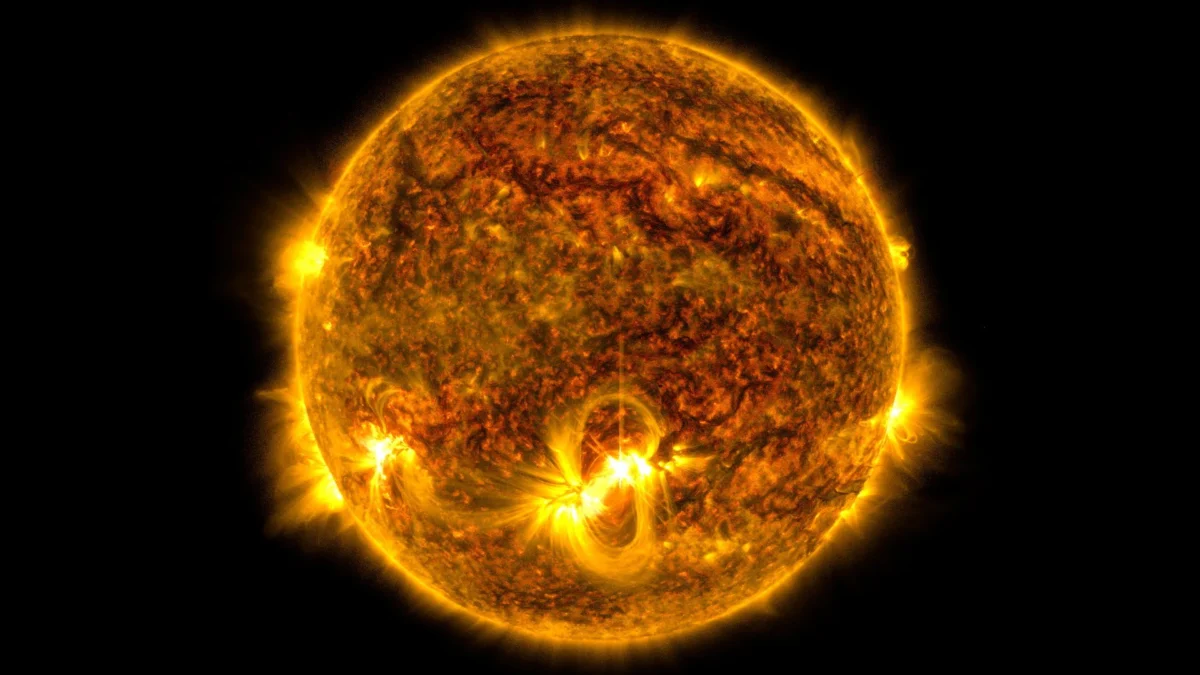
The month of August 2026 is poised to deliver an extraordinary series of astronomical events, offering skywatchers across the globe an unparalleled opportunity to witness some of the cosmos’s most dramatic displays. From the rare grandeur of a total solar eclipse to the ethereal glow of a deep partial lunar eclipse, complemented by the annual meteor shower and the brilliant prominence of Venus, this August is shaping up to be a landmark period for celestial observation. This convergence of phenomena underscores the dynamic nature of our solar system and provides a rich tapestry for both amateur astronomers and the general public to engage with the universe.
The Grand Spectacle: A Total Solar Eclipse on August 12
The month’s astronomical calendar kicks off with one of the most anticipated events: a total solar eclipse occurring on August 12. This celestial alignment, where the Moon perfectly obscures the Sun, will cast a shadow across a significant swathe of the Northern Hemisphere, offering a breathtaking experience for those within the narrow path of totality. The phenomenon itself is a testament to a remarkable cosmic coincidence: the Moon, despite being approximately 400 times smaller than the Sun, is also roughly 400 times closer to Earth, allowing it to precisely cover the solar disk during an eclipse.
The path of totality for the August 2026 eclipse will begin its journey over the remote Arctic, sweeping across parts of northern Russia, Greenland, and Iceland, before making its dramatic descent across northern Spain and a small corner of Portugal. In these regions, observers will experience several minutes of midday darkness, witnessing the Sun’s ethereal corona – its outermost atmosphere – which is typically hidden by the star’s brilliant face. For instance, in parts of Iceland, totality could last for over two minutes, while in northern Spain, the duration might extend to nearly three minutes, offering a substantial window for observation and scientific study. The specific timing for maximum totality in key locations includes:
- Reykjanesbær, Iceland: Approximately 17:47 UTC (17:47 local time), with totality lasting around 2 minutes 18 seconds.
- Vigo, Spain: Approximately 18:30 UTC (20:30 local time), with totality lasting around 1 minute 47 seconds.
- Palma, Spain (Mallorca): Approximately 18:32 UTC (20:32 local time), with totality lasting around 1 minute 38 seconds.
Beyond the path of totality, a much wider area will experience a partial solar eclipse. This includes large portions of Europe, parts of Africa, and crucially, significant regions of North America, stretching from Alaska eastward to North Carolina. In these areas, the Moon will appear to take a "bite" out of the Sun, with the extent of coverage varying significantly by geographical location. For observers in Alaska, a substantial portion of the Sun might be obscured, creating a noticeable dimming of daylight. Conversely, in regions further east, such as North Carolina, the Moon’s obscuration will be much less pronounced, perhaps just a slight indentation on the solar limb. Regardless of the degree of partiality, the fundamental principles of solar observation safety remain paramount.
Prioritizing Solar Eclipse Safety: A Crucial Mandate
Observing any solar eclipse, whether total or partial, demands stringent adherence to safety protocols to prevent severe and permanent eye damage. The intense light and radiation from the Sun can cause retinal burns without proper protection, leading to scotomas (blind spots) or even complete blindness. Regular sunglasses, no matter how dark, offer insufficient protection and are never safe for direct solar viewing.
Certified eclipse glasses, meeting the ISO 12312-2 international safety standard, are the only safe way to look directly at the partially eclipsed Sun. These specialized filters block out nearly all harmful ultraviolet, visible, and infrared light. It is critical for individuals to source these glasses from reputable vendors to ensure their authenticity and effectiveness. Similarly, anyone wishing to use binoculars, telescopes, or cameras to view the eclipse must equip these optical instruments with approved solar filters designed specifically for the front of the optics. Never look through an unfiltered optical device at the Sun, even with eclipse glasses on, as the concentrated sunlight can overwhelm the protective eyewear and cause immediate damage. Public health organizations and astronomical societies worldwide, including NASA, consistently issue advisories stressing these safety measures, urging the public to prepare well in advance and prioritize eye safety above all else. NASA’s Jet Propulsion Laboratory (JPL) and other scientific bodies routinely issue guidelines emphasizing that "safe viewing is paramount for enjoying the spectacle without risk."
Scientific and Societal Implications of the Solar Eclipse
Total solar eclipses are not merely spectacular visual events; they present invaluable opportunities for scientific research. During the brief period of totality, scientists can study the Sun’s corona in unprecedented detail from Earth, gathering data that is often challenging to obtain with ground-based telescopes under normal conditions or even with space-based observatories. Research during eclipses can yield insights into the corona’s extreme temperatures, its magnetic field structures, and the mechanisms that drive solar flares and coronal mass ejections, which can impact Earth’s technology and power grids. For instance, observations during totality can help validate models of the solar wind, a stream of charged particles emanating from the corona that permeates the solar system.
Beyond science, the August 2026 eclipse is expected to generate significant tourism and economic activity in the regions within the path of totality. Hotels, transportation, and local businesses in destinations like Iceland and Spain will likely experience a surge in demand as astronomy enthusiasts and curious travelers converge to witness this rare event. This influx highlights the broader cultural impact of astronomical phenomena, fostering public interest in science and inspiring future generations of explorers and researchers. Educational institutions and planetariums will undoubtedly leverage this event for extensive outreach programs, promoting scientific literacy and safe viewing practices, often partnering with local authorities to manage crowds and ensure safety.
The Perseid Meteor Shower: A Cosmic Downpour Under Dark Skies
Later on the very same night of August 12, continuing into the early morning hours of August 13, another celestial highlight will grace the night sky: the peak of the annual Perseid meteor shower. This year, the timing is exceptionally fortuitous, as the New Moon also occurs on August 12, ensuring ideally dark skies free from lunar glare. This rare confluence of a total solar eclipse during the day and a meteor shower peak at night, all under optimal lunar conditions, makes August 12-13, 2026, an extraordinary window for skywatchers.
The Perseids are widely regarded as one of the best and most reliable meteor showers of the year, known for producing numerous bright meteors and occasional spectacular fireballs. This annual display occurs when Earth passes through a dense stream of cosmic debris left behind by Comet Swift-Tuttle. As our planet slices through this trail of dust and rocky fragments, these tiny particles—ranging in size from grains of sand to small pebbles—slam into Earth’s atmosphere at incredibly high speeds, typically around 59 kilometers per second (about 132,000 miles per hour). The immense friction generated by this rapid entry causes the particles to superheat and vaporize, creating brilliant streaks of light across the night sky, commonly referred to as "shooting stars."
Comet Swift-Tuttle, the parent body of the Perseids, is a large periodic comet with a nucleus estimated to be about 26 kilometers (16 miles) across. It orbits the Sun once every 133 years, with its last perihelion (closest approach to the Sun) occurring in 1992. Each time the comet passes through the inner solar system, it sheds a fresh trail of dusty material, replenishing the debris stream that Earth encounters annually. The consistency and density of this debris stream contribute to the Perseids’ high Zenithal Hourly Rate (ZHR), which can reach between 60 to 100 meteors per hour under optimal viewing conditions. The ZHR represents the number of meteors an observer would theoretically see per hour under perfectly dark skies, with the radiant directly overhead. This year’s New Moon ensures that fainter meteors, which might otherwise be washed out by moonlight, will be visible, potentially pushing the effective ZHR higher for casual observers.
Optimal Viewing for the Perseids
To maximize the viewing experience for the Perseids, observers should seek out a location far away from urban light pollution, ideally with an unobstructed view of the horizon. Once it is fully dark, typically an hour or two after sunset, look toward the northeast. The meteors appear to originate from a point in the sky known as the radiant, which is located within the constellation Perseus – hence the shower’s name. However, it is important to remember that meteors can flash across any part of the sky, often appearing brightest and longest away from the radiant.
Patience is key for meteor shower viewing. It takes approximately 20-30 minutes for human eyes to fully adapt to darkness, allowing fainter meteors to become visible. Lying down on a blanket or in a reclining chair can provide a comfortable viewing position, allowing observers to scan a broad expanse of the sky without neck strain. While no special equipment is needed, binoculars or a small telescope can enhance views of other celestial objects, but they are not recommended for meteor shower viewing as their narrow field of view makes it difficult to catch the fleeting streaks. Dress warmly, even on summer nights, as