

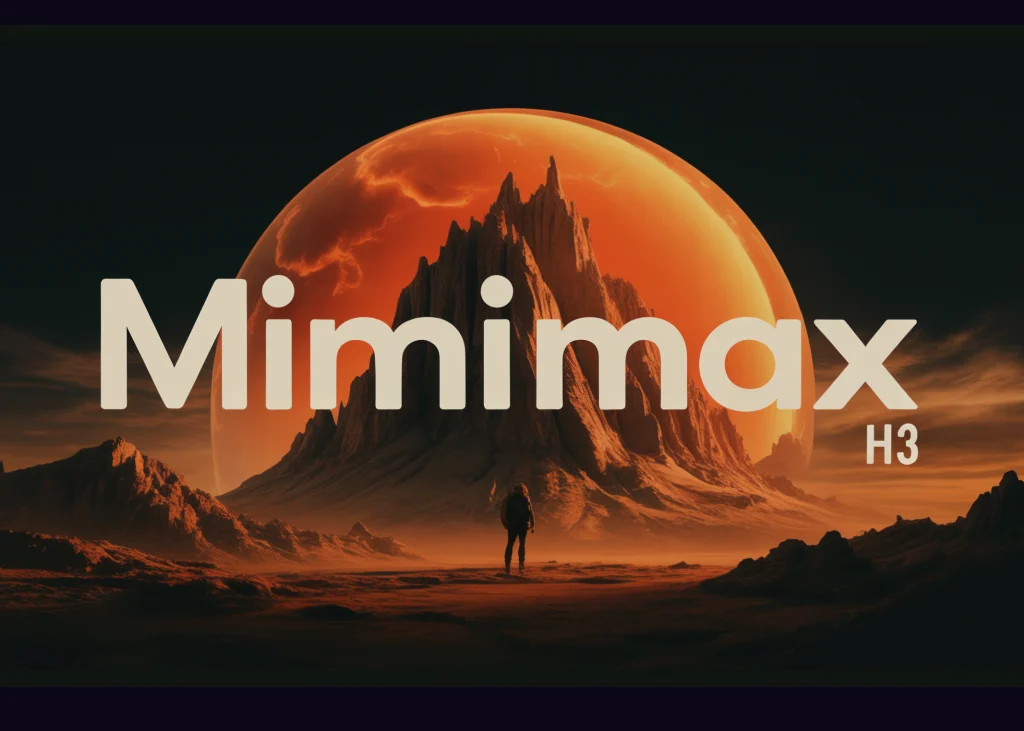
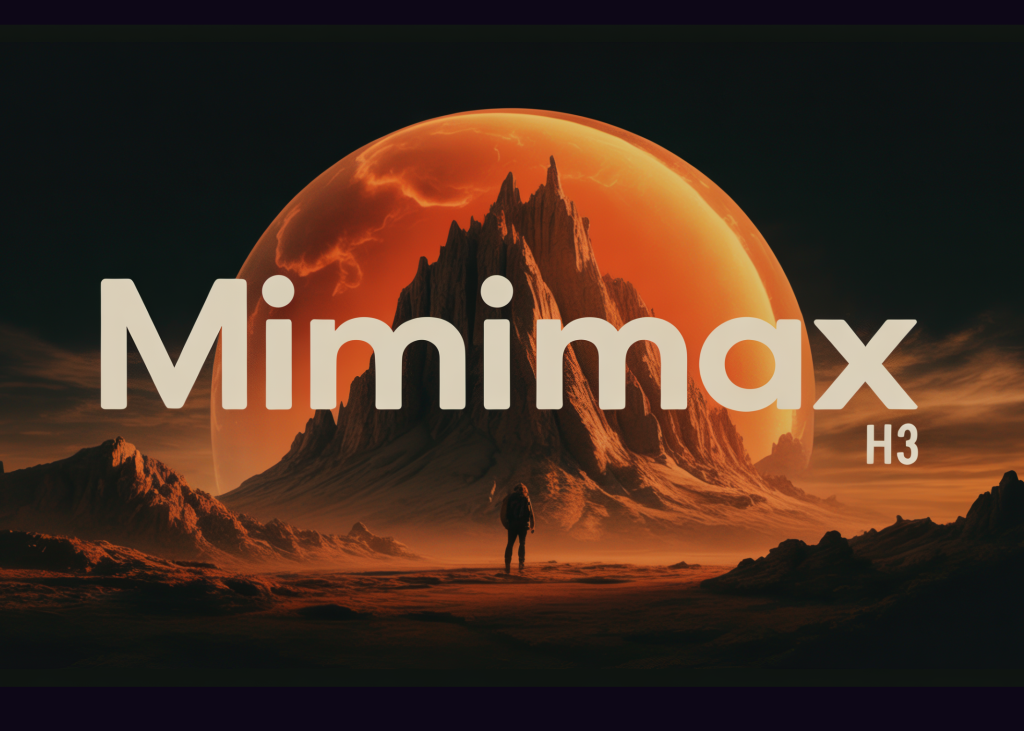
The global landscape of generative artificial intelligence has reached a significant milestone with the official launch of MiniMax H3, a general-purpose multimodal generation model designed to consolidate disparate media processing tasks into a single, unified architecture. Released on July 31, 2026, MiniMax H3 represents a departure from the traditional modular approach to video generation. Unlike previous iterations that relied on separate "expert" models for text-to-video, image-to-video, and video editing, the H3 model utilizes a unified context paradigm. This allows the system to ingest text, images, video, and audio simultaneously, returning high-fidelity video complete with native stereo sound. The model is currently accessible via the MiniMax platform API and the Hailuo AI consumer application, signaling a move toward commercially deployable, high-resolution AI media production.
A Paradigm Shift in Multimodal Architecture
The core philosophy behind MiniMax H3 is the elimination of the "task-specific" silo. In the preceding years of AI development, developers and creators were forced to navigate a fragmented ecosystem. If a user wanted to animate a static character, they used an image-to-video model; if they wanted to change the background of an existing clip, they turned to a video editing model. MiniMax H3 folds these capabilities into a single pretraining framework. By doing so, the model understands the relationships between different media types through natural language instructions.
The practical application of this unified context is best illustrated by the complexity of its prompts. A single instruction to MiniMax H3 can include a request to reference the camera movement from one video, apply the character design from a separate image, and synchronize the character’s lip movements to a third audio file. This level of cross-modal synthesis allows for a degree of creative control that was previously only possible through intensive manual post-production or by daisy-chaining multiple specialized AI tools, a process that often led to a degradation in visual consistency.
Technical Innovations: The Four Pillars of H3
The development of MiniMax H3 is supported by four distinct technical breakthroughs that differentiate it from its predecessor, the Hailuo-02 architecture, and its contemporary competitors.
1. Contextual Omni Representation
One of the most significant hurdles in multimodal generation is the ability of the model to describe the relationship between the input "context" and the "target" output. MiniMax has overhauled its captioning system to move beyond simple descriptive tags. Instead of merely identifying objects in a frame, the Contextual Omni Representation describes the interaction between elements. During the inference process, source material often requires approximately 100,000 tokens of data, which the system distills into a dense 4,000-token average. This distillation process ensures that the model maintains a high level of "intent fidelity," meaning the final video closely adheres to the nuances of the user’s multi-layered instructions.
2. The H3-VAE Tokenizer
To achieve native 2K resolution, MiniMax introduced a new Variational Autoencoder (VAE). The H3-VAE features a significantly improved compression ratio, which provides a fourfold gain in effective sequence length. In the context of video generation, sequence length is the currency of quality; longer sequences allow for more frames, higher detail, and smoother transitions without a proportional increase in computational cost. This efficiency is what enables the model to produce 2K output as a standard rather than a post-processed luxury.
3. H3-Omni Transformer
Recognizing that multimodal inputs introduce a high degree of variance in sequence length, MiniMax moved away from the Hailuo-02 architecture in favor of the H3-Omni Transformer. This new architecture bifurcates the workload between "understanding" (processing the multimodal inputs) and "generation" (creating the video). By optimizing hardware utilization for these two distinct tasks, MiniMax has reported an end-to-end training throughput increase of nearly 30%. This efficiency not only speeds up the development cycle but also reduces the latency for API users during real-time generation tasks.
4. In-Context Regeneration
Standard video AI models often rely on a "bolt-on" super-resolution module—essentially an external upscaler that guesses where pixels should go to increase resolution. MiniMax H3 employs In-Context Regeneration. In this process, the base model re-reads the original multimodal context to regenerate its own low-resolution output into high-definition. This method is particularly effective at recovering fine details, such as small text on a product label or the specific texture of a fabric, which conventional upscalers often blur or hallucinate incorrectly. This feature is positioned as a critical tool for brand-sensitive industries like e-commerce and advertising.
Deployment and API Specifications
MiniMax has prioritized immediate deployability for H3, making it available through a structured API and the Hailuo AI interface. The API supports three primary entry modes: text-to-video, image-to-video (utilizing first and last frame references), and general reference generation. The workflow is designed for enterprise integration, using an asynchronous three-step flow where a task is created, a task ID is polled, and the final content is downloaded via a URL.
The model’s output is currently constrained to integer durations ranging from 4 to 15 seconds. While these durations may seem brief compared to traditional film, they are specifically calibrated for the "micro-content" economy—social media ads, website hero loops, and product listings. The ability to generate 2K video with native stereo sound directly from the model reduces the need for secondary audio engineering, making the H3 a "one-stop" solution for short-form media.
Competitive Performance and Market Positioning
The release of MiniMax H3 comes at a time of intense competition among AI laboratories globally. Data from Artificial Analysis, as reported by the South China Morning Post, suggests that MiniMax H3 has taken a definitive lead in the specialized field of video editing and multimodal reference. However, the market remains divided. In pure text-to-video generation, Google’s Gemini Omni Flash continues to hold a performance edge. In the category of image-to-video, MiniMax H3 currently sits behind both ByteDance’s Seedance 2.0 and Gemini Omni Flash.
Despite these rankings, MiniMax is aggressively positioning H3 as the most cost-effective high-end solution on the market. The company claims that at 2K resolution, the per-second price of H3 is less than a third of the cost of mainstream competitors. For standard 768p generation, the price is reportedly less than half that of mainstream 720p models. Third-party trackers have estimated the pay-as-you-go rate for 2K video at approximately $0.13 per second, which translates to roughly $1.95 for a 15-second high-definition clip. While these figures are subject to change as MiniMax updates its official pricing tiers, the focus on affordability suggests a strategy aimed at capturing the high-volume enterprise market.
Industry Applications and Economic Implications
The versatility of MiniMax H3 makes it applicable across a wide array of professional sectors. In the realm of advertising and branding, the model’s ability to handle "character-consistent" generation is a significant advancement. Ad agencies can now generate multiple variants of a campaign—changing backgrounds, lighting, or soundtracks—while keeping the central product or mascot identical across all versions.
In the e-commerce sector, the H3 model allows for the rapid creation of video catalogs. A retailer can take a single product photo and generate a 15-second lifestyle video of that product in use, complete with ambient sound and 2K clarity. This drastically reduces the cost of traditional videography and allows for "just-in-time" marketing assets that can be tailored to specific consumer demographics or seasonal trends.
The gaming and film industries are also expected to adopt H3 for pre-visualization and cinematics. Film directors can use the model to create high-fidelity "moving storyboards" that include specific camera movements and audio cues, providing a clearer vision for stakeholders before principal photography begins. In gaming, the model facilitates the creation of consistent cinematic cutscenes that match the visual fidelity of modern high-resolution displays.
Conclusion and Future Outlook
The launch of MiniMax H3 signifies a transition in the generative AI field from "experimental" to "utilitarian." By solving the problem of fragmentation through a unified multimodal context and addressing the "upscaling" problem through in-context regeneration, MiniMax has provided a blueprint for the next generation of media models. While it faces stiff competition from tech giants like Google and ByteDance, its focus on native 2K output and aggressive pricing structures makes it a formidable contender in the enterprise space.
As the model continues to evolve, the industry will likely watch for expansions in duration limits and further improvements in text-to-video accuracy. For now, MiniMax H3 stands as a testament to the rapid acceleration of AI capabilities, moving the world closer to a future where high-quality, synchronized video and audio production is accessible through a single, natural language interface. The integration of "omni-representation" ensures that as AI continues to learn, the bridge between human intent and digital creation becomes increasingly seamless, fundamentally altering how media is conceived, produced, and consumed.