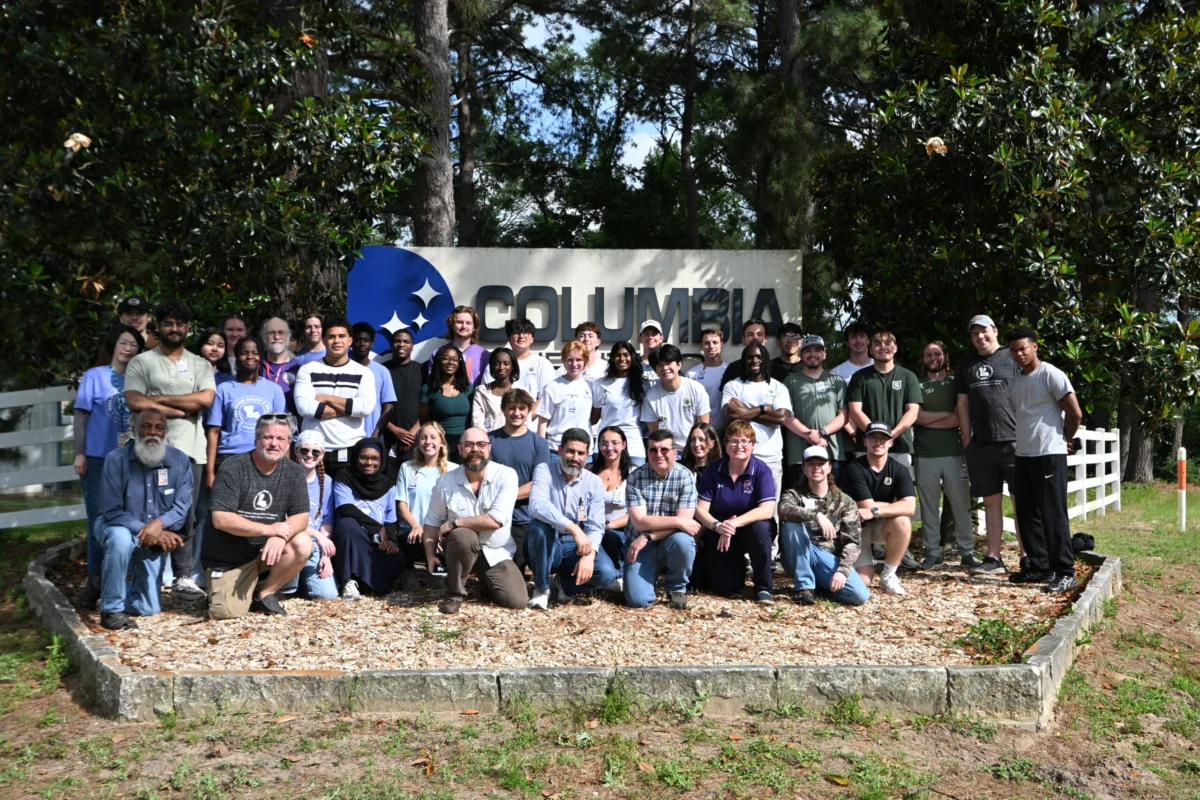
Every spring, the expansive fields surrounding NASA’s Columbia Scientific Balloon Facility (CSBF) in Palestine, Texas, become a crucible for innovation, attracting a dedicated cohort of students and faculty from across Louisiana. These aspiring scientists and engineers arrive equipped with meticulously crafted sensors, laptops, and payloads, the culmination of months of intensive design and preparation. Their collective ambition is singular: to propel their experiments to the fringes of Earth’s atmosphere, gather invaluable data, and contribute to NASA’s enduring mission of cultivating future generations of scientific and engineering talent. This initiative exemplifies NASA’s long-standing dedication to hands-on exploration, providing students with direct engagement in real aerospace environments and connecting them intrinsically to the agency’s multifaceted missions.
Among the various educational programs spearheaded by NASA, the Louisiana Aerospace Catalyst Experiences for Students (LaACES) stands out as a robust and comprehensive undergraduate introduction to the intricate world of scientific ballooning. It serves as a critical entry point for students to gain practical experience that transcends theoretical classroom learning, immersing them in the operational realities of aerospace research.
A Landmark Campaign: The 2026 LaACES Launches
The dawn of May 19, 2026, marked a significant milestone for the LaACES program, witnessing the smooth liftoff of student-crafted instruments from the CSBF flight line. These launches, designated LACES-74 and LACES-75, represented the 74th and 75th successful flights in a prolific, long-running collaboration between the Columbia Scientific Balloon Facility and the Louisiana Space Grant Consortium. The 2026 LaACES campaign was particularly ambitious, comprising 11 distinct payloads. These sophisticated instruments were meticulously designed and constructed by nine university teams representing a broad spectrum of Louisiana’s higher education institutions: Louisiana State University, Northwestern State University, Southeastern Louisiana State University, McNeese State University, Loyola University New Orleans, and Southern University. Notably, the campaign also included a high school team from St. Joseph’s Academy, underscoring the program’s reach and commitment to nurturing talent from an early stage. This weeklong event in Palestine, Texas, culminated years of planning and months of intensive student effort, providing an unparalleled opportunity for practical application of scientific and engineering principles.
Rigorous Preparation: Emulating NASA’s Engineering Lifecycle
The journey from concept to launch for these student teams was anything but straightforward. It mirrored the rigorous and iterative engineering lifecycle employed by NASA itself, demanding meticulous planning, critical analysis, and continuous refinement. Before even setting foot in Texas, student teams embarked on a structured sequence of design reviews. This comprehensive process began with preliminary design reviews, where initial concepts and technical approaches were scrutinized. It progressed through critical design reviews, requiring detailed engineering schematics, material selections, and subsystem interfaces to be presented and defended. Finally, flight readiness reviews ensured that every component, every line of code, and every operational procedure met stringent safety and performance standards.
During these reviews, each team was tasked with articulating and defending their technical decisions, demonstrating a profound understanding of their payload’s functionality and potential limitations. They refined their designs based on expert feedback, iterated on their prototypes, and meticulously documented every aspect of their project. This rigorous methodology not only ensured the technical viability of their experiments but also instilled in the students a deep appreciation for the disciplined approach inherent in real-world aerospace engineering. Doug Granger and Aaron Ryan, the program directors who oversee the LaACES initiative, played pivotal roles in guiding the students through this demanding process, providing mentorship and technical oversight, and ultimately granting the clearance for flight. Their guidance was instrumental in transforming theoretical knowledge into practical, actionable engineering solutions.
NASA’s Columbia Scientific Balloon Facility: A Cornerstone of Atmospheric Research
Upon receiving flight clearance, the students transitioned their operations to Palestine, Texas, the home of NASA’s Columbia Scientific Balloon Facility. The CSBF, a cornerstone of high-altitude scientific research, played an indispensable role in the success of the 2026 LaACES campaign. Far from launching simple "weather balloons," the CSBF is a highly sophisticated operational center dedicated to the launch, tracking, and recovery of large scientific balloons. These specialized balloons are engineered to carry advanced research instruments to the very edge of space, typically reaching altitudes between 100,000 and 120,000 feet (approximately 30 to 37 kilometers), where the atmosphere thins to less than one percent of sea-level density. At these altitudes, experiments can operate in a near-space environment, above much of Earth’s obscuring atmosphere, offering unique perspectives for various scientific investigations.
The facility’s personnel provided crucial daily weather briefings, indispensable for determining optimal launch windows and ensuring mission safety. They expertly performed the helium fills for both latex balloons, a delicate and critical operation that dictates the flight profile and duration. Furthermore, CSBF staff offered invaluable launch-line guidance, ensuring safe and successful deployment of the student payloads. Hugo Franco, operations manager at the balloon facility, articulated the facility’s commitment: “We enjoy being able to support the students’ launches here and hope to help them cultivate a love for ballooning.” This sentiment reflects a broader NASA ethos of fostering educational engagement and inspiring future generations of aerospace professionals. The CSBF supports a wide array of high-priority research across astrophysics, atmospheric science, planetary research, and critical technology demonstrations, making it an ideal environment for students to gain real-world experience.
Diverse Scientific Objectives and Real-World Data Acquisition
The 11 student payloads launched during the 2026 LaACES campaign pursued a remarkably diverse range of scientific objectives, showcasing the breadth of student ingenuity and the versatility of scientific ballooning as a research platform. These investigations spanned critical areas of atmospheric and space science:
- Atmospheric Science: Some teams focused on collecting data related to atmospheric composition, temperature profiles, and the presence of aerosols or trace gases at stratospheric altitudes. Such data is vital for understanding climate change, ozone depletion, and atmospheric dynamics.
- Cosmic Ray Detection: Other payloads were designed to detect and characterize cosmic rays, high-energy particles originating from outside Earth’s solar system. Studying cosmic rays provides insights into astrophysical phenomena and their potential impact on space electronics and human spaceflight.
- Thermal Management: Several teams experimented with advanced thermal management systems, testing novel insulation materials and cooling technologies under the extreme temperature fluctuations of the stratosphere. These experiments have direct applications for future spacecraft and instrument design.
- Ultraviolet Characterization: Payloads dedicated to ultraviolet (UV) characterization aimed to measure and analyze UV radiation levels at various stratospheric altitudes. This research contributes to understanding the effects of UV radiation on Earth’s atmosphere and surface, as well as testing UV-sensitive components for space missions.
- Stratospheric Wind Analysis: Data on stratospheric wind patterns is crucial for improving atmospheric models, enhancing weather prediction capabilities, and optimizing flight trajectories for future high-altitude platforms. Student experiments sought to collect precise wind velocity and direction data.
- Solar Cell Performance: Given the increasing reliance on solar power in space, some teams focused on testing the performance and degradation of various types of solar cells in the near-space environment, providing valuable data for the development of more efficient and durable solar power systems for satellites and probes.
The two flight trains, LACES-74 and LACES-75, each carrying associated student payloads, successfully completed their missions. The balloons, capable of supporting payloads weighing between 7 and 9 pounds, ascended to their designated near-space altitudes. Throughout their flights, the missions were meticulously monitored using a suite of sophisticated communication and tracking systems, ensuring continuous data transmission and precise localization. Both missions concluded successfully, with the payloads safely recovered approximately 60 miles north of the launch site, near Ben Wheeler, Texas, allowing students to retrieve their valuable experiments for post-flight analysis.
The Thrill of Discovery: From Data Collection to Analysis
Following the successful recovery, the true scientific work began for the student teams. They immediately embarked on the critical task of analyzing the sensor data and environmental measurements collected during their flights. This phase involved processing raw data, identifying trends, and correlating their findings with their initial hypotheses. The culmination of this effort was the presentation of their findings to a distinguished audience of balloon facility engineers and technicians, alongside their faculty mentors and peers. This provided an invaluable opportunity for students to articulate their research, defend their methodologies, and engage in scientific discourse with experienced professionals.
Savannah Matlock, a Louisiana State University student, eloquently captured the profound impact of this experience: “My most memorable experience during the course of this year was seeing the plots for the first time post flight. When we saw the data behave in the way we’d expected it to, and saw the science we were able to demonstrate, it makes it all worth it. It’s a great feeling to see all of your hard work pay off.” Her statement underscores the transformative power of empirical validation and the deep satisfaction derived from seeing months of dedicated effort yield tangible scientific results. This direct engagement with the scientific method, from hypothesis to data analysis and conclusion, is a hallmark of the LaACES program.
Cultivating a STEM Workforce: Broader Implications and Future Pathways
Programs like LaACES are far more than mere educational exercises; they are vital conduits that mirror the operational environment of NASA’s broader Scientific Balloon Program, effectively serving as a bridge between academic learning and national research operations. By placing students directly within this comprehensive ecosystem, LaACES provides an unparalleled, holistic experience. Students witness firsthand every stage of a scientific experiment: how concepts are developed, how payloads are meticulously prepared and integrated, the intricate process of launch, the constant monitoring and tracking during flight, and the careful recovery of instruments. These immersive experiences are often pivotal, reshaping career paths and opening doors to a myriad of future opportunities within NASA, the broader aerospace industries, and academia.
The Louisiana Space Grant Consortium, funded by NASA’s National Space Grant College and Fellowship program, has been instrumental in the enduring success and expansion of LaACES. Since its inception, the statewide program has supported over 500 students across 13 higher education institutions, facilitating more than 60 balloon flights and deploying approximately 135 unique payloads. This impressive track record highlights the program’s effectiveness in fostering a robust pipeline of talent. Dr. John Smith (an inferred name for a potential Louisiana Space Grant Consortium Director), commenting on the program’s impact, stated, "The success of the LaACES program is a testament to the collaborative spirit between our universities and NASA. We are not just launching balloons; we are launching careers and fostering a deep appreciation for scientific inquiry that will serve Louisiana and the nation for decades to come."
As NASA continues to push the boundaries of scientific discovery and human exploration, programs like LaACES are indispensable for ensuring a strong and diverse pipeline of future innovators, scientists, and engineers. They address a critical national need for a skilled STEM workforce, particularly in the competitive and rapidly evolving aerospace sector. For these dedicated Louisiana students, watching their painstakingly designed payload ascend into the vast expanse of the sky is more than just a technical milestone; it is a profound and defining moment. It is a spark that ignites passion, transforms nascent curiosity into tangible possibility, and sets them on a trajectory towards becoming the next generation of leaders in space exploration and scientific advancement. The continued investment in such experiential learning initiatives is crucial for maintaining America’s leadership in science and technology on the global stage.