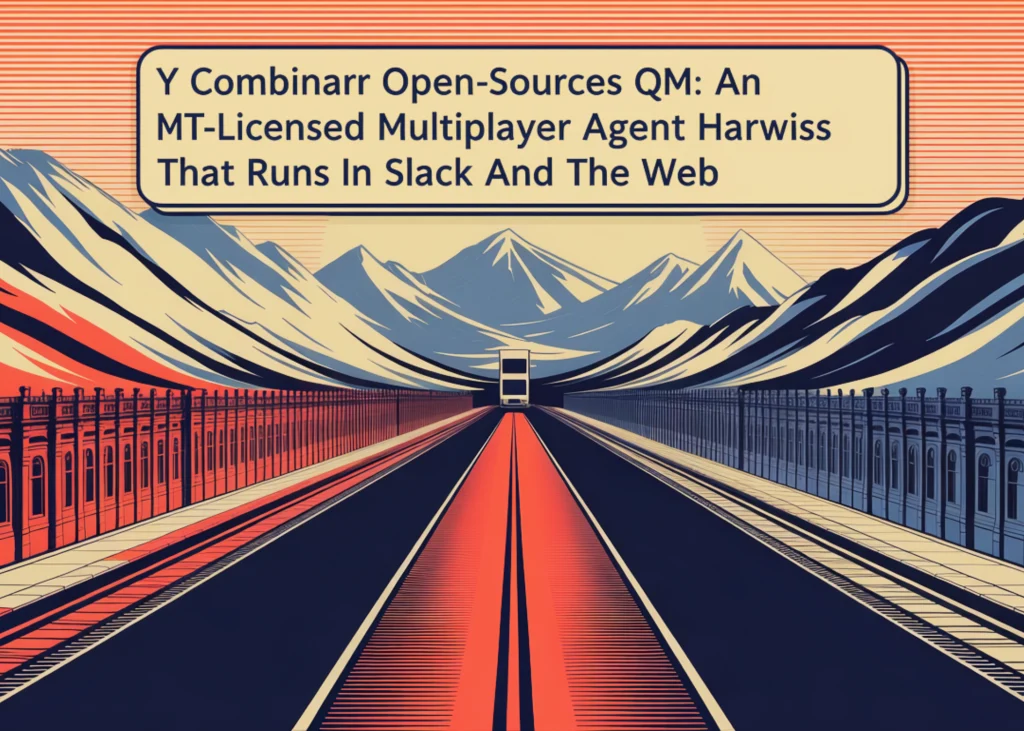
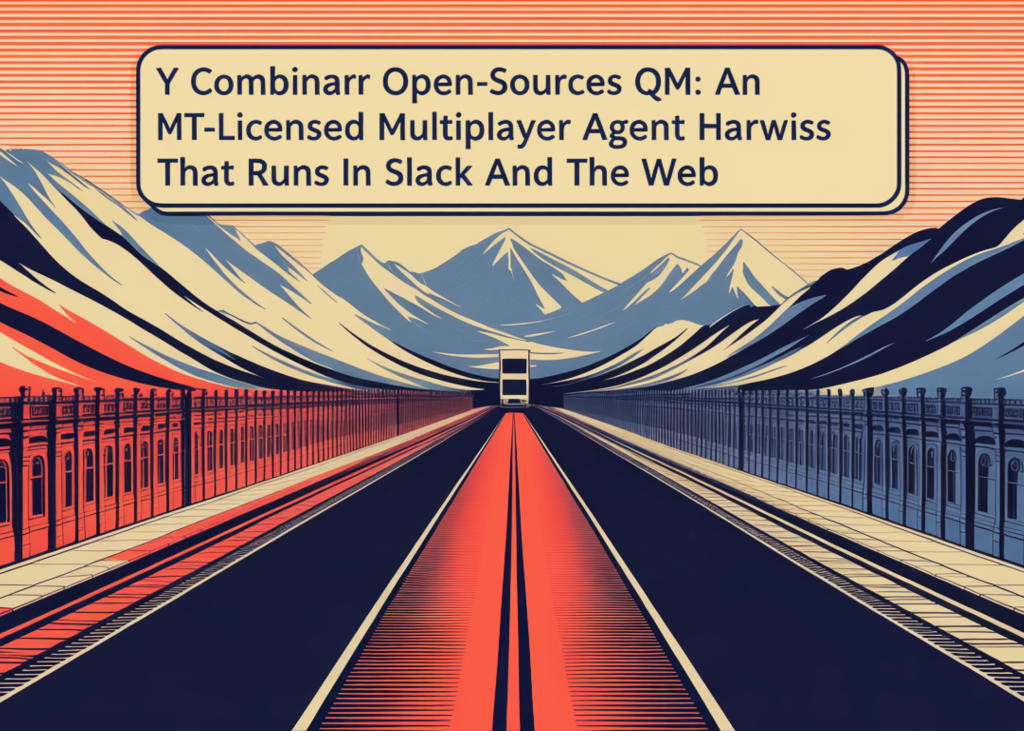
Y Combinator, the world’s most influential startup accelerator, has officially open-sourced its internal multi-agent harness, QM (Quartermaster), signaling a significant shift in how organizations may soon deploy and manage autonomous AI agents. Described as a "multiplayer agent harness for work," QM is designed to function across both Slack and web interfaces, providing a structured environment where AI agents can perform complex, multi-step tasks alongside human collaborators. The release, which includes the project’s full source code under the permissive MIT license, marks YC’s transition from using the tool as a private internal utility to offering it as a foundational experiment for the broader developer community.
The development of QM stems from a practical need within Y Combinator’s own operations. For an organization that manages thousands of portfolio companies, vast legal frameworks, and frequent high-stakes events, the limitations of standard "personal assistant" AI models became quickly apparent. While individual chatbots are effective for isolated tasks, they often struggle with the shared state, long-term memory, and collaborative requirements of a professional team. QM was built to bridge this gap, serving as the operational backbone for YC’s accounting, legal, events, and engineering departments. By open-sourcing the tool, YC is providing a blueprint for how mid-sized enterprises can move beyond simple chat interfaces toward fully integrated, agentic workflows.
The Architecture of Collaborative Autonomy
At its core, QM is built on a headless central engine that manages the heavy lifting of API interactions, identity verification, policy enforcement, and task scheduling. Unlike many contemporary AI tools that are built as lightweight wrappers around large language model (LLM) APIs, QM is designed as robust "org software." It requires a sophisticated infrastructure stack, including a cloud account (such as AWS or Fly.io) and a Postgres database to maintain durable state, session history, and user data.
The system’s architecture is intentionally "harness-agnostic." This means that while it provides the structure and the "tools" for the agent to use, it does not mandate a specific AI model. It can be driven by various high-end models, including Anthropic’s Claude Code, OpenAI’s Codex, or other specialized engines like Pi and OpenCode. This vendor-agnostic approach ensures that organizations are not locked into a single AI provider, allowing them to swap models as the landscape of LLM performance evolves.
One of the most distinctive features of QM is its "multiplayer" design. Most AI agents today are scoped to a single user’s session. QM, however, provides each employee with an isolated workspace that remains unaffected by others, while simultaneously allowing agents to participate in shared environments like Slack channels and group messages. Each "room" or user scope possesses its own memory, file storage, keychain for credentials, and sandbox. This allows the agent to maintain context over long periods, remembering past interactions and project specificities without mixing data between different departments or individuals.
Deployment Requirements and Ideal Use Cases
Y Combinator has positioned QM as a tool for organizations that have reached a certain level of technical maturity. It is not a "plug-and-play" desktop application for individual freelancers; rather, it is infrastructure-heavy software intended for startups and mid-sized companies ranging from 10 to 500 employees. Deployment typically requires at least one platform engineer who is comfortable managing cloud infrastructure and database persistence.
The deployment process is streamlined through an "org-owned" repository model. Instead of simply cloning the main QM repo, an organization creates its own deployment repository that depends on the @yc-software/qm package. By running a specialized initialization command (qm init), the system materializes a "deployment skill" that guides the administrator through setting up infrastructure, web sign-in protocols, and Slack integrations. This methodology ensures that the organization maintains full control over its data and deployment environment, as each instance runs within the operator’s own cloud account.
The practical applications for QM are diverse, reflecting the varied tasks it handled internally at YC. Key use cases identified by the development team include:
- Unified Search and Information Retrieval: Searching across disparate internal notes, emails, documents, and databases simultaneously.
- Inbox and Communication Management: Triaging high-volume inboxes based on schedules, applying labels, and generating draft replies for human review.
- Engineering and CI/CD Operations: Working directly within code repositories to run tests, open pull requests, and monitor continuous integration (CI) pipelines.
- Project Tracking: Monitoring shared Slack channels to track progress, update task statuses, and ensure deadlines are met without manual intervention.
A Rigorous Security and Permission Model
In an era where AI safety and data privacy are paramount, QM introduces a tiered security model designed to mitigate the risks associated with autonomous agents. Because the agent acts on behalf of a human user—utilizing their credentials and permissions—every action must be auditable and controlled.
The framework offers three distinct security "postures" that an organization can adopt:
- Strict Mode: This is the most conservative setting. It pauses the agent before every single tool call, requiring explicit human approval for any action that might affect the environment. This is ideal for sensitive legal or financial operations where the cost of an error is high.
- Auto Mode: The default setting for most deployments. It utilizes a classifier to screen external data and tool results before they are passed back to the LLM. This acts as a filter against prompt injection attacks and ensures that the model does not ingest malicious data that could lead to unintended actions.
- Dangerous Mode: This mode removes the automated screening and pauses, allowing for maximum autonomy. However, even in this mode, QM enforces a "predeclared command policy." This policy includes hard denials for destructive actions, such as recursive file deletions or destructive SQL commands (e.g.,
DROP TABLE), providing a safety net against catastrophic failures.
This security-first approach addresses one of the primary concerns of enterprise AI: the "black box" problem. By forcing agents to operate within a predefined sandbox and subjecting their actions to a central policy engine, QM provides the transparency necessary for corporate compliance.
Timeline and Evolutionary Context
The release of QM comes at a pivotal moment in the AI industry. Throughout 2023 and early 2024, the focus was largely on "Chat" interfaces. However, the industry is now moving toward "Agents"—systems that don’t just talk, but actually do.
The chronology of QM’s development reflects this shift:
- Phase 1 (Internal Development): YC engineers developed QM to handle the massive administrative overhead of managing the accelerator’s batches and alumni network.
- Phase 2 (Dogfooding): The tool was rolled out across YC’s internal departments, including legal and accounting, to refine its ability to handle "boring" but essential back-office tasks.
- Phase 3 (Open Source Experiment): In late 2024, YC decided to release the code to the public. The team has been transparent about the current state of the software, framing it as an "early experiment" that likely contains bugs, inviting the global developer community to contribute to its stability.
This move follows a long tradition of Y Combinator-affiliated projects becoming industry standards. By providing the "harness" rather than the "model," YC is betting that the real value in AI for the next few years lies in the integration and orchestration of these models within existing business processes.
Broader Implications for the AI Ecosystem
The decision to open-source QM under an MIT license is a strategic move that could disrupt the burgeoning market for proprietary AI productivity suites. While companies like Microsoft, Salesforce, and ServiceNow are racing to build "Agentic" features into their expensive, per-seat SaaS platforms, QM provides a free, customizable alternative for companies that prefer to own their infrastructure.
For the startup ecosystem, this release is particularly significant. New companies can now leverage a battle-tested agent framework to automate their early-stage operations without incurring the high costs of enterprise AI licenses. Furthermore, by standardizing the "harness" for agents, YC is encouraging a more modular approach to AI development. Developers can build "skills" (modular units of functionality) that are shareable and portable, potentially creating a secondary market or community for agent-based capabilities.
However, the "early and buggy" disclaimer remains important. The complexity of QM’s architecture means that it is not yet a solution for every business. The requirement for a platform engineer and a specific infrastructure stack suggests that for the immediate future, QM will be a tool for the "technologically elite" startups—those with the engineering talent to maintain and extend the system.
Conclusion: The Path Forward for Quartermaster
As QM moves into the public domain, its success will likely depend on the vibrancy of its open-source community. If developers embrace the framework, it could become the "Linux of AI Agents"—a stable, community-driven foundation upon which a thousand different business-specific applications are built.
Y Combinator’s release of QM underscores a fundamental belief: that the future of work is not just humans using AI, but humans and AI working together in a shared, synchronized environment. By moving the agent out of a private chat window and into the "multiplayer" world of Slack and shared databases, QM provides a glimpse into a future where the "Quartermaster" is an essential, autonomous member of every professional team. For now, the project remains a high-potential experiment, inviting the world’s engineers to help iron out the bugs and define the next era of organizational productivity.