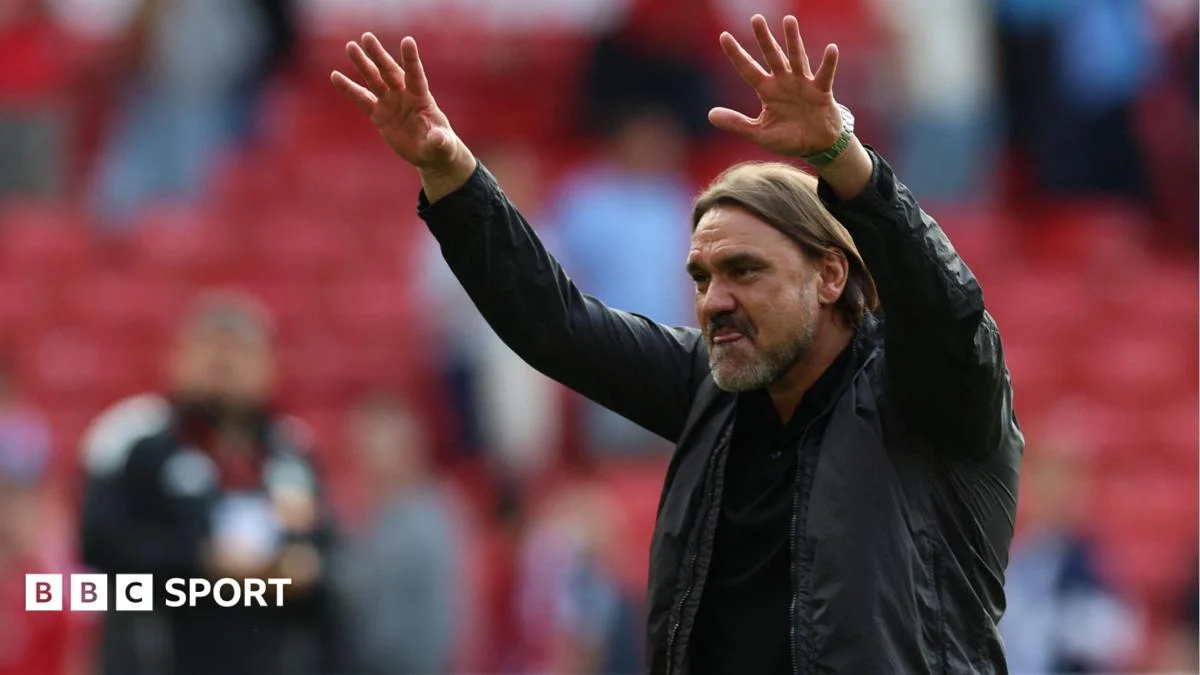
Leeds United’s journey back to the Premier League was a stark reminder of the demanding nature of top-flight football. While the final league position of 14th, a comfortable eight points clear of the relegation zone, might suggest a smooth transition, the reality for Daniel Farke’s side was far more turbulent. The opening 13 games of their return to the top flight saw a mere three victories and a concerning eight defeats, a stark illustration of the immense pressure that had mounted on both the manager and his squad. This initial struggle underscored the critical need for adaptation and strategic evolution to secure their Premier League status.
The Turning Point: A Tactical Metamorphosis
The narrative of Leeds United’s Premier League survival in their inaugural season was significantly shaped by a pivotal tactical adjustment. On November 29th, following a 3-2 defeat at the formidable Etihad Stadium against Manchester City, Farke made a decisive shift in formation. The team transitioned from their established 4-3-3 system to a 3-5-2. This change, implemented in the face of adversity, proved to be a significant catalyst for their improved fortunes. For the remainder of the season, Leeds United experienced a marked decrease in losses, suffering only five defeats in the subsequent fixtures. This tactical flexibility demonstrated Farke’s willingness to adapt and innovate, a crucial element for sustained success in a league as competitive as the Premier League.
The impact of this tactical switch was not lost on the players. Midfielder Ethan Ampadu, reflecting on the early struggles of the previous season, highlighted the team’s desire for greater control and assertiveness. "There were times in the first half of last year where we allowed teams to run over us a bit," Ampadu stated. "We wanted to get a bit more solid and put our stamp on the game. We want the ball, we want to be attacking and creative." This sentiment encapsulates the collective desire within the squad to dictate the tempo of matches rather than being dictated to, a key characteristic of successful Premier League teams.
Building on Success: Addressing Past Shortcomings
With the lessons of their challenging first season firmly in mind, Leeds United are determined to avoid repeating past mistakes as they embark on their second Premier League campaign. A particular area of focus for improvement is their away form. The statistics from the 2025-26 season reveal a stark reality: Leeds secured only two victories on the road throughout the entire campaign. This lack of success away from home placed additional pressure on their performances at Elland Road and limited their ability to accumulate points consistently. The recent triumph at the City Ground, a venue known for its passionate support and challenging atmosphere, is therefore particularly satisfying and indicative of a renewed focus on away-day resilience.
Manager Daniel Farke acknowledged the inherent difficulties of competing in away fixtures in the Premier League. "Away games in Premier League are always difficult," Farke commented. "Sometimes the second year is more difficult. Last season, we picked up many points with draws. On the road, we want to be competitive and be more effective." This candid assessment underscores the strategic objective of transforming their away performances from merely competitive to consistently effective, a crucial step in solidifying their Premier League status and potentially pushing for higher league placings. The emphasis on being more "effective" suggests a desire to convert promising situations into tangible results, a common challenge for teams looking to establish themselves in the top tier.
Summer Investment: A Show of Ambition and Trust
Following the successful conclusion of the 2025-26 season and the securing of Premier League survival, Daniel Farke had openly expressed his ambition for the club. He had previously stated that he was "not the right choice" to lead the club if their summer transfer ambitions did not align with his own. This bold declaration served as a clear signal to the club’s hierarchy, emphasizing his commitment to continuous improvement and his vision for Leeds United’s future in the top flight.
The club’s ownership and hierarchy responded decisively to Farke’s concerns, demonstrating a clear commitment to backing their manager. A significant investment of approximately £80 million was made in the transfer market during the summer window, signaling a clear intent to strengthen the squad and compete at a higher level. This substantial outlay on new arrivals indicates a shared ambition between the manager and the club’s leadership to not only survive but to thrive in the Premier League.
New Signings, Immediate Impact: A Glimpse of Promise
The fruits of this summer investment were evident in the opening match of the new season. Three of the new recruits featured prominently in the starting lineup, offering encouraging early signs of their potential to contribute to Leeds United’s ambitions. The performance of goalkeeper James Trafford, in particular, justified the club’s significant outlay. A record fee of £45 million was paid to Manchester City for his services, making him the most expensive British goalkeeper in history. Trafford’s decisive saves throughout the match demonstrated his quality and provided a crucial foundation of defensive solidity. His presence in goal signals a long-term investment in a key position, aiming to provide stability and leadership for years to come.
The defensive reinforcements extended to Bosnia-Herzegovina international Tarik Muharemovic. Beyond his robust defensive display, Muharemovic proved to be a valuable asset from set-pieces. His towering header, which tested the reflexes of the opposing goalkeeper, showcased his aerial threat and added another dimension to Leeds’ attacking strategy. His ability to contribute effectively at both ends of the pitch is a testament to his all-round capabilities and suggests he will be a vital component of the team’s defensive structure and attacking threat from dead-ball situations.
The attacking department also received a significant boost with the free transfer acquisition of Harry Wilson. Having enjoyed a productive previous season with Fulham, contributing 10 goals and seven assists, Wilson was denied an immediate debut goal by the narrowest of margins, an offside flag. His arrival on a free transfer, following a successful spell at another Premier League club, represents shrewd business by Leeds United, adding proven Premier League quality and attacking flair to the squad without incurring a transfer fee. The immediate impact and potential of these new signings were not lost on the existing players.
Ethan Ampadu, now a senior figure within the squad, expressed his optimism regarding the new arrivals. "From the very first minute they walked into the building, they have shown their quality," Ampadu remarked. "They have shown why they have been brought in to try and help us get to the next level. They’ve shown that hunger and drive to take Leeds to a better place so that has been very good." This sentiment highlights the positive influence the new signings have had on the team’s morale and overall ambition, fostering a culture of continuous improvement.
Managerial Stability and Future Outlook
Daniel Farke echoed his captain’s positive assessment, emphasizing the collective strength of the squad. "I am very happy because they have big boots to fill," Farke stated. "Trafford is a good player but he hasn’t played that many Premier League games, Tarik too. So they both shined and showed why we agreed to sign them, but the whole group was excellent today. Wilson too was excellent. The vibe and mood is good around the place." Farke’s acknowledgement of the players’ potential while also tempering expectations by noting their relative lack of extensive Premier League experience demonstrates his astute management style. His focus on the entire group’s performance, rather than solely on individual brilliance, underscores his belief in team cohesion.
Interestingly, Farke’s tenure at Leeds United now positions him as the third-longest-serving manager in the Premier League, trailing only Arsenal’s Mikel Arteta and Aston Villa’s Unai Emery. This longevity, in the often-volatile world of football management, speaks volumes about his ability to build stability and achieve objectives. In an era where managerial changes are frequent, Farke’s sustained presence at Elland Road suggests a strong working relationship with the club’s hierarchy and a shared vision for the future.
With new signings integrating seamlessly and contributing from the outset, and established players like Stach continuing to perform at a high level, Leeds United possess a compelling blend of experience and fresh talent. This promising combination, coupled with Daniel Farke’s strategic acumen and the club’s demonstrated ambition in the transfer market, provides a strong foundation for optimism. The prospect of an improved league campaign, potentially challenging for higher positions, appears more tangible than ever before. The lessons learned from their initial Premier League foray, combined with a renewed sense of purpose and strategic investment, suggest that Leeds United are well-equipped to make this second season in the top flight their most successful yet under Farke’s leadership. The early signs point towards a team that has not only learned from its past but is actively building towards a brighter future, aiming to solidify its place among England’s elite clubs.