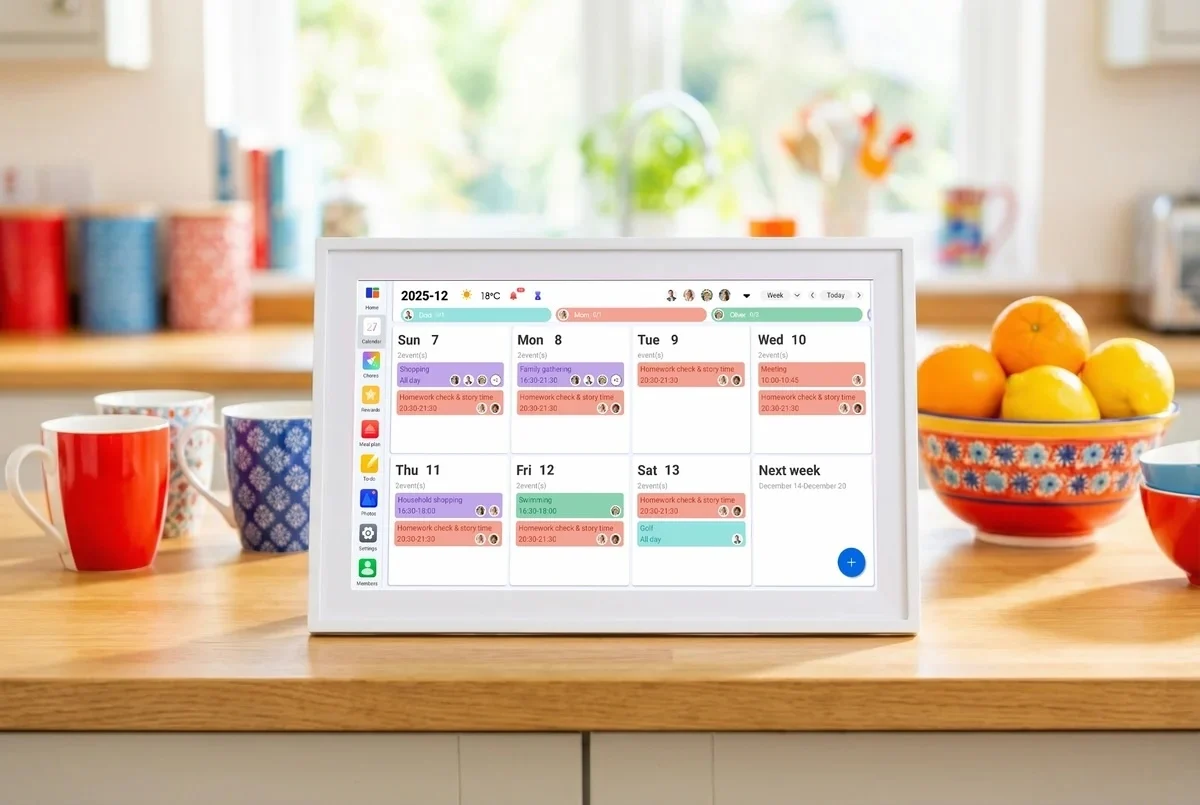
As the back-to-school season gears up, or has already commenced in numerous regions, the intricate dance of managing household schedules escalates into a formidable challenge for countless families. The relentless juggling act encompassing professional commitments, academic timetables, medical appointments, extracurricular sports, household chores, and myriad other daily obligations frequently overwhelms traditional organizational methods. Conventional paper calendars, once the staple of household management, are increasingly proving inadequate in the face of modern life’s accelerated pace and multifaceted demands. It is precisely into this vortex of domestic complexity that Linkdaze introduces its innovative smart digital calendar, a sophisticated touchscreen tablet meticulously engineered not for individual task management, but as a centralized command center for the entire household. Launched in December 2025, Linkdaze aims to redefine how families coordinate, communicate, and conquer their daily routines, positioning itself as a critical tool in the burgeoning smart home ecosystem.
Unifying Disparate Schedules: The Core of Linkdaze’s Appeal
One of Linkdaze’s most compelling attributes lies in its exceptional calendar compatibility, a feature that directly addresses a pervasive pain point for contemporary families. In an era where digital ecosystems are often fragmented, with family members frequently utilizing different platforms for personal and professional scheduling, Linkdaze offers a seamless solution. The system boasts the capability to synchronize calendars from a wide array of popular services, including Google Calendar, Apple’s iCloud, Microsoft Outlook, Yahoo Calendar, and Cozi, a highly regarded application specifically designed for family organization. This broad compatibility eliminates the frustrating requirement for every family member to migrate to a single, mandated calendar app. Instead, Linkdaze intelligently aggregates these diverse schedules into a unified, coherent display, employing an intuitive color-coding system that makes individual family members and their respective commitments effortlessly identifiable at a glance.
This integration capability is not merely a convenience; it represents a significant step forward in simplifying the digital lives of busy households. According to a 2024 study by the Pew Research Center, approximately 65% of households with children aged 6-18 reported using at least three different digital platforms for scheduling and communication, leading to an increased likelihood of missed events or miscommunication. Linkdaze directly mitigates this fragmentation, transforming what was once a source of confusion into a clear, comprehensive overview. The ability to visualize the entire family’s week on a large, dedicated screen prominently displayed in a communal area, such as the kitchen or living room, fosters greater awareness and accountability among all members, from parents coordinating carpools to children understanding their chore assignments.
Beyond Appointments: A Comprehensive Household Hub
While its robust calendar synchronization forms the bedrock of its utility, Linkdaze transcends the functionality of a mere digital agenda, evolving into a comprehensive household management hub. Since its launch in December 2025, the device has been available in two distinct models: a substantial 15.6-inch version and a more compact 10.1-inch iteration, providing flexibility to suit varying wall spaces and household preferences. Beyond meticulously tracking appointments and events, Linkdaze empowers families to manage a spectrum of domestic responsibilities. Users can leverage the device for assigning and tracking chores, implementing reward systems for accomplishments, streamlining meal planning, generating dynamic shopping lists, and even serving as a digital photo frame, cycling through cherished family memories.
This multi-functional approach positions Linkdaze not just as a productivity tool but as an interactive centerpiece of the smart home. The chore and reward system, for instance, offers a digital, engaging alternative to traditional chore charts, potentially increasing children’s participation and motivation. Parents can assign tasks, set deadlines, and track completion, with the added incentive of customizable rewards. Furthermore, the integrated shopping list feature, which can be dynamically updated by any family member, helps prevent forgotten items and streamlines grocery runs, a recurring household task often fraught with inefficiency. The ability to consolidate these disparate functions into a single, accessible device simplifies the mental load for parents and fosters a more organized, harmonious living environment.
Innovation in the Kitchen: AI-Powered Meal Planning with Snap-to-Sync
Perhaps the most distinctive and forward-thinking feature of the Linkdaze smart digital calendar is its AI-powered meal planner, augmented by the ingenious "Snap-to-Sync" capability. This innovation significantly streamlines one of the most time-consuming and often stressful aspects of household management: meal preparation. Instead of requiring users to manually input every ingredient and step into a digital meal-planning application, Snap-to-Sync allows for a remarkably intuitive interaction. Users can simply capture a photograph of a traditional paper recipe card, a magazine clipping, or even their child’s school lunch menu. Linkdaze’s integrated artificial intelligence then processes this visual information, converting it into a structured, digital meal plan that can be seamlessly integrated into the family’s weekly schedule. Crucially, the AI further extends its utility by automatically generating a comprehensive shopping list derived directly from the digitized meal plan, ensuring all necessary ingredients are accounted for.
While the concept of digitizing information from physical documents is not entirely novel, its application within a dedicated family organization device, particularly with the added intelligence of automatic shopping list generation, sets Linkdaze apart from more basic digital calendars. This feature directly addresses the challenges identified in a 2023 study by the National Retail Federation, which found that an average household spends over two hours per week on meal planning and grocery list creation. By automating much of this process, Snap-to-Sync offers tangible time savings and reduces the cognitive load associated with meal preparation. It exemplifies how specialized AI applications can deliver practical, everyday benefits, making Linkdaze not just an organizer, but a true facilitator of efficient household operations. The integration of such a feature underscores a strategic move by Linkdaze to differentiate itself through tangible problem-solving capabilities rather than just aesthetic appeal or basic calendar functions.

A Differentiated Business Model: Challenging the Subscription Status Quo
In a technology landscape increasingly dominated by recurring revenue models, Linkdaze has made a noteworthy strategic decision by not requiring a monthly subscription for its primary features. This approach stands in stark contrast to many of its competitors within the smart display and digital calendar market. For instance, Skylight, a prominent competitor in the smart calendar space, offers additional features and functionalities through an annual subscription priced at $79. Linkdaze’s choice to eschew this prevalent monetization strategy for its core offerings presents a compelling value proposition to consumers, particularly those wary of accumulating numerous monthly digital subscriptions.
This business model decision is a calculated gamble in a crowded market. From a consumer perspective, the absence of a mandatory subscription means a lower total cost of ownership over the product’s lifespan, making the initial hardware investment a one-time expense for core utility. This transparency and predictability in pricing can be a significant draw for budget-conscious families. From a business standpoint, this choice is either a bold differentiator that builds strong customer loyalty and word-of-mouth adoption, or it represents a foregone revenue stream that could be crucial for long-term development and advanced feature deployment. However, the initial pricing strategy further enhances its appeal; the 10.1-inch Linkdaze model is available at $119.99, notably less expensive than Skylight’s comparable 10-inch model, which starts at $149.99 (often requiring the subscription to unlock its full potential). This aggressive pricing, coupled with the subscription-free core features, positions Linkdaze as a highly accessible and cost-effective entry point into advanced family organization technology. This strategy suggests Linkdaze is prioritizing market penetration and user acquisition by minimizing financial barriers, betting on the intrinsic value of its hardware and innovative features to drive success.
The Broader Landscape: Linkdaze in the Smart Display and Home Automation Market
Linkdaze enters a vibrant and rapidly expanding smart home market, specifically carving out a niche within the smart display segment. The global smart home market was valued at approximately $100 billion in 2023 and is projected to reach over $300 billion by 2030, driven by increasing consumer demand for convenience, connectivity, and integrated solutions. Within this ecosystem, smart displays like Amazon Echo Show and Google Nest Hub have popularized the concept of a central, visual interface for home control and information access. However, these general-purpose devices, while versatile, often lack the specialized, family-centric functionalities that Linkdaze offers.
Linkdaze’s distinct focus on household organization and scheduling differentiates it from these broader smart displays. Instead of being a jack-of-all-trades, Linkdaze aims to be the master of one critical domain: family management. This specialization allows it to integrate features like the multi-calendar sync and AI meal planning more deeply and intuitively than a general-purpose smart display could. The market for specialized smart devices is growing as consumers seek solutions tailored to specific needs rather than generic capabilities. Linkdaze capitalizes on this trend by providing a dedicated appliance for family coordination, positioning itself as an essential tool for modern households grappling with increasingly complex logistical demands. Its success will be a litmus test for whether highly specialized smart displays can effectively compete and thrive alongside more generalized smart home hubs.
Implications and Future Outlook: Reshaping Family Management
The introduction of Linkdaze carries significant implications for various demographics and the future of household management. For busy parents, the device offers a practical, centralized solution to the perennial challenge of keeping everyone’s schedules aligned, potentially reducing parental stress and improving overall family communication. The visual clarity of a large, wall-mounted display makes it easier for all family members, including children, to understand the day’s and week’s activities, fostering a greater sense of independence and responsibility.
Beyond nuclear families, Linkdaze holds considerable promise for other communal living arrangements. College apartments, for instance, could greatly benefit from such a device, enabling roommates to seamlessly coordinate chores, synchronize study schedules, plan shared meals, and manage other collective responsibilities without the friction often associated with manual coordination. Professionals juggling multiple interviews, tight deadlines, frequent meetings, and complex project assignments could also find Linkdaze an invaluable asset for personal and team organization, especially in home office environments where work and personal life often intertwine.
The strategic decision to offer core features without a subscription could also disrupt existing market dynamics, forcing competitors to reconsider their monetization strategies or enhance their value propositions. If Linkdaze gains significant traction, it could accelerate a trend towards more consumer-friendly pricing models in the smart home sector. Furthermore, the success of features like Snap-to-Sync could pave the way for more sophisticated AI integration in everyday home appliances, moving beyond voice assistants to more proactive, visually driven intelligent helpers. The long-term impact of Linkdaze hinges on its ability to continually evolve its features, maintain its competitive pricing, and effectively address the ever-changing needs of modern households, solidifying its place as an indispensable element in the quest for domestic harmony.
Conclusion: A New Era for Household Harmony
In conclusion, Linkdaze represents a thoughtful and timely evolution in the realm of smart home technology, specifically tailored to the intricate demands of modern family life. By offering a dedicated, touchscreen smart digital calendar that unifies disparate digital schedules, streamlines chores, and introduces innovative AI-powered meal planning with its unique Snap-to-Sync feature, Linkdaze delivers a compelling solution to pervasive household organizational challenges. Its bold decision to forgo monthly subscriptions for core functionalities, combined with competitive pricing, positions it as an accessible and economically attractive option for a broad consumer base. As households continue to navigate increasingly complex schedules and seek greater efficiency, Linkdaze stands poised to become a central fixture in the pursuit of greater domestic harmony, offering a clear, collaborative, and intelligent platform that transforms the chaos of daily life into a manageable, well-orchestrated rhythm.