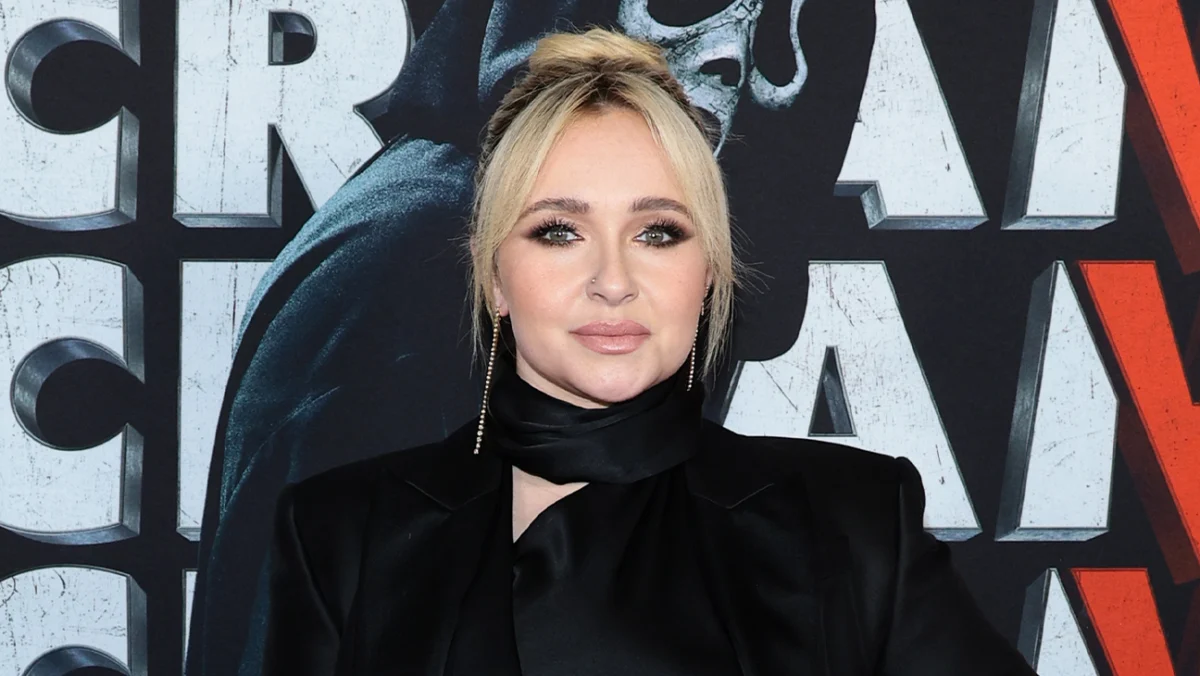
The entertainment industry is grappling with a growing crisis surrounding the welfare of child actors, brought into sharp focus by the recent, untimely deaths of Hayden Panettiere, Michelle Trachtenberg, and Daveigh Chase. In the wake of these profound losses, prominent actresses Anna Paquin, Christy Carlson Romano, and Melissa Gilbert, all of whom experienced the intense pressures of child stardom themselves, have issued a powerful call to action, urging Hollywood to implement more robust protections for its youngest performers.
The confluence of these tragedies has galvanized a community often characterized by its isolation. Panettiere’s death at the age of 36 last Sunday served as a catalyst, prompting Paquin, Romano, and Gilbert to break their silence and address the systemic issues they believe have contributed to the premature ends of these talented individuals. Trachtenberg passed away in February 2025 at the age of 39, and Chase died in July of the same year at 35. These deaths, occurring within a relatively short span, have sent shockwaves through the industry and highlighted a disturbing pattern.
A Shared Experience, A Collective Plea
Anna Paquin, an Oscar winner at just 11 for her role in The Piano, articulated the shared pain and concern on Instagram. "It’s not a coincidence that so many former, specifically pre-sexualized female, child ‘stars’ have profoundly sad lives and untimely ends," she wrote, emphasizing the perceived inadequacy of existing safeguards. "We were not as protected by the ‘systems’ that look great on paper, as we are supposed to be."
Paquin’s message extended a lifeline to others who have navigated the complex and often perilous landscape of child stardom. "RIP HP, MT, DC and too many others," she continued. "It’s a strange small club we belong to and you are worthy of support no matter how our industry makes us feel." She offered a direct invitation for connection and support: "Literally DM me. I believe you and I will stand by your side. You aren’t alone. Let’s have each other’s backs. It might make public disclosure less terrifying."
In a subsequent post, Paquin underscored that the industry is capable of prioritizing the well-being of young performers, even when dealing with challenging material. "As an adult I’ve had the pleasure of working on productions where the welfare and mental health of young performers was handled incredibly carefully," she stated. "Especially around material that was intense. It is possible to holistically look after the kids on set and tell complex and sometimes upsetting stories. It just has to be the top priority of the production." This sentiment points to a critical need for a cultural shift within production environments, moving beyond mere compliance to genuine, proactive care.
The Analogy of CTE and the Architecture of Childhood
Christy Carlson Romano, who transitioned from a Disney Channel star in Even Stevens and the voice of Kim Possible to a published author, drew a stark parallel between the effects of early fame and Chronic Traumatic Encephalopathy (CTE), a degenerative brain disease linked to repeated head trauma. In an essay published by Elle, Romano articulated the unique predicament of former child actors.
"The former child actor exists in a category the world does not know how to hold," Romano wrote. "We are children when the public wants to feel protective of us, professionals when the industry wants to profit from us, and spoiled celebrities when we eventually show symptoms of having been both." She elaborated on the CTE analogy: "Early fame is like CTE. Not as a diagnosis. As a way of thinking about repeated impact. We now have language for youth sports: protocols, helmets, parents worried about concussions. But we have almost no language for what happens when stress, scrutiny, rejection, adult pressure, and the collapse of privacy become the architecture of a childhood."
Romano’s critique extended to the industry’s perceived neglect of the psychological toll on young performers. "Young performers are still treated as exceptions. Lucky exceptions. Cute exceptions. Talented exceptions. Exceptions whose labor powers one of the most profitable storytelling machines in the world, while their mental needs are treated as inconvenient or irrelevant. Social work be damned." This highlights a perceived systemic devaluation of the mental health needs of child actors, often framed as an ancillary concern rather than a fundamental requirement.
A Tribe United by Trauma and a Call for Accountability
Melissa Gilbert, whose nine-year tenure as Laura Ingalls Wilder on Little House on the Prairie defined a generation, expressed her profound grief and confusion over the recent deaths. In a poignant post on Substack, she directly questioned the circumstances: "Why are these three sweet, wildly talented, vibrant, vital young women gone?"
Gilbert identified a shared bond among former child performers, referring to them as members of "the same tribe; Female Former Child Performers." She explained, "When one of us dies, it runs through all of us like an electrical current. When three of us die so close together, something is very, very wrong. We all know the stories of how the entertainment industry uses, abuses, exploits and then throws away its youngest, but for some reason, this trend is getting worse."
Her impassioned plea then turned to the institutions meant to provide oversight and support. "Where is our Union in all of this? Where is the collective outrage? Where are the regulations? Where is the protection of privacy?" Gilbert voiced a frustration that resonates deeply within communities that have historically felt marginalized or overlooked.
She lamented a cycle of public outcry followed by inaction: "It really seems like no one cares enough to enact real change. At least, not until the next death and everyone talks about how sad they are and how we must do something and then they forget and get on with their lives until it happens again and again and again." Gilbert acknowledged the complexities of individual struggles, such as addiction, family dysfunction, and PTSD, but insisted that these should be handled with extreme care when they manifest in children. "Yes, addiction is a real disease. Family dysfunction is real. PTSD is real. In actors, all those things are assets. They enable us to access emotion and share it with an audience. But when it comes through children, it should be treated tenderly, protectively, respectfully and in a way that is as limited as possible."
A Chronology of Starry Beginnings and Tragic Endings
The careers of Panettiere, Trachtenberg, and Chase began at remarkably young ages, showcasing prodigious talent that captivated audiences.
-
Hayden Panettiere: Her career began at four years old in the soap opera One Life to Live. By the age of 10, she had secured a role in the 2000 film Remember the Titans. She later achieved widespread fame for her roles in the television series Heroes and Nashville, and in the Scream film franchise. Her struggles with postpartum depression and addiction were publicly documented, highlighting the intense pressures she faced throughout her life.
-
Michelle Trachtenberg: Trachtenberg was a familiar face in children’s television, appearing in the Nickelodeon series The Adventures of Pete & Pete. Her early film roles included Harriet the Spy (1996) and Inspector Gadget (1999). She gained significant recognition for her roles in Buffy the Vampire Slayer and Gossip Girl, navigating the transition from child to adult roles under the constant glare of public scrutiny.
-
Daveigh Chase: Known for her voice work as Lilo in Disney’s Lilo & Stitch (2002), Chase also starred in the iconic 2002 horror film The Ring at a young age. Her early career showcased a versatile range, from animation to psychological thrillers, demonstrating considerable talent from her formative years.
The fact that these three women, all of whom achieved significant success as child performers, have died in such rapid succession, and at relatively young ages, has compelled their peers and industry observers to question the underlying systemic failures.
The Role of Unions and the Need for Regulatory Action
Gilbert’s direct question regarding the role of unions, such as SAG-AFTRA, points to a critical area for examination. While unions typically advocate for worker safety and fair labor practices, the specific vulnerabilities of child performers may require enhanced protocols and more stringent enforcement. The Coogan Law, enacted in California in 1939, mandates that a portion of a child actor’s earnings be set aside in a trust, but concerns remain about the broader psychological and emotional well-being of these young individuals.
The call for "collective outrage" and "regulations" suggests a need for legislative and industry-wide reforms. This could include:
- Enhanced Psychological Support: Mandating on-set access to qualified mental health professionals for all child performers, with a focus on preventative care and immediate intervention.
- Stricter Supervision and Mentorship: Implementing programs that provide robust, independent adult supervision on set, beyond parental figures, to ensure children are not subjected to undue pressure or exploitation.
- Education and Awareness Campaigns: Increased training for producers, directors, and crew members on the specific psychological needs and vulnerabilities of child actors.
- Independent Oversight Committees: Establishing bodies composed of child welfare advocates, psychologists, and former child actors to review production practices and investigate concerns.
- Post-Employment Support: Developing resources and networks to assist former child actors in navigating the transition to adulthood and addressing potential long-term psychological impacts of their early careers.
The Broader Implications and a Call for Lasting Change
The statements from Paquin, Romano, and Gilbert are more than just expressions of grief; they represent a significant moment of reckoning for Hollywood. The industry has long profited from the innocence and talent of children, yet the support systems in place have demonstrably failed to adequately protect them from the unique pressures and potential harms of early fame.
The personal context of Melissa Gilbert’s advocacy, with her husband Timothy Busfield currently facing child sex abuse allegations on the set of The Cleaning Lady, adds another layer of complexity and urgency to the conversation. While Gilbert has publicly defended her husband, who denies the allegations, her platform for discussing child welfare in the industry is undeniably amplified by these circumstances. This situation underscores the multifaceted nature of child protection within the entertainment sphere, touching upon issues of workplace safety, alleged misconduct, and the broader responsibility of employers.
Ultimately, the collective voice of these respected actresses serves as a powerful indictment of the status quo. Their demand for "real change" is not merely a plea for better conditions but an imperative for the industry to confront its historical shortcomings and fundamentally re-evaluate its commitment to the welfare of its youngest stars. The legacy of Hayden Panettiere, Michelle Trachtenberg, and Daveigh Chase may well be one of tragedy, but their stories, amplified by the courage of Paquin, Romano, and Gilbert, have the potential to usher in a new era of genuine protection and support for the next generation of Hollywood talent. The question remains whether the industry will heed this urgent call and translate empathy into lasting, meaningful action.