




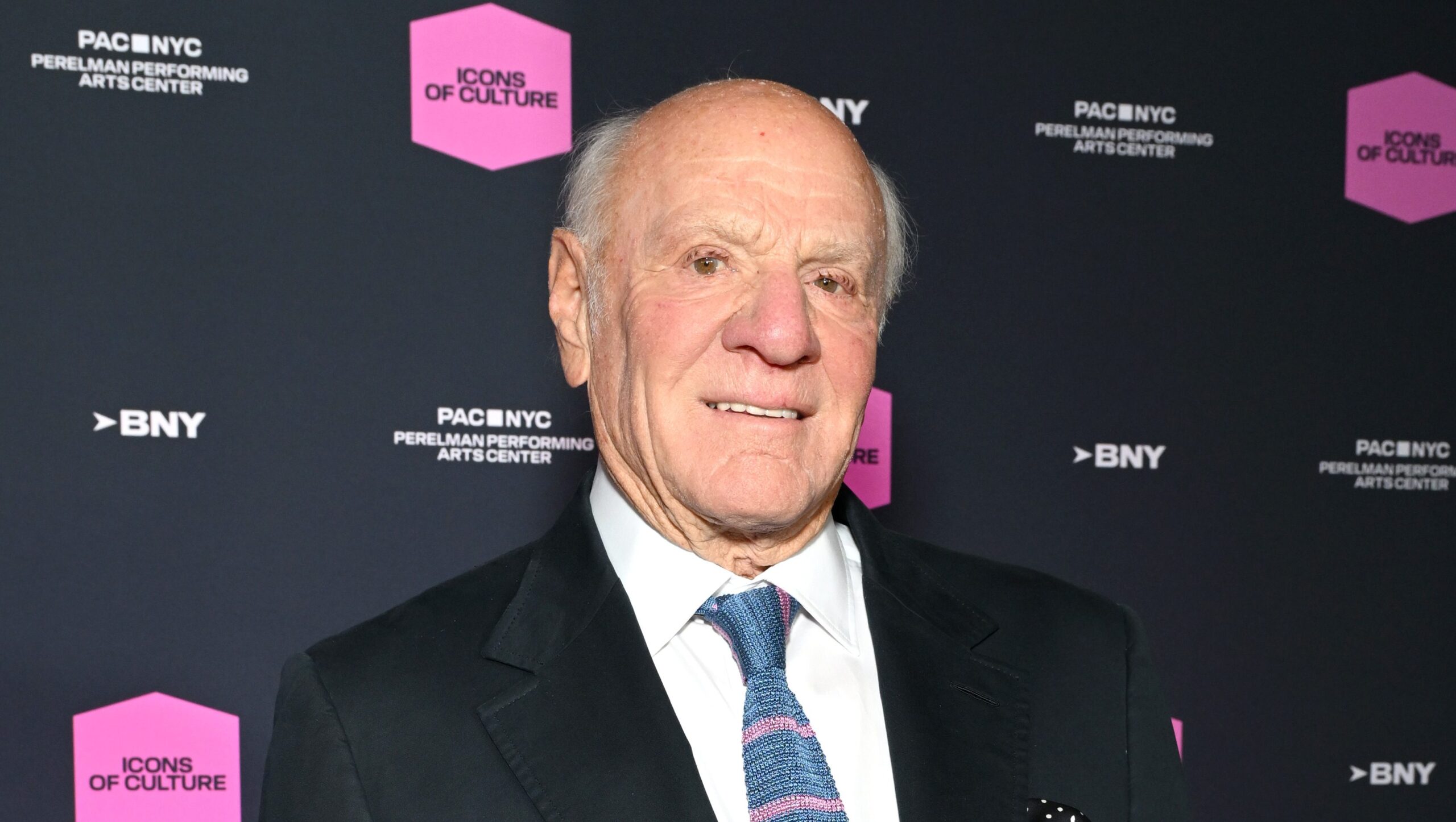
The annual Producers Guild of America (PGA) Awards ceremony, a prestigious event celebrating excellence in film and television production, took an unexpected turn on Saturday night as industry titan Barry Diller, presenting the Milestone Award to Blumhouse founder Jason Blum, delivered a series of pointed barbs aimed at both individual producers and the guild itself. Diller, a seasoned executive with a storied career at Paramount Pictures and Fox, and currently chairman of IAC, did not shy away from controversy, using the platform to critique past honorees and cast a shadow of doubt on the PGA’s discernment.
Diller’s Unvarnished Critique of PGA Honorees
Diller’s remarks began with a sharp contrast between the storied pioneers of Hollywood and a more contemporary figure, drawing an audible gasp from the assembled industry professionals. "Samuel Goldwyn, Adolph Zukor, Jack Warner – What would Jack Warner do to know he’d been succeeded by a stunt pilot?" Diller quipped, immediately drawing attention to David Ellison, the current chairman and CEO of Paramount Pictures. Ellison, a licensed pilot with certifications in helicopter aviation and aerobatics, has recently been at the center of industry discussions regarding the potential mega-merger between Paramount and Warner Bros. Discovery. The juxtaposition of Ellison, a modern-day aviator, with Warner, the legendary founder of Warner Bros. Studios, served as a thinly veiled jab at what Diller perceived as a shift in the caliber of individuals recognized by the guild.
The critique did not end there. Diller continued his address by drawing parallels between esteemed figures like Cecil B. DeMille and Walt Disney and the current honoree, Jason Blum. However, he quickly pivoted to a more damning observation, stating, "Cecil B. DeMille, Disney, and now Blum: Not the most obvious succession, but then you also gave this award to Harvey Weinstein and Les Moonves. So there’s that." This pointed reference to two prominent figures who have faced significant public scrutiny and legal repercussions for alleged misconduct served as a stark reminder of past controversies and raised questions about the PGA’s vetting process for its highest honors. The inclusion of Weinstein and Moonves in the same breath as Blum, DeMille, and Disney underscored Diller’s dissatisfaction with the guild’s historical decision-making.
Praising Blum’s "Cheapness" as a Defining Attribute
Beyond his critique of the PGA and its past honorees, Diller also humorously addressed Jason Blum’s well-known frugality, a characteristic that has become synonymous with the Blumhouse model. Blum, the visionary behind iconic horror franchises such as Paranormal Activity, Insidious, The Black Phone, and The Purge, has built his empire on a foundation of low-budget productions that yield remarkably high returns. Diller highlighted this financial acumen, noting, "There’s some commonality with the greats. DeMille made movies for $15,000 and so did Blum almost 100 years later. To say he’s cheap isn’t a characterization. It’s a defining attribute."
This "defining attribute" of cost-effectiveness has been central to Blumhouse’s success. The groundbreaking success of the 2007 film Paranormal Activity, produced for a mere $15,000 and subsequently grossing nearly $200 million worldwide, stands as a testament to this strategy. Diller’s acknowledgment of this achievement, framed as a shared trait with filmmaking legends, subtly elevated Blum’s business model from mere parsimony to a form of artistic and financial genius.
Diller’s personal connection to Blum was also evident as he continued, “I’m giving this award to Jason, not because I like horror movies; I actually hate them. But because we’ve been friends since before he matriculated, if that’s the right word to describe working for Harvey Weinstein. How he found his groove after that is anyone’s guess, but he sure did find it.” This personal anecdote alluded to Blum’s early career, which included a stint as an executive for Bob and Harvey Weinstein at Miramax. Diller’s remark acknowledged Blum’s ability to navigate a challenging early career trajectory and ultimately forge his own successful path in the industry, further underscoring his resilience and talent.
Blum’s Pioneering Approach to Production and Artistic Freedom
The discussion of Blum’s production philosophy extended to his commitment to fostering artistic freedom. Diller elaborated on Blum’s consistent strategy of investing modest sums in films while granting directors significant creative control. This approach, Diller suggested, has allowed artists to tell compelling stories and achieve substantial financial success. "300 films made on the lowest pay scales in film history, but he also did something quite extraordinary in itself, and that’s helping artists tell stories and helping them make a lot of money," Diller stated.
He further emphasized Blum’s unwavering focus in a notoriously distracting industry. "Once Jason found his calling, he focused with an intensity that is rare in this business, and that’s worth saying because Hollywood is essentially a machine that’s designed to distract you," Diller observed. "There’s always a bigger budget being dangled in front of you, a more prestigious kind of movie that will get you an awards campaign or a franchise that someone swears is going to change everything. The shiny objects in this town are endless. Jason though stayed focused on scary and people betting on themselves." This focused dedication, Diller argued, distinguishes Blum and positions him as a unique figure in contemporary Hollywood. Diller concluded his introduction by praising Blum as "this odd something of a Renaissance man, a true embodiment of a man [who] can do all things if it is his will. And it is his will and his stick to perseverance of what he believes in and how essentially honest and honorable he has been that makes me ever so glad to be able to present this award to him."
Blum’s Acceptance: Acknowledging Mentorship and the Human Element in Production
Upon receiving the Milestone Award, Jason Blum acknowledged Diller’s significant influence and friendship. "I think my biggest achievement is getting Barry Diller to the PGAs!" he quipped, eliciting laughter from the audience and playfully referencing Diller’s initial reservations about the horror genre. Blum then expressed his gratitude for Diller’s mentorship, stating, "Barry’s been a friend of mine for a long time and a mentor of mine and someone I admire so, so much. And he’s changed my life is a lot of ways." This sentiment underscored the deep personal and professional bond between the two industry veterans.
Blum then shifted to a more philosophical reflection on the evolving landscape of content creation, particularly in the age of artificial intelligence. He challenged the notion that algorithms and AI can fully replicate the nuanced role of a producer. "We’re living at this time where machines are very confident that they can pick what will work, that algorithms can tell us everything we’ve ever watched and what we should watch next, and AI can tell us what to stream in the mood we’re in next Tuesday," Blum remarked.
He posited that what machines fundamentally lack is the intangible human element of passion and taste that drives successful production. To illustrate his point, Blum cited the unexpected success of the low-budget gay hockey romance series Heated Rivalry. "If you would ask an algorithm a few months ago to predict a low-budget gay hockey romance with zero known stars, I promise you the algorithm would have been like, ‘Do not make that show.’ But that’s why Heated Rivalry needed us. It needed producers." This anecdote served as a powerful argument for the indispensable role of human intuition, risk-taking, and creative vision in identifying and nurturing unique stories that might otherwise be overlooked by data-driven decision-making processes. Blum also mentioned that the producers of Heated Rivalry were unable to attend the PGA Awards ceremony as they were in New York to watch Connor Storrie host Saturday Night Live, further highlighting the interconnectedness and diverse paths within the entertainment industry.
Broader Implications and Industry Context
The Producers Guild of America Awards, held annually, serves as a significant bellwether for the Academy Awards, with many PGA winners going on to secure Oscar nominations and wins. The 2026 PGA Awards ceremony, celebrating productions from 2025, was a high-profile event attended by a who’s who of Hollywood’s producing elite. The Milestone Award, in particular, is bestowed upon individuals who have made significant contributions to the art of producing. Past recipients include a pantheon of Hollywood legends, making Diller’s pointed remarks about the inclusion of figures like Harvey Weinstein and Les Moonves particularly resonant and controversial within the industry.
Barry Diller’s career spans decades, marked by transformative leadership roles at major media conglomerates. His tenure at Paramount Pictures and Fox, as well as his current position at IAC, has given him a unique vantage point from which to observe and critique the industry. His willingness to speak candidly, even provocatively, at such a prominent event underscores a deep-seated concern about the integrity and direction of the producing profession and the institutions that recognize it.
Jason Blum, through Blumhouse Productions, has redefined the landscape of genre filmmaking by demonstrating that critical and commercial success can be achieved with modest budgets and a focus on creative talent. His consistent output of commercially successful and critically acclaimed films has solidified his position as one of Hollywood’s most influential producers. His acceptance speech, while acknowledging Diller’s mentorship, also served as a platform to champion the enduring value of human creativity and intuition in a rapidly evolving media environment.
The implications of Diller’s remarks extend beyond the immediate event. His critique of the PGA’s past awardees may prompt further internal reflection within the organization regarding its selection criteria and legacy. Furthermore, his defense of the producer’s role in identifying and championing unconventional projects, as exemplified by Heated Rivalry, resonates in an era where the power of algorithms and data analytics is increasingly debated in creative decision-making. The juxtaposition of Diller’s sharp criticisms and Blum’s thoughtful reflections provides a compelling snapshot of the ongoing conversations about talent, integrity, and the future of storytelling in Hollywood.