



Omaha, Nebraska – Berkshire Hathaway, the sprawling conglomerate helmed for decades by legendary investor Warren Buffett, concluded 2025 with a notable decline in its fourth-quarter operating earnings, largely attributed to softness within its vast insurance operations. The financial results, released in early 2026, mark a pivotal moment as they represent the final quarter under Warren Buffett’s nearly six-decade tenure as Chief Executive Officer, with Greg Abel officially taking the reins at the start of the new year. While Buffett remains Chairman, the financial report provides an initial glimpse into the company’s performance as it navigates a carefully orchestrated leadership transition.
Operating earnings for the fourth quarter totaled $10.2 billion, representing a substantial decrease of more than 29% compared to the $14.56 billion reported in the year-earlier period. This dip underscores the challenges faced across several of Berkshire’s diverse business segments, particularly within its critical insurance arm, which typically serves as a foundational pillar of its earnings and capital generation. The full-year operating earnings for 2025 also reflected this trend, coming in at $44.49 billion, down from $47.44 billion in 2024. These figures present a complex picture for investors, highlighting both the inherent volatility in certain sectors and the broader economic currents impacting corporate profitability.
Deep Dive into Segment Performance: Insurance Underwriting and Investment Income
The insurance sector, a cornerstone of Berkshire Hathaway’s empire, experienced a particularly challenging quarter. Insurance underwriting profits plummeted by a significant 54%, falling to $1.56 billion from $3.41 billion in the fourth quarter of the previous year. This substantial reduction suggests increased claims costs, potentially due to a combination of factors such as higher catastrophe losses, inflation impacting repair and replacement expenses, or heightened competition in various insurance lines leading to less favorable pricing. The sheer scale of this decline indicates a period of significant headwinds for the companies within Berkshire’s insurance portfolio, which includes GEICO, Berkshire Hathaway Primary Group, and General Re.
Adding to the pressure on the insurance segment, insurance investment income also saw a notable decrease, sliding by nearly 25% from $4.088 billion to $3.1 billion. This category reflects the returns generated from the vast float—the premiums collected but not yet paid out in claims—that Berkshire’s insurance operations manage. While the specific drivers for this decline were not detailed in the initial release, potential factors could include lower interest rates on certain fixed-income investments, changes in portfolio allocation, or a decrease in the overall size of the float available for investment. In an environment where interest rates had been fluctuating, managing returns on such a massive pool of capital becomes increasingly complex.
For the entirety of 2025, the trends observed in the fourth quarter largely held true. Profits from insurance underwriting for the full year came in at $7.26 billion, a reduction from $9 billion in 2024. Similarly, insurance investment income for the year eased to $12.5 billion from $13.6 billion a year prior. These comprehensive annual figures reinforce the narrative of a challenging year for Berkshire’s insurance businesses, underscoring the cyclical nature of the industry and the continuous pressure on profitability.
Overall Earnings and the Impact of Investment Fluctuations
Beyond operating earnings, Berkshire Hathaway’s overall earnings, which include the often-volatile gains or losses from its extensive portfolio of stock market investments, also saw a slight dip in the fourth quarter. Totaling $19.2 billion, these earnings were marginally lower than the $19.7 billion reported in the year-earlier period. This slight decline, however, was significantly influenced by a $4.5 billion impairment charge related to Berkshire’s long-standing investments in Kraft Heinz and Occidental Petroleum.
Investment impairments occur when the fair value of an asset falls below its carrying value on the balance sheet, signaling a perceived long-term decline in value. Both Kraft Heinz and Occidental Petroleum have experienced periods of market volatility and operational challenges, leading to these adjustments in Berkshire’s financial statements. Despite these specific impairments, the conglomerate still reported substantial investment gains of $13.5 billion in the fourth quarter, reflecting the overall positive performance of other holdings within its diverse equity portfolio.
For the full year 2025, overall earnings experienced a more pronounced fall, dropping to $66.97 billion from $89 billion in the prior year. This larger annual decline underscores the significant impact that market fluctuations and specific investment performance can have on Berkshire’s reported net income, especially in years where impairments are recognized.
However, Berkshire Hathaway has consistently advised investors to exercise caution and pay little attention to the performance of its investments over short time frames. Warren Buffett has repeatedly emphasized that these quarterly and even annual swings in investment gains or losses are often "meaningless" and can be "extremely misleading" to those unfamiliar with accounting rules. The company reiterates this stance in its earnings release, reminding stakeholders that the intrinsic value of its businesses, rather than short-term market valuations of its holdings, is the primary focus. This philosophy underpins Berkshire’s long-term investment horizon, distinguishing it from many other publicly traded companies.
Leadership Transition: A New Era Begins
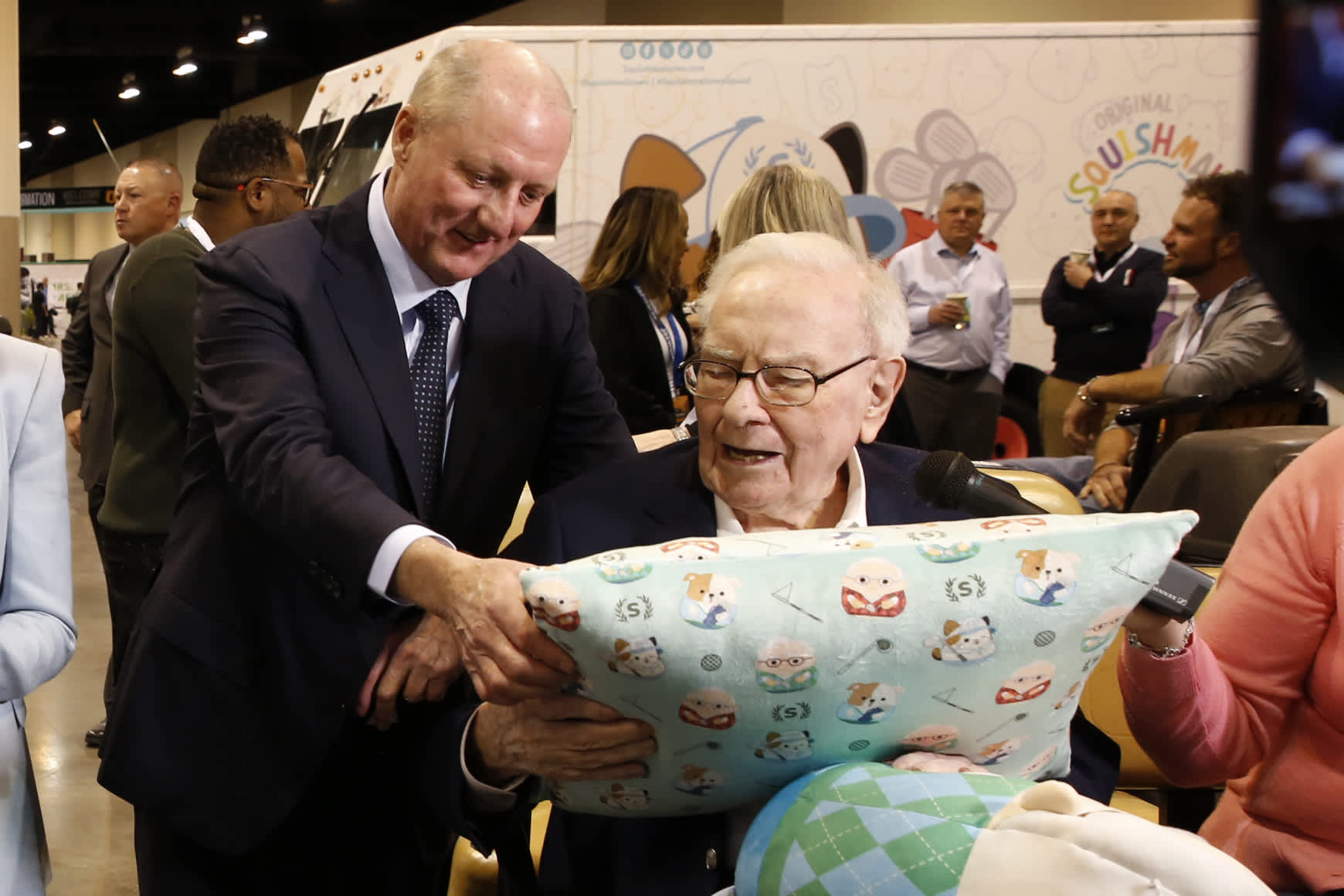
The reporting of these Q4 2025 results carries particular weight as they coincide with a monumental shift in leadership at the top of the Berkshire Hathaway hierarchy. Warren Buffett, the visionary who transformed a struggling textile mill into a global powerhouse, officially stepped down as CEO at the close of 2025. This transition follows his announcement at the annual shareholders meeting in Omaha on May 3, 2025, where he confirmed his decision to pass the operational baton.
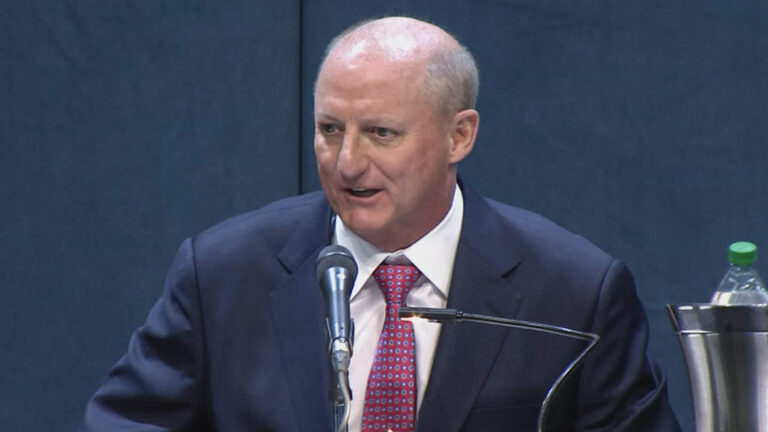
Effective January 1, 2026, Greg Abel assumed the role of Chief Executive Officer. Abel, who previously oversaw all of Berkshire’s non-insurance operations, has long been groomed as Buffett’s successor, a process that began years prior with his promotion to Vice Chairman alongside Ajit Jain, who manages the insurance businesses. Buffett, however, retains the pivotal role of Chairman, ensuring his continued guidance and strategic oversight, particularly in capital allocation decisions and the cultivation of Berkshire’s unique corporate culture.
In his inaugural annual letter to shareholders accompanying the results, Abel promptly affirmed his commitment to upholding the enduring principles that have defined Berkshire Hathaway for decades. He vowed to perpetuate the culture of "financial strength and capital discipline" that Buffett meticulously built, signaling a continuity of philosophy rather than a radical departure. This reassurance is critical for investors who have long relied on Buffett’s steadfast approach to value investing and prudent management. Abel’s letter served as a crucial statement of intent, indicating that while the leadership has transitioned, the core tenets of the Berkshire ethos will remain firmly in place.
Capital Allocation and the Cash Hoard Dilemma
One of the closely watched aspects of Berkshire’s financial reports is its capital allocation strategy, particularly regarding share buybacks and the deployment of its massive cash reserves. Despite the relative flatness of Berkshire Hathaway Class A shares during the fourth quarter, Buffett once again refrained from authorizing significant buybacks. This decision suggests that, in the eyes of management, the shares may not have presented a sufficiently compelling value proposition at prevailing market prices, adhering to Berkshire’s disciplined approach of only repurchasing shares when they trade below what management considers their intrinsic value.
While buybacks were limited, the conglomerate’s substantial cash hoard did experience a slight dip, easing to $373.3 billion from a record high of $381.6 billion in the third quarter. This reduction, though modest, reflects a slight deployment of capital, potentially into new investments, organic growth initiatives within existing businesses, or other strategic allocations. The sheer size of this cash pile continues to be a defining characteristic of Berkshire, often described as a "good problem to have." However, it also presents a significant challenge: finding suitable, large-scale acquisitions or investments that can meaningfully move the needle for a company of Berkshire’s immense scale. Buffett has often referred to this challenge as "elephant hunting," underscoring the difficulty of deploying such vast sums profitably without overpaying.
Market Performance and the Enduring Legacy
In terms of market performance, Berkshire Hathaway Class A shares saw a 10% increase in 2025. While a respectable gain, this performance lagged behind the broader market, as the S&P 500 advanced by 16.4% over the same period. This relative underperformance in a single year, however, is often viewed through the lens of Berkshire’s long-term strategy, which prioritizes compounding capital over decades rather than maximizing short-term market gains.
Indeed, the enduring legacy of Warren Buffett’s leadership at Berkshire Hathaway is one of unparalleled wealth creation for shareholders. The statistics are staggering and often cited as a testament to his unique investment philosophy. Since its inception as a holding company in 1965, Berkshire Hathaway has achieved compounded annual gains of 19.7%. This figure is nearly double the S&P 500’s compounded increases over the same remarkable period, which stood at approximately 9.9% (including dividends).
The cumulative impact of this sustained outperformance is even more dramatic. Abel highlighted in his first annual letter that Berkshire’s overall gains have exceeded a staggering 6,000,000% over that period. In stark contrast, the S&P 500, despite its own impressive run, gained just 46,061% including dividends over the identical timeframe. These numbers powerfully illustrate the extraordinary value generated under Buffett’s stewardship and set a formidable benchmark for the incoming leadership.
Implications for the Future Under Greg Abel
The fourth-quarter and full-year 2025 results present Greg Abel with his first official financial report as CEO, albeit for a period largely managed by his predecessor. The decline in operating earnings, particularly the weakness in the insurance segment, will undoubtedly be a key area of focus for his early tenure. Investors will be keen to observe how Abel and his team address these challenges, whether through strategic adjustments in underwriting, optimization of investment portfolios, or other operational efficiencies.
The continued presence of a substantial cash hoard also places pressure on Abel to identify and execute meaningful capital deployment opportunities. While maintaining financial strength is paramount, the market will look for evidence of how Berkshire plans to grow its intrinsic value in an environment where large, attractively priced acquisitions are increasingly scarce.
Ultimately, these results underscore the formidable task ahead for Greg Abel. He must navigate a complex economic landscape, manage a vast and diverse portfolio of businesses, and maintain the unique culture and investment discipline that have made Berkshire Hathaway a global financial icon. His commitment to upholding Buffett’s principles provides a stable foundation, but the execution of these principles in an evolving market will define his leadership and shape the future trajectory of one of the world’s most closely watched conglomerates. The era of Warren Buffett as CEO may have concluded with a challenging quarter, but the long-term vision and foundational strengths he instilled are expected to guide Berkshire Hathaway through its next chapter.